
Advantages of Wireless Remote Control for RTG Cranes
Overview of Rubber Tyred Gantry Crane
Rubber-Tyred Gantry Cranes (RTG cranes) are large-scale lifting equipment that use rubber tires as their mobility system. They are primarily used in container terminals, freight ports, and large-scale warehousing and logistics parks. Its primary function is to perform loading, unloading, handling, and stacking operations on containers or large cargo, enabling efficient cargo transshipment and storage. It is an indispensable key piece of equipment in the logistics and transportation industry. With its flexible mobility, the RTG crane can freely maneuver within a large operational area, adapting to various operational environments and conditions.
With the continuous development of global trade and the sustained growth of logistics transportation volumes, the traditional RTG crane operation mode has certain issues such as low efficiency and numerous safety hazards, making it difficult to meet the development needs of the modern logistics industry. Therefore, the market’s demand for smarter, safer, and more productive RTG operation methods is becoming increasingly urgent, driving continuous innovation and application of related technologies.
Evolution of RTG Crane Control Systems
Traditional Cab-Operated RTG Cranes
In the early stages of RTG crane development, the traditional cab-operated mode was widely adopted. Operators had to enter the cab located at the top of the crane and control its operations using various control levers, buttons, and instruments within the cab. This operating method required operators to work at high altitudes, necessitating constant monitoring of the cargo’s status and awareness of the surrounding work environment, thereby imposing extremely high demands on the operator’s technical skills and concentration.
Introduction of Wired Remote Control Systems
With the initial development of industrial automation technology, RTG crane control systems began transitioning toward semi-automated and wired remote control systems. Semi-automated systems introduced automated control modules to achieve partial automation of certain operational processes, such as precise positioning and automatic speed adjustment, thereby reducing the operator’s workload to some extent. Wired remote control systems, on the other hand, moved the operating location from the cab to the ground, allowing operators to control the crane via a control device connected by a wired cable. While this improved the operator’s working environment, the presence of the wired cable restricted the operator’s mobility, and the cable was prone to wear and tear in complex working environments, affecting system stability.
Transition from Wired to Wireless Solutions
With the rapid development of wireless communication technology, RTG crane control systems have undergone a significant transition from wired to wireless. Wireless remote control systems eliminate the constraints of wired cables, allowing operators to remotely control the crane within a more flexible range. This transition not only completely resolves the various issues caused by cables in wired systems but also brings higher flexibility, safety, and efficiency to RTG crane operations, marking an important milestone in the development of RTG crane technology.
Key Advantages of Wireless Remote Control
Use of Ease
The wireless remote control system features a user-friendly design with an intuitive interface and simple, easy-to-understand control buttons. Operators can quickly familiarize themselves with the operation process without undergoing complex training, lowering the learning threshold. This convenient operation method not only reduces the time and effort required for operator training but also helps them achieve proficiency in a short period, thereby improving operational efficiency.
Enhanced Safety
Wireless remote control operations allow operators to remain outside the crane cab, keeping them away from hazardous areas that may arise during crane operations, thereby fundamentally reducing the risk of operator injury. Operators can monitor the entire operation process from a safe ground observation point, gaining a clearer understanding of the movements of ground personnel, equipment, and cargo, and avoiding safety incidents such as collisions caused by limited visibility. Additionally, the wireless remote control system is equipped with an emergency stop function that can quickly cut off the crane’s power in case of emergencies, ensuring operational safety.
Improved Efficiency
The wireless remote control system has fast signal transmission speeds, enabling real-time transmission of operational commands to the crane, achieving faster response times, and making the crane’s lifting, moving, and stacking actions smoother, reducing downtime and waiting time during operations. Furthermore, in wireless remote control mode, a single operator can simultaneously monitor and control multiple cranes, optimizing human resource allocation and significantly improving overall operational efficiency. Additionally, operators work in a comfortable environment, reducing fatigue and enabling them to maintain high-efficiency work performance for extended periods, thereby minimizing efficiency declines and operational errors caused by fatigue.
Cost Savings
Wireless remote control mode reduces the need for cabin operators, lowering labor costs. Since the maintenance of wireless remote control systems is relatively simple, equipment failure rates are lower, reducing maintenance expenses. Additionally, improved operational safety and reduced operational errors lower costs associated with equipment damage, cargo loss, and personnel injuries caused by accidents, achieving cost savings from multiple angles.
Operator Comfort and Flexibility
Operators can perform remote operations from an ergonomically designed control room or a safe ground-level position, avoiding the effects of vibration, noise, and adverse weather conditions typically encountered in the cab, resulting in a more comfortable working environment. Additionally, wireless remote control operations are not restricted by space, allowing operators to flexibly choose the optimal operating position based on operational needs, thereby enhancing operational flexibility and convenience. This comfortable and flexible working method is also more appealing to young, tech-savvy labor, injecting new vitality into the enterprise.
Integration with Smart Technology
The wireless remote control system has excellent compatibility and can seamlessly integrate with automated yard management systems, enabling data sharing and collaborative work. Through real-time data transmission functionality, crane operational parameters and task progress information can be promptly fed back to the management system, enabling managers to conduct real-time monitoring and scheduling. Additionally, wireless remote control technology lays a solid foundation for RTG cranes to transition toward semi-automation and full automation, establishing future-oriented infrastructure that enables businesses to better adapt to the trend of intelligent logistics development.
Comparison: Wireless Remote Control vs. Operator Cabin
Operator Perspective
From the operator’s perspective, the two operating modes exhibit significant differences in terms of comfort, safety, and work environment. In the cabin operation mode, operators spend extended periods in a confined high-altitude cabin, which is subject to vibrations and noise generated during crane operations, leading to fatigue after prolonged use. Additionally, high-altitude work poses safety risks, such as difficulties in evacuating during sudden malfunctions.
In wireless remote control mode, operators can perform operations from a safe ground-based area or a comfortable control room, free from the interference of vibrations and noise. The improved work environment significantly enhances operator comfort, reduces fatigue, and thereby helps improve the accuracy and stability of operations. Furthermore, operators are located in a safe area, avoiding the safety hazards associated with high-altitude work, resulting in a significant improvement in safety.
Efficiency Perspective
In terms of efficiency, the wireless remote control mode has a clear advantage over the cabin operation mode. During cabin operation, operators must observe and operate from within the cab, where visibility is relatively limited. In complex operational scenarios, judgments about cargo and the surrounding environment may be delayed, leading to slowed operational rhythms or even downtime waiting periods.
In wireless remote control mode, operators can choose the optimal observation position, providing a clearer view of the cargo lifting, movement, and stacking processes, enabling faster decision-making and response times, thereby reducing operational errors and adjustment time. Additionally, the wireless remote control system ensures stable signal transmission, allowing operational instructions to be quickly and accurately conveyed to the crane, achieving faster response times and making the entire operational process smoother, effectively reducing downtime and improving operational efficiency.

Cost Perspective
From a cost perspective, the two operating modes differ in terms of maintenance, training, and operational costs. Traditional cab-operated RTG cranes have numerous mechanical control devices and instrumentation inside the cab, which require significant maintenance efforts and have higher replacement costs for components. Additionally, cab operation demands higher technical proficiency from operators, necessitating extensive and intensive training, resulting in relatively higher training costs.
The wireless remote control system has a relatively simple structure, primarily consisting of a remote controller and receiver, making maintenance and upkeep more straightforward. The failure rate of components is lower, resulting in significantly reduced maintenance costs. In terms of training, the wireless remote control system typically features an intuitive interface and user-friendly design, enabling operators to master operating techniques more easily, shortening training cycles, and consequently reducing training costs. Furthermore, the improved operational efficiency under the wireless remote control mode reduces equipment downtime, thereby lowering operational costs.
Safety Perspective
In cabin operation mode, there are numerous safety risks. Operators working at high altitudes face the risk of falling; vibrations and impacts during crane operation may harm operators’ physical health; in complex operational environments, such as encountering adverse weather conditions or equipment failures, operators may face significant challenges in escaping or being rescued.
The wireless remote control mode, however, enables operators to monitor and operate the crane from a safe distance through remote monitoring technology. The remote monitoring system can real-time obtain information such as the crane’s operational status and cargo location, allowing operators to promptly identify potential safety hazards and take corresponding measures to address them. Additionally, in the event of an emergency, operators can quickly stop the crane’s operation by pressing the emergency stop button on the remote control, preventing the escalation of accidents and significantly enhancing operational safety.
Application of Wireless Remote Control Crane
Construction and Building
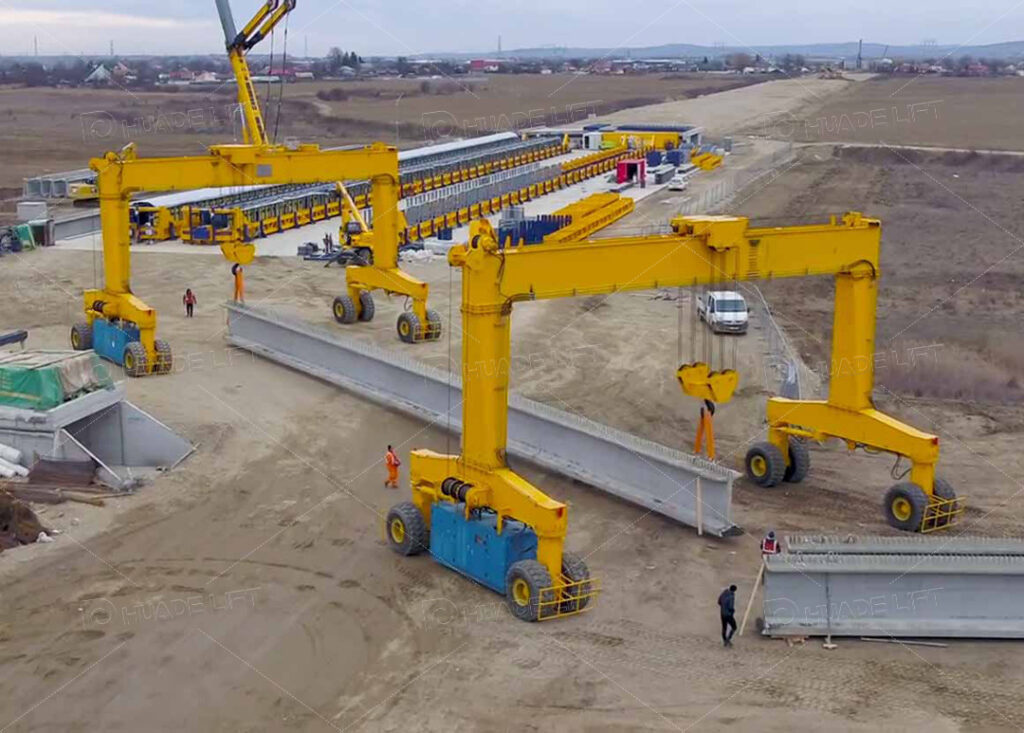
In construction projects, wireless remote control technology is widely used for RTG crane operations involving the lifting of large construction components such as steel beams and concrete slabs. Through wireless remote control, operators can precisely control the crane’s movements, ensuring components are accurately installed in designated positions. This not only enhances construction precision but also eliminates the need for operators to work in high-altitude or hazardous areas, thereby ensuring construction safety.
Storage and Shipping
In the warehousing and shipping sectors, RTG cranes are primarily used for handling pallets and large containers. The application of wireless remote control technology enables cranes to quickly and accurately complete cargo loading, unloading, and stacking operations, significantly improving material handling speed and efficiency, reducing cargo turnaround time, and enhancing operational efficiency for warehousing and shipping companies.
Heavy Equipment and Manufacturing
In heavy equipment manufacturing and large-scale machinery assembly processes, precise handling and installation of heavy components and equipment are required. Wireless remote-controlled RTG cranes can achieve precise operations in complex production environments, meeting the stringent precision requirements of assembly lines, thereby improving production efficiency and product quality.
Remote or Hazardous Environments
In remote areas or hazardous work environments, such as construction sites under extreme weather conditions or hazardous zones in chemical plants, wireless remote control technology demonstrates unique advantages. Operators can control RTG cranes from a safe remote location, avoiding exposure to hazardous environments and ensuring safe operations.

Conclusion
In summary, wireless remote control for rubber tired gantry cranes offers numerous significant advantages. In terms of safety, it relocates operators from hazardous areas to safe positions, enhancing operational safety; in terms of efficiency, it accelerates response times, optimizes human resource allocation, and improves operational efficiency; in terms of flexibility, operators can flexibly choose operating positions to adapt to different operational conditions; in terms of cost-effectiveness, it reduces labor costs, maintenance costs, and accident-related expenses.
As the logistics industry continues to develop and intelligent technologies advance, the application of wireless remote control technology in RTG cranes has become an inevitable trend. Adopting wireless remote control technology not only meets current operational requirements for safety, efficiency, and cost but also lays a solid foundation for future business development, making it a wise investment with long-term benefits.
