
Introduction
In today’s material handling sectors across various industries, rubber-tired gantry cranes (RTGs) have become a highly favored lifting solution due to their high mobility, precise control, and strong adaptability. Their electric/hybrid drive systems balance performance with environmental sustainability, significantly reducing operational costs. Widely used in construction, manufacturing, logistics, and other fields, RTGs efficiently handle large materials such as steel structures and prefabricated components, markedly enhancing industry-wide material handling efficiency.
Key Advantages of Rubber Tyred Gantry Cranes for Multiple Applications
Outstanding Flexibility
RTG cranes excel in spatial adaptability and operational flexibility. Their trackless operation mode, supported by advanced chassis systems, enables free movement across all terrains, breaking the spatial constraints of traditional rail-bound equipment. Combined with intelligent path planning and dynamic positioning technology, they can rapidly adjust working positions, boosting handling efficiency and space utilization.
In terms of maneuverability, the high-performance rubber-tire drive system supports multi-axle steering and composite motion. This enables precise control and agile turning even on complex terrain, irregular sites, and in confined spaces, overcoming application bottlenecks in special environments and meeting diverse operational demands.
Environmental Protection & Energy Efficiency
Its energy-saving performance is particularly outstanding. Modern RTG cranes predominantly utilize electric drive systems, significantly reducing reliance on diesel engines. This approach minimizes exhaust emissions and operational noise at the source, effectively meeting stringent environmental requirements across industries.
Additionally, RTG cranes boast high energy efficiency, significantly reducing energy consumption during operations. This not only directly cuts operational costs for enterprises but also saves substantial energy expenses from a long-term operational perspective, aligning with corporate sustainable development strategies.
High Operational Efficiency
Exceptional operational performance is the core strength of RTG cranes. Their advanced positioning technology enables rapid and precise targeting of work locations, substantially shortening loading/unloading cycles and significantly boosting operational efficiency.
Integrated intelligent control systems and sensor devices enable precise management throughout the entire lifting process. From hoisting to lowering, the system employs high-precision positioning, intelligent anti-sway technology, and load-adaptive adjustment to ensure handling accuracy while effectively reducing cargo damage risks, helping businesses control costs.
High Safety
Safety remains the paramount consideration in material handling operations, and RTG cranes demonstrate comprehensive safety design. Considering the frequent wind impacts in port environments, RTG cranes incorporate wind-resistant design to ensure stable operation in windy conditions, safeguarding both personnel and equipment.
Additionally, RTG cranes are equipped with comprehensive safety systems, including collision avoidance systems, emergency braking systems, and load monitoring systems. These safety features continuously monitor potential risks during operations, enabling immediate response to unexpected situations and effectively preventing accidents.
Easy Maintenance
Compared to fixed-track cranes, RTG cranes feature a simpler structure, making maintenance and repairs more convenient. During routine maintenance, personnel do not need to navigate complex rail systems, enabling faster completion of equipment inspections and maintenance tasks.
Furthermore, the rubber tires and electrical systems of RTG cranes are designed with maintenance convenience in mind. Daily upkeep and servicing are relatively straightforward, reducing equipment downtime and lowering maintenance costs. This helps businesses minimize unnecessary expenses during equipment operation.
Applications of Rubber Tyred Gantry Cranes in Various Industries
Transportation and Logistics Industry
In transportation and logistics hubs, RTG cranes play a critical role. Without relying on tracks, RTG cranes offer high mobility, enabling efficient loading and unloading of heavy cargo, vehicles, and equipment, significantly boosting operational efficiency at logistics hubs.
Simultaneously, RTG cranes optimize logistics site layouts and material flow processes, helping distribution centers reduce cargo turnaround times, increase handling capacity, and better meet the logistics industry’s demands for efficient, rapid operations.
Bridge Construction Sector
In bridge construction projects, RTG cranes are indispensable key equipment. They are primarily used for lifting and precisely positioning components such as precast beams, main girders, and structural segments. With their large span and lifting height, RTG cranes meet the demands of on-site bridge assembly, particularly excelling in areas unsuitable for rail-mounted cranes.
Furthermore, the rubber-tired design of RTG cranes minimizes ground damage while maintaining excellent maneuverability on uneven terrain, ensuring smooth progress in bridge construction operations.
Steel Manufacturing and Processing
Within steel mills and processing yards, RTG cranes undertake critical material handling duties, primarily managing heavy steel components such as coils, plates, and structural frames. Their robust lifting capacity and stable operational performance enable safe, efficient movement of steel materials.
Considering the unique operating conditions of the steel industry, some RTG cranes feature heat resistance and corrosion protection. This enables them to maintain reliable performance even in harsh industrial environments, meeting the operational demands of steel manufacturing and processing.

Container Handling
In container yards and inland freight terminals, RTG cranes play an irreplaceable role. They efficiently stack containers within limited spaces, significantly boosting storage capacity and cargo throughput while effectively addressing container storage shortages.
Simultaneously, the adoption of electric RTG cranes reduces pollutant emissions and operational noise, aligning with modern ports and freight terminals’ sustainability requirements. This advances the container handling sector toward green, eco-friendly operational models.
Modular and Prefabricated Construction
With the rapid growth of the modular and prefabricated construction industry, RTG cranes are seeing increasingly widespread application. In such construction projects, RTG cranes primarily handle the lifting and assembly of prefabricated modules. Leveraging precise control capabilities and flexible mobility, RTG cranes enable seamless integration of heavy structural units, significantly reducing on-site installation time and labor intensity. This drives the modular and prefabricated construction industry toward greater efficiency and convenience.
Precast Concrete Sites
At precast concrete facilities, RTG cranes are extensively employed for handling large concrete components. These elements are typically heavy and demand high precision in lifting and positioning. RTG cranes possess the lifting capacity and maneuverability required for such tasks, efficiently completing the movement and placement of concrete components.
Additionally, the rubber-tired design of RTG cranes prevents damage to concrete surfaces, making them highly suitable for use in precast concrete yards where environmental conditions are critical.
Wind Power Equipment
RTG cranes are increasingly utilized in the wind power sector for transporting and assembling large turbine components such as towers, nacelles, and blades. Their high mobility and precise positioning capabilities make them an ideal choice for handling oversized and precision structures during manufacturing and on-site installation. Why Choose RTG Cranes Over Other Lifting Equipment
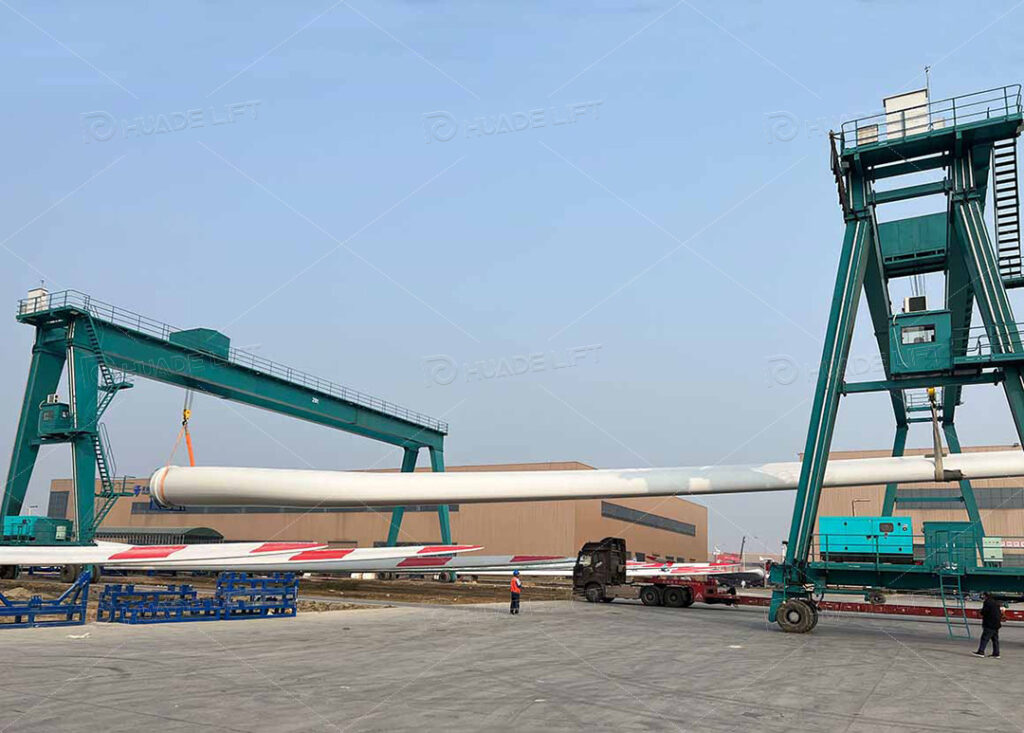
Straddle Carrier used in wind power
Compared to other lifting equipment, RTG cranes demonstrate unique advantages in multiple aspects, making them the preferred choice across numerous industries.
Why Choose Rubber Tyred Gantry Cranes Over Other Lifting Equipment
Infrastructure Cost Advantages
RTG cranes operate on rubber tires, eliminating the need for costly track installations compared to rail-mounted or gantry cranes. This feature enables businesses to significantly reduce infrastructure investment costs during the initial equipment installation phase, enhancing capital utilization efficiency.
Superior Space Adaptability and Maneuverability
With multi-directional mobility, RTG cranes operate efficiently in confined and irregular workspaces. Their maneuverability significantly outperforms other lifting equipment in complex environments, better meeting diverse operational demands.
Optimized Energy and Operational Costs
RTG cranes offer electric or hybrid drive options, effectively reducing fuel consumption. This not only significantly lowers daily operational expenses but also aligns with modern environmental standards, supporting enterprises in achieving green, low-carbon development.
High Scalability and Customization Capabilities
Enterprises can flexibly equip RTG cranes with automated control systems, intelligent safety protection systems, and real-time monitoring systems based on actual operational needs. This high scalability and customization enables seamless adaptation to diverse industry requirements, providing flexible and reliable equipment support for long-term business growth.
Key Considerations When Selecting Rubber Tyred Gantry Cranes
Assess Load Requirements
When selecting an RTG crane, accurately evaluate load demands and specification compatibility. Determine the maximum weight of materials or equipment while reserving load capacity based on business growth plans. Ensure parameters like lifting capacity and operating radius align with operational needs and project scope to avoid efficiency losses and cost overruns.
Environmental Factors
The operating environment significantly impacts RTG crane performance and lifespan, necessitating careful consideration of environmental factors during selection. Weather conditions—including wind, rainfall, and temperature fluctuations—must be evaluated to choose a suitable model. Site conditions such as rugged terrain and confined spaces require attention to ensure stable and reliable crane operation.
Evaluate Budget Constraints
Budget is a critical consideration for enterprise selection. When purchasing RTG cranes, comprehensively analyze costs including initial procurement, installation, and subsequent maintenance, comparing the cost-effectiveness of different models. Simultaneously, focus on total lifecycle costs encompassing maintenance, repairs, and energy consumption to maximize long-term economic benefits.
Customization Options
Operational requirements vary across industries. When selecting RTG cranes, prioritize customized services. Equip specialized lifting attachments or safety devices tailored to specific operational demands. Explore custom features like remote monitoring, intelligent safety systems, and ergonomic controls to enhance performance and efficiency. Only by comprehensively evaluating requirements, planning, and budget can enterprises select suitable equipment, laying a robust hardware foundation for production operations.
Customized Options for Different Rubber Tyred Gantry Applications
Structural Design Customization
RTG cranes support customized structural designs, allowing adjustments to span, lifting height, and frame type to fit specific operational spaces. Lifting capacity is tailored to material characteristics, ensuring safe and efficient operations.
Power System Selection
Offering diesel, hybrid, and pure electric power options, enterprises can flexibly choose based on environmental, ecological, and energy conditions. Select models feature energy recovery systems to reduce consumption and emissions.
Steering and Mobility Modes
Supports multi-directional, crab steering, and pivot systems for diverse scenarios. Manufacturers can optimize mobility for confined or complex sites, enhancing operational flexibility.
Control and Automation Systems
Features manual, semi-automatic, and fully automatic operation modes to match diverse workflows. Integrates anti-sway systems, GPS positioning, and remote monitoring for enhanced precision and equipment management efficiency.
Lifting Attachments and Rigging
Equipped with multiple customizable lifting attachments designed for specific material properties to ensure stable hoisting. Select models incorporate quick-change systems to boost multi-material handling efficiency.
Environmental Protection and Safety Features
Features corrosion-resistant and other specialized designs for harsh environments. Safety includes radar, monitoring, and overload protection systems for real-time alerts and operational security.
Industry-Specific Adaptation
Customized for diverse sectors:
Precast concrete industry: Large-span, high-precision control
Steel industry: Heat-resistant systems
Wind power industry: Long-component handling
Modular construction: Enhanced mobility and stacking capabilities
Maintenance Best Practices for Multi-Industry Rubber Tyred Gantry Use
To ensure continuous reliable operation and safe working conditions for RTG cranes, maintenance inspections are critical. The following bullet points outline professional, clear maintenance essentials focusing on core components and overall structure:
Tire System Maintenance
– Air Pressure Monitoring: Regularly check tire pressure to ensure compliance with manufacturer-specified standards, preventing stability issues caused by abnormal pressure.
Wear Inspection: Examine tire surface wear, including tread depth and uniformity. Replace tires exceeding wear limits promptly to prevent slippage and blowout risks.
Damage Inspection: Thoroughly examine tires for cuts, bulges, punctures, or other damage. Repair or replace affected tires immediately to prevent escalating issues.
Hydraulic System Maintenance
Leak Inspection: Conduct regular inspections of hydraulic lines, fittings, and seals, focusing on detecting hydraulic fluid leaks to ensure system integrity.
Fluid Management: Replace hydraulic fluid and filters according to equipment manuals to maintain fluid cleanliness and lubrication properties, preventing system failures caused by contaminants.
Component Inspection: Check hydraulic hoses for aging, cracking, and loose fittings. Replace or secure hoses and fittings posing safety hazards promptly.
Electrical and Control System Maintenance
Wiring Inspection: Verify secure electrical connections, identify loose, oxidized, or faulty contacts to ensure stable power transmission.
Control Component Testing: Test control panels, switches, and sensors for responsive operation, precise control, and absence of sticking or malfunction.
Safety System Testing: Periodically test emergency stop systems to validate rapid power disconnection during emergencies, safeguarding personnel and equipment.
Other Critical Maintenance Items
Bolts and Clamps: Inspect and tighten bolts, nuts, and clamps throughout the equipment to prevent accidents caused by vibration-induced loosening or detachment.
Gantry Structure: Inspect the gantry steel structure for corrosion, deformation, and fatigue cracks. Promptly apply anti-corrosion treatment and perform structural repairs or reinforcement.
Moving Component Lubrication: Apply grease to moving parts such as bearings, pulleys, and pins at specified intervals to reduce friction wear and extend component lifespan.
Through systematic and professional maintenance inspection procedures, RTG crane performance stability is effectively ensured, providing reliable support for material handling operations across multiple industries.
Conclusion
With its outstanding performance, the Rubber-Tired Gantry Crane (RTG) has become an ideal choice for material handling across multiple industries. Its exceptional flexibility enables adaptation to diverse complex operating environments, while its efficient operational capabilities provide robust support for enhancing corporate productivity. Its eco-friendly and energy-saving characteristics align with contemporary sustainable development requirements, and its adaptability meets the varied demands of different industries.
For enterprises, gaining a thorough understanding of RTG cranes’ advantages, application scenarios, and customization options empowers them to select equipment best suited to their specific requirements. By strategically configuring RTG cranes, businesses can significantly enhance material handling efficiency, reduce operational costs, and promote green, sustainable development while ensuring operational safety. This approach enables enterprises to gain a competitive edge in the fiercely competitive market.
