
Introduction
In scenarios where logistics and industrial projects run concurrently, equipment allocation efficiency directly impacts project timelines. Due to their mobility, rubber-tired gantry cranes (RTGs) are often considered shared assets. But can a single RTG effectively handle operations across multiple projects? This article analyzes its core characteristics, interprets key deployment points for multi-site operations, outlines efficiency strategies and applicable scenarios, and clarifies equipment configuration logic.
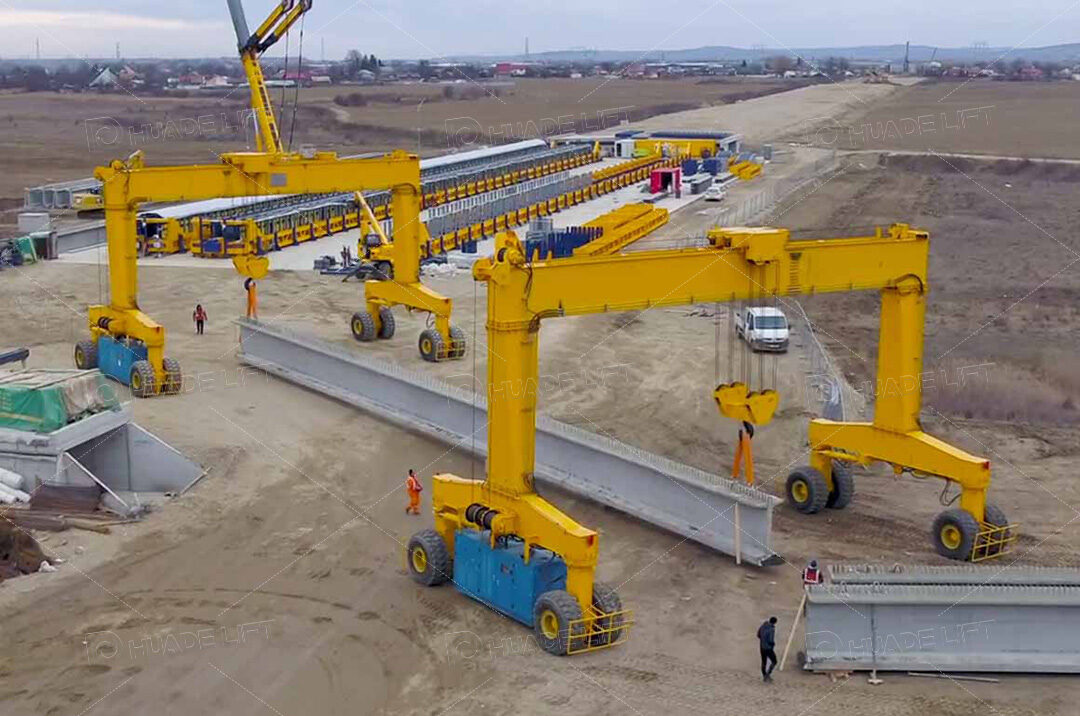
Rubber-tyred gantry cranes transporting long precast concrete beams at an outdoor construction site
Basics of Rubber Tyred Gantry Cranes
Core Structure and Components
The flexibility of RTG cranes stems from their scientifically designed structure, where core components collectively enable efficient lifting and mobility:
Main Girder: As the horizontal load-bearing structure, it determines span and stability, serving as the core for handling heavy loads;
Trolley and Hoisting Mechanism: Moves along the main girder, responsible for load lifting and lateral transport; hoisting capacity must match the heaviest load;
Rubber-Tired Outriggers: Heavy-duty tires handle industrial-grade loads, freeing the crane from rail constraints and granting high mobility;
Operator Cab: Elevated design provides panoramic visibility; some models support remote operation;
Control system: Features manual, semi-automatic, and fully automatic modes to adapt to diverse operational scenarios.
These components work in concert, enabling RTG cranes to maintain high lifting capacity while offering far greater site adaptability than rail-mounted cranes.
Unique Advantages Over Other Cranes
Compared to fixed or rail-mounted cranes, RTG cranes inherently suit multiple project scenarios through four core advantages:
High Mobility: Requires no tracks or concrete foundations, enabling rapid relocation on paved surfaces
Exceptional Flexibility: Easily adapts to changing site layouts and adjusts operational ranges according to project demands
High Lifting Capacity: Capable of handling heavy loads such as large containers and industrial components
Rapid Deployment: Can be operational with minimal site preparation, reducing equipment downtime
These characteristics give RTG cranes a distinct advantage in multi-project rotation operations.
Typical Application Scenarios
Within single projects, RTG cranes have proven effective across multiple domains: installing heavy components in bridge construction, handling precast elements in concrete projects, transferring raw materials and finished goods in steel industries, lifting modular building components, and processing cargo at transportation hubs. The operational logic in these scenarios provides a practical foundation for cross-project reuse.
Key Mobility Features of Rubber Tyred Gantry Cranes
Rubber Tire System
RTG cranes replace fixed rails with large rubber tires, enabling free movement between different work zones and flexible positioning in confined spaces. The high load-bearing capacity of heavy-duty tires ensures stable movement under industrial-grade loads, providing the foundation for cross-site operations.
Multi-Steering Modes
Equipped with multiple steering modes: crab steering enables diagonal traversing; pivot steering facilitates precise positioning; lateral steering accommodates sideways movement in confined areas. These modes empower the crane to navigate complex environments with agility and execute tasks with accuracy.
Compact Design Options
Manufacturers offer compact and low-profile models that optimize chassis dimensions while maintaining lifting capacity. These designs enable direct deployment in space-constrained environments like workshops and warehouses without extensive site modifications, expanding possibilities for multi-site reuse.
Precision Control and Self-Sufficiency
RTG cranes feature variable-speed drives and advanced braking systems, enabling precise operation via joystick or remote control to minimize collision risks. Remote operation enhances visibility and safety. Their diesel, electric, or hybrid power systems eliminate reliance on external power sources, ensuring stable operation in areas with weak electrical infrastructure and boosting cross-site deployment flexibility.
Factors Affecting Multi-Site Deployment Cranes
Achieving multi-site operation for RTG cranes involves more than simple equipment relocation. It requires comprehensive consideration of transportation, infrastructure, timing, personnel, and regulatory factors. Oversights in any of these areas can compromise deployment effectiveness.
Transportation Logistics
The primary concern for cross-site deployment is crane transportation safety. RTG cranes are large and heavy, necessitating specialized transport vehicles and secure fastening solutions to prevent damage during transit. Route planning is equally critical, requiring avoidance of complex road conditions or restricted access points to ensure smooth transportation and minimize delays.
Site Infrastructure
Ground conditions, spatial dimensions, and access routes vary significantly across project sites, directly impacting RTG crane operational efficiency. The ground must possess sufficient load-bearing capacity to prevent settlement during crane operations. Site space must accommodate the crane’s turning radius and operational requirements. Access routes must be unobstructed, free of obstacles that could impede equipment movement. Pre-assessing site infrastructure is essential for ensuring rapid equipment deployment.
Installation and Dismantling Duration
When transferring RTG cranes between sites, installation and dismantling processes generate downtime—a critical factor affecting multi-project efficiency. Dismantling must follow standardized procedures to prevent component damage; installation requires precise calibration to ensure stable performance. Optimizing these processes and reducing turnaround times directly impacts overall project schedules.
Operator Deployment and Training
Operator skill levels and availability form the core human resource foundation for multi-site operations. Variations in site conditions and load types necessitate operators’ familiarity with site-specific operational protocols. Additionally, when rotating a single crane across sites, ensure operator schedules align with project timelines to prevent equipment downtime due to staffing shortages. Conducting site-specific training for each location’s operational characteristics significantly enhances efficiency and safety.
Regulatory Compliance Requirements
Transportation and operations across sites involve multiple regulatory requirements that demand advance preparation. Transportation requires obtaining appropriate permits and adhering to road weight and height restrictions. Operations must comply with local industrial safety standards and secure relevant work permits. Neglecting regulatory requirements may lead to project shutdowns and financial losses for the company.
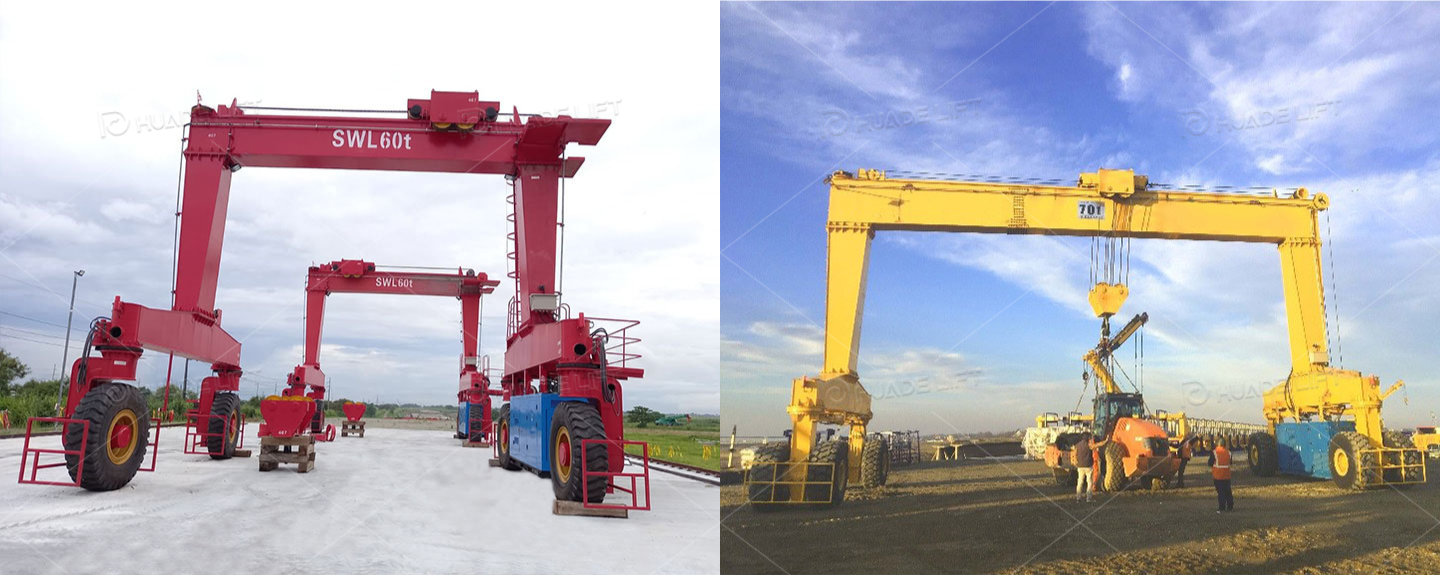
Rubber-tyred gantry cranes of different capacities operating at outdoor construction sites, used for lifting and handling heavy concrete components.
Operational Efficiency Across Multiple Sites
After addressing fundamental multi-site deployment issues, operational efficiency must be improved through scientific scheduling, maintenance, and management practices to maximize resource utilization.
Scientific Scheduling
Optimal scheduling is central to improving utilization rates. Develop detailed equipment rotation plans based on project-specific operational demands and timelines to prevent idle equipment at any site while ensuring critical project milestones remain unaffected. Implement a “peak-shifting operation” model, prioritizing urgent projects before progressing to routine tasks to maintain continuous high-efficiency equipment operation.
Maintenance Planning
Equipment failures during multi-site operations can disrupt multiple projects, making maintenance planning critical. Establish a regular maintenance mechanism to proactively replace wear-prone components and identify potential faults based on usage duration and operational intensity. Conduct basic maintenance and debugging during site transition gaps to prevent unexpected downtime during operations and ensure continuity.
Digital Tools
Implementing management software and digital monitoring tools significantly enhances multi-site operational efficiency. Software enables real-time tracking of equipment location, operational status, and remaining power/fuel levels, providing precise operational data. Digital monitoring tools deliver instant feedback on component conditions and issue early warnings for potential failures. These tools empower managers to remotely coordinate schedules, adjust work plans promptly, and optimize resource allocation.
Safety and Compliance Management
Safety and compliance during site transitions form the foundation for operational efficiency. Pre-transportation checks must confirm equipment securing and clarify transportation safety responsibilities. Installation procedures require strict adherence to operational protocols and safety briefings. Site compliance verification before operations ensures equipment meets local safety standards. Standardizing procedures across all stages minimizes safety incidents and compliance risks, preventing project delays caused by unforeseen circumstances.
Applications for Multi-Site RTG Deployment
The multi-site reuse of a single RTG crane is particularly prominent in specific industries and project types, where operational characteristics align closely with the crane’s advantages.
Precast Concrete Production
Precast concrete component manufacturing typically involves multiple production and construction sites, with components transported from factories to project sites for installation. RTG cranes handle component lifting and stacking at factories before transferring them to various construction sites for installation. Their mobility and lifting capacity adapt to diverse site-specific component handling requirements.
Modular Construction Projects
In modular construction, components are prefabricated at production bases before being transported to multiple project sites for assembly. RTG cranes handle module lifting and quality inspection at production facilities, then facilitate installation at construction sites. Their compact design and multi-directional maneuverability enable efficient module assembly within confined workspace constraints.
Outdoor Manufacturing Sites
Outdoor manufacturing facilities—such as steel fabrication plants and equipment assembly plants—frequently handle large component transportation and assembly. These sites often feature multiple operational zones or require cross-site component transfers. The self-sufficient nature and flexible mobility of RTG cranes enable efficient operation in outdoor environments without fixed infrastructure, accommodating multi-zone rotation requirements.
Steel Beam and Heavy Component Handling
In projects like bridge construction and factory building erection, handling and installing heavy components such as steel beams and columns is a core operation. These projects may involve multiple construction segments or sites. RTG cranes’ high lifting capacity and precise control enable safe and efficient component hoisting. When deployed across sites, they require no complex infrastructure and can rapidly switch between operational scenarios.
Short-Cycle Industrial Projects
For industrial projects like equipment maintenance or temporary production line setup—characterized by short cycles and flexible locations—a single RTG crane can rotate between multiple short-term projects. Its rapid deployment and minimal site requirements enable swift adaptation to temporary project needs, preventing long-term equipment idling and boosting utilization rates.
Challenges and Risks
Equipment and Transportation Risks
Mechanical failure is a primary risk. Extended cross-site operation accelerates component wear. Without timely maintenance, failures during operation may cause project shutdowns. Transportation risks include unexpected road conditions or vehicle breakdowns, potentially delaying equipment arrival and disrupting project schedules.
Project Schedule Conflicts
When critical milestones overlap across multiple projects, a single RTG crane may struggle to meet all demands simultaneously, potentially delaying some projects. Frequent schedule adjustments further complicate equipment scheduling, leading to idle equipment or operational bottlenecks that reduce overall efficiency.
Resource Constraints
Beyond equipment limitations, constraints on labor, spare parts, and other resources also impact multi-site operations. Operators frequently commuting between sites risk fatigue-induced errors, increasing safety hazards. Delayed spare parts supply may prolong downtime if equipment malfunctions due to unavailable replacement components.
End-to-End Safety Risks
Safety hazards exist throughout the entire lifecycle of RTG cranes—from transportation and installation to operation. Improper equipment securing during transport risks component detachment; inadequate commissioning during installation may cause equipment overturn during operation; and operator errors or sudden site condition changes during operation can lead to accidents like load drops.
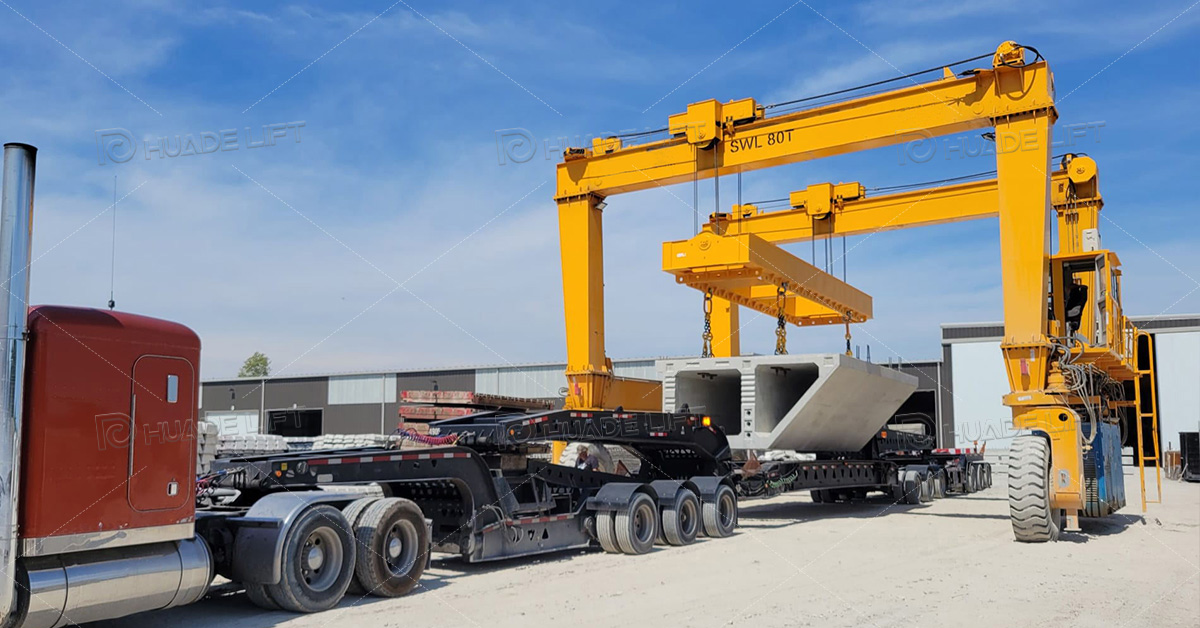
Rubber Tyred Gantry Crane (SWL 80T) lifting concrete structure at industrial site.
Strategies for Efficient Multi-Site Operation of RTG Cranes
To address the challenges and risks of multi-site operations, targeted strategies must be developed to enhance operational stability through scientific planning and technological empowerment.
Project Schedule Coordination
Pre-emptively map all project timelines and operational requirements, establishing detailed equipment utilization plans that specify duration and priority for each site. For potential schedule conflicts, proactively coordinate adjustments with project stakeholders or allocate buffer time to prevent scheduling chaos from unexpected demands. Simultaneously, establish a progress tracking mechanism to update project statuses in real-time and optimize scheduling plans promptly.
Application of Modular Design
Selecting RTG cranes with modular design significantly reduces installation and dismantling time. Modular components facilitate transportation and assembly, allowing individual parts to be disassembled, transported, and rapidly reassembled on-site with minimal downtime. This design also simplifies maintenance by enabling replacement of faulty components without requiring full system shutdown.
Equipment Coordination
A single RTG crane can coordinate with other equipment to enhance overall efficiency. For instance, in precast concrete handling, forklifts can transport components within the crane’s operating radius before the RTG completes the lift. In modular construction projects, straddle carriers facilitate short-distance component transport, minimizing unnecessary RTG movement. This complementary equipment maximizes the core lifting value of each RTG crane.
Deep Application of Digital Tools
Beyond basic monitoring and scheduling software, technologies like IoT and big data can be integrated to achieve end-to-end digital control. Sensors collect real-time equipment operation data to analyze wear patterns and optimize maintenance schedules. Big data simulations evaluate different scheduling scenarios to select optimal routes. Remote control technology enables operators to manage multiple sites from a central control room without moving with equipment, enhancing labor efficiency.
How to Evaluate Whether Your Projects Need One or Multiple Rubber Tyred Gantrys
Project managers must conduct a comprehensive assessment based on operational requirements across multiple dimensions to determine whether a single RTG crane suffices or additional units are needed.
Workload and Usage Duration
Evaluate the total workload of each project against the daily capacity of a single crane. If the total workload falls within the capacity of a single unit and usage duration is reasonably distributed, a single crane may suffice. If the workload is substantial, making it difficult for a single unit to complete tasks within the specified timeframe, or if 24-hour continuous operation is required, additional equipment should be considered.
Project Timelines
If multiple projects have non-overlapping timelines or can be scheduled to operate during off-peak hours, a single unit may suffice. However, if critical phases of multiple projects overlap significantly and schedules cannot be adjusted, a single unit will struggle to handle the demands, necessitating multiple cranes.
Lifting Frequency
If lifting operations across projects occur infrequently, a single unit can flexibly switch between sites to meet dispersed demands. If multiple projects require extremely high lifting frequency within a specific timeframe, a single unit’s response speed may be insufficient, potentially causing project delays. In such cases, additional equipment is necessary.
Future Expansion Plans
If the company anticipates new projects or operational scaling in the near term, equipment capacity must be reserved in advance. If the total demand post-expansion remains within the capacity of a single unit, a single crane may suffice temporarily. However, if the workload increases significantly after expansion, planning for multiple units is recommended to avoid future development being hindered by equipment shortages.
Summary
A single RTG crane can efficiently serve multiple project sites, provided it is backed by scientific planning and meticulous management. Its flexible mobility, robust lifting capacity, and minimal site requirements make it an ideal choice for multi-site operations. However, maximizing its value requires balancing multiple factors including transportation, maintenance, scheduling, and compliance.
If you’re facing equipment allocation challenges across multiple projects or wish to explore RTG crane selection and deployment strategies, consider conducting a comprehensive needs assessment tailored to your project characteristics. This approach ensures more precise equipment configuration and significantly enhances operational efficiency.
