
In the logistics and transportation sector, rubber-tired gantry cranes (RTG cranes) are indispensable heavy-duty equipment. Their lifting capacity, as a core performance metric, directly influences both the equipment’s applicable scenarios and procurement costs. For logistics operators and industrial purchasers, understanding the relationship between lifting capacity and price is key to balancing budget planning with equipment performance. It is also a crucial prerequisite for avoiding wasted investment or insufficient capacity.
What is a Rubber Tyred Gantry Crane
As industrial equipment for heavy cargo handling, rubber-tired gantry cranes (RTG cranes) find extensive application across multiple sectors. Comprising a chassis, gantry crane, and mobile platform, these components work in concert to ensure stable and efficient operations. Their flexible steering system enables omnidirectional movement, making them highly maneuverable in confined spaces. Winch and rope/chain systems ensure safe lifting of heavy loads. The telescopic axle design facilitates storage, while the ergonomic operator cab and maintenance-friendly structure significantly enhance usability and equipment longevity. Lifting capacity, as a core parameter, directly determines their application scenarios.
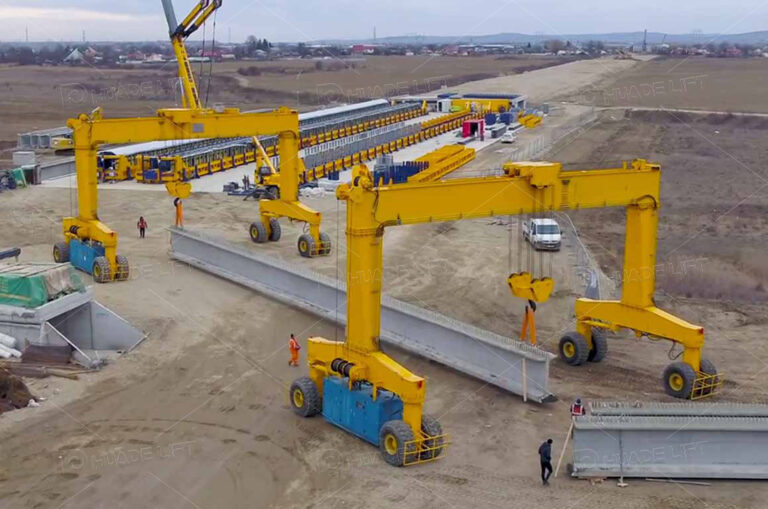
Rubber Tyred Gantry Crane for sale-Huadelift
Why Understanding Rubber Tyred Gantry Crane Price Matters
Key Investment Decision
As a major capital investment, understanding the price range corresponding to lifting capacity is central to project planning and budget management for logistics operators and industrial buyers, enabling sound investment decisions.
Product Comparison Advantage
Understanding the relationship between price and lifting capacity facilitates comparisons across different crane brands and models, enabling selection of products that align performance with budget.
Cost Control Essentials
Recognizing how lifting capacity influences pricing helps identify core cost drivers. This prevents wasteful investments driven by blind pursuit of high capacity or operational limitations caused by insufficient capacity, thereby uncovering potential cost savings.
Impact on Operations and Maintenance
From a long-term operational perspective, the alignment between lifting capacity and price affects the maintenance budget. Equipment with appropriate lifting capacity ensures operational efficiency while reducing repair costs caused by improper loading. This balances short-term investment with long-term operational costs, supporting sustainable business development.
Understanding RTG Crane Lifting Capacity
The lifting capacity of an RTG crane refers to the maximum weight the equipment can safely hoist, serving as a core metric for assessing its load-bearing capability. Different RTG crane models offer a wide range of lifting capacities, accommodating material handling needs from light to heavy cargo. Specially designed equipment can further adapt to more specialized heavy-load scenarios.
Lifting capacity is influenced by multiple factors, including structural design, power systems, and stability. The structure must be sufficiently robust, the power system must provide adequate driving force, and the design must ensure stable lifting operations. It is also closely tied to the duty cycle, as different operational scenarios demand varying lifting capacities and structural designs. Therefore, selection should be based on specific requirements during procurement.
How to Calculate the Required Capacity for Your Rubber Tyred Gantry Crane
Understand Equipment Fundamentals
Before calculating the required lifting capacity for an RTG crane, clarify its characteristics and application scenarios. RTG cranes are rubber-tired gantry cranes that move without rails, offering flexible mobility suitable for cargo handling in logistics centers and industrial warehouses. Their span, lifting capacity, and lifting height are customizable, forming the basis for capacity calculations.
Determine Maximum Static Load Weight
The first step in calculating lifting capacity is to identify the maximum static load weight the equipment must lift—the combined weight of the cargo itself plus packaging, pallets, and other ancillary components. This step requires comprehensive consideration of all potential components lifted with the cargo to ensure weight calculations are complete and avoid underestimating lifting capacity due to omitted accessories.
Incorporating Dynamic Factors
During actual operations, cargo lifting is influenced by various dynamic factors such as wind forces and accelerations/decelerations generated by the equipment. These elements increase the actual weight the equipment must bear. Therefore, dynamic loads must be fully accounted for in load capacity calculations. Applying appropriate safety factors ensures safe operation under complex working conditions.
Account for Cargo Dimensions and Lifting Requirements
Cargo dimensions (length, width, height) directly dictate lifting methods and operational space requirements, necessitating sufficient clearance to prevent collisions. Additionally, the lifting beams, slings, and other tools suited for different cargo sizes will alter the required lifting capacity.
Lifting height is equally critical. Greater vertical lifting height imposes stricter demands on crane stability and power systems. This must be fully accounted for when calculating lifting capacity to ensure reliable hoisting performance at maximum height.
Analyzing Working Radius and Span Requirements
Working radius refers to the horizontal distance from the crane’s center to the load, directly affecting the equipment’s load-bearing capacity. A larger radius increases the moment applied to the equipment, demanding higher structural strength and stability. The lifting capacity must be adjusted accordingly based on actual conditions.
Span refers to the distance between the crane’s outriggers or wheels, affecting overall stability and significantly impacting heavy lifting operations. Wider spans require stronger structural support. This parameter must be incorporated into load capacity calculations to ensure lifting safety.
Assessing Site Conditions and Operational Factors
Ground Conditions: Uneven or sloped ground reduces crane stability, necessitating higher load capacity margins to ensure safe operation.
Obstacle Distribution:
Obstacles within the work area restrict the crane’s operational path and lifting methods, indirectly influencing the selection of lifting capacity.
Wind Conditions:
During outdoor operations, lateral forces generated by varying wind speeds increase the equipment’s load-bearing requirements. Lifting capacity must be scientifically adjusted based on typical wind conditions in the work area to mitigate risks.
Accounting for Duty Cycle and Working Class
The crane’s working class (operational frequency and intensity) directly influences lifting capacity selection. Continuous high-intensity operations require equipment with high structural strength; otherwise, accelerated wear and reduced performance may occur. Therefore, procurement must precisely match the working class to actual operational needs, ensuring long-term stable operation while avoiding excessive wear or investment waste due to improper selection.
Allowing for Future Expansion
When selecting RTG crane lifting capacity, balance current operational needs with future business expansion. Industry growth may increase cargo weights and handling volumes. Allowing moderate lifting capacity redundancy accommodates operational changes, extends equipment lifespan, and prevents secondary purchases due to short-term capacity shortages.
Reasonably reserve expansion space by avoiding blind pursuit of excessive lifting capacity while also not settling for current requirements alone. Integrate corporate development plans and industry trends for comprehensive consideration.
Consult Professional Manufacturers and Technical Experts
Lifting capacity calculations are complex, requiring multidisciplinary knowledge, and experience-based estimates are prone to error. Consulting RTG crane manufacturers and experts allows them to provide scientific recommendations based on standards and specifications, tailored to your requirements, environment, and plans. This helps buyers select the right model and mitigate risks.
How Lifting Capacity Affects RTG Crane Pricing
Structural Strength and Steel Consumption
Lifting capacity is central to RTG crane structural design, directly impacting equipment strength and cost. To handle heavy loads, high-capacity models require thick steel plates, robust frames, and high-strength materials, significantly increasing steel consumption. Simultaneously, all structural components require reinforced designs. The use of complex structures and high-performance materials substantially elevates manufacturing costs, ultimately reflected in the equipment price.

Hoisting Mechanism and Motor Specifications
As the core component enabling cargo lifting in RTG cranes, the hoisting mechanism’s performance is directly determined by the lifting capacity. Higher lifting capacities demand greater hoisting mechanism power, necessitating corresponding upgrades to components like winches and gearboxes. High-power hoisting mechanisms impose stringent requirements on manufacturing processes and component quality to ensure stable operation under heavy-load conditions, resulting in significantly increased costs.
The drive motor power must be matched to the lifting capacity. High-capacity cranes require high-power motors, which must be designed and manufactured to balance power output, heat dissipation, and durability to withstand prolonged heavy-load operations. This leads to a substantial increase in motor costs as lifting capacity rises.
Lifting Equipment Types and Cargo Handling Components
As the direct contact point between the RTG crane and cargo, lifting equipment must be precisely matched to the lifting capacity in terms of design and strength. High-capacity cranes typically employ lifting equipment made from high-strength alloy materials. Structural design prioritizes load-bearing capacity and stability, with reinforced connection and locking mechanisms.
Additionally, cargo-handling components like wire ropes and pulley blocks must be upgraded according to lifting capacity specifications. While high-strength wire ropes and wear-resistant pulleys enhance equipment performance, they also increase manufacturing costs, ultimately reflected in the overall equipment price.
Wheel Load and Bogie System Requirements
The wheel load and bogie system of RTG cranes bear the combined weight of the equipment and cargo. Higher lifting capacities result in greater wheel load stress. To ensure stable and safe operation, higher-capacity models require sturdier bogies, heavy-duty wheels and tires, and reinforced braking systems.
Bogie design becomes more complex with increased lifting capacity, necessitating balanced considerations of wheel load distribution, steering agility, and braking reliability. This not only increases design and manufacturing complexity but also drives up component costs, significantly impacting equipment pricing.
Electrical System and Power Supply Upgrades
The specifications of RTG crane electrical and power supply systems are intrinsically linked to lifting capacity. Higher lifting demands necessitate more complex electrical control systems that precisely manage high-power motors for smooth operation while enhancing protections against overloads and short circuits. Concurrently, power supply systems require upgrades to deliver sufficient electricity. The increased specifications of electrical components and the advancement of intelligent control systems collectively elevate manufacturing costs, ultimately influencing equipment pricing.
Price Differences Based on Lifting Capacity
Entry-Level RTG Cranes
Suitable for small to medium-sized warehouses and general cargo handling, primarily handling lightweight standard goods with relatively low operational intensity.
Reasons for Price Advantage: Simple structural design, lightweight overall construction, and reduced material usage.
Hydraulic and electrical systems are relatively simplified, resulting in lower manufacturing costs.
Target Buyers: Suitable for budget-conscious purchasers with relatively simple operational needs. Offers high cost-effectiveness, meeting basic requirements while controlling investment costs.
Core value lies in practical operational performance and economical purchase price, ideal for small-to-medium enterprises without heavy-load requirements.
Mid-Range RTG Cranes
As the mainstay model, medium-capacity RTG cranes serve comprehensive logistics parks, handling both light and heavy cargo with strong versatility. To meet diverse demands, structural and performance enhancements have been implemented, resulting in a higher price point.
Structural Upgrades: Utilizes higher-strength steel to reinforce structural load-bearing capacity, accommodating varied operational requirements.
Performance Enhancements: Equipped with high-power motors and advanced load control systems to improve operational stability and efficiency.
Price Positioning: Priced above entry-level equipment due to structural reinforcement and performance upgrades, offering an ideal balance of capability and cost.
Heavy-Duty RTG Crane
Designed for handling bulky cargo and demanding operations, this high-capacity RTG crane excels in industrial heavy equipment transportation. Its premium pricing stems from complex engineering and high-end specifications:
Structural Reinforcement: The chassis and mast undergo specialized reinforcement using thick-walled steel and fortified structures to ensure stability under heavy loads.
Advanced Anti-Sway Technology: Equipped with advanced anti-sway technology to effectively reduce sway during cargo lifting, enhancing operational safety and precision.
Automated Safety Systems: Incorporates automated safety systems to further ensure reliability during heavy-load operations.
These high-end configurations and precision engineering significantly increase manufacturing costs, resulting in a correspondingly high price point.
Ultra-Heavy-Duty RTG Crane
Equipment Attributes: Ultra-high-capacity RTG cranes are customized solutions for specialized industrial applications, handling oversized containers, heavy machinery, and other exceptional cargo.
Price Influencing Factors
Customized Design: Requires tailored engineering for specific operational environments, including structural optimization and bespoke power/control systems, involving substantial R&D investment.
Technology Integration: Incorporates cutting-edge technologies like fully automated hoisting and real-time load monitoring to ensure safe handling of super-heavy cargo.
Value Proposition: Pricing reflects not only material and manufacturing costs but also the value of R&D design and technology integration. Ideal for large enterprises and specialized operations with unique heavy-load requirements.
Other Factors Affecting Price Variation
Span Width and Structural Requirements
The span of an RTG crane—the distance between its running rails—directly impacts its operational range and structural design. While a larger span expands the coverage area, it demands higher structural strength. Reinforced components like girders and outriggers, along with thicker materials and optimized mechanical structures, increase manufacturing costs.
When procuring, span selection should align with site requirements rather than pursuing excessive size. Balancing span with lifting capacity ensures operational needs are met while reducing structural costs, achieving an optimal performance-to-price ratio.
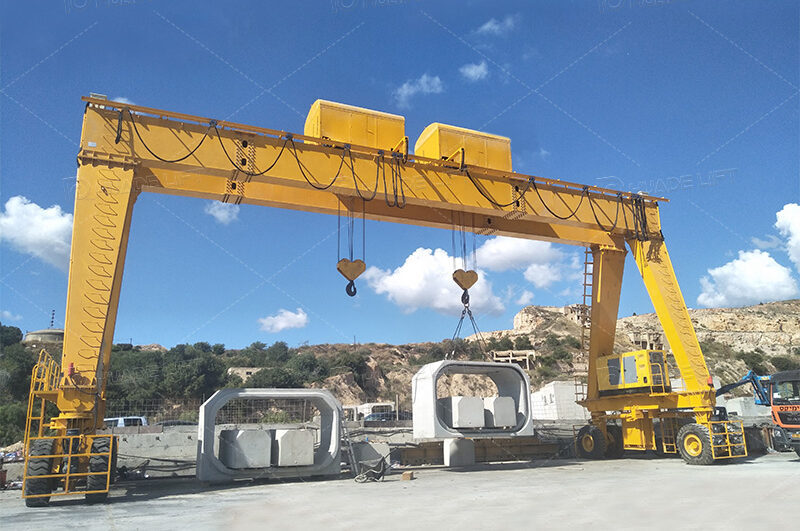
Rubber Tyred Gantry Crane is used for transporting prefabricated modules
Power System Selection
The power system is the core of an RTG crane, with its type directly impacting equipment cost and applicability:
Diesel-Electric Hybrid: Low initial procurement cost with mature technology, suitable for sites lacking stable power supply, but high long-term operating expenses.
Fully Electric: Environmentally friendly and efficient with low energy consumption and maintenance costs, but requires significant upfront investment. Ideal for sites with stable power supply and stringent environmental requirements.
Hybrid: Mid-range cost offering energy savings and carbon reduction without requiring full charging infrastructure, making it an optimal transitional solution.
Control System Configuration
The control system directly determines RTG crane operation and efficiency, with significant price variations across configurations.
Manual Control System: As the basic configuration, it relies on manual operation, has low manufacturing costs, and is suitable for simple tasks with low precision requirements. However, operational efficiency is heavily influenced by operator skill, carries risks of human error, and incurs higher long-term labor costs.
Automated Control System: The mainstream development, encompassing semi-automatic and fully automatic modes. Integrated with technologies like GPS positioning, it enables precise automated cargo handling, boosting efficiency while reducing reliance on labor and minimizing errors, thereby enhancing safety. Although the initial purchase price is higher due to R&D and integration costs, long-term savings in labor costs and efficiency gains yield substantial benefits, making it suitable for large-scale, high-precision, and high-efficiency operations.
Customized Features and Modification Requirements
Many purchasers request customized modifications to RTG cranes for specific operational needs, which is a key factor affecting equipment pricing. Operating in extreme environments requires specialized modifications (e.g., cold insulation, heat dissipation for high temperatures, wind reinforcement), where the use of special materials and processes directly increases costs. Handling unique cargo necessitates R&D investments in custom slings and specialized clamps, significantly raising prices. Additionally, customization for improved maintenance accessibility (e.g., adding access walkways, optimizing component layout) also drives up costs, ultimately reflected in the equipment’s final price.
Cost-Saving Tips When Purchasing an RTG Crane
Precise Configuration Parameter Matching
When procuring RTG cranes, accurately determine lifting capacity and span based on actual operational requirements to avoid redundant specifications. Thoroughly consider the weight range of routinely handled cargo and site spatial constraints for appropriate model selection. This approach reduces initial procurement costs while minimizing subsequent operational energy consumption and maintenance expenses, preventing energy waste and accelerated component wear caused by over-specified equipment operating under low loads.
Partner with Reliable Suppliers
Collaborating with reputable, technologically mature manufacturers is key to cost control. Such suppliers leverage robust production and quality control systems to deliver stable, durable equipment, significantly reducing long-term maintenance expenses. Their comprehensive after-sales service ensures timely technical support, spare parts supply, and repairs, minimizing downtime losses. Additionally, transparent and fair pricing models mitigate procurement risks stemming from information asymmetry.
Prioritize Energy-Efficient and Eco-Friendly Power Systems
From a long-term operational perspective, energy-efficient and environmentally friendly power systems offer high cost-effectiveness. While fully electric or hybrid RTG cranes have higher initial procurement costs, their electricity consumption is cheaper than diesel, and maintenance is more economical, allowing for long-term cost recovery. Under increasingly stringent environmental policies, such equipment can also benefit from policy incentives, further reducing costs. Opt for fully electric systems for stable power supply—economical and eco-friendly. When power supply is inconvenient, hybrid systems can balance cost and environmental considerations.
Prioritize Standard Configurations
Unless specific operational requirements exist, opt for manufacturers’ standard models. These feature mature production processes, lower costs, competitive pricing, and ample spare parts availability, ensuring economical and efficient maintenance and replacements. When custom features are needed, precisely identify core requirements, eliminate unnecessary modifications, and clearly distinguish between “essential” and “additional” needs to effectively control costs.
Conclusion
The price of RTG cranes exhibits a clear positive correlation with lifting capacity, while factors such as span and power system configurations also impact overall costs. When selecting a model, balance performance and budget by considering cargo weight, operational frequency, and future plans to avoid efficiency losses or financial waste from over- or under-speccing. Consult professional manufacturers to obtain precise configurations and quotations based on actual working conditions, enabling the development of a more cost-effective procurement strategy.
