
Understanding Rubber Tyred Gantry Cranes
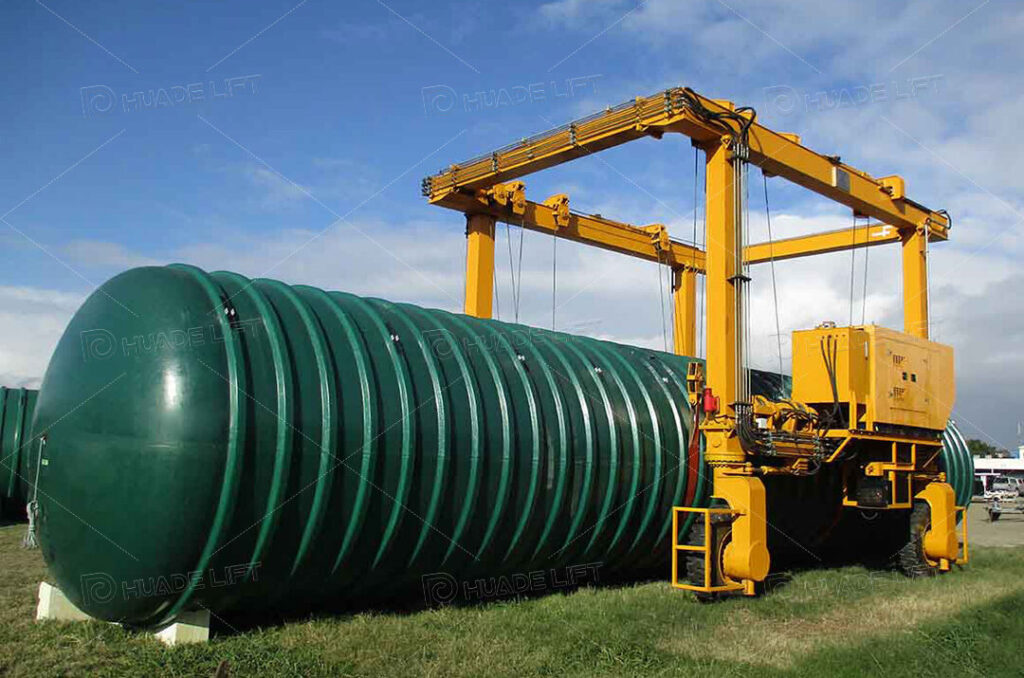
In industrial and logistics sectors, efficient material handling equipment is paramount, and the rubber tyred gantry gantry crane stands out as a top performer. As flexible mobile lifting machinery, they have traditionally been used for stacking and transferring containers in ports. Today, they also handle the transportation of heavy materials, large machinery, and cross-site logistics in scenarios where conventional cranes struggle to operate. Powered by diverse energy sources, equipped with telescopic lifting attachments, advanced control systems, and rubber tires, they can operate flexibly across various terrains.
Key Steps in Installing an Rubber Tyred Gantry Crane
Site Survey and Preparation
Before installing a rubber tyred gantry crane, conducting a thorough site survey and preparation is fundamental to ensuring a smooth installation process. Professionals must perform a detailed site assessment, much like a doctor conducting a comprehensive examination of a patient, to fully understand all site conditions.
During the survey, precise measurements of the site dimensions must be taken to confirm it can accommodate the overall size of the rubber tyred gantry crane and its operational range during work. This includes the crane’s length, width, height, and maximum swing radius during operation, ensuring the rubber tyred gantry crane will not collide with surrounding structures or obstacles during operation.
Site levelness is equally critical. Uneven ground may cause instability during crane operation, such as swaying or tilting, compromising both operational safety and equipment longevity. If the ground is uneven, leveling measures are required. This may involve using equipment like bulldozers or graders to grade the surface. Where necessary, materials such as gravel or concrete should be laid to reinforce the ground, ensuring it can bear the crane’s weight.
Simultaneously, clearly marking the crane’s travel path is essential. This allows operators to understand the direction of travel during operations, preventing operational errors caused by unclear paths. Additionally, it is necessary to ensure that utilities such as water, electricity, and communications are properly connected to provide the necessary conditions for crane operation and operator work.
The duration required to complete these tasks varies significantly depending on the site’s complexity and existing conditions. If site conditions are favorable and all work progresses smoothly, the time required will be relatively short. However, if the site presents numerous challenges—such as poor ground conditions or complex underground utilities—additional time will be needed for resolution.
Component Unloading and Inspection
Crane components are typically transported to the installation site by truck or ship. Upon arrival, auxiliary cranes or forklifts must carefully unload them from the transport vehicles. This process demands the same meticulous care as handling fragile items from a delivery truck—absolutely no carelessness is permitted.
Following unloading, each component undergoes a meticulous inspection. This includes checking for transport-related damage—such as surface scratches, dents, or cracks—and verifying that connections remain secure. Specifications are cross-referenced against design requirements, ensuring correct part dimensions, models, and materials to prevent shipping errors. Additionally, quality compliance with relevant standards is assessed to detect any instances of substandard workmanship. Only after all components pass rigorous inspection can the installation phase proceed. Failure to do so may introduce serious safety hazards during subsequent installation and operation. The duration of the enrubber tyred gantry unloading and inspection process must be flexibly determined based on the quantity and volume of components.
Structural Assembly
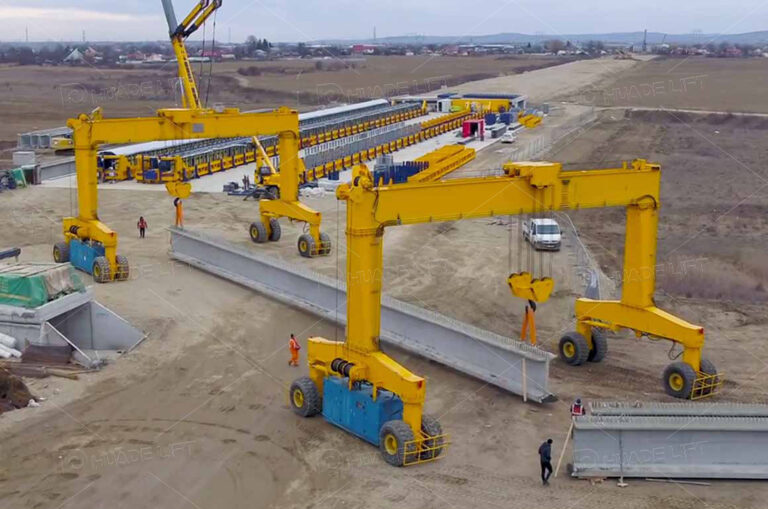
The primary structures of a rubber tyred gantry crane, such as the legs, main beams, and trolley rails, require meticulous on-site assembly. This process resembles constructing a massive block castle, but each block is exceptionally large and heavy.
Assembly typically involves mobile cranes, heavy-duty jacks, and specialized rigging equipment. Mobile cranes function like strongmen, precisely hoisting components to designated positions; heavy-duty jacks adjust component height and leveling for precise alignment; specialized rigging equipment securely fastens and anchors parts, ensuring safety during lifting and assembly.
Throughout assembly, meticulous attention is required to ensure perfect alignment of each component—like a puzzle where every piece must fit seamlessly. Simultaneously, bolt tightening and weld integrity must be verified, as these directly impact the crane’s overall stability. If bolts are not fully tightened or welds are weak, the crane may experience dangerous structural loosening or disassembly during operation. The time required for structural assembly is closely related to the size of the equipment. Large rubber tyred gantry cranes, with their massive components and complex alignment, demand more time; smaller rubber tyred gantry cranes have relatively simpler assembly processes and consequently require less time.
Hoisting System and Lifting Gear Installation
The hoisting system and lifting gear are critical components of rubber tyred gantry cranes, with their installation quality directly impacting the crane’s operational capability and safety. The hoisting system includes components like the hoisting motor and gearbox, which function as the crane’s “muscle,” providing the power for lifting operations. During installation, precise positioning of the hoisting motor is essential. Its connection to the gearbox must be secure and reliable, with belts or chains tensioned appropriately. This ensures efficient power transmission for smooth and stable hoisting operations.
The lifting device directly grips the cargo. Installation must guarantee a robust connection to the hoisting system while allowing flexible extension, retraction, and rotation. This adaptability accommodates the lifting requirements of cargo varying in size and shape. Precise installation is critical for stable equipment operation. Just as improperly mounted car tires cause unstable driving, incorrect installation of the hoisting system and lifting device can lead to swaying, tilting, and other issues during lifting, compromising safety and efficiency. The time required for this installation process depends on the complexity of the hoisting system.
Electrical and Control System Integration
The electrical system of a rubber tyred gantry crane functions like the nervous system of the human body, controlling all crane movements including travel, lifting, and braking. Its complexity is self-evident. Installation begins with wiring, where cables are laid according to design specifications. Connections must be correct, secure, and insulated to prevent electrical leakage.
Simultaneously, sensors must be installed and calibrated. These sensors act as the crane’s “sensory organs,” continuously monitoring operational parameters such as load weight, height, and angle, and relaying this information to the control system. The integration of the Programmable Logic Controller (PLC) is equally critical. Serving as the “brain” of the control system, it processes sensor data and issues control commands based on pre-programmed sequences to achieve automated crane operation. Furthermore, remote or ground control panels must be connected to facilitate crane operation and monitoring by personnel.
Throughout this process, construction must strictly adhere to local electrical standards, accompanied by comprehensive safety inspections to ensure the electrical system’s reliability and safety. The duration of the entire electrical and control system integration depends on the system’s complexity; more feature-rich systems require more intricate debugging and consequently longer completion times.
Testing and Commissioning
Following the installation of a rubber tyred gantry crane, a series of rigorous tests and commissioning procedures must be conducted to ensure its performance meets design specifications and enables safe, stable operation.
Initially, no-load and full-load tests are performed. During the no-load test, the crane executes various movements—such as lifting, lowering, traveling, and slewing—without carrying any load. This verifies the smooth operation of all mechanisms and detects any abnormal noises or vibrations. The loaded test replicates these operations while the crane bears its rated load. This verifies the crane’s working capacity and stability under maximum load, confirming it can withstand the maximum lifting capacity specified in the design without structural deformation or component damage during hoisting.
Functional testing is also essential. This involves testing the movement functions of the trolley, hoisting mechanism, and gantry frame to verify that their operating speeds and positioning accuracy meet requirements, and that transitions between actions are smooth. For instance, verify whether the trolley runs smoothly on the rails without jamming; whether the hoisting mechanism’s lifting and lowering speeds are uniform; and whether it can accurately position the load at the designated location.
Safety system validation is paramount. The emergency stop button serves as the final line of defense for operational safety. Its responsiveness and reliability must be guaranteed, ensuring the crane halts all movements immediately upon activation. Various safety devices—including overload protection, limit switches, and collision prevention systems—must undergo rigorous testing. Simulate hazardous scenarios to verify these protections activate promptly and effectively prevent accidents.
These tests and commissioning efforts identify and resolve crane issues early, ensuring safe and efficient operation upon deployment.
How Long Does It Take to Install a Rubber Tyred Gantry Crane
The installation timeframe for a rubber tyred gantry gantry crane is influenced by multiple factors, requiring assessment based on actual conditions. Structural assembly typically consumes the most time due to the precise alignment of large components. While component unloading and inspection involve relatively straightforward procedures, they are critical to subsequent installation quality and must not be overlooked.
The time required to install a rubber tyred gantry gantry crane varies significantly based on crane specifications, site conditions, personnel allocation, and other factors, making it impossible to provide a fixed standard. However, it is clear that the duration of each phase is interconnected. Delays in any one phase may impact the overall schedule, necessitating thorough coordination across all stages.
Factors Affecting Installation Duration
Crane Size and Complexity
The dimensions and complexity of the crane are key determinants of installation duration. Larger cranes feature more massive and heavier components, requiring specialized equipment and expertise for transportation and assembly. Structural alignment and commissioning also become more challenging. Cranes equipped with automated stacking, remote control, or anti-sway systems demand additional time for system debugging due to their reliance on complex electrical controls and precision mechanical structures, further extending the overall cycle.
Site Conditions
Site conditions significantly impact installation progress. Uneven ground increases preliminary preparation work, requiring leveling, compaction, or even reinforcement to ensure the surface can bear the crane’s weight and operational loads. Poor drainage can lead to site flooding, hindering construction and potentially damaging equipment components. Adverse weather conditions like extreme heat, heavy rain, or strong winds also disrupt operations—high temperatures reduce efficiency, while extreme weather necessitates work stoppages for safety, all contributing to potential delays.
Best Practices to Reduce Installation Time
Comprehensive planning is central to shortening installation time. Before installation, thoroughly map the entire process, clarify key coordination points between each phase, and rationally allocate personnel and equipment based on crane characteristics and site conditions. Simultaneously, anticipate potential issues during construction—such as weather disruptions or component fitting deviations—and develop targeted contingency plans to prevent schedule delays caused by unforeseen circumstances.
Teamwork ensures efficient installation progress. Different trades like mechanical and electrical must have clear divisions of labor while maintaining close coordination. Pre-construction technical briefings unify understanding and clarify collaboration points for each phase. During construction, timely communication is essential. When encountering component misalignment or system compatibility issues, jointly discuss solutions to prevent disconnects between phases.
Advanced tools and techniques significantly boost installation efficiency. New lifting equipment enables precise handling of large components, reducing alignment adjustments. High-precision measuring instruments ensure rapid installation accuracy, preventing rework. Modular installation technology involves pre-assembling and debugging components in the factory, requiring only final on-site integration. This drastically reduces field work and accelerates the installation process.
Tips For Installing a Rubber Tyred Gantry Crane
Site Clearance and Foundation Inspection
Site preparation forms the foundation of installation. Thoroughly clear debris from the installation area to ensure an unobstructed workspace. Use professional tools to inspect ground levelness and load-bearing capacity. If ground strength is insufficient, reinforce with measures like laying steel plates or pouring foundations. Simultaneously improve drainage systems to prevent water accumulation from affecting equipment and construction.
Building a Solid Foundation
Foundation construction determines crane operational stability. Foundations should be designed based on crane specifications and soil conditions, typically using reinforced concrete. During construction, ensure foundation pit dimensions comply with standards, reinforce steel bars securely, and compact concrete thoroughly to prevent defects like honeycombing or surface pitting. After pouring, implement adequate curing measures—such as covering for moisture retention or watering—based on ambient temperatures to achieve design strength, providing stable support for the crane.
Precision Assembly
Steel structure assembly commences once the foundation meets standards. Utilize large-scale lifting equipment to hoist structural components like main girders and outriggers to designated positions. Construct the framework following a bottom-up, primary-to-secondary sequence, completing connections between main girders and outriggers. During assembly, high-precision measuring instruments continuously monitor component levelness, verticality, and spacing. Ensure all connection bolts are fully tightened and welds meet quality standards to prevent assembly deviations from compromising overall crane performance.
Standardized Wiring
Electrical system installation must strictly adhere to design drawings and electrical codes. Cables should be routed clearly by circuit, secured firmly, and positioned to avoid friction with moving mechanical parts. After installing core equipment like motors and controllers, verify each terminal connection for accuracy. Conduct safety tests including insulation resistance and ground resistance upon completion. Verify electrical equipment protection ratings meet site environmental requirements to eliminate hazards like leakage or short circuits.
Precision Debugging
The drive mechanism is central to crane mobility and demands meticulous installation. Securely mount components like motors and gearboxes to the chassis. Carefully adjust coupling concentricity to ensure smooth power transmission. After installing wheels, calibrate their vertical alignment and track gauge to prevent rail biting during operation. During debugging, focus on testing motor rotation direction, speed, and braking performance. Through iterative fine-tuning, achieve design-specified drive mechanism parameters to ensure flexible crane movement and smooth starts/stops.
Comprehensive Inspection
Testing and commissioning must progress sequentially through “no-load → loaded → extreme conditions.” Under no-load conditions, verify smooth operation of all mechanisms and normal instrument readings. During load testing, incrementally increase hoisting weights while observing structural deformation and component stress levels. Extreme condition testing simulates scenarios like overload and sudden shutdowns to validate safety device responsiveness. All test data must be meticulously documented. Adjustments should be made promptly for any anomalies until all crane performance metrics meet specifications.
Empowering Operations
Operator training must integrate theoretical knowledge with practical skills. Theoretical training covers crane structural principles, safety operating procedures, and emergency response protocols. Practical training employs simulated work scenarios to ensure operators master fundamental operations like hoisting, traveling, and slewing, while becoming familiar with remote control or panel function keys. Simultaneously, emphasize safety red lines by clearly defining the hazards of violations such as overloading or diagonal lifting. Enhance operators’ safety awareness and emergency response capabilities through case studies.
Conclusion
The installation of rubber tyred gantry gantry cranes is an interconnected system engineering project. From preliminary site preparation to post-installation training and acceptance, every step impacts equipment safety and operational efficiency. Seamless coordination among trades and thorough preliminary planning are key to avoiding delays, while strict adherence to standardized procedures is central to ensuring installation quality. Whether it’s the precise control of foundation construction or the meticulous debugging of electrical systems, every step demands relentless pursuit of excellence with zero tolerance for carelessness.
