
Why “High Quality” is Critical for Tire-Mounted Gantry Cranes
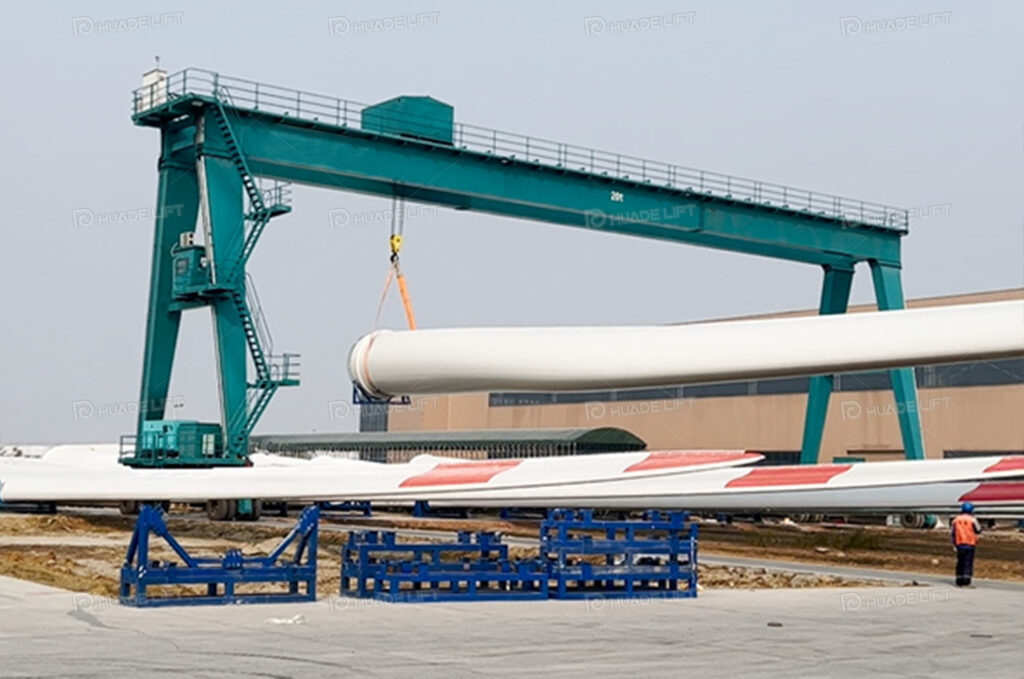
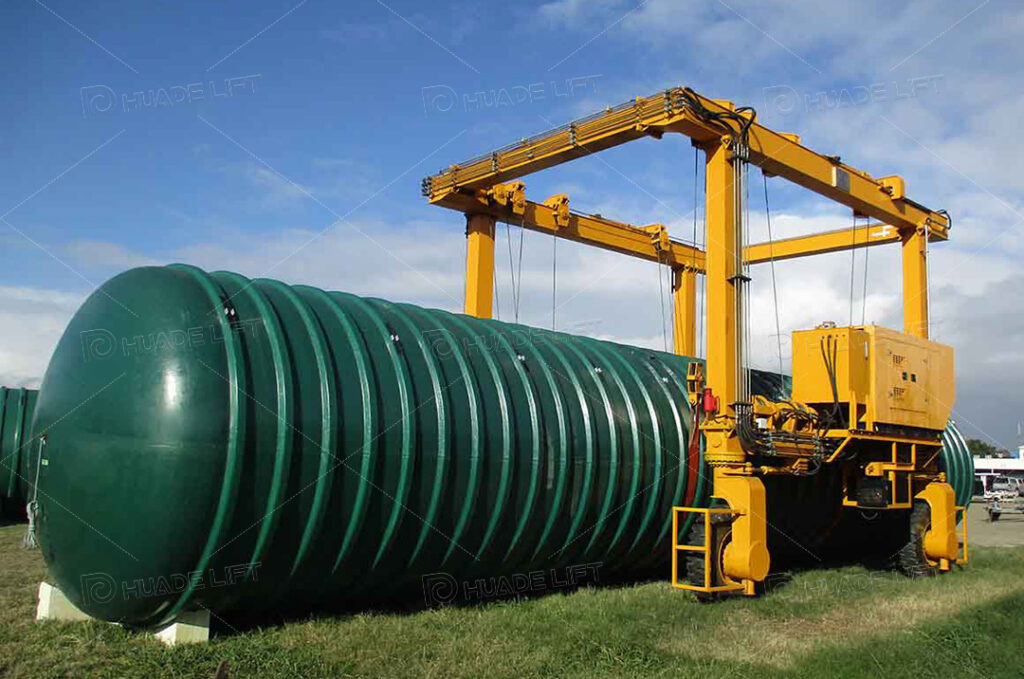
On a bridge construction site, a high-performance tire-mounted gantry crane is steadily lifting precast beams weighing dozens of tons and precisely placing them in designated positions, laying the foundation for the successful completion of the bridge; At wind farm construction sites, it takes on the critical task of lifting and positioning massive wind turbine blades and towers, ensuring wind turbines can be operational sooner to provide clean energy to society; At energy storage project sites, it systematically lifts large energy storage tanks into their designated positions, facilitating the rapid deployment of energy storage systems.
In these critical engineering scenarios, the tire-mounted gantry crane undoubtedly plays a central role. With its flexible mobility, it can navigate complex work sites with ease, adapting to varying operational requirements; simultaneously, its robust lifting capacity enables it to effortlessly handle the loading, unloading, and transportation of various large-scale heavy objects.
“High quality” holds significant and far-reaching implications for tire-mounted gantry cranes. From the perspective of operational efficiency, high-quality tire-mounted gantry cranes can complete a greater volume of work within the same timeframe. In the midst of tight project schedules, every minute and second is critical. These cranes can swiftly respond to operational instructions, minimizing unnecessary waiting time, thereby saving time and meeting deadlines, ensuring projects proceed smoothly according to plan.
From an economic cost perspective, high-quality tire-mounted gantry cranes can save companies significant expenses in the long run. On one hand, their low failure rate reduces maintenance costs caused by equipment malfunctions. On the other hand, the significant reduction in downtime due to failures avoids project delays caused by downtime, thereby minimizing indirect losses. Additionally, their longer service life means companies do not need to replace equipment frequently, reducing equipment procurement costs.
This article will delve into high-quality tire-mounted gantry cranes from multiple dimensions, including their definition, functions, and core characteristics, to help readers better understand this type of equipment and master methods to extend its service life.
What is a Rubber Tire Gantry Crane
A tire-mounted gantry crane is essentially a mobile gantry crane equipped with rubber tires. Its structure is relatively complex, primarily consisting of a gantry frame structure, hoisting mechanism, traveling mechanism, and electrical control system. Among these, the gantry frame structure is its signature component, resembling a large “door”-shaped frame that spans above cargo or work areas, providing stable support for lifting operations; the rubber tires are the key to its mobility, typically mounted at the bottom of the gantry frame, enabling the entire device to move freely without being constrained by tracks.
Compared to other types of cranes, its distinctive feature is the combination of a gantry frame structure and rubber tires. This structural design grants it both stability and mobility. While track-mounted cranes also offer high stability and lifting capacity, they must operate along fixed tracks, severely limiting their operational range and preventing them from flexibly adapting to different work requirements within a site. While truck cranes offer superior mobility, they lag behind tire-mounted gantry cranes in terms of lifting capacity and operational stability, particularly during prolonged, high-precision lifting operations involving large, heavy loads, where the advantages of tire-mounted gantry cranes become more pronounced.
In terms of application scenarios, tire-mounted gantry cranes are primarily focused on concrete, wind power equipment, and energy storage tanks. During the production and installation of precast beams, they play a crucial role in lifting precast beams from the production site to transport vehicles and then unloading them from transport vehicles to the installation location, ensuring that precast beams are safely and accurately positioned. At wind power equipment installation sites, whether it be massive wind turbine blades, towers, or generator housings, tire-mounted gantry cranes are essential for lifting operations. Their powerful lifting capacity and precise control capabilities ensure the smooth installation of these large-scale devices. During the transportation and installation of energy storage tanks, it also plays a critical role, responsible for transferring and lifting energy storage tanks between transportation vehicles and installation sites, providing strong support for the rapid advancement of energy storage projects.
Additionally, tire-mounted gantry cranes can be found in large port yards, heavy machinery factory workshops, and other locations, where they undertake critical tasks such as the storage and loading/unloading of large equipment and components, providing strong support for the smooth progress of engineering projects.
Core Functions of Tire-Mounted Gantry Cranes
Goods Loading
Goods loading/unloading is one of the most basic and core functions of tire-mounted gantry cranes. It utilizes a hoisting mechanism to precisely control the height of the cargo. The hoisting mechanism typically consists of spare parts such as a motor, reducer, drum, and steel wire rope. The motor provides power, which is transmitted to the drum via the reducer. The rotation of the drum drives the steel wire rope to wind or unwind, thereby achieving the lifting or lowering of the cargo. Operators can precisely control the motor’s operation through a control handle, thereby regulating the speed and height of the cargo’s ascent or descent, ensuring it reaches the desired position smoothly.
When combined with the travel mechanism, it enables efficient loading and unloading of cargo between ships, vehicles, and yards. The travel mechanism primarily consists of a drive motor, tires, and steering devices. The drive motor provides power for the rotation of the tires, enabling the crane to move within the worksite; the steering devices ensure the crane can turn flexibly and accurately adjust its working position. Whether it is unloading precast beams from transport vehicles or loading wind power equipment to designated locations, the tire-mounted gantry crane can efficiently complete the task. For example, during the loading and unloading of precast beams, it can first move above the transport vehicle, lift the precast beam using the hoisting mechanism, then move to the yard or installation location, and finally lower the precast beam smoothly. The entire process is seamless and efficient, significantly improving operational efficiency.
Cargo Transfer Functionality
The tire-mounted gantry crane enables rapid transfer of cargo between different carriers, a feature of significant importance in logistics transportation and construction projects. It can transfer cargo from one mode of transport to another, or from a transport vehicle to a storage area, and then from the storage area to the work site, etc.
For example, transferring energy storage tanks from one transport ship to another, or from a ship to a land transport vehicle, ensures the continuity and efficiency of cargo transfer. During the transfer process, the tire-mounted gantry crane first lifts the cargo from the starting carrier, then moves the cargo to the target carrier using its own mobility, and finally lowers the cargo smoothly. Throughout the process, it precisely controls the movement trajectory and speed of the cargo, preventing collisions or drops during transfer and ensuring cargo safety. Additionally, its rapid movement and lifting speeds reduce cargo transfer time, enhancing the efficiency of the entire logistics or engineering process.
Site Organization Function
In addition to the above primary functions, tire-mounted gantry cranes can also assist with site organization work. During operations, various factors may cause cargo to scatter or be improperly stacked, disrupting on-site order and hindering subsequent operations. In such oversea cases, the tire-mounted gantry crane can intervene to clear scattered cargo. It can use its lifting equipment to lift scattered cargo and transport it to designated storage areas.
Additionally, it can adjust the stacking positions of goods, moving those that are improperly stacked or obstructing work pathways to appropriate locations, ensuring the work site remains neat and orderly, and creating favorable conditions for subsequent operations. For example, in equipment storage areas at wind farms, after a period of operation, small parts or tools may be scattered across the site. The tire-mounted gantry crane can collect these items and place them in designated storage containers; For tower sections or blades that are stacked crookedly, it can also adjust them to ensure more stable and orderly stacking.
Key Characteristics of High-Quality RTG Gantry Cranes
High-Efficiency Operational Performance
Quick Positioning
High-quality tire-mounted gantry cranes possess highly agile mobility, enabling them to quickly and accurately reach designated work points. This is primarily attributed to their advanced drive mechanisms and power systems. The operating mechanism employs high-performance drive motors and transmission systems, providing powerful power output to enable the crane to move at high speeds. Additionally, its steering system is meticulously designed for flexible maneuvering, allowing quick adjustments to the direction of travel. Even in narrow work areas, it can easily turn and reverse direction.
Furthermore, some high-quality tire-mounted gantry cranes are equipped with advanced positioning systems, such as GPS positioning or laser positioning. Operators can input the coordinates of the work site into the control system, and the crane will automatically plan its travel route to quickly and accurately reach the designated location. This feature effectively reduces loading and unloading cycles, and in large-scale projects, each rapid positioning can save valuable time for the overall project schedule. For example, in bridge construction, there are numerous precast beams to be lifted, and each precast beam has a different installation location. The crane’s rapid positioning capability can reduce the time spent moving between different work points, thereby accelerating the overall progress of bridge construction.
Precise Control
High-quality tire-mounted gantry cranes are equipped with advanced electronic control systems and various sensors. Through the synergistic effects of these technologies, they can achieve high-precision control of operations such as lifting, moving, and placing. The electronic control system serves as the “brain” of the crane, receiving instructions from the operator and precisely controlling the operation of each mechanism based on feedback from the sensors. The various sensors act as the crane’s ‘eyes’ and “ears,” continuously monitoring parameters such as the position and weight of the load, the crane’s operating speed, and angle, and transmitting this information to the electronic control system.
For example, the lifting height sensor can precisely measure the height at which the cargo is raised or lowered, ensuring it reaches the intended height accurately; the weight sensor monitors the lifting load in real time to prevent overloading; and the displacement sensor monitors the crane’s movement distance and position, ensuring it can precisely dock at the work site. This not only enhances operational accuracy but also significantly reduces cargo damage during operations. When lifting precision equipment or fragile components, precise control is particularly important to avoid equipment damage caused by improper operation and reduce economic losses.
Comprehensive Safety Measures
Wind-Resistant Design
Although tire-mounted gantry cranes are primarily used in bridge construction, wind farms, and similar applications, these scenarios often involve outdoor operations and may be exposed to strong winds. Strong winds can severely affect the stability of the crane, potentially causing it to overturn and result in major safety incidents. Therefore, high-quality tire-mounted gantry cranes have been optimized for windy environments.
In terms of structural design, they feature a streamlined appearance to minimize wind resistance on the equipment; simultaneously, the strength and stiffness of the gantry frame structure have been enhanced to withstand greater wind loads. Furthermore, some cranes are equipped with wind-resistant anchoring devices. In the event of a strong wind warning, operators can secure the crane to the ground using the anchoring device to prevent it from being blown away by the wind. These designs ensure that tire-mounted gantry cranes can operate stably even in strong wind conditions, ensuring operational safety.
Comprehensive Safety Devices
High-quality tire-mounted gantry cranes are equipped with a range of safety devices, including collision prevention systems, emergency braking systems, and load monitoring systems, to comprehensively mitigate operational risks. Collision prevention systems typically consist of radar and camera devices that continuously monitor the crane’s surroundings. When the system detects that the crane is too close to other equipment, buildings, or personnel, it will immediately issue an alarm and, if necessary, automatically reduce speed or stop operation to prevent collisions.
The emergency braking system is a critical safety device that ensures the safety of both equipment and personnel in emergency situations. When an emergency occurs, such as the operator detecting danger or equipment malfunction, pressing the emergency braking button causes the system to immediately cut off power supply, bringing the crane to a swift stop. The load monitoring system continuously monitors the lifting load, and when the load exceeds the rated capacity, it issues an alarm and automatically stops the lifting operation to prevent equipment damage or cargo falling due to overloading.
Additionally, some high-quality tire-mounted gantry cranes are equipped with safety devices such as height limiters, reach limiters, and rotation limiters, which restrict lifting height, operating reach, and rotation angle, respectively, ensuring all operations are conducted within safe limits.
Convenient Maintenance Features
Simplified Structure
Compared to rail-mounted cranes, tire-mounted gantry cranes have a simpler structure. Rail-mounted cranes require complex track systems andguidance devices, resulting in a relatively cumbersome structure that is difficult to maintain. Tire-mounted gantry cranes eliminate tracks and use tires as moving components, simplifying the overall structure.
This simplified structure makes inspection and maintenance work more convenient, reducing the difficulty for maintenance personnel. Maintenance personnel can more easily access various components for inspection, maintenance, and repairs. For example, when maintaining the running mechanism, there is no need to inspect and maintain the tracks; instead, focus on components such as tires, drive motors, and transmission systems, significantly reducing maintenance time and improving maintenance efficiency.
Maintenance-friendly Design
The rubber tires and electrical system of the tire-mounted gantry crane are designed with daily maintenance needs in mind, facilitating regular inspections and maintenance. The rubber tires are made from wear-resistant and aging-resistant materials, and their installation and removal methods are designed for ease of use, allowing maintenance personnel to conveniently inspect, inflate, and replace the tires.
The electrical system’s wiring layout is clear, with standardized interfaces, and the installation positions of electrical components are designed for easy access by maintenance personnel. Additionally, the electrical system is equipped with fault diagnosis functionality, enabling rapid identification of fault locations and providing accurate guidance for repairs. This design reduces equipment downtime, lowers maintenance costs, and improves equipment utilization. For example, when an electrical system fault occurs, maintenance personnel can quickly identify the cause and location of the fault through the fault diagnosis system and perform timely repairs, avoiding prolonged downtime for troubleshooting.
High Operability
Simple Operating Interface
The buttons and gauges on the operating interface of the high-quality tire-type gantry crane are reasonably laid out and clearly labeled. When designing the operating interface, the designers fully considered the operating habits and visual experience of the operators, placing frequently used operation buttons in convenient locations and displaying simple and clear information on the gauges, allowing operators to quickly obtain equipment operation information.
This simple interface lowers the learning curve, enabling even new operators to quickly become proficient. New operators do not need to spend significant time familiarizing themselves with complex buttons and gauges; after basic training, they can master the crane’s operation methods, thereby shortening the training period and reducing training costs for the company.
High Durability
High-quality Material Selection
The gantry and boom of the tire-mounted gantry crane are made of high-strength alloy steel. This steel has excellent mechanical properties, high tensile strength, and good toughness, enabling it to withstand long-term stress impacts. During crane operations, the gantry and boom must withstand significant weight and torque. High-strength alloy steel ensures these structural components remain stable and do not deform or fracture over extended use, guaranteeing the equipment’s reliable operation.
In addition to critical structural components, other parts of the crane, such as steel wires and hooks, are also made from high-quality materials. Steel wires are manufactured using high-strength, wear-resistant alloy steel wires, offering high tensile strength and a long service life; hooks are forged from high-quality carbon structural steel or alloy structural steel, and undergo After heat treatment, it possesses excellent strength and toughness, enabling safe and reliable lifting of heavy loads.
Corrosion Protection and Fastening Treatment
The equipment surface undergoes multi-layer rust removal, painting, and other corrosion protection processes, effectively resisting corrosion from air, moisture, and other environmental factors. The rust removal process thoroughly removes rust and oxide scale from the equipment surface, laying a solid foundation for subsequent painting; the painting process uses high-performance corrosion-resistant coatings to form a dense protective layer, isolating the equipment surface from external corrosive media and slowing down the corrosion rate.
Connection points are reinforced with high-strength bolts and undergo special tightening treatment to prevent loosening during frequent operations. During crane operations, vibrations and impact forces between components can cause connection bolts to loosen. Special tightening treatments, such as using anti-loosening nuts or applying thread lock agents, effectively prevent bolt loosening and ensure the structural integrity of connection points. These corrosion prevention and tightening measures significantly extend the equipment’s service life and reduce failures caused by corrosion and connection loosening.
Conclusion
In summary, extending the service life of tire-mounted gantry cranes requires a deep understanding and full utilization of their “high-quality” core characteristics. From reducing unnecessary mechanical wear through efficient operation, to avoiding accidental damage through comprehensive safety measures, to minimizing fault risks through convenient maintenance features, and to establishing a durable foundation through high-quality materials and corrosion-resistant fastening treatments, every aspect is critical. In daily operations, companies must integrate these key points into the entire process of equipment operation, maintenance, and management, enabling tire-mounted gantry cranes to consistently and reliably perform their core functions in critical applications such as bridge construction, wind farm installation, and energy storage project development. This ensures longer service lifespans, safeguarding engineering efficiency and economic benefits, and serving as a reliable enabler for the smooth progression of various large-scale engineering projects.
