
Rubber Tyred Gantry Cranes (RTGs) have become essential equipment in industrial production, logistics centers, container stacking, and various large-scale warehousing facilities due to their flexible maneuverability and powerful lifting capacity.
To ensure that the rubber tyred gantry crane operates efficiently, stably, and safely at all times, proper usage methods and scientific, comprehensive maintenance measures are crucial. Improper operation and neglect of maintenance not only lead to frequent equipment failures and significantly reduced operational efficiency but also pose serious safety hazards, endangering personnel and property safety. Therefore, establishing a systematic and standardized usage and maintenance system for rubber tyred gantry cranes is a critical task that industry professionals must prioritize and implement.
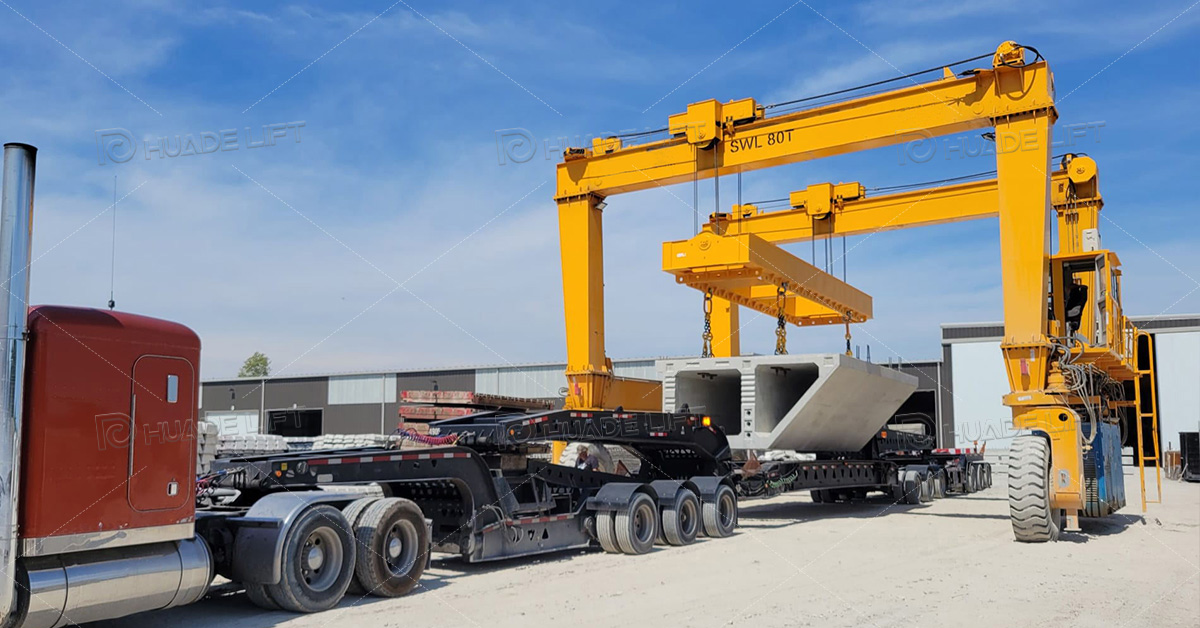
Pre-Use Preparation of Rubber Tyred Gantry Crane
Equipment Integrity Inspection
Core component inspection: The steel frame of the rubber tyred gantry crane, as the critical structural component supporting the entire equipment weight and lifting load, must be free of any deformation, cracks, or signs of corrosion. All components of the hoisting mechanism, such as the drum, steel wire rope, pulleys, and drive motor, must be thoroughly inspected.
The drum should rotate smoothly without any sticking; the steel wire rope should not have broken wires, excessive wear, or rust; the pulleys should roll smoothly, and the pulley grooves should show no significant wear. Components of the steering system, such as the steering knuckle, tie rod, and tires, should also be thoroughly inspected. The steering knuckle should be secure with no loosening, the tie rod connections should be firm, tire pressure should meet specified standards, and the tire tread should show uniform wear with no abnormal bulges or damage.
Electrical and power system inspection: The electrical system inspection covers all circuits and components from the power supply input end to all electrical equipment. Circuits should have no damage, aging, or short circuit hazards, all connection points should be secure and reliable, and insulation performance should be good.
Various electrical components in the control box, such as contactors, relays, and switches, should operate sensitively and have good contact.
For rubber tyred gantry cranes equipped with diesel generator sets, before startup, check that the diesel fuel level is sufficient, the engine oil level is normal, and the coolant level in the radiator meets requirements. Additionally, perform a test run of the generator set to observe whether it starts quickly, operates smoothly, and whether the output voltage and frequency are stable within the specified range.
Operating Procedures of Rubber Tyred Gantry Crane
Lifting and Hoisting Operations Procedures
Lifting Posture and Center of Gravity Control: When performing lifting and hoisting operations, ensure that the steel wire rope of the hook remains in a vertical position. Pulling the cargo at an angle will subject the steel wire rope to additional lateral forces, significantly increasing the risk of rope breakage, and may also cause the cargo to swing out of control, leading to collision accidents.
Before lifting the cargo, precisely align the cargo’s center of gravity with the center of the hook. For cargo with sharp edges, use protective pads made of soft materials such as wood or rubber to prevent the edges from cutting the steel wire rope.
Lifting and operation procedures: During the lifting and lowering of cargo, the speed must be maintained uniformly and steadily, avoiding sudden stops or starts. Sudden changes in speed can cause significant inertial forces, leading to violent swaying of the cargo in the air, posing a serious threat to the equipment and surrounding personnel. When lowering the cargo, the speed should also not be too fast to prevent damage to the cargo due to excessive impact force.
Equipment operation prohibitions
Restrictions on composite actions: During the operation of a rubber tyred gantry crane, it is strictly prohibited to activate two or more operating mechanisms (including auxiliary hooks) simultaneously. Simultaneous operation of multiple mechanisms can complicate the equipment’s operational state and make it difficult to control, easily causing unstable swinging of the cargo and potentially leading to failures in the equipment’s control system. For example, simultaneously performing lifting and boom swing operations may subject the boom to excessive torque, damaging the equipment’s structure.
Response to adverse weather conditions: Strong winds can severely affect the stability of the rubber tyred gantry crane, potentially causing the equipment to be blown over or cargo to be blown off. After stopping operations, the boom should be quickly turned toward the wind direction, the height should be appropriately lowered, and the hook should be securely suspended.
Additionally, devices such as iron wedges should be used to secure the equipment’s tires to prevent movement under wind force. Additionally, close the equipment’s doors and windows, disconnect the power supply, and secure the cables with wind ropes to ensure the equipment’s safety during adverse weather conditions.
Full-cycle Maintenance of Rubber Tyred Gantry Crane
Daily Inspections
Daily inspections before operations are the first line of defense to ensure the normal operation of rubber tyred gantry cranes. Inspection personnel should visually inspect the equipment’s structural components, such as the gantry and beams, to check for cracks, deformation, or loose connections. The hook should show no obvious wear or deformation, with a smooth surface and no cracks. The hubs and rims of the wheels should be undamaged, the tire pressure should be normal, and the tires should make good contact with the ground.
A comprehensive test of the equipment’s control functions should be conducted, including the operation buttons and handles for lifting, lowering, traveling, and steering, to ensure smooth operation and accurate response. Inspection of the braking system is critical. Verify that the brakes function properly, that the clearance between the brake pads and brake discs is normal, and that there is no abnormal wear or overheating.
Regular Maintenance
Regular maintenance is typically performed on a weekly or monthly basis. During maintenance, first thoroughly lubricate all moving parts of the equipment, such as bearings, gears, and chains. Selecting appropriate lubricants and applying them according to specified lubrication points and quantities can effectively reduce friction between components, minimize wear, and extend component lifespan.
For the electrical system, inspect whether the wiring connections are secure, and check for any loosening, oxidation, or corrosion. Dust and debris inside the control box should be promptly removed to ensure proper heat dissipation of electrical components.
For hydraulic systems (if equipped on a rubber tyred gantry crane), check that the hydraulic oil level is within the normal range, and that the oil is clear, free of impurities, and shows no signs of emulsification. Hydraulic lines should be free of leaks, and joints should be properly sealed. Additionally, follow the equipment manufacturer’s recommendations to regularly replace hydraulic oil and filters to ensure stable operation of the hydraulic system.
Deep Maintenance
Deep maintenance is typically conducted annually and requires professional technicians using specialized tools and testing equipment. Non-destructive testing of metal structures is a critical component of deep maintenance. Through techniques such as ultrasonic testing and magnetic particle testing, key welds and stress-concentrated areas of the equipment are inspected to promptly identify internal defects such as cracks or porosity.
Calibration of safety devices is also essential. For example, load limiters must undergo precision calibration to ensure accurate weight display when lifting different loads, issue alerts when approaching or reaching the rated load capacity, and restrict lifting operations to prevent overloading accidents.
Key Maintenance Points for Core Components of RTG


Lifting Mechanism
Mechanical Component Maintenance: The drum of the hoisting mechanism may experience wear or deformation over prolonged use. Regularly inspect the surface wear of the drum; if wear exceeds specified limits, promptly repair or replace it. The gear surfaces of the gear transmission system should show no signs of fatigue spalling or broken teeth, and the side clearance must remain within normal ranges. Regular cleaning and lubrication of gears can effectively reduce wear rates.
Motor maintenance includes inspecting the wear condition of the motor’s carbon brushes. If the carbon brushes are excessively worn, they should be replaced promptly. It is also important to ensure that the motor’s cooling fan is operating normally and that the motor housing does not overheat.
Wire rope maintenance: The wire rope is a critical component of the hoisting mechanism, and its maintenance is particularly important. Regularly inspect the steel wire rope for wear, broken wires, and corrosion. During daily use, the steel wire rope should be regularly lubricated using a specialized steel wire rope lubricant, which can effectively reduce friction between the steel wire rope and pulleys/drums, thereby extending the service life of the steel wire rope.
Brake system maintenance: Regularly inspect the wear condition of the brake pads. When the brake pads wear down to near their minimum thickness, they should be replaced promptly. Adjust the braking torque of the brake to ensure reliable braking when lifting heavy loads while avoiding excessive braking force that could cause impact on the equipment.
Additionally, inspect the hydraulic or pneumatic lines of the braking system for leaks and verify the integrity of the piston seals in the brake cylinders or pneumatic cylinders.
Steering and Travel System
Steering System Maintenance: Components such as the steering knuckles and tie rods in the steering system should be inspected regularly to ensure secure connections with no loosening, deformation, or excessive wear. The operation of the steering cylinder and any leaks are also key inspection points. Regular lubrication of the moving joints in the steering system can make steering operations more flexible and smooth. Additionally, check whether the power-assisted devices (such as hydraulic or electronic power steering) in the steering system are functioning normally and whether the power-assisted effect meets requirements.
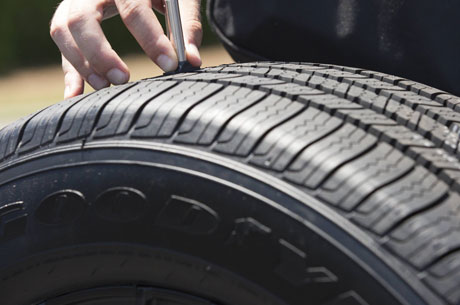
Travel System Maintenance: The tires of the travel system are components that directly contact the ground, and their condition is critical to the safe operation of the equipment. Regularly check the tire pressure to ensure it meets the specified standards. The wear condition of the tires should also be closely monitored. If uneven wear is detected, promptly inspect the alignment of the travel mechanism and make adjustments as needed.
Electrical and Control Systems
Electrical Component Maintenance: Maintenance of electrical components primarily involves inspecting and maintaining components such as wiring, contactors, relays, and switches. Regularly inspect the insulation performance of the wiring. If any damage, aging, or cracking of the insulation layer is detected, the wiring should be replaced promptly. The contacts of contactors and relays should be kept clean, with no burning, sticking, or adhesion. For frequently operated contactors and relays, regularly inspect their operational reliability. Switches should operate smoothly with good contact. Additionally, inspect the grounding system of electrical equipment to ensure grounding resistance meets safety requirements, preventing equipment leakage and potential safety incidents.
Control System Maintenance: Control system maintenance includes inspecting and calibrating control programs, sensors, displays, and other components. Regularly back up control programs to prevent data loss or damage. Check the operational status of sensors such as load weight sensors, position sensors, and limit sensors to ensure accurate measurements and stable signal transmission.
Displays should show clear readings without missing lines or garbled characters. Regularly inspect and adjust control system parameters to adapt them to the actual operating conditions of the equipment. Additionally, test the control system’s interference resistance to ensure it can operate stably and reliably in complex electromagnetic environments.
Common Faults and Troubleshooting Directions
Mechanical Fault Diagnosis
Abnormal lifting: When the lifting mechanism experiences issues such as insufficient lifting force or inability to lift, first inspect the operational status of the lifting motor to check for overloading, phase loss, or motor damage. Next, verify that the hydraulic system (if the lifting mechanism is hydraulically driven) has normal pressure, the hydraulic pump functions properly, and there are no leaks in the hydraulic lines. Additionally, inspect the steel wire rope for issues such as jamming or broken strands, and verify that the pulleys and drums rotate smoothly.
Traveling and Steering Faults: If the rubber tyred gantry crane experiences traveling deviation, this may be caused by uneven tire pressure, malfunction of the traveling mechanism’s drive unit, or uneven tracks. In such cases, first check and adjust the tire pressure, then inspect the motor, reducer, chain, and other components of the travel mechanism to ensure they are functioning properly.
For steering issues, such as difficulty steering or lack of steering flexibility, inspect the hydraulic oil level in the steering system, the steering cylinder, the steering knuckle, and the steering assist device.
Electrical Fault Handling
Control failure: When the control system of a rubber tyred gantry crane experiences control failure, first inspect the control circuit for open circuits, short circuits, or poor connections. Check the electrical components inside the control box, such as contactors, relays, and switches, for damage.
Also verify that the control system’s power supply is functioning normally and that the voltage is stable. If the control system uses a programmable logic controller (PLC), inspect the PLC’s program for normal operation and check for any error codes displayed.
Electrical component damage: Damage to electrical components is also a common fault. Examples include motor burnout, transformer failure, and sensor malfunction. When electrical component damage is detected, the damaged components should be promptly replaced with identical models. After replacing the components, the equipment should be tested to ensure it operates normally.
Maintenance Best Practice Recommendations
Follow the Manufacturer’s Maintenance Guidelines
When designing and manufacturing rubber tyred gantry cranes, equipment manufacturers develop detailed maintenance manuals based on factors such as the equipment’s performance, structure, and operating conditions. Users should strictly adhere to the maintenance schedule, maintenance intervals, and maintenance methods provided by the manufacturer when performing maintenance on the equipment.
Maintenance manuals typically specify lubrication intervals, replacement intervals, and inspection items and standards for each component. Adhering to the manufacturer’s maintenance guidelines ensures that the equipment receives appropriate maintenance, maximizes its performance, and extends its service life.
Professional Training
Regular professional training for operators and maintenance personnel is a crucial means of enhancing maintenance standards and operational safety. Training content should cover equipment structure and principles, operational techniques, maintenance methods, safety knowledge, and fault diagnosis and resolution.
Use of High-Quality Parts
Using standard-compliant original or certified parts is essential for ensuring equipment performance and operational safety. Original manufacturer parts undergo rigorous quality inspections and compatibility testing, ensuring perfect compatibility with the equipment and meeting all performance specifications as designed. In contrast, low-quality non-original parts may have defects in material quality, dimensional accuracy, or performance. Using such parts not only fails to guarantee normal equipment operation but may also damage the equipment or even cause safety incidents. Therefore, the use of counterfeit or substandard parts must be strictly prohibited during equipment maintenance and repair.
Maintenance Record Establishment
Establishing comprehensive equipment maintenance records helps gain a thorough understanding of the equipment’s operational status and maintenance history. Maintenance records should include details such as the date and time of each maintenance session, the maintenance personnel involved, the maintenance items performed, the parts replaced, and the operational status of the equipment before and after maintenance. By analyzing maintenance records, potential issues with the equipment can be identified promptly, such as frequent damage to certain components, which may indicate abnormal operational conditions or the need for improved maintenance methods.
Conclusion
Proper use and scientific maintenance are the cornerstones of efficient and safe operation of rubber tyred gantry cranes. Standardized operations can prevent equipment damage and safety incidents caused by human error, while scientific and comprehensive maintenance measures can promptly identify and resolve potential equipment issues, extend equipment lifespan, reduce failure rates, and enhance operational efficiency.
The establishment of a systematic rubber tyred gantry crane use and maintenance system is not only necessary to ensure the stable operation of the equipment itself, but also an important guarantee for the relevant industries to enhance competitiveness and achieve sustainable development.
For more information, please feel free to contact Huadelift.
