
Key Considerations for Deploying RTG Cranes in Highway Projects
Introduction
Rubber Tyred Gantry Cranes (RTG cranes) are mobile cranes designed for lifting and transporting heavy loads. With the continuous advancement of large-scale infrastructure construction technology, RTG cranes have gradually expanded beyond traditional applications. Leveraging their outstanding mobility, flexible load adjustment capabilities, and adaptability to complex working conditions, they have emerged as key equipment in major infrastructure projects such as highways, bridges, and railways.
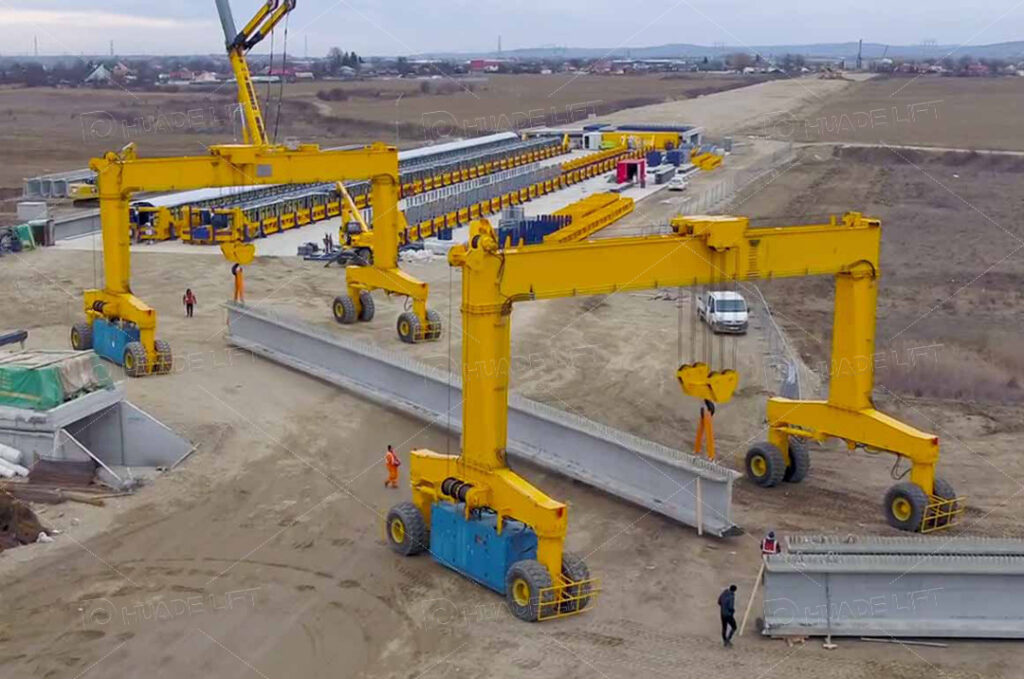
In highway construction, particularly for large-scale complex projects like river-spanning bridges and expressway interchange hubs, precise lifting and relocation of oversized, heavy components such as precast beams, steel box girders, and heavy bearings are often required. RTG cranes, with their adjustable span, stable lifting performance, and ability to move without fixed tracks, effectively overcome the operational limitations of traditional cranes in open work areas and complex terrains. They have become one of the core pieces of equipment for enhancing construction efficiency and ensuring safety in highway projects, playing an irreplaceable role in driving high-quality project advancement.
Assessing Project Requirements
When deploying RTG cranes in highway projects, the primary task is to accurately assess actual project needs to ensure equipment performance aligns precisely with engineering requirements.
Lifting Capacity Assessment
Core lifting objects in highway projects include precast concrete beams (e.g., T-beams, box girders), steel truss girders, and heavy steel bearings. Weight variations among these components are significant—small precast beams may weigh several dozen tons, while large steel box girders can exceed 300 tons. Therefore, it is essential to first identify the maximum weight, center of gravity, and dimensions of components requiring lifting at each project phase based on design drawings. This information forms the basis for determining the RTG crane’s rated lifting capacity. For instance, when lifting a 300-ton steel box girder, an RTG crane with a rated capacity of at least 350 tons (allowing for safety margin) must be selected. Specialized lifting gear must also be employed to ensure even force distribution, preventing deformation or damage during the lifting process.
Determining Mobility Requirements
Construction sites for highway projects are typically characterized by scattered work areas and frequent phased relocation. For instance, in expressway construction, equipment must be transferred between different contract sections to complete tasks like bridge hoisting and installation of heavy roadbed components. Therefore, based on the project construction plan, the RTG crane’s mobility range, relocation frequency, and road surface conditions must be clearly defined: – If the construction area primarily consists of hardened access roads, an RTG crane with standard tire configuration can be selected. For sections involving temporary dirt roads or soft ground, wider tires with enhanced off-road capability or crawler-type auxiliary mobility devices are required to prevent equipment from getting stuck or damaging the road surface during transfers.
Matching Equipment Parameters to Project Schedule
RTG crane parameters such as span, lifting height, and operating speed must be strictly aligned with the project timeline and workload. For example, a highway project requiring the installation of 20 precast box girders (30 meters each) within three months necessitates an RTG crane with a lifting speed of no less than 8 meters per minute, a slewing speed of no less than 1.5 revolutions per minute, and a span capable of covering both the girder storage area and the bridge bearing installation site. This prevents project delays due to insufficient equipment efficiency. For tight project schedules, evaluate whether multiple RTG cranes should operate in coordination, pre-planning their operational radii and avoidance routes.
Site Conditions and Maneuverability
The complexity of highway construction sites (e.g., undulating terrain, confined spaces, dense temporary facilities) imposes stringent demands on RTG crane maneuverability.
Road Surface Topography and Site Accessibility
First, conduct a comprehensive site survey to determine pavement load-bearing capacity, slope gradients, turning radii, and obstacle distribution: If slopes exceeding 5° exist within the construction area, select RTG cranes with slope compensation functionality to prevent tilting during movement or lifting operations; If obstacles such as high-voltage cables or temporary structures exist on-site, adjust the RTG crane’s span and lifting height based on actual space constraints to ensure a minimum safety clearance of no less than regulatory requirements (typically no less than 3 meters) between the equipment and obstacles during operations. Additionally, assess the site accessibility for equipment transport vehicles. This may involve widening temporary access roads or reinforcing bridges to ensure RTG crane disassembled components can be delivered to the installation location without hindrance.
Core Value of Rubber-Tired Mobility
The rubber-tired design of RTG cranes is a key advantage for adapting to highway construction environments. Compared to rail-mounted gantry cranes (RMG), rubber tires eliminate the need for fixed tracks, enabling 360° rotation, lateral movement, and diagonal travel within the construction site. This makes them particularly suited for highway projects requiring multi-point lifting and flexible adjustment of operating positions. For instance, during bridge bearing installation, RTG cranes can precisely position bearings over embedded bolts with sub-millimeter accuracy (within 5mm) by fine-tuning tire placement, significantly enhancing construction precision. Additionally, rubber tires cause minimal pavement damage, eliminating the need for protective steel plates on existing roadbeds or temporary hardened surfaces, thereby reducing site maintenance costs.
Maneuverability in Confined and Uneven Spaces
Highway projects frequently encounter space-constrained scenarios, such as under-bridge lifting at interchange hubs or component installation at tunnel entrances. In these situations, the RTG crane’s maneuverability becomes critical. RTG cranes with variable span functionality should be selected, allowing adjustment of the main beam span to accommodate narrow working spaces. Additionally, the equipment must be equipped with high-precision steering systems and real-time attitude monitoring instruments to ensure the body remains level during operations on uneven surfaces (such as gravel roads during subgrade construction), preventing load displacement caused by tilting. Furthermore, some advanced RTG cranes support remote operation, allowing operators to adjust equipment movements in real-time from a secure area via a control console, thereby enhancing operational safety and precision in complex environments.
Safety and Compliance Considerations
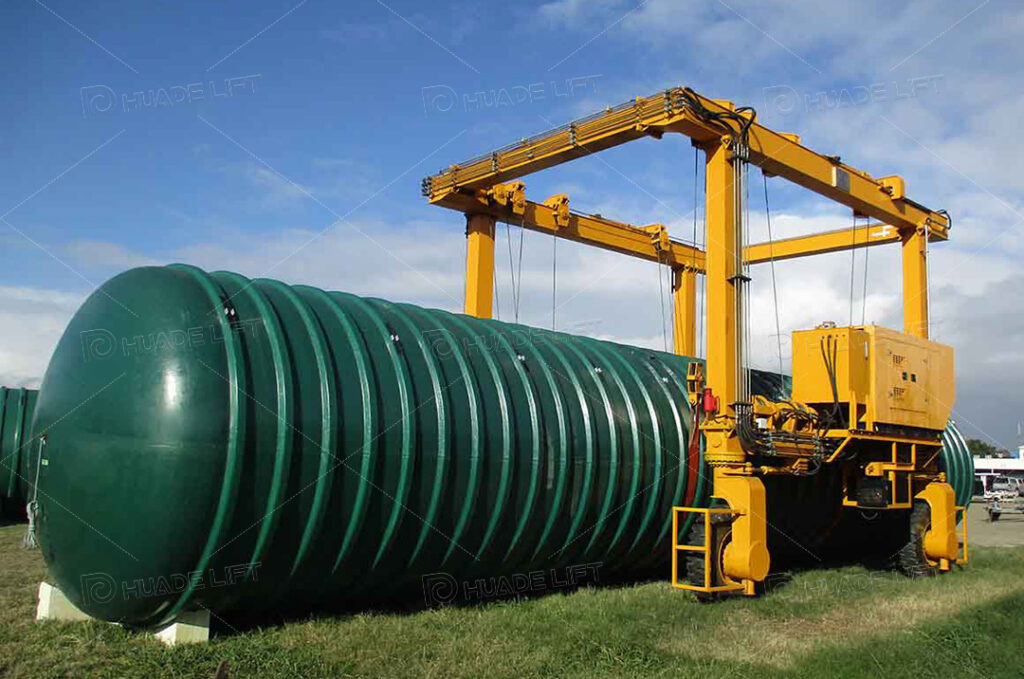
Highway construction involves complex environments with multifaceted safety risks concerning personnel, equipment, and traffic. Deploying RTG cranes must strictly adhere to safety regulations, establishing a comprehensive safety assurance system.
Compliance with Local Regulations and Safety Standards
Different regions have established specific regulations for lifting operations in highway construction. For example, China’s “Safety Technical Specifications for Highway Construction” requires that the rated lifting capacity of cranes must meet “actual lifting weight × 1.2 safety factor.” Additionally, warning zones must be established and dedicated safety officers must be present during operations. Therefore, prior to deploying RTG cranes, thoroughly review local safety regulations, industry standards, and environmental requirements at the project site. This includes noise emission standards (selecting RTG cranes with low-noise engines if near residential areas) and nighttime construction restrictions. Ensure equipment selection and operational procedures fully comply to avoid project shutdowns or penalties due to non-compliance.
Integrated Core Safety Systems
To mitigate lifting risks, RTG cranes must incorporate comprehensive safety protection devices, with core systems including:
- Load Monitoring System:Displays real-time lifting weight, issues warnings when load exceeds 90% of rated capacity, and automatically halts hoisting operations at 100% to prevent overturning due to overload.
- Anti-Sway System:Utilizes hydraulic or electronic control technology to suppress swaying of the lifting device during hoisting and slewing operations. Particularly in high-wind outdoor environments (e.g., bridge construction), it limits sway amplitude to within 10 cm, ensuring precise component alignment.
- Emergency Stop System:Emergency stop buttons are installed at critical locations (e.g., operator cab, both ends of the main beam). In case of emergencies (such as component collisions or tire failures), operators can immediately cut off power to prevent accidents from escalating;
- Vision Assistance System:Equipped with 360° panoramic cameras and radar distance sensors to eliminate operational blind spots. This significantly enhances the equipment’s environmental awareness during nighttime or adverse weather conditions (rain, fog).
Operator Training and Certification
The professional competence of RTG crane operators directly determines operational safety, necessitating a rigorous training and certification system:
- Qualification Requirements:Operators must hold a “Special Equipment Operator Certificate”(Crane Safety Management and Operation Certificate) issued by the State Administration for Market Regulation, along with at least 2 years of experience operating large-scale lifting equipment.
- Specialized Training:Given the unique demands of highway projects, operators must undergo specialized training covering RTG crane operation procedures for scenarios like precast beam lifting and cross-road operations. This includes identifying risk points (e.g., overhead cables, passing vehicles) and implementing emergency response plans (e.g., for equipment overturn or sling jamming).
- Regular Assessments:Conduct monthly safety knowledge tests and practical drills for operators to ensure mastery of equipment safety protocols. Implement an operator log system to document daily equipment status and operational details for traceability management.
Deployment and Logistics Planning
RTG cranes are large with numerous components. The efficiency of their transportation, assembly, and on-site coordination directly impacts project progress and cost control.
Equipment Transportation and Assembly
Core components like the main girder, outriggers, and tire assemblies can weigh tens of tons. A detailed transportation plan is required:
- Transportation Vehicle Selection:Choose heavy-lift semi-trailers (e.g., axle-line trucks) based on component dimensions and weight. Obtain an “oversize transport permit” in advance and plan routes to avoid bridges with insufficient load capacity or tunnels with inadequate clearance.
- On-site Assembly:Select a level, hard-packed site for the assembly area, laying steel plates or crushed stone bedding to enhance ground bearing capacity. The assembly process must be guided by professional technicians using high-precision measuring instruments (such as total stations) to ensure the main beam’s levelness and outrigger verticality meet standards, preventing equipment malfunctions caused by assembly deviations.
- Commissioning and Acceptance:After assembly, conduct no-load trial runs (testing lifting, slewing, and travel functions) and load tests (lifting 1.1 times the rated capacity). Only proceed to formal operation after successful acceptance.
Operation Scheduling and Traffic Management
Highway projects often require that the road be open to traffic while the construction is underway. RTG crane operations must avoid disrupting existing traffic:
- Temporal Planning:If lifting operations span existing roadways, prioritize nighttime (22:00-06:00) or off-peak traffic periods. Apply in advance to traffic authorities for temporary traffic control permits.
- Traffic Management: Install warning signs, speed bumps, and marshals within 500 meters before and after the work zone. Use temporary barriers to separate the construction area from traffic lanes. Deploy traffic guidance vehicles to divert traffic when necessary.
- Efficiency Enhancement:Optimize lifting procedures (e.g., pre-positioning components near the work site) to reduce per-operation duration and minimize traffic disruption—for instance, compressing a precast beam lift from 1 hour to 40 minutes to shorten traffic control periods.
Coordination with Other Heavy Equipment
During highway construction, RTG cranes must coordinate with crawler cranes, loaders, concrete pump trucks, and other equipment, requiring advance planning:
- Work Radius Demarcation:Define distinct operational zones based on each machine’s working range (e.g., RTG crane span, crawler crane swing radius) to prevent interference.
- Signal Coordination:Implement a unified command signal system (e.g., flag signals, walkie-talkies) with dedicated signalers to coordinate equipment movements. For instance, when a loader transfers components to an RTG crane, the signaler must confirm both positions are correct before issuing the lifting command.
- Equipment Scheduling Plan:Develop daily equipment schedules based on project progress, specifying each piece of equipment’s operating times, tasks, and parking locations to prevent equipment downtime or task conflicts, thereby enhancing overall construction efficiency.

Maintenance and Full Lifecycle Support
RTG cranes typically operate for 1-3 years in highway projects under harsh conditions (wind, sun exposure, high dust levels). A comprehensive maintenance system must be established to ensure long-term stable operation.
Importance of Preventive Maintenance
Preventive maintenance effectively reduces equipment failure rates and minimizes downtime costs:
- Daily Inspections:Operators must check tire pressure, brake systems, hydraulic fluid levels, and safety devices (e.g., limit switches) before each shift, addressing any abnormalities promptly.
- Scheduled Maintenance:Follow equipment manuals to lubricate bearings, gears, and other transmission components monthly; inspect main beam structures for cracks and weld separation quarterly; conduct comprehensive hydraulic and electrical system inspections semi-annually.
- Harsh Environment Measures:During dusty subgrade construction phases, equip RTG cranes with air filters and regularly clean the equipment’s cooling system. During rainy season operations, implement waterproofing for electrical control cabinets to prevent short circuits caused by water ingress.
Spare Parts and Technical Support
Given that highway projects are often located in remote areas, the timeliness of spare parts supply and technical support is critical:
- Spare Parts Stockpiling:Pre-stock wear-prone components (e.g., tires, hydraulic seals, limit switches) and critical parts (e.g., engines, frequency converters). Stock levels should be determined based on equipment usage frequency and spare parts supply cycles (e.g., tire stock should not be less than 20% of the total number of tires for the equipment).
- Supplier Collaboration:Select RTG crane suppliers with service centers in or near the project location. Sign a Technical Support Agreement requiring suppliers to respond within 24 hours of equipment failure and arrive on-site for repairs within 48 hours.
- On-site Technical Team:Assign 1-2 dedicated equipment maintenance personnel familiar with RTG crane structure and principles, capable of addressing common faults (e.g., tire deflation, hydraulic system leaks) to reduce reliance on external technical support.
Reliability Assurance for Long-Term Projects
For large-scale highway projects exceeding 2 years, long-term reliability must be considered from the equipment selection phase:
- Equipment Material Selection:Prioritize RTGs featuring high-strength steel (e.g., Q355B) for main girders and tires made of wear-resistant, puncture-resistant materials to enhance fatigue resistance and durability.
- Total Cost of Ownership Management:During procurement, evaluate not only upfront costs but also long-term maintenance expenses (e.g., spare parts pricing, fuel consumption) to select equipment offering high cost-effectiveness and low maintenance costs;
- Periodic Performance Evaluation:Conduct semi-annual inspections of RTG crane performance metrics including lifting capacity, operating speed, and energy consumption. Promptly address any performance degradation (e.g., reduced hoisting speed, increased fuel consumption) through repairs or upgrades to ensure equipment consistently meets project requirements.
Comprehensive Cost-Benefit Analysis
Given the substantial investment scale and extended project cycles of highway initiatives, deploying RTG cranes necessitates comprehensive cost-benefit analysis to balance expenditures with returns.
Balancing Initial Investment and Long-Term Efficiency
RTG cranes involve higher upfront costs, but their long-term efficiency advantages can gradually offset these expenses:
- Purchase vs. Rental Decision:If the project duration exceeds 2 years and similar projects are anticipated, purchasing equipment is more cost-effective (long-term rental costs may exceed the equipment purchase price). For short-term projects (under 1 year) or low equipment utilization, renting reduces upfront investment while avoiding the risk of equipment idling.
- Cost Savings from Enhanced Efficiency:Taking precast beam installation on a highway project as an example, traditional crawler cranes require 2 hours per lift. RTG cranes, with superior mobility and minimal repositioning needs, complete lifts in just 1 hour. Lifting 10 beams daily saves 10 hours of operation time, indirectly reducing labor and fuel costs by approximately ¥2,000/day. accumulating savings of hundreds of thousands of yuan over the project cycle.
ROI Considerations for Large-Scale Highway Projects
In large-scale highway projects, the ROI of RTG cranes is primarily reflected in the following aspects:
- Reduced Construction Time:Early completion of highway projects generates significant economic benefits (e.g., toll revenue). If RTG cranes enable the project to finish one month ahead of schedule, with an average daily toll revenue of ¥500,000, this would increase revenue by 15 million yuan—far exceeding the equipment investment.
- Reduced Labor Costs:RTG cranes feature simplified operation, requiring only one operator + one signalman per unit, whereas traditional crawler cranes necessitate 2-3 personnel working in coordination. Deploying two RTG cranes can reduce monthly labor costs by approximately ¥30,000;
- Reduced Safety Costs:RTG cranes feature comprehensive safety systems that lower accident rates, preventing compensation claims and downtime losses from safety incidents (which could halt the project for 1-2 weeks, causing losses reaching millions of money).
- Equipment Reusability Value:Procured RTG cranes can be transferred to other highway or bridge projects post-completion or sold on the secondary market, recovering part of the initial investment and enhancing overall ROI.
Conclusion
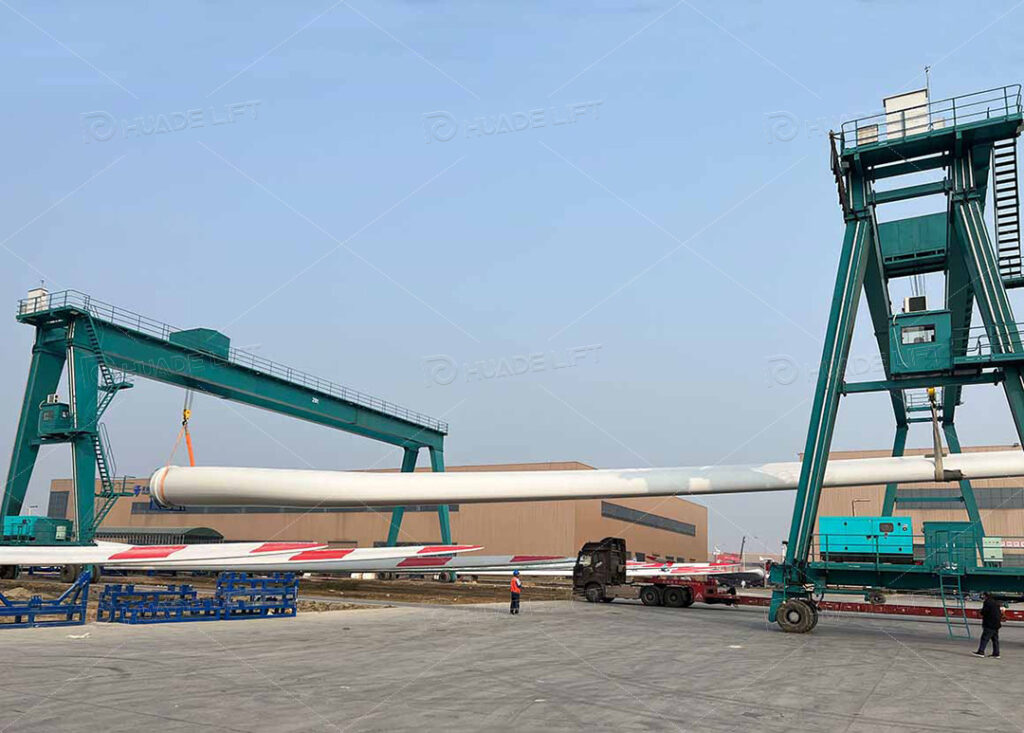
Deploying RTG cranes in highway projects requires comprehensive planning. By precisely matching equipment parameters to project requirements and fully leveraging the RTG crane’s mobility and efficiency, construction precision can be enhanced, project timelines shortened, costs reduced, and operational safety ensured—providing robust support for high-quality highway project advancement.
If you are advancing a highway project and have questions regarding RTG crane selection or deployment, we recommend promptly consulting our professional technical team. They can provide customized equipment solutions and full-process technical support based on your project’s specific requirements, helping you achieve the project construction goals of safety, efficiency, and economy.
