
Introduction
Rubber Tired Gantry Cranes serve as core equipment in heavy-duty applications, where their safety and reliability directly determine operational efficiency. Crane load testing,particularly for rubber tyre gantry,constitutes a mandatory critical phase post-installation, primarily aimed at verifying equipment performance compliance through simulated real-world load conditions. This process proactively identifies potential hazards, ensures safety and regulatory adherence, and empowers personnel to mitigate operational risks while enhancing equipment management standards.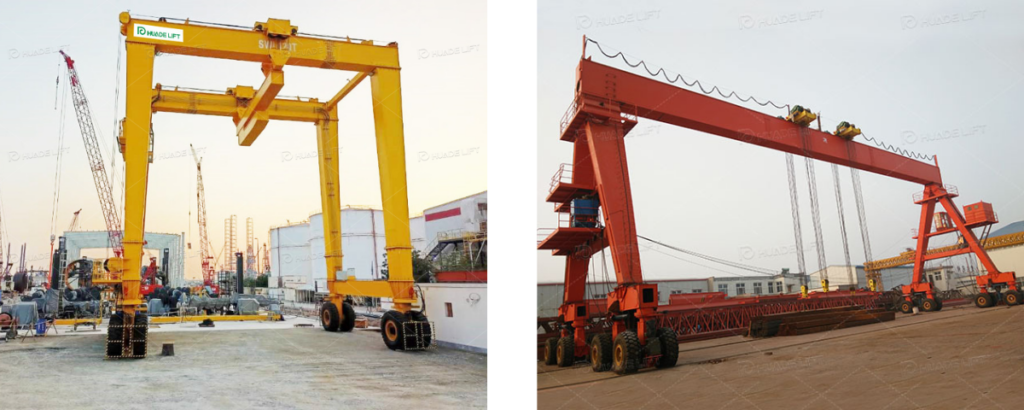
Why Crane Load Testing is Critical After Installation
The significance of rubber tyred gantry crane load testing after installation lies in its role as a risk-control and compliance safeguard, serving as a critical decision gate before commissioning.Rather than serving as a simple inspection, load testing functions as a comprehensive validation mechanism that addresses safety risks, performance uncertainties, regulatory obligations, and long-term operational stability.
Safety and Structural Assurance
Load testing verifies the stability and structural integrity of the rubber tyred gantry crane under rated load conditions, ensuring that key load-bearing components—including the steel structure, main girder, hoisting system, trolley assembly, and wheels—can withstand operational stresses without excessive deflection, deformation, or abnormal vibration. By exposing latent structural weaknesses before commissioning, load testing eliminates load-related failure risks at their source and establishes a secure foundation for safe operation.
Performance and System Validation
During installation, assembly deviations or latent defects in hoisting, hydraulic, braking, and travel systems often remain undetectable under no-load conditions. Load testing verifies key performance parameters under rated load—such as hoisting speed, braking response, travel smoothness, steering accuracy, and hydraulic system stability—confirming that all electromechanical systems operate in coordination and comply with design specifications. This process prevents performance-related failures, reduces unplanned downtime, and ensures stable operational efficiency from the outset.
Compliance and Acceptance Readiness
Governments impose stringent safety regulations on heavy lifting equipment like rubber tyred gantry cranes. In regulated environments, crane load testing serves as the core basis for meeting regulatory requirements, especially for rubber tyred gantry cranes operating in yards. Authorities mandate that such equipment undergo load testing to confirm compliance before commissioning. Failure to complete compliance testing prevents permit issuance. Operating without authorization not only exposes operators to legal risks but may also result in shutdown orders, causing significant economic losses.
Preventive Maintenance and Lifecycle Protection
Load testing identifies potential weaknesses in equipment design or assembly, providing precise guidance for preventive maintenance. If such vulnerabilities remain unaddressed, they may deteriorate during operation, leading to severe failures, costly repairs, and prolonged downtime. Addressing these issues early effectively reduces future maintenance expenses, minimizes unplanned stoppages, and extends stable operational cycles,improving lifecycle return on investment.
Personnel Empowerment and Operational Readiness
Load testing provides a critical opportunity for operation and maintenance teams to build hands-on competence and operational confidence with newly installed rubber tyred gantry cranes. During testing, teams can directly observe crane behavior under load conditions, understand system response characteristics and safe operating limits, strengthen operational and maintenance effectiveness, and lay a solid foundation for subsequent routine operations.
Project Delivery Confidence and Stakeholder Trust
Standardized and well-documented load testing demonstrates that the rubber tyred gantry crane is capable of meeting continuous heavy-duty operational demands. For buyers and operators, this provides confidence in equipment quality and readiness; for suppliers, it validates manufacturing quality and service professionalism. Clear test results and acceptance records also help prevent disputes during handover, ensuring alignment among all stakeholders and supporting long-term cooperation.
Load Testing vs. Visual Inspection:What Buyers Often Overlook
During equipment acceptance, crane load testing is often underestimated with some buyers hold the misconception that visual inspection alone suffices to evaluate performance, eliminating the need for complex load testing. This perception poses significant operational risks and must be corrected.
Why Visual Inspection Inadequately Assesses Rubber Tyred Gantry Crane Performance
Visual inspections only reveal the external condition of the equipment and cannot thoroughly examine core indicators such as internal structural strength and the coordination of electromechanical systems. Potential defects like internal weld cracks or material fatigue in critical components like the rubber tyred gantry crane steel frame and main beams are difficult to detect with the naked eye. Furthermore, performance deviations in electrical control and hydraulic systems only become apparent under load conditions. Therefore, visual inspection alone cannot comprehensively and accurately evaluate the actual performance of the equipment.
Hidden Hazards Revealed Only Under Load
Numerous potential hazards in rubber tyred gantry cranes only fully manifest under load conditions. For instance, minor structural deformations are barely noticeable when unloaded but significantly increase under rated load, compromising operational stability. Poor electrical component contacts remain undetectable during unloaded or low-load operations but can cause component overheating and functional failure when current increases under load. Issues like insufficient braking force or hydraulic system leaks also require load conditions for accurate detection.
Common Critical Issues in Rubber Tyred Gantry Crane Load Testing
Load testing frequently uncovers critical issues directly impacting safe operation that require immediate resolution. Structural components may exhibit excessive deflection or latent weld cracks; electromechanical systems may show abnormal motor operation or unstable braking; safety systems may experience inaccurate overload protection responses or delayed emergency stop activation. All these issues demand precise identification through load testing.
Consequences of Late Issue Detection
Omitting load testing or conducting it superficially, coupled with delayed identification of potential problems, can inflict severe consequences on operators. Safety-wise, this may trigger accidents like structural failure or brake malfunction, leading to casualties and property damage. Operationally, it causes work interruptions and reduced productivity, with costly repairs and potential cascading losses. Compliance-wise, non-compliance risks regulatory penalties and jeopardizes operational licenses.
Acceptance Criteria for Rubber Tyred Gantry Crane Load Testing
Rubber tyred gantry crane load testing acceptance must adhere to explicit standards to ensure scientifically accurate results. Evaluation centers on three core dimensions: structural requirements, electromechanical system requirements, and safety system requirements. Compliance across all dimensions is required for qualification.
Structural Requirements
Structural requirements serve as the core metric for assessing rubber tyred gantry crane load-bearing capacity. Specific acceptance criteria include:First, deflection must remain within permissible limits to prevent deformation risks from insufficient load-bearing capacity; Second, all structural components must exhibit no cracks, weld failures, or structural deformation to guarantee structural strength and stability. Third, tires must maintain stability without slippage or excessive compression, ensuring overall operational safety and load-bearing capacity.
Electromechanical System Requirements
Electromechanical system performance determines rubber tyred gantry crane operational efficiency and stability. Acceptance criteria primarily include: Motor temperature rise must not exceed design thresholds to prevent overheating damage.Trolley and gantry travel must be smooth and free of abnormalities, with the steering system remaining stable under load.Control components like limit switches must operate precisely to prevent operation beyond safe limits.
Safety System Requirements
The safety system serves as the final line of defense for risk control. Acceptance criteria include:Overload protection devices must trigger accurately to prevent overload operation;Emergency stop functions must respond instantly to halt escalating hazards; Anti-sway systems effectively suppress load oscillation to ensure operational safety; collision avoidance systems respond normally within specified detection ranges to prevent impact incidents.
Qualification Determination
Rubber tyred gantry crane load testing qualification follows the “comprehensive compliance” principle, requiring all metrics across three core dimensions to meet standards for approval. Any non-compliant metrics necessitate rectification and retesting until full-dimensional qualification is achieved. Only rubber tyred gantry cranes passing this qualification may proceed to commissioning and normal operation.
Rubber Tyred Gantry Crane Commissioning Process (Including Post-Installation Load Testing)
How Load Testing Affects Rubber Tyred Gantry Crane Acceptance, Warranty, and Costs
Load testing, typically conducted by a qualified load testing service provider, serves as the core basis for meeting regulatory requirements and obtaining operational permits. Its impact manifests in the following aspects:
Load Testing as the Final Gate of Acceptance
Load testing serves as the final critical stage in the factory acceptance test (FAT) and on-site acceptance test for tire-mounted gantry cranes, with its results forming the key basis for acceptance approval. Concurrently, the buyer must require the supplier or an independent load testing service provider to furnish complete test documentation and reports. Test records must be exhaustive and comprehensive, with data fully aligned with acceptance criteria. Compliance certificates must bear signatures from professional institutions or authorized personnel to validate the testing’s compliance and scientific rigor, while also providing reliable reference for subsequent equipment maintenance and repairs.
Load Testing Determines Warranty Activation
The date of load test approval directly determines the start date of the rubber tyred gantry crane warranty. Most supplier warranty policies stipulate that the warranty period begins on the date the equipment passes the load test and completes acceptance. If the test fails, the warranty period does not commence while the equipment is undergoing rectification. Therefore, successfully completing the test and acceptance is a critical prerequisite for safeguarding the buyer’s warranty rights.
Prevents Cost Escalation During Delivery and Operation
Standardized load testing clearly defines equipment performance metrics and safety status, generating mutually agreed-upon test reports that effectively prevent delivery disputes. Failure to conduct testing or non-compliance with procedures may lead to disputes over responsibility when performance issues arise post-commissioning. A complete and standardized testing process with documentation provides clear evidence for issue resolution, ensuring smooth project delivery.
Step-by-Step Crane Load Testing Procedure for Rubber Tyred Gantry
Load testing must follow a standardized procedure, whether performed by the manufacturer’s team or a professional load testing service on site.
Final Pre-Test Inspection
The final pre-test inspection forms the foundation of load testing, aiming to eliminate underlying hazards and ensure testing safety. The inspection scope covers the integrity of structural component bolts and welds, the assembly and connections of electromechanical systems, the functionality of safety components, and the lubrication status of all lubrication points.
Safety Protection Preparation
Load testing carries inherent safety risks, necessitating protective measures and clearly defined control boundaries: Establish restricted zones to prevent unauthorized access; assign dedicated observers and supervisors to ensure seamless team communication; train personnel on emergency shutdown procedures with defined roles for rapid risk response.
Load Application Operation
Load application is the core test phase, requiring adherence to smooth and controlled principles: Secure the test load with qualified lifting equipment and ensure firm fixation; Conduct staged test lifts, raising to a specified height to verify balance and stability before gradually ascending to full test height; Move the load across spans or along tracks according to the plan. During this process, closely monitor motor smoothness, structural deflection, brake effectiveness, and limit switch accuracy, recording results in real time.
Load Holding and Movement Testing
This test verifies the rubber tyred gantry crane’s load-bearing capacity and operational stability under static and dynamic loads, specifically including:
Static Holding Test (load raised to test height and held stationary for a specified duration, monitoring deformation and brake stability);
Dynamic Movement Test (load moved across the full span to verify smoothness and control precision);
Emergency Stop Test (triggering an emergency stop during load movement to verify stopping speed and load stability); Controlled Descent Test (smoothly lowering the load to ground level to verify descent controllability and braking effectiveness).
Post-Test Inspection and Documentation
Post-test inspection and documentation constitute a critical concluding phase, providing a basis for comprehensive results and subsequent corrective actions: After unloading, conduct a thorough inspection of the equipment to identify structural deformation or cracks, verify abnormal overheating or wear of electromechanical components, and check the integrity of the electrical system; Detailed documentation of all data, observations, anomalies, and corrective actions. This comprehensive record serves as both acceptance criteria and a vital reference for future maintenance.
Best Practices for Load Testing
To enhance test validity and ensure results accurately reflect equipment performance, adhere to these five core principles:
Strictly Follow Manufacturer Guidelines
Manufacturer-provided documentation is the foundational basis for load testing. Tests must strictly adhere to official protocols, including load settings, procedural sequence, and observation standards. Deviations may distort results, invalidate performance verification, or even damage equipment.
Use Certified Test Weights
Test weight accuracy directly impacts precision. Employ certified weights that precisely meet standard specifications to ensure load application is authentic and accurate. Secure weights properly to maintain load stability during testing, preventing detachment or vibration that could compromise results.
Maintain standardized documentation throughout the process
Standardized documentation is critical for ensuring compliance and traceability. A designated person must be responsible for recording the test plan, full process inspection results, observation data, anomalies, and corrective actions. Ensure records are clear, accurate, and complete. After signature confirmation, archive them to meet regulatory requirements and provide a basis for subsequent maintenance.
Deploy qualified personnel
Load testing must be supervised by certified engineers or technicians from an experienced crane load testing service provider. Operators require specialized training and thorough familiarity with standardized procedures. Qualified personnel can accurately assess equipment condition, identify potential hazards, and ensure testing safety and result accuracy. Non-professional operation risks equipment damage, safety incidents, and invalid test outcomes.
Timely Maintenance After Testing
Maintenance must follow testing promptly: Minor defects or anomalies should be rectified immediately to prevent escalation. If no issues are found, perform routine maintenance such as component tightening and lubrication replenishment. Timely maintenance consolidates test outcomes, ensures optimal equipment commissioning, and extends stable operational cycles.
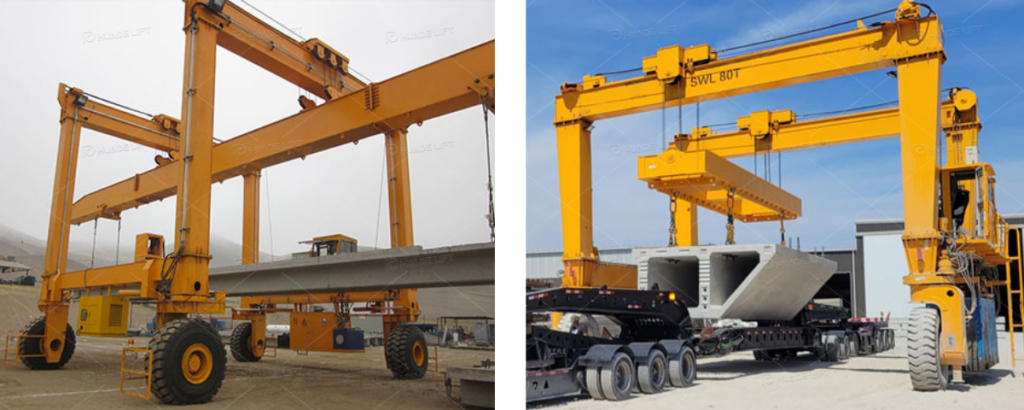
Common Mistakes to Avoid
During load testing after rubber tyred gantry crane installation, some practitioners may fall into common pitfalls due to cognitive biases or non-standard operations, leading to inaccurate test results, equipment damage, or even safety incidents. The following four major risk areas require particular attention:
Skipping Pre-Test Inspections
Some teams bypass pre-test checks to save time, proceeding directly to load testing—a highly risky practice. Minor defects like hidden cracks in lifting hooks or poor electrical contacts can trigger failures or accidents during testing. Therefore, comprehensive pre-test inspections are indispensable; testing should only commence after confirming no underlying equipment hazards exist.
Uneven Load Distribution
Uneven load distribution often stems from improper securing of heavy objects or inappropriate selection of lifting accessories. This causes unbalanced stress on the equipment, not only distorting test results but also exacerbating localized structural stress and creating hidden hazards. Before applying the load, ensure the heavy object is securely fastened and the load is evenly distributed to prevent swaying or tilting.
Incomplete Documentation
Some teams neglect documentation, resulting in incomplete records or inaccurate data. This compromises test result traceability, affects compliance during acceptance, and may invalidate warranties, leading to liability disputes. Therefore, standardized documentation throughout the process must be prioritized and ensured.
Non-Professional Operation
Non-professionals lack in-depth understanding of rubber tyred gantry crane structure, performance, and testing procedures. Their operation or supervision of tests may lead to misjudgments of equipment status, causing equipment damage or safety incidents. Consequently, load testing must be conducted by professionally trained personnel with appropriate qualifications.
Summary
In summary, post-installation load testing of rubber tyred gantry cranes is a critical process for ensuring safety, verifying performance, and guaranteeing compliance. Standardized testing enables early hazard detection, enhances efficiency, and reduces costs—demanding high priority from both suppliers and users. It is recommended to establish a closed-loop management system covering the entire process and implement regular retesting plans. This approach supports long-term stable equipment operation and promotes safe, efficient industry development.
