
Introduction
Rubber tyred gantry cranes, with their unique construction and operating mechanisms, are widely used in container terminals, railway yards, logistics warehouses, and other locations, serving as a powerful tool for improving operational efficiency and ensuring the rapid movement of goods. This article will delve into the critical role of rubber tyred gantry cranes in modern logistics systems and detail diverse strategies for maximizing their productivity.
What Is a Rubber Tyred Gantry Crane?
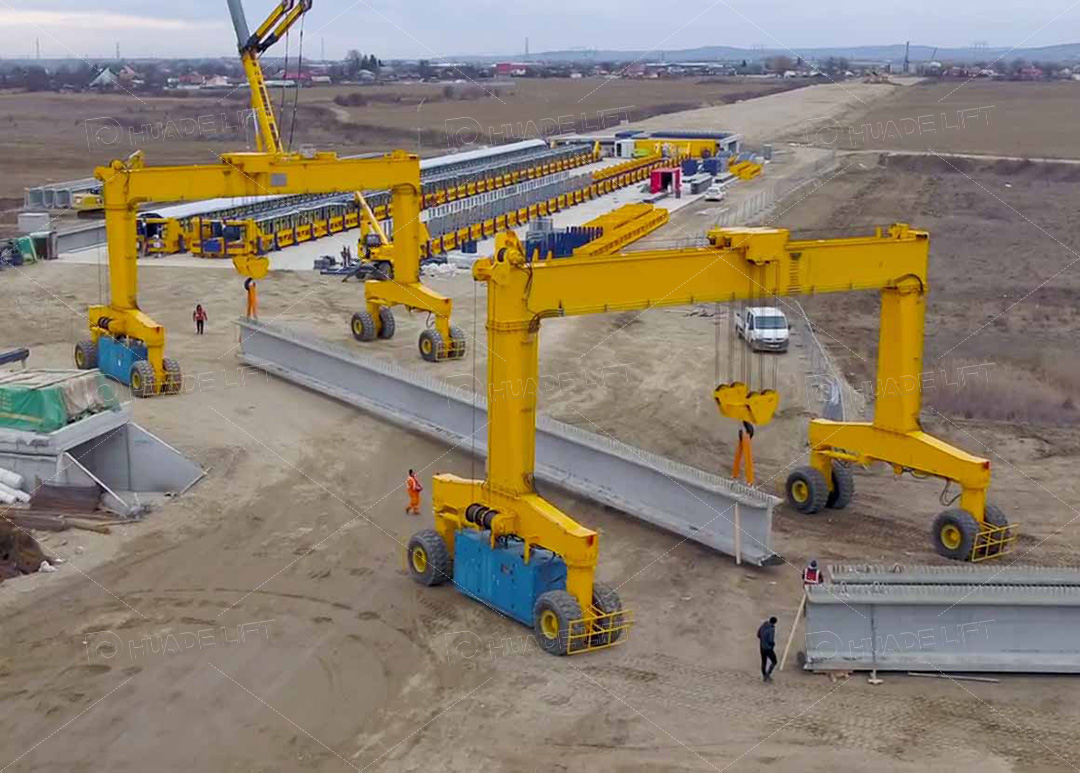
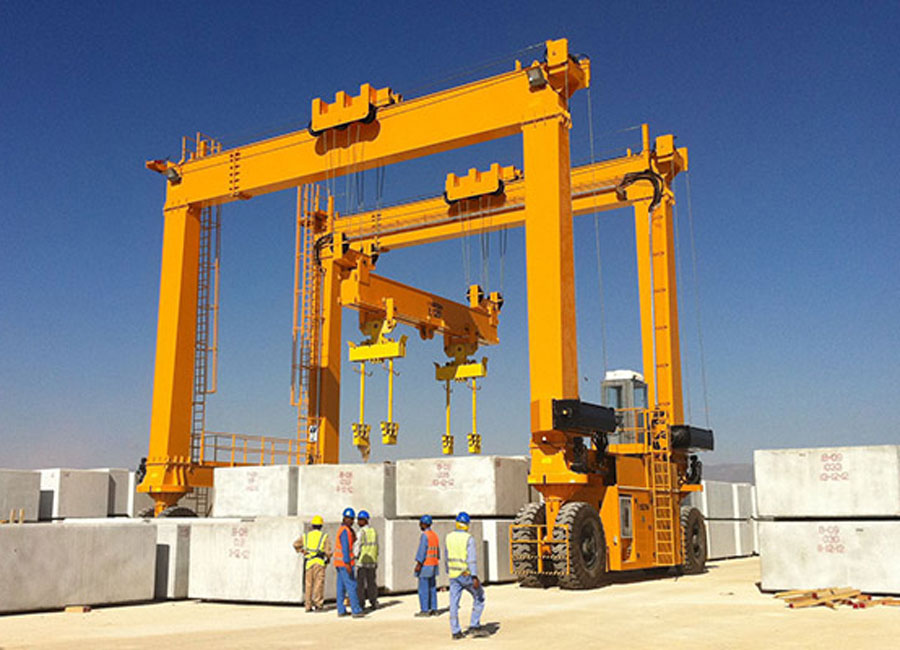
A rubber tyred gantry crane is a ground-based lifting device commonly used in ports, terminals, and construction sites. Its distinctive feature is its ability to move via rubber tires, freeing it from the constraints of traditional tracks.
Core Advantages of Rubber Tyred Gantry Cranes
High Mobility
Unlike track-mounted cranes, rubber tyred gantry cranes are not restricted by tracks and can move freely within cargo yards. In complex and dynamic yard environments, it can easily adapt to irregular layouts, flexibly adjust operational paths, and eliminate operational blind spots. For example, during partial yard renovations or changes in cargo stacking arrangements, the rubber tyred gantry crane can swiftly alter its travel route to continue efficient operations without the need for extensive modifications or operational downtime, as required by track-mounted cranes. This high mobility enables the rubber gantry crane to rapidly respond to diverse operational demands, significantly enhancing operational efficiency.
Strong Storage Capacity
Rubber tyred gantry cranes feature multi-layer container stacking functionality, typically enabling 4-5 layers of container stacking. Compared to traditional single- or double-layer storage methods, this significantly increases the number of containers stored per unit area. Taking a standard football field-sized yard as an example, using rubber tyred gantry multi-layer stacking can accommodate several times more containers than single-layer stacking, effectively alleviating yard space constraints. By reasonably planning the stacking layout, rubber gantry cranes can fully utilize vertical yard space, achieving dual improvements in storage density and operational efficiency, thereby saving logistics companies significant land resources and operational costs.
Flexible and Efficient Scheduling Performance
In logistics hubs such as ports, there is often uncertainty regarding ship schedules and truck arrival times. The flexible scheduling capabilities of rubber tyred gantry cranes play a critical role in such scenarios, enabling rapid relocation to different work areas based on actual conditions. When large container ships arrive early and require priority loading/unloading, rubber tyred gantry cranes can swiftly halt current operations, move to designated berths, and coordinate with shore cranes for efficient loading/unloading. This precise control over operational rhythms and rapid response capability ensures that logistics operations are closely aligned with actual demand, avoiding delays caused by untimely equipment scheduling and significantly improving overall logistics efficiency.
Scalability
Whether it is a small logistics yard or an ultra-large international container terminal, rubber tyred gantry cranes can be perfectly adapted. When business volume is low, a single unit can be deployed to meet basic loading, unloading, and storage needs. As business volume grows, the number of rubber tyred gantry cranes can be increased to build a multi-unit collaborative operation network, achieving linear expansion of operational capacity. Multiple rubber gantry cranes can optimize task allocation and path planning through an intelligent scheduling system to avoid mutual interference and ensure efficient collaboration. For example, during peak port periods, multiple rubber tyred gantry cranes can simultaneously handle loading and unloading operations for multiple vessels. Through reasonable scheduling, overall throughput can be enhanced to confidently handle business peaks.
How to Maximize the Productivity of Rubber Tyred Gantry Cranes
Precise Equipment Selection and Configuration Optimization
Equipment selection is the foundation for enhancing the productivity of rubber tyred gantry cranes. Logistics companies should select the appropriate rubber tyred gantry crane model based on yard size, business throughput, and container types. Large container terminals should opt for rubber tyred gantry cranes with high lifting capacity and long spans to meet the demands of handling multiple heavy containers and covering extensive operational areas; smaller logistics terminals can opt for equipment with moderate lifting capacity and higher flexibility to reduce procurement and operational costs. In terms of configuration, efficient hoisting mechanisms and running systems are critical. Adopting advanced variable frequency speed control technology enables precise control of hoisting and running speeds, reducing time losses during acceleration and deceleration, and shortening operational cycle times.
Fine-Tuned Operational Process Management
Scientific yard planning is key to improving the operational efficiency of rubber tired gantry cranes. Divide the yard into functional zones such as import container zones, export container zones, and transshipment container zones, and establish reasonable storage strategies based on factors such as container size, weight, and shipper. By optimizing storage layout, the idle travel distance of rubber tyred gantry cranes between different operational tasks can be reduced. For example, containers awaiting loading for export can be concentrated in areas near the gantry cranes, facilitating rapid container retrieval and transportation by rubber tyred gantry cranes. Additionally, optimizing loading and unloading scheduling logic using a “priority sorting” principle ensures that urgent cargo or containers with tight shipping schedules are prioritized, guaranteeing efficient completion of critical operations. Furthermore, the “human-machine collaboration” operation mode is implemented, leveraging intelligent assistance systems to provide precise guidance for operators, reducing human judgment errors, and enhancing operational efficiency and accuracy.
Enhancing Personnel Skills and Standardized Operations
The skill level of operators directly impacts the operational efficiency and safety of rubber tyred gantry cranes. Companies should regularly organize specialized training for rubber gantry crane operators, covering equipment operation techniques, safety standards, and emergency response procedures. Through practical training simulating real-world operational scenarios, operators’ precise operational capabilities are enhanced, enabling them to swiftly and proficiently perform container lifting and stacking operations. Concurrently, standardized operational procedures should be established, with clear standards defined for critical processes such as hook positioning and container stacking angles.
Deep Empowerment by Intelligent Technology
Intelligent technology provides a powerful boost to the productivity of rubber tyred gantry cranes. By introducing an automated scheduling system, real-time analysis of multi-source data such as operational tasks, equipment status, and yard layout enables load balancing and path optimization for multiple rubber tyred gantry cranes, preventing some equipment from being overloaded while others remain idle, ensuring each rubber tyred gantry crane operates at maximum efficiency. By applying remote monitoring and fault warning systems, sensors collect real-time operational data from equipment. Through data analysis, potential fault hazards are promptly identified and warnings issued in advance. Maintenance personnel can prepare tools and spare parts accordingly to perform preventive maintenance before equipment failures occur, thereby reducing unplanned downtime. Additionally, unmanned operation technology is gradually maturing, enabling rubber tyred gantry cranes to achieve higher precision operations through autonomous driving and automatic positioning functions, free from human interference, further enhancing operational efficiency and quality.
Establishing a Comprehensive Maintenance and Care System
Establishing a comprehensive maintenance and care system is a critical measure to ensure the continuous and efficient operation of rubber tired gantry cranes. Develop a preventive maintenance plan to conduct regular comprehensive inspections, maintenance, and repairs based on equipment usage frequency and operating time, such as regularly replacing lubricants for critical components, inspecting the condition of electrical system connections, and testing the reliability of safety protection devices. Establish a spare parts inventory management mechanism to monitor inventory levels in real time, predict replacement cycles based on equipment operating conditions and historical maintenance data, and pre-stock sufficient spare parts to enable swift responses to equipment failures and reduce maintenance cycles. Additionally, conduct regular equipment performance testing and calibration to ensure that critical metrics such as lifting capacity, positioning accuracy, and operating speed remain in optimal condition, providing a solid foundation for efficient operations.

Common Constraints and Solutions for Improving the Productivity of Rubber Tyred Gantry Cranes
Site and Environmental Constraints and Responses
Some older ports or narrow yards have limited space, restricting the travel and operational space of rubber tyred gantry cranes and leading to equipment collisions and restricted operations. In response, the yard layout can be optimized, unnecessary obstacles removed, and the travel passages for rubber gantry cranes widened. Additionally, intelligent navigation and collision avoidance systems can be employed to provide precise path planning and real-time collision warnings for rubber tyred gantry cranes, ensuring safe and efficient operations within limited spaces. Adverse weather conditions such as heavy rain, strong winds, and dense fog can significantly impact the operational efficiency and safety of rubber gantry cranes. Weather sensors and anemometers can be installed to monitor weather conditions in real time. When adverse weather strikes, operational parameters can be automatically adjusted, such as reducing speed or lowering lifting height. During strong winds, anti-wind anchoring devices can be installed to enhance equipment stability and ensure operational safety.
Solutions for Equipment Aging and Performance Degradation
As the service life increases, the mechanical components of rubber tyred gantry cranes experience accelerated wear, and the performance of the electrical system declines, leading to reduced operational efficiency and increased failure rates. To address this issue, aging equipment can undergo technical upgrades and renovations, such as refurbishing mechanical transmission components or replacing them with high-performance parts to improve transmission efficiency, and upgrading the electrical control system with intelligent technology, using advanced controllers and sensors to optimize operational control logic. Through such upgrades, equipment performance can be partially restored, extending the efficient operational cycle and avoiding the high costs associated with premature equipment retirement.
Strategies for Addressing Poor Coordination in Scheduling
In logistics operations, rubber tyred gantry cranes must coordinate with various equipment such as container trucks and ship-to-shore cranes. If coordination in scheduling is poor, issues such as prolonged waiting times and loose connections in operational workflows may arise. By utilizing a digital platform to establish an information-sharing network between equipment, real-time data sharing can be achieved. Through an intelligent scheduling system, unified coordination and command can be implemented based on the operational progress and status of each piece of equipment, thereby optimizing operational workflows. For example, when a container truck is about to arrive at the rubber tyred gantry crane’s operational area, the system can preemptively notify the rubber tyred gantry crane to prepare for operations, ensuring swift container loading and unloading, reducing container truck waiting times, and enhancing overall operational efficiency.
Breaking Through Energy Supply Bottlenecks
Traditional diesel-powered rubber tyred gantry cranes have high energy consumption and significant pollution, and prolonged operations may face fuel supply shortages. To overcome energy supply bottlenecks, hybrid power technology is being promoted, combining grid power, batteries, and diesel generators to flexibly switch energy modes based on operational conditions, thereby reducing fuel consumption and emissions. Additionally, fast-charging technology is being accelerated to shorten charging times and enhance continuous operational capability. Furthermore, the application of green energy sources such as hydrogen and solar power on rubber tired gantry cranes is being explored to provide clean and sustainable energy support for rubber tired cranes, driving green development in the logistics industry.
Future Trends for Rubber Tyred Gantry Cranes
The Rise of Fully Automated Rubber Tyred Gantry Crane Systems
With advancements in artificial intelligence and automated control technology, fully automated rubber tyred gantry crane systems will become the mainstream trend in the future. Such systems can achieve fully automated operations from container identification, positioning, and handling to stacking, without requiring human intervention. Through high-precision sensors and intelligent algorithms, the system can real-time sense changes in the operational environment and precisely control the movements of the rubber tyred gantry crane, significantly enhancing operational efficiency and accuracy. In future smart ports, fully automated rubber tyred gantry crane systems will collaborate with automated ship-to-shore cranes and autonomous container trucks to build a highly intelligent logistics operation system, enabling efficient and rapid cargo turnover.
Deep Integration of 5G and IoT
The high-speed, low-latency characteristics of 5G technology provide strong support for remote monitoring and intelligent control of rubber tyred gantry cranes. Combined with IoT technology, various sensors on the rubber tyred crane can transmit real-time operational data and status to the cloud, enabling managers to monitor equipment conditions and perform remote operations via mobile devices or computers. In the remote control room, operators can precisely control the rubber tyred gantry crane remotely via the 5G network, as if operating on-site. Additionally, 5G + IoT technology enables optimized collaborative operations among multiple rubber tyred gantry cranes, enhancing operational synergy and fluidity through real-time data exchange, thereby further unlocking the productivity potential of rubber tyred gantry cranes.
Widespread Application of Green Energy Technology
In response to global environmental protection initiatives, the application of green energy technology in the rubber tyred gantry crane sector will continue to expand. Hydrogen, as a clean and efficient energy source, is poised to become one of the primary power sources for rubber tired gantry cranes. Hydrogen fuel cell-powered rubber gantry cranes produce only water during operation, with no exhaust emissions and high energy conversion efficiency. Additionally, solar-assisted power supply technology will further develop, with solar panels installed on rubber tired gantry cranes to collect solar energy and convert it into electricity to power auxiliary systems, thereby reducing overall energy consumption. The application of green energy technologies not only enhances the sustainable operational capabilities of rubber tired gantry cranes but also supports the logistics industry’s transition toward green and low-carbon operations.
The Popularization of Modular Design
The concept of modular design will be more widely applied in the future manufacturing of rubber tyred gantry cranes. By dividing the rubber tyred gantry into multiple functional modules such as lifting modules, running modules, and electrical control modules, standardized production can be achieved in manufacturing, thereby improving efficiency and quality. In terms of equipment maintenance and upgrades, modular design makes it easier to replace faulty modules or upgrade specific functions. For example, when enhancing the lifting capacity of a rubber tyred gantry crane, only the corresponding lifting module needs to be replaced, without requiring major modifications to the entire equipment. This design approach can quickly respond to the diverse needs of different users, reduce the lifecycle costs of the equipment, and drive the continuous innovation and development of rubber tyred gantry crane technology.
Conclusion
Rubber tyred gantry cranes play a crucial role in enhancing productivity. This equipment helps businesses optimize operations and improve efficiency. Companies should consider adopting rubber tyred gantry cranes early to maintain a competitive edge in the market. If you wish to obtain the most suitable rubber tyred gantry crane solution for your business, please contact us immediately.
