
With the global trade recovery and accelerated infrastructure development in Australia, rubber-tired gantry cranes (RTGs) have become core equipment for container terminals, rail yards, and mining logistics due to their flexible and efficient heavy-load handling capabilities.
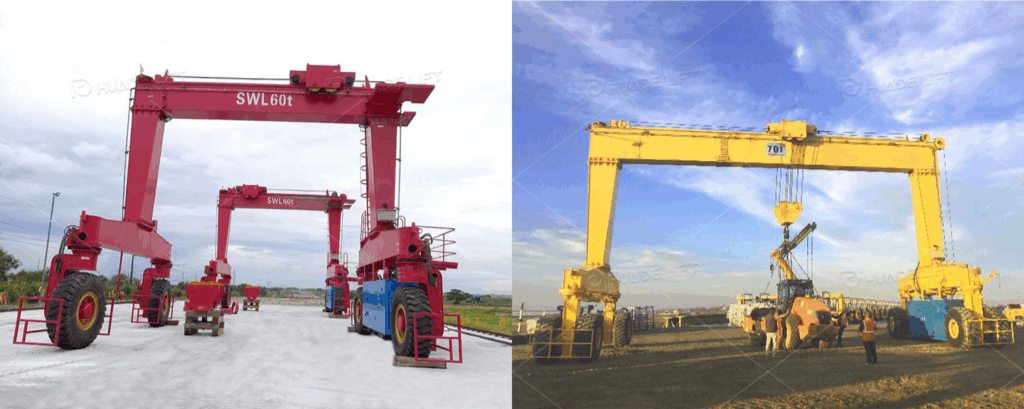
Why RTG Cranes Are Widely Adopted in Australia
Trends in Australian Port and Inland Logistics Development
Australia is undergoing rapid expansion of its logistics infrastructure, with port expansions serving as a key driver. The Port of Melbourne plans to add three new container berths by 2030, while the Ports of Sydney and Brisbane are advancing berth upgrade projects. This has directly fueled a surge in RTG crane imports, with Australia’s total crane imports growing by 25% year-on-year in 2024. Concurrently, deepening mining operations—such as iron ore development in Western Australia and gold mining in Victoria—alongside expanding energy infrastructure like Queensland’s liquefied natural gas processing plants, have further amplified demand for heavy-duty, flexible lifting equipment. In inland regions, the integration and modernization of rail yards and regional logistics hubs have generated sustained growth in demand for highly mobile RTG cranes, steadily increasing their market penetration.
Typical Applications of RTG Cranes
RTG cranes are widely deployed across Australia’s core logistics scenarios, with distinct advantages tailored to each environment:
Container Terminal Scenario: Leveraging high stacking density advantages of 900-1100 TEU/hectare, significantly enhancing terminal space utilization (far exceeding the 500-600 TEU/hectare level of straddle carriers), precisely matching the growing container throughput demands of Australia’s major ports;
Rail Yard Scenario: The trackless, tire-mounted design flexibly adapts to diverse cargo layouts, efficiently facilitating container loading/unloading onto rail freight cars and substantially boosting intermodal transport efficiency;
Mining Logistics Scenario: Customized models withstand extreme conditions including temperatures exceeding 40°C and high dust levels, enabling safe handling of heavy materials like ore and mineral processing equipment. As core equipment for mine maintenance and production transfer, they ensure operational continuity.
Comparison of Applicability with RMG/Straddle Carrier
| Comparison Dimensions | Rubber-Tired Gantry (RTG) Crane | Rail-Mounted Gantry (RMG) | Straddle Carrier |
| Initial Purchase Price | Mid-tier (Benchmark Reference) | 40%-60% higher than RTG (requires additional track laying and foundation construction costs) | Approximately 30% lower than RTG |
| Long-Term Operating Costs Core Characteristics | Significant overall advantages | Lower energy consumption but high track maintenance costs; limited flexibility, challenging to adapt for multi-area operations | High maneuverability but high energy consumption per unit load, 30% higher operating costs than RTG; short service life (only 10-15 years) |
| Service Life | 15-20 years | – | 10-15 years |
| Adaptability Summary | Best overall value for money in “initial cost + long-term operating cost” for Australia’s diverse, high-flexibility operational needs | Limited flexibility, suited only for single, fixed-area operations | High mobility but high operating costs and short lifespan, suitable for small-scale, flexible transfer scenarios |
2025 Australian RTG Crane Price Range
New RTG Crane Price Range (USD/AUD Dual Currency)
The 2025 Australian market price for new RTG cranes varies significantly based on configuration. The dual-currency price ranges are clearly defined as follows:
| Model Configuration | USD Price Range | AUD Price Range |
| 30-ton class, 1-over-5 stacking structure Standard diesel model | USD 250,000-320,000 | AUD 385,000-492,000 |
| 40-ton Class, 1-over-6 Stacking Configuration General Purpose Model | USD 280,000-350,000 | AUD 430,000-540,000 |
| 50-ton heavy-duty model or hybrid model | USD 350,000-450,000 | AUD 540,000-695,000 |
| 50-ton all-electric model (25%–40% powertrain premium) | USD 450,000-600,000 | AUD 695,000-930,000 |
Price Range and Risk Advisory for Used RTG Cranes
Prices for used RTG cranes vary significantly based on service life and condition, with key reference points as follows: Used RTGs with less than 5 years of service typically cost 60%-75% of new equipment, saving 25%-40% in costs; Units with 5-10 years of service command 40%-60% of new equipment prices, yielding 40%-60% cost savings; Refurbished used RTGs cost 50%-70% of new equipment, resulting in 30%-50% savings.
Key risks associated with used equipment warrant close attention: First, compliance risks—some imported used equipment may fail to meet Australian AS/NZS 1418 standards, with costly and time-consuming recertification processes (potentially up to 60 days). Second, core component wear—hidden deterioration in tires, hydraulic systems, and other consumables may trigger sudden spikes in maintenance costs. Third, technical compatibility—older equipment may lack integration with modern automated monitoring systems, compromising operational efficiency.
Cost Differences Between Local Australian Procurement vs. Direct Overseas Manufacturing
The core advantage of locally procuring RTG cranes in Australia lies in rapid after-sales response and guaranteed compliance, though this comes with a significant price premium of 30%-50% over direct overseas procurement. Local suppliers primarily focus on technical services and regional support rather than large-scale equipment production. The premium stems mainly from local warehousing, installation/commissioning, compliance certification, and short-term spare parts inventory costs.
Overseas direct procurement, primarily from Chinese manufacturers, offers significant cost advantages: equipment prices are 30%-40% lower than local procurement, and bulk purchases (3 units or more) qualify for 5%-15% discounts. However, overseas direct procurement incurs additional costs: transportation (approximately 15%-20% of total equipment value), tariffs (Australia’s HS code 8426 imposes a 5% base tariff on cranes), and import certification fees. Delivery cycles are also extended, typically spanning 3-6 months—significantly longer than the 1-2 months for local procurement.
Reasons for Quotation Disparities
The core reasons for RTG crane quotation differences lie in configuration variations across four key dimensions:
Core Performance Parameters: Lifting capacity and stacking height structures directly impact manufacturing costs, with significant cost differences between models of varying tonnages and stacking configurations.
Power System Type: All-electric and hybrid models command a substantial premium over diesel variants, with power system differences being a major source of price variation.
Automation and Control System Levels: High-end PLCs, anti-sway systems, and remote monitoring can increase costs by 10%-20%. Higher automation levels correlate with higher prices;
Compliance and Service Costs: Local procurement includes after-sales and certification services that command a higher premium than direct overseas sourcing. The accumulation of compliance and service-related costs further widens the quotation gap.
Additionally, supplier pricing strategies, procurement batch sizes, and delivery cycle requirements can further amplify quotation differences.
Key Factors Affecting RTG Crane Prices in Australia
Lifting Capacity and Span Configuration
Lifting capacity is the core factor influencing price. For RTG cranes in the 30-ton to 50-ton class, each 5-ton increase in lifting capacity raises the price by 15%-20%. Regarding stacking configurations, the 1-over-6 stacking structure costs 8%-12% more than the 1-over-5 configuration, primarily due to reinforced main beam structures and upgraded hoisting mechanisms. For example, a 40-ton 1-over-5 stacking RTG costs approximately $320,000. Upgrading to a 1-over-6 stacking configuration increases the price to $345,600–$384,000.
Power Systems
Diesel RTGs offer the lowest initial cost as a base configuration option, but incur high long-term fuel expenses. For a 40-ton class unit, annual fuel costs can reach $25,000–$40,000, accounting for over 50% of annual operating expenses, and fail to meet ESG compliance requirements at certain ports.
Hybrid RTGs in Australia base their ROI calculations primarily on energy savings: while their initial cost is 15%-20% higher than diesel models, annual energy costs can be reduced by 30%-40%. Combined with Australia’s energy pricing policies, most projects can recoup the price difference within 4-6 years. For mining sites and ports with high operational intensity and extended continuous running times, the ROI advantage of hybrid models is even more pronounced.
All-electric RTGs carry the highest initial cost, exceeding diesel models by over 35%, yet offer irreplaceable value in ESG compliance. As Australian ports advance carbon neutrality goals, fully electric RTGs achieve zero emissions, reducing annual CO2e emissions by up to 480 tons per unit while qualifying for regional environmental subsidies. Additionally, maintenance costs for fully electric models are 40% lower than diesel counterparts, delivering significant lifecycle cost advantages over 10 years.
Automation and Control System Levels
Automation level directly determines RTG pricing: Semi-automated RTGs cost 10%-15% more than manual models, primarily due to added semi-automatic positioning and automatic alignment functions. Fully automated RTGs cost 30%-50% more than manual models, featuring advanced capabilities like unmanned operation and automatic scheduling. Industry data indicates fully automated RTGs significantly enhance operational efficiency, reduce labor dependency, and align with port automation upgrade trends.
Core Control System Component Costs: PLC control systems account for 5%-8% of total equipment cost, serving as the automation hub. Anti-sway systems represent 3%-5%, enhancing precision and efficiency. Remote monitoring systems constitute 2%-4%, enabling real-time operational status tracking, fault alerts, and reduced manual intervention costs. Investing in high-end control systems can reduce long-term operational costs by 20%-30%.
Tires, Drive, and Steering Systems
Tire configuration directly impacts costs: 16-wheel configurations cost 12%-18% more than 8-wheel setups. This increase stems not only from higher tire procurement costs ($3,000-$6,000 per tire) but also requires upgrades to drive and load-bearing structures. The advantage of 16-wheel configurations lies in enhanced load capacity, reduced ground pressure, adaptability to complex terrain, and minimized tire wear.
Chassis reinforcement costs for Australia’s challenging terrain are significant: Custom chassis designs—including reinforced frame structures, additional anti-corrosion coatings, and upgraded suspension systems—are essential for mining sites with gravel roads and ports with humid, corrosive environments. These modifications account for 5%-10% of the equipment’s total cost. Neglecting terrain adaptation may increase tire replacement frequency by 30%, shorten chassis lifespan by 20%, and significantly elevate long-term maintenance costs.
Compliance with Australian Standards
Australia enforces stringent compliance requirements for RTG cranes, centered on the AS/NZS 1418 Crane Safety Standard. This covers structural strength, safety protection devices, electrical system safety, and other dimensions, while also meeting WorkSafe operational safety requirements. Equipment must pass static load tests at 1.25 times rated capacity and dynamic load tests at 1.1 times rated capacity. Safety devices including overload protection, travel limit switches, collision prevention, and emergency stop systems are mandatory. Outdoor models additionally require wind speed monitoring devices.
Third-party certification and compliance testing constitute a significant cost component, typically accounting for 3%-8% of the equipment’s total price. For imported equipment, if AS/NZS 1418 standards were not considered during the design phase, subsequent retrofitting and recertification costs may reach 10%-15% of the total equipment price. Additionally, the lengthy audit cycle of up to 60 days often leads to project delays, with a delay rate as high as 35%.
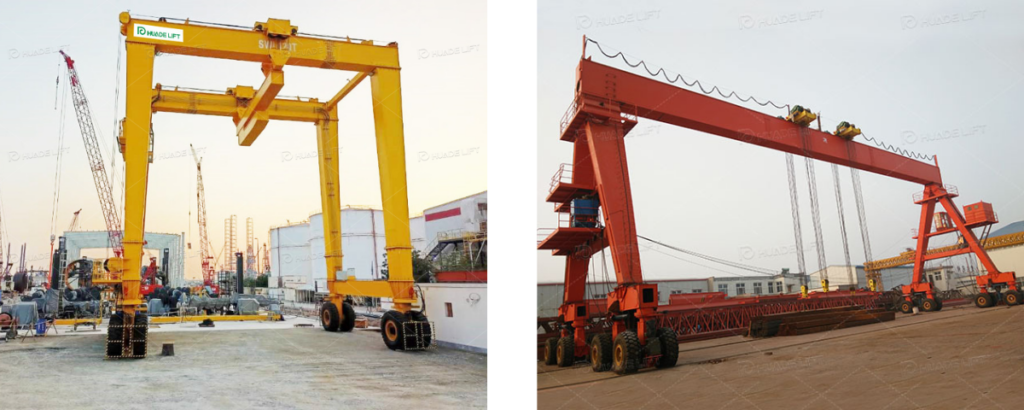
Total Cost of Ownership (TCO) for Australian RTG Cranes
Total Cost of Ownership (TCO) encompasses initial procurement costs, energy consumption costs, maintenance costs, labor training costs, and other expenses over a 10-year cycle. It serves as the core basis for procurement decisions, rather than a single unit price.
Energy Consumption Costs
The calculation logic for a 10-year cycle is “average annual operating hours × unit energy consumption × energy unit price.” For example, a 40-ton diesel RTG operating 3,000 hours annually with a fuel consumption rate of 30L/hour and diesel priced at AUD 2.2/L incurs approximately AUD 198,000 in energy costs over 10 years. In contrast, an all-electric RTG with an energy consumption rate of 80kWh/hour and electricity priced at AUD 0.3/kWh incurs only AUD 72,000 in energy costs over the same period.
Maintenance and Wear Parts Replacement
Tire replacement cycles occur approximately every 2-3 years, with a single set costing AUD 30,000-50,000. Annual maintenance costs for hydraulic and braking systems average 1%-2% of the equipment’s total price. Cumulative maintenance and wear parts costs over 10 years amount to approximately 15%-20% of the initial equipment price.
Technical Support and Spare Parts Supply
Direct overseas procurement of spare parts involves extended lead times (4-8 weeks) and high air freight costs for urgent replacements. Locally sourced parts or those from overseas manufacturers with Australian spare parts centers reduce lead times to 1-2 weeks. Annual technical support costs average 0.5%-1% of the equipment’s total price.
Labor and Training Costs
Lower automation levels require more operators, increasing annual labor costs. Fully automated RTGs reduce operator needs by 50%, saving AUD 300,000–500,000 in cumulative labor costs over 10 years. Initial technical training costs approximately AUD 15,000–25,000 (including certified operational compliance training).
Comparison: Low-cost RTGs (e.g., basic diesel models, overseas direct purchases without service) have a 10-year TCO approximately 1.8-2.2 times the initial price. High-specification RTGs (fully electric, automated, with local service) have a 10-year TCO approximately 1.3-1.6 times the initial price. While the initial investment is higher, the long-term cost advantage is significant.
Price Comparison: Local Suppliers vs. Overseas Manufacturers
Advantages of Local Brands and Reasons for Premium Pricing
The Core Advantages of Local Brands in Australia
Compliance Assurance
Equipment is certified against AS/NZS 1418 crane safety standards and WorkSafe operational safety requirements prior to shipment. Purchasers incur no additional certification costs or delays, enabling immediate compliant deployment.
Rapid Response Service
Leveraging local technical teams enables on-site repair responses within 24 hours, with spare parts delivery cycles of just 1-7 days. This significantly reduces equipment downtime and minimizes operational losses.
Customized Adaptation
Equipment designs are specifically optimized for Australia’s climate characteristics—including high temperatures, dusty conditions, and humid corrosion—as well as challenging operational environments like gravel mining roads and complex port surfaces. This enhances operational stability and adaptability.
Core reasons for local brand price premiums
Aggregated operational costs
Including local warehouse leasing, regional logistics, and on-site installation/commissioning labor expenses;
Compliance and Spare Parts Inventory Costs
Ongoing investments in initial compliance certifications and capital tied up in short-term spare parts stockpiling;
Brand and Service Premium
Premium derived from years of established local market reputation, plus the cost allocation for providing long-term rapid response services. The combination of these costs results in local brands being priced 30%-50% higher than overseas manufacturers.
The Cost-Effectiveness Logic of Chinese RTG Manufacturers
China has become Australia’s largest crane import source, with its cost-effectiveness advantage rooted in three core logics:
Scale Manufacturing Cost Reduction
Leveraging large-scale production systems significantly lowers unit manufacturing costs, positioning equipment prices 20%-30% below international brands to establish foundational price competitiveness;
Integrated Supply Chain Support
Full vertical integration from core structural components to control systems reduces reliance on external suppliers and intermediary costs, further compressing total expenses.
Precision Customization
Rapid adaptation to Australian compliance standards (e.g., AS/NZS 1418) and tailored equipment designs for diverse operational environments like mines and ports enhance localized suitability.
Additionally, Chinese manufacturers hold extra advantages in the new energy sector: mature RTG technology for new energy, with hydrogen fuel cell and fully electric models already commercially deployed. These precisely align with Australian port ESG compliance needs while offering 15%-25% lower pricing than comparable European/American new energy models, balancing environmental requirements with cost efficiency.
Delivery Cycle, After-Sales Response, and Risk Control Comparison
Delivery Cycle: Local suppliers offer 1-2 month delivery cycles, enabling rapid response to urgent project demands; Overseas direct procurement from Chinese manufacturers takes 3-6 months. Bulk orders require advance production scheduling, while customized designs extend lead times to 6-8 months.
For after-sales response, local suppliers offer 24-48 hour technical support and on-site repairs. Chinese manufacturers typically provide service through overseas agents with 3-7 day response times. Complex issues may require domestic technical team support, extending response cycles to 1-2 weeks.
Regarding risk management, the primary risk of local procurement is inflated pricing that reduces return on investment. Key risks for direct overseas sourcing include: equipment damage during transit, failure to obtain compliance certifications, delivery delays, and inadequate after-sales support. Mitigation strategies include signing detailed contracts, retaining warranty deposits, and selecting manufacturers with proven experience in Australian projects.
How to Obtain Accurate RTG Crane Quotes in Australia
10 Core Technical Parameters Required in RFQs
Accurate quoting hinges on clear technical specifications. RFQs must include: ① Rated lifting capacity (including duty cycle); ② Stacking structure (e.g., 1-over-5/1-over-6); ③ Span dimensions; ④ Power system type (diesel/hybrid/electric); ⑤ Travel speed and hoisting speed requirements; ⑥ Automation level (manual/semi-automatic/fully automatic); ⑦ Operating environment (port/mining site/rail yard, presence of extreme climates); ⑧ Ground bearing capacity; ⑨ Compliance standards (specific clauses of AS/NZS 1418); ⑩ Delivery and service requirements (installation/commissioning timeline, spare parts warranty period, training needs).
Hidden Clauses Affecting Final Quotations
Pay close attention to three types of hidden clauses: First, certification responsibility clauses (whether the supplier bears compliance certification costs, compensation mechanism for failed certification); Second, transportation and assembly responsibility clauses (whether oversized transport permits, on-site assembly/commissioning, and error control standards are included); Third, after-sales guarantee clauses (spare parts supply cycle, free maintenance period, emergency fault response time).
Hidden Costs Behind Low-Priced Quotes
The core issue is that low quotes often omit three types of costs: First, compliance costs—subsequent certification and testing expenses far exceed expectations. Second, service costs—additional installation, commissioning, and technical training fees typically account for 5%-10% of the total equipment price. Third, risk costs—hidden expenses like retrofitting due to poor equipment-site compatibility and downtime losses from failures.
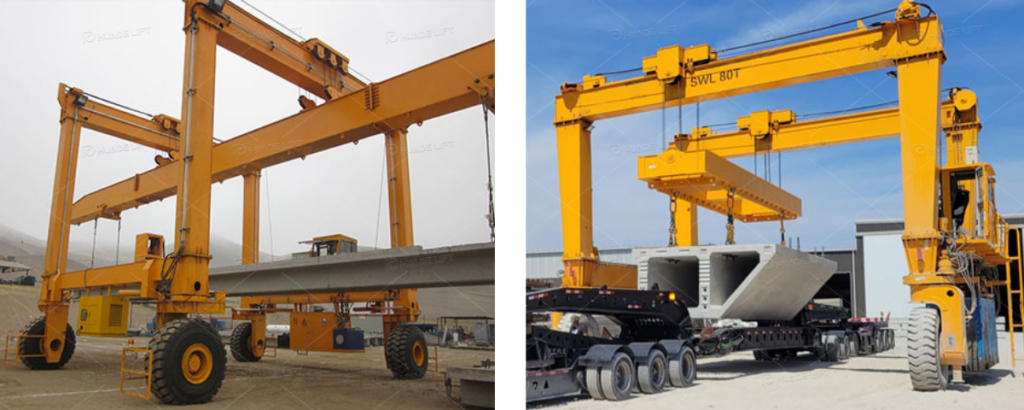
Common Misconceptions When Purchasing RTG Cranes in Australia
Overlooking Total Cost of Ownership (TCO)
Most buyers fall into the “low-price-first” trap, neglecting TCO calculations. While low-cost RTGs have lower initial expenses, their high energy consumption, maintenance costs, labor requirements, and low residual value can result in a 10-year TCO significantly exceeding that of higher-spec models. For example, a 40-ton low-cost diesel RTG may cost 35% less than a fully electric model upfront, but its 10-year TCO is 25%-30% higher, ultimately increasing long-term investment costs.
Neglecting Ground Conditions and Tire Configuration
Australian mining sites feature abundant gravel, ports suffer from humid corrosion, and some inland areas have insufficient ground bearing capacity. Ignoring these conditions while selecting standard tires and chassis configurations can increase tire replacement frequency by over 30%, elevate risks of chassis deformation and corrosion, and significantly boost subsequent maintenance costs and downtime losses. For instance, using an 8-wheel RTG with standard tires in mining areas may reduce tire lifespan to 1-2 years, incurring 50% higher tire replacement costs compared to properly configured equipment.
Insufficient Understanding of Australian Compliance
Some buyers lack deep comprehension of Australian compliance frameworks like AS/NZS 1418 standards and WorkSafe requirements. Blindly procuring low-cost overseas equipment often results in non-compliance with local safety standards. This necessitates substantial additional investment for retrofitting and certification, or even renders equipment unusable due to failed inspections—causing severe financial losses and project delays.
Underestimation of After-Sales Support and Remote Services
Many buyers overly focus on unit prices during procurement decisions while neglecting the critical importance of after-sales support and remote services. As large heavy-duty equipment, RTGs inevitably experience operational failures. Delayed after-sales responses or prolonged spare parts supply cycles can drastically increase downtime losses. Particularly for directly imported overseas equipment, failure to plan after-sales support solutions in advance may result in prolonged unavailability due to unrepaired faults.
Which Suppliers Are Suitable for Australian Projects
Technical Delivery Experience
High-quality suppliers should possess extensive experience in RTG crane technology R&D and delivery, capable of providing mature equipment solutions tailored to Australian operational scenarios and compliance requirements. Key considerations include the supplier’s technical team strength, equipment development cycle, and in-house R&D capabilities for core components. Avoid selecting suppliers with immature technology or insufficient delivery experience.
Project Experience in Australia or Similar Markets
Suppliers with project experience in Australia or comparable overseas markets (e.g., Southeast Asia, Europe, or North America) demonstrate deeper understanding of local compliance requirements, operational environment characteristics, and customer needs. This expertise helps mitigate various risks during project implementation. Buyers should request relevant project case studies and verify project completion quality, customer evaluations, and post-sales feedback.
Customization Capability vs. Standardization Capability
Suppliers must balance customization and standardization capabilities: On one hand, they should provide tailored equipment design and configurations to meet the specific demands of diverse Australian operational scenarios (e.g., ports, mining sites, rail yards). On the other hand, they must maintain standardized production processes and quality control systems to ensure consistent equipment quality while controlling customization costs and delivery timelines.
Long-Term Partnership and Spare Parts Assurance
With RTG cranes boasting a service life of 15-20 years, the supplier’s capacity for sustained collaboration and spare parts support is critical. Premium suppliers should offer long-term technical assistance, spare parts supply services, and establish comprehensive inventory systems to minimize lead times, ensuring reliable, long-term equipment operation. For overseas suppliers, verify whether they maintain local agencies or spare parts warehouses in Australia.
Conclusion
Investing in RTGs in Australia offers significant economic value, with total cost of ownership (TCO) being the core decision factor. While high-specification models require higher initial investment, they deliver substantial long-term advantages in energy consumption, maintenance, and labor costs, aligning with local logistics infrastructure upgrade needs. RTGs suitable for Australia must meet core criteria: compliance with AS/NZS 1418 and WorkSafe standards; adaptability to complex environments; prioritization of hybrid/electric models for ESG alignment; automation for cost reduction and efficiency gains; and optimized chassis/tires to minimize maintenance losses.
Core recommendations for engineering managers and procurement leads: – Conduct precise research to clarify requirements and compliance standards – Select suppliers with proven Australian project experience, mature technology, and robust after-sales support – Calculate TCO to avoid low-price traps – Refine contracts to specify critical terms – Prioritize training and commissioning to ensure operational readiness Choosing highly adaptable, cost-effective RTGs underpins long-term, stable project operations.
