
Introduction
Against the backdrop of global efforts to promote sustainable energy development, the wind power industry is expanding rapidly. Data indicates that the global wind power market reached $89.6 billion in 2023, growing to $98.74 billion in 2024. It is projected to reach $260.81 billion by 2034, with a compound annual growth rate (CAGR) of 10.2% from 2024 to 2034, underscoring wind power’s pivotal role in energy transition.
The trend toward larger wind turbines is evident, exemplified by the world’s largest 26-megawatt offshore wind turbine, featuring blades spanning 153 meters and a nacelle weighing over 500 tons. This poses significant challenges for equipment transportation and handling, where traditional lifting and transport methods fall short. Rubber-tyred gantry cranes (RTGs), however, offer unique performance advantages, making them an ideal solution for this challenge and increasingly vital to the wind power industry.

Challenges in Transporting and Handling Wind Power Equipment
Dimensions and Weight Characteristics of Wind Power Components
Core components of wind turbines, including blades, hubs, and towers, are continuously increasing in size and weight. For instance, the wind turbines installed at the Jingyuan Beitan 300MW wind power project within the Baiyin 1.5GW New Energy Base under China Shandong Energy’s “Longdian Ru Lu” initiative feature a total weight exceeding 750 tons, a tower height of 125 meters, a rotor diameter of 221 meters, and a swept area surpassing 38,000 square meters—equivalent to five standard soccer fields. While this trend toward larger turbines enhances wind capture efficiency and power generation capacity, it significantly increases the complexity of transportation and installation.
Limitations of Traditional Lifting and Transportation Methods
Conventional lifting and transportation equipment reveals numerous shortcomings when handling the large dimensions and heavy weights of wind power equipment. For instance, their lifting capacity and height may fall short of requirements for hoisting large towers and nacelles. Flexibility is also limited, hindering free movement and precise positioning within complex wind farm environments. Furthermore, traditional equipment lacks effective handling and securing methods for extra-long, oversized blades, increasing the risk of damage during transport.
Wind Farm and Manufacturing Plant Requirements
Wind farms are typically located in remote areas with complex terrain and limited access, demanding handling equipment with excellent mobility and adaptability for rapid deployment and operation across diverse site conditions. Meanwhile, turbine manufacturers require efficient, flexible handling equipment during production to meet the manufacturing and transfer needs of components for turbines of varying specifications. Consequently, developing a flexible, high-efficiency handling solution tailored to the unique demands of wind power equipment is imperative.
Core Advantages of Rubber-Tired Gantry Cranes (RTGs)
High Load Capacity
RTGs possess formidable load-bearing capabilities, effortlessly handling the lifting of hundred-ton wind turbine components. Advanced RTG models can achieve maximum lifting capacities of several hundred tons, fully meeting the requirements for transporting heavy components such as large nacelles and towers. This provides robust assurance for the installation and transportation of wind power equipment.
Flexible Mobility
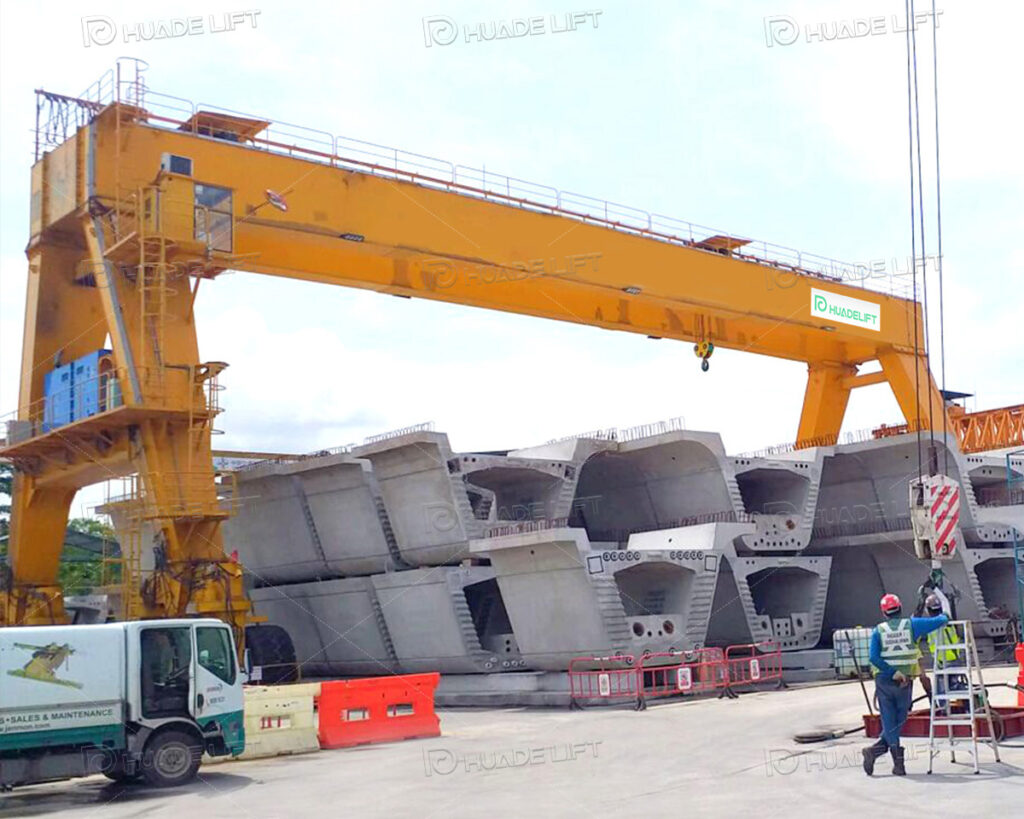
The rubber-tired design grants RTGs exceptional maneuverability. Unlike traditional rail-mounted cranes constrained by tracks, RTGs can freely traverse various terrains and surfaces—including rugged mountain roads and soft sandy ground—within wind farms, manufacturing plants, and other sites. This mobility enables rapid deployment to work locations, significantly boosting operational efficiency.
Modularity and Customization
RTGs feature modular designs and customizable configurations tailored to the specific dimensions and weight requirements of wind turbine components. By flexibly combining different modules, they meet the handling demands of specialized wind power equipment. For instance, extended lifting attachments and support structures can be engineered for extra-long blades, while reinforced hoisting mechanisms and structural integrity ensure safe operation when handling heavy nacelles.
Precision Control
Precision control is critical when lifting large components like blades and towers. RTGs feature advanced control systems enabling operators to precisely manage lifting, lowering, traversing, and rotating motions, ensuring smooth and accurate component handling. Some high-end RTGs incorporate intelligent control technology that automatically adjusts the crane’s posture and operating parameters based on the load’s weight and position, further enhancing operational safety and precision.
Rubber Tyred Gantry Crane Applications in Wind Power
Wind Turbine Blade Handling and Storage Solutions
Wind turbine blades present significant challenges due to their length and unique shape during handling and storage. RTGs utilize specialized lifting attachments to securely hoist blades and transport them to designated locations. During storage, their precise maneuverability allows blades to be arranged at specified angles and intervals, optimizing space utilization while preventing damage during handling and storage.
Adaptability for Tower and Nacelle Transportation
For transporting towers and nacelles, RTGs leverage their high load capacity and agile mobility to efficiently transfer components within wind farms or between manufacturing plants and ports. During tower section hoisting, RTGs precisely position segments at installation points, ensuring accuracy and quality. For nacelle transport, RTGs provide stable lifting support, guaranteeing safety throughout transit.
Rapid Deployment at Wind Farm Construction Sites
Wind farm construction sites present complex environments requiring equipment capable of swift deployment and operation. Utilizing rubber-tired travel, RTGs eliminate the need for complex rail systems, enabling rapid access to all work points across the site. They can flexibly adjust their operational positions according to construction progress and site changes, providing robust support for accelerated wind farm construction.
Efficient Support for Manufacturing Plants and Port Transfers
At turbine manufacturing plants, RTGs assist in producing, assembling, and transferring wind turbine components, boosting production efficiency. At ports, RTGs rapidly load components from manufacturing plants onto transport vessels or unload arriving components onto storage yards or transfer vehicles, enabling seamless logistics and accelerating the turnover of wind power equipment.
Technological Innovation and Solutions
Electric and Hybrid RTGs
To reduce carbon emissions and align with the wind power industry’s green development philosophy, an increasing number of RTGs are adopting electric or hybrid technologies. Electric RTGs operate on electricity, producing near-zero emissions during operation and significantly reducing environmental pollution. Hybrid RTGs combine traditional fuel engines with electric drive systems, maintaining power performance while lowering fuel consumption and exhaust emissions. This provides a more environmentally friendly handling solution for the sustainable development of wind power projects.
Intelligent Control and Automation Systems
The application of intelligent control and automation systems greatly enhances RTG operational precision and safety. Equipped with sensors and control systems, RTGs can monitor real-time operational status, load weight, and position, automatically adjusting parameters and movements according to pre-set programs. For instance, during lifting operations, the system automatically corrects for swaying or shifting loads to ensure stable and safe handling. This intelligent control not only boosts operational efficiency but also minimizes risks from human error.
Remote Control and Monitoring Capabilities
Considering the harsh conditions of wind farms and the inaccessibility of certain areas, some RTGs are equipped with remote control and monitoring functions. Operators can safely manage the RTG from a secure location away from the worksite using a remote controller, eliminating the risk of personnel working in adverse environments. Simultaneously, the remote monitoring system provides real-time insights into the RTG’s operational status, enabling timely detection and resolution of potential faults to ensure stable equipment performance.
Structural Optimization
To reduce dependence on ground foundations and enhance RTG adaptability, manufacturers have optimized structural designs. Utilizing lightweight, high-strength materials reduces equipment weight while maintaining lifting capacity. Simultaneously, optimized chassis structures and tire configurations improve stability and maneuverability, enabling reliable operation across diverse terrain conditions.
Comparison with Other Handling Equipment
Rubber Tyred Gantry Crane vs. Straddle Carrier
In wind power transportation, while straddle carriers offer certain load-bearing capacity and mobility, they exhibit less flexibility compared to RTGs. Straddle carriers are typically larger in size with a greater turning radius, making maneuverability challenging on narrow wind farm roads or complex construction sites. Conversely, the RTG’s rubber-tired design enables agile turning, allowing it to navigate freely within confined spaces. This makes it better suited for the complex operational environments involved in transporting and handling wind power equipment.
Differences and Complementarity with Crawler Cranes and Bridge Cranes
Crawler cranes offer excellent off-road performance and powerful lifting capabilities, making them ideal for hoisting heavy equipment in harsh terrain conditions. However, their slow travel speed requires significant time and effort when relocating between job sites. Bridge cranes are primarily used in fixed workshops or warehouses, operating on dedicated tracks with high lifting precision but limited mobility. RTGs combine lifting capability with flexible mobility, enabling widespread application in open outdoor areas like wind farms and manufacturing plants, complementing both crawler and bridge cranes. In wind power projects, selecting the appropriate crane type based on specific operational scenarios and requirements achieves optimal performance.
Analysis of Advantages in Cost, Efficiency, and Flexibility
From a cost perspective, RTGs feature relatively low acquisition costs. Their mobility eliminates the need for expensive track installation, resulting in economical maintenance and operational expenses. In terms of efficiency, RTGs can rapidly respond to operational demands and efficiently switch between different work sites, significantly enhancing the handling efficiency of wind power equipment. Regarding flexibility, as mentioned earlier, the rubber tire design of RTGs enables them to adapt to various complex site conditions, a capability unmatched by other handling equipment. Considering multiple factors such as cost, efficiency, and flexibility, RTGs hold distinct advantages in the field of wind power equipment handling.
Economic and Environmental Benefits
Reduced Transportation and Handling Costs
The RTG’s high-efficiency operation and agile mobility minimize time losses during transportation and handling of wind power equipment, lowering labor costs and equipment rental expenses. Simultaneously, its adaptability to diverse site conditions avoids additional costs associated with site modifications, effectively reducing the overall transportation and handling expenses for wind power projects.
Enhancing Equipment Turnover Efficiency
By swiftly and precisely handling wind power equipment, RTGs accelerate the turnover speed between manufacturing plants, ports, wind farms, and other stages. This enables faster completion of equipment installation and commissioning, allowing projects to commence operations sooner. Consequently, it improves capital turnover rates and return on investment for wind power enterprises.
Reduced Dependence on Site Infrastructure
RTGs operate without complex rail systems or solid ground foundations, functioning effectively in relatively rudimentary site conditions. This not only minimizes infrastructure construction requirements and lowers development costs but also enables wind farms to be established in areas with challenging topography yet abundant wind resources, expanding project site selection possibilities.
Aligning with Sustainable Development and Green Energy Supply Chain Demands
The electrification and hybrid technology advancements of RTGs, coupled with their application in the wind power sector, align closely with sustainable development principles and green energy supply chain requirements. By reducing their own carbon emissions while enabling efficient wind project construction, RTGs actively contribute to global clean energy development and promote the sustainable growth of the entire green energy industry.
Selecting a Reliable Rubber Tyred Gantry Crane Supplier
Technical Capabilities and Customization Experience
A dependable RTG supplier must possess robust R&D capabilities to deliver customized solutions tailored to the wind power sector’s unique requirements. This includes designing appropriate lifting heights, load capacities, and lifting gear configurations for various wind turbine specifications. Extensive customization experience ensures the supplier accurately interprets client needs and swiftly provides practical product solutions.
Track Record and Reputation in Wind Power
Evaluating a supplier’s successful case studies and reputation within the wind power sector is crucial. By examining the operational performance of equipment supplied to past wind projects and reviewing client feedback, one can assess the supplier’s product quality, performance, and after-sales service standards. A strong reputation indicates customer recognition of the supplier’s product quality, delivery reliability, and technical support capabilities.
After-Sales Service and Long-Term Maintenance Support
Wind power equipment operates in complex environments, making RTG failures inevitable during use. Therefore, suppliers must maintain a comprehensive after-sales service system capable of promptly addressing maintenance requests and providing swift, effective technical support. Additionally, they should offer long-term maintenance support plans to ensure stable equipment operation, extend service life, and reduce operational risks for customers.
International Certification and Safety Standard Compliance
Compliance with international certifications and safety standards is a fundamental requirement for RTG suppliers. Certifications such as ISO quality management systems and CE safety certifications demonstrate that a supplier’s products meet internationally recognized standards for quality and safety. Strict adherence to relevant safety standards ensures equipment safety during operation, protecting both personnel and equipment.
Conclusion
In summary, rubber-tired gantry cranes (RTGs) deliver significant value in the wind power industry. Leveraging advantages such as high load capacity, flexible mobility, modular customization, and precise control, they effectively address transportation and handling challenges for wind power equipment. RTGs are widely deployed in critical applications including blade handling, tower and nacelle transportation, and wind farm construction.
Driven by technological innovation, RTGs are evolving toward electrification and intelligent operation, enhancing both performance and environmental sustainability to better align with the industry’s sustainable development needs. Compared to alternative handling equipment, RTGs demonstrate superior cost-effectiveness, operational efficiency, and flexibility, delivering significant economic and environmental benefits to enterprises.
When selecting an RTG supplier, enterprises should evaluate technical capabilities, industry case studies, after-sales service, and compliance with safety standards to ensure equipment reliability and service quality. Moving forward, RTGs will continue to empower the wind power industry. Advances in intelligent and green technologies will inject stronger momentum into the sector. Wind power enterprises are advised to adopt suitable RTG solutions to drive high-quality industry development, supporting global energy transition and sustainable growth.
