
Selecting the appropriate lifting solution is crucial for enhancing operational efficiency, ensuring operational safety, and controlling costs. Rubber Tyre Gantry Cranes (rubber tyre gantry cranes) and mobile lifts are two commonly used types of equipment. The former is suitable for heavy-duty material handling in specific sites, while the latter demonstrates distinct advantages in ship-related operations. This article provides selection guidance for diverse needs by examining equipment characteristics, differences, and application scenarios.
What Is a Rubber Tyre Gantry Crane?
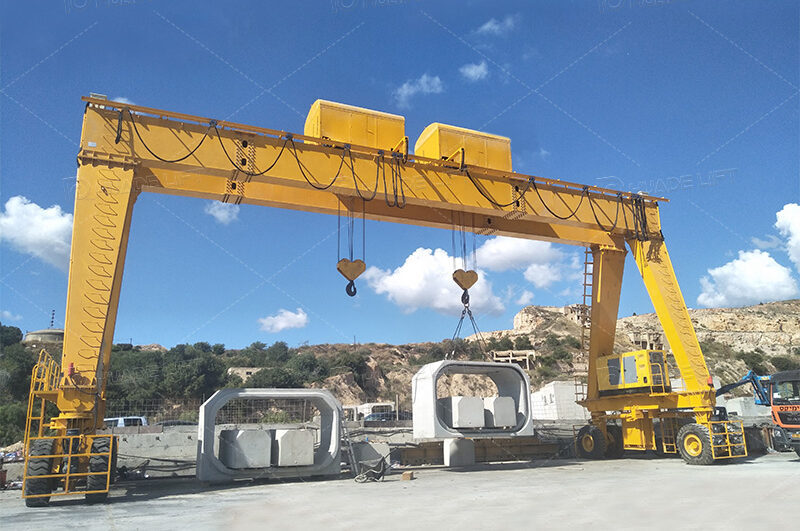
A rubber tyre gantry crane (RTGC) primarily performs vertical lifting and horizontal movement of heavy loads in open areas. Key features include:
– Flexible mobility via rubber tires
– Lifting capacity for medium-to-heavy loads
– Gantry frame structure enabling efficient cargo transfer within work zones
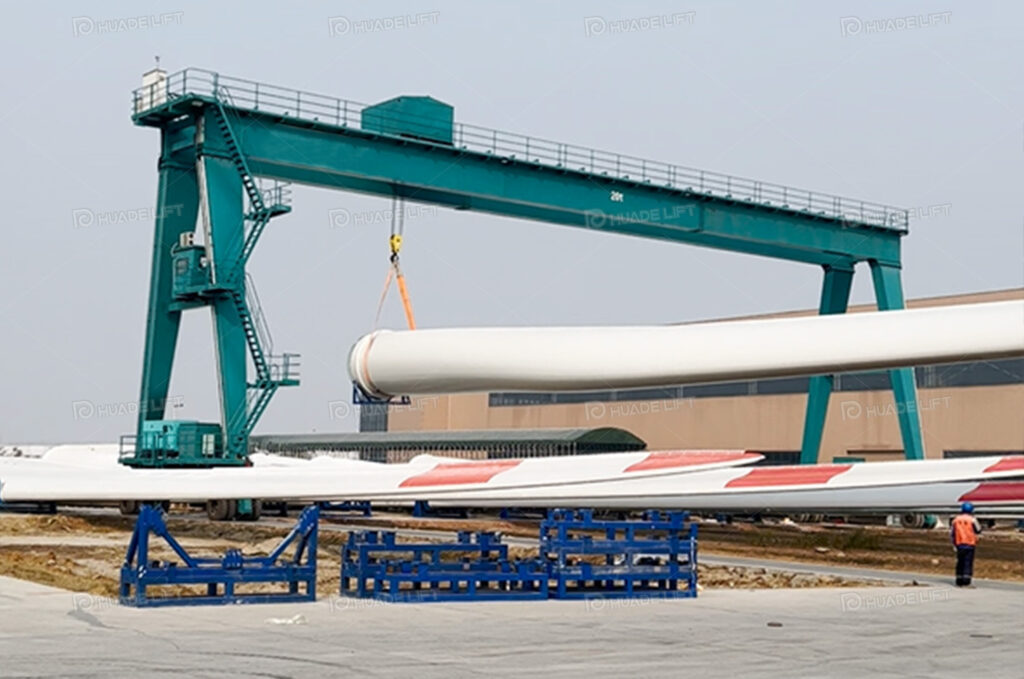
These cranes are widely deployed in precast component yards, wind turbine assembly sites, infrastructure bridge construction zones, energy storage pipe storage facilities, and heavy steel processing plants. They efficiently handle the loading, unloading, and stacking of large precast bridge components, wind turbine towers, energy storage pipes, and steel structures. However, its operation demands high site leveling and faces mobility constraints in confined spaces.
What is a Travel Lift?
A travel lift (also known as a ship crane or mobile ship lift) is a specialized lifting device designed for ship handling. Its core function is to lift, move, and lower entire vessels. Key features include an adjustable lifting sling system adaptable to vessel dimensions, excellent mobility via its own drive system, and precise compatibility with vessels of varying tonnages and sizes.
Primarily deployed in shipyards, docks, and ship repair facilities, it facilitates vessel repositioning during construction, shore-based lifting for maintenance, and launching operations. Compared to other lifting equipment, it offers significant advantages in vessel adaptability but imposes specific requirements on site load-bearing capacity and water access conditions. Its versatility for non-vessel heavy-lift tasks is relatively limited.
Core Differences Between Rubber Tyre Gantry Crane and Travel Lifts
Design and Structural Differences
Rubber tyre gantry cranefeature a gantry frame structure as their core design. The frame spans the work area in a “gate” configuration, utilizing lifting mechanisms (such as winches or hook assemblies) mounted on the crossbeam to achieve vertical lifting of heavy loads. This design provides high structural rigidity and stable support for lifting operations. Mobile lifts, however, center on a lifting sling system. Multiple adjustable-length slings form an enveloping lifting structure. The flexibility of the slings adapts to the irregular shapes of ships, eliminating the need for complex rigid frames. The overall structure prioritizes flexibility and adaptability.
Differences in Mobility and Operational Scenarios
In terms of mobility, rubber tyre gantry cranes utilize rubber tires for movement. They are suited for operations in large, flat yards, wind turbine assembly areas, bridge construction sites, and other open, level terrain. They can perform long-distance horizontal movement of heavy loads and multi-level stacking, with the core operation being “efficient intra-site transfer.” Mobile elevating work platforms are better suited for complex terrains, primarily serving shipyard slipways and water-land interfaces at docks. Their core operation is “cross-scenario transfer between land and water for vessels,” requiring flexible movement from water edges to repair platforms and from slopes to flat areas.
Differences in Lifting Capacity and Height
Regarding lifting capacity, rubber tyre gantry cranes offer a broader load range, covering medium-sized (tens of tons) to heavy-duty (hundreds of tons) cargo. They can accommodate diverse heavy objects such as precast bridge components, wind turbine towers, energy storage pipes, and steel structures. Mobile elevating platforms require precise load matching to vessel tonnage. While their load range can also span tens to hundreds of tons, they emphasize “targeted adaptation” rather than universal load coverage.
Regarding lifting height, rubber tyre gantry cranes are primarily designed to meet multi-level stacking requirements. For instance, wind turbine tower storage yards necessitate 2-3 tiers of tower storage, enabling lifting heights of over ten meters. Mobile elevators’ lifting height is centered on vertical displacement for ship launching or hauling out, typically only needing to bridge the height difference between the water surface and the repair platform (usually several meters), resulting in a relatively limited overall lifting height range.
Control System Differences
Rubber tyre gantry crane predominantly utilize automated or semi-automated control systems. Programmable Logic Controllers (PLCs) enable preset operational parameters for precise load positioning, lifting speed regulation, and path planning. For instance, cranes in energy storage tube yards can automatically identify tube codes to complete grabbing and stacking tasks, reducing manual intervention while enhancing operational accuracy and efficiency. Rubber tyre gantry craneprimarily rely on manual or semi-automated control. Due to variations in vessel shape and weight distribution, operators must adjust sling tension and lifting speed in real-time based on the vessel’s actual conditions (e.g., tilt angle, center of gravity position). Their control systems emphasize “human real-time intervention.”
Site Requirement Differences
The core site requirement for rubber tyre gantry cranes is “flat and reinforced.” The ground surface in the operational area must maintain minimal flatness deviation (to prevent tilting during equipment movement) and undergo reinforcement treatment (e.g., reinforced concrete paving) to withstand the combined weight of the equipment and load, preventing ground collapse. Mobile elevating platforms require “terrain adaptability and water access,” necessitating shallow water conditions (for vessel berthing and lifting) and ramp access (for vessel movement between land and water). While the ground must possess sufficient load-bearing capacity, flatness requirements are lower than for rubber tyre gantry cranes, allowing adaptation to slightly sloped terrain.
Ideal Application Scenarios
Core Considerations for Site Selection
Equipment selection requires comprehensive evaluation of workflow, operational frequency, and terrain conditions. From a workflow perspective:
– For continuous, large-scale heavy-load stacking and transfer operations (e.g., “component unloading – storage – assembly workstation transfer” in wind turbine assembly yards), rubber tyre gantry cranes’ efficient transfer capacity and automated control better suit such processes.
– For operations centered on vessel “launching – construction/repair – docking” cycles, the site must feature:
– Sufficient ground bearing capacity to support equipment and heavy loads, preventing ground collapse.
– Shallow water depth for vessel berthing and lifting. – assembly station transfer“ continuous operations, the rubber tyre gantry crane’s efficient transfer capability and automated control better suit such processes. If the workflow revolves around a ship’s ”launching – construction/repair – docking” cycle with relatively flexible intervals between stages, the mobile lift’s ship adaptability and scenario flexibility better meet the requirements.
Regarding operational frequency: For high-frequency operations—such as daily stacking and transfer of dozens of energy storage tubes at a manufacturing site—the rubber tyre gantry crane’s stable, continuous operation prevents equipment failures caused by frequent starts and stops. For operations tied to shipbuilding/repair cycles—like monthly section transfers for a few vessels at a shipyard—the mobile lift’s stability during low-frequency tasks offers greater advantages.
Regarding terrain conditions: – For flat, open yards or sites without significant slopes or obstacles, the mobility of rubber tyre gantry cranes is fully advantageous. – For sites involving inclined ramps or waterfront access—such as shipyard slipways or dock waterfronts—mobile elevating work platforms better accommodate special terrain requirements.
Selecting the Appropriate Lifting Solution
Assessing Lifting Requirements
First, determine the maximum load weight in the operation to ensure the selected equipment’s lifting capacity fully covers the demand, avoiding operational interruptions or safety risks due to insufficient load capacity. Simultaneously, establish the required lifting height by considering the number of cargo stacking layers (e.g., wind turbine tower stacking layers) or the lifting height requirements for heavy objects in the operational scenario, then select matching equipment parameters. Furthermore, consider the frequency of lifting operations. For frequent and continuous tasks, prioritize equipment with stable, sustained operational capability to minimize failure risks from equipment fatigue.
Additionally, make targeted selections based on the material types involved in the operation. For handling rigid, regular-shaped heavy objects like precast bridge components, wind turbine towers, energy storage tubes, or steel assemblies, the gantry frame structure and lifting mechanism of a rubber tyre gantry crane provide greater stability during hoisting. Conversely, for irregularly shaped, flexible loads such as ships, the sling system of a mobile lift better accommodates the load, minimizing potential damage to the material.
Assessing Site Conditions
Terrain characteristics of the work site are a critical consideration. On reinforced, level ground with no significant slopes or obstacles—such as wind turbine assembly areas, energy storage tube yards, or precast component storage zones at bridge construction sites—the rubber-tired mobile system of a rubber tyre gantry crane can fully leverage its advantages, enabling flexible movement and efficient operations. However, for shipyard ramp accesses or water-to-land transition zones at docks, equipment must switch between slope and flat-ground operations while facilitating water-to-land transfers. In such cases, mobile elevating work platforms better meet site requirements.
Simultaneously, spatial constraints and maneuverability requirements must be considered. In open work areas without narrow passages or dense obstacles—such as large steel fabrication plants—the gantry frame structure of rubber tyre gantry cranes operates unrestricted, enabling unrestricted operations. However, if the site contains numerous pieces of equipment, structures, or narrow passages, equipment with a compact, agile body and precise maneuverability is required. Mobile lifts demonstrate superior adaptability in such scenarios, enabling precise vessel repositioning within confined spaces.
Operational Efficiency and Process Compatibility
Equipment suitability must be assessed based on daily lifting frequency. For scenarios requiring multiple consecutive lifting and transfer operations with tight schedules—such as daily precast girder feeding at bridge construction sites—the rubber tyre gantry crane’s automated control system reduces operation time, enhances single-task efficiency, and supports continuous operation to meet high-frequency demands. For relatively low-frequency operations where intervals correlate with shipbuilding or maintenance cycles, and each operation requires parameter adjustments for different vessels, the manual adjustment capability of mobile hoists better accommodates customized requirements while maintaining stable performance during infrequent use.
Integration with other operational equipment and site processes must also be considered. When coordinating with gantry cranes, wind turbine assembly equipment, forklifts, etc., to achieve seamless “lifting – transport – processing/assembly” operations, the rubber tyre gantry crane’s working range and movement paths must align with other equipment trajectories to ensure smooth workflow. For ship-related processes like “launching – construction/repair – docking” processes, mobile lifts must interface with facilities like slipways and repair platforms to integrate seamlessly into the overall workflow, preventing process interruptions or equipment coordination issues.
Budget and Maintenance Considerations
Regarding costs, both initial investment and long-term maintenance expenses must be comprehensively evaluated. Due to their higher technical complexity, rubber tyre gantry cranes involve relatively higher initial costs for automated control systems and gantry frame structures. However, during prolonged use, they exhibit lower failure rates and standardized maintenance procedures, resulting in stable maintenance costs and spare part replacement expenses. This makes them particularly suitable for long-term continuous operations in wind power, bridge construction, energy storage, and similar projects.
Mobile elevating work platforms exhibit varying initial costs based on tonnage and configuration, generally lower than high-end rubber tyre gantry cranes. However, their lifting sling systems require periodic inspection and replacement, and components exposed to water are prone to corrosion, necessitating additional anti-corrosion maintenance costs, resulting in relatively higher long-term upkeep expenses.
Simultaneously, the availability of spare parts and repair services must be considered. Core components of rubber tyre gantry cranes exhibit strong interchangeability, with numerous suppliers and extensive service networks. Particularly in regions concentrated with wind power and infrastructure projects, rapid access to parts and repair support is achievable during equipment failures. Conversely, certain specialized components for mobile elevating work platforms (e.g., customized slings, water-adapted mobile units) are supplied by niche vendors. Maintenance relies on specialized manufacturers, potentially leading to longer procurement and repair response times. Supplier service capabilities must be thoroughly evaluated during selection.
Decision Summary
Equipment selection must precisely match project characteristics. For projects involving wind turbine assembly, infrastructure bridge construction, energy storage container storage/transport, or steel component handling in heavy industrial facilities—primarily flat-ground transport of regular-shaped, medium-to-heavy loads—rubber tyre gantry cranes are the preferred choice. For projects involving shipbuilding, repair, or port vessel transfer—where the core requirement is land-to-water transfer of irregularly shaped loads like ships—mobile elevating work platforms (MEWPs) are the more suitable choice.
Simultaneously, the strengths and limitations of each equipment type must be weighed. Rubber tyre gantry craneexcel in versatility, lifting efficiency, and automation, accommodating heavy-load transportation needs across wind power, bridge construction, energy storage, and other industries. However, they demand high-quality sites and struggle in confined spaces. Mobile elevating platforms stand out for vessel adaptability and maneuverability in specific sites, but suffer from limited versatility and high maintenance costs. Projects must balance these strengths and weaknesses to select a lifting solution that maximizes core requirements while minimizing drawbacks.
Conclusion
Rubber tyre gantry crane and mobile lifting platforms exhibit significant differences in design, functionality, and application scenarios:
– Rubber tyre gantry crane suit medium-to-heavy load handling on flat terrain, particularly for wind power, infrastructure bridge construction, energy storage pipe handling, and steel component operations. Mobile lifts specialize in land-to-water and water-to-land vessel transfers. Selection requires multi-dimensional evaluation of lifting requirements and site conditions, balancing efficiency and cost. For precise needs matching, consulting industry experts for customized recommendations is advised to ensure the lifting solution aligns with actual operational demands.
