
In industrial zones, bridge construction sites, wind power facility installation sites, and other scenarios, rubber-tired gantry cranes (RTG cranes, hereinafter referred to as tire cranes) have become core equipment due to their advantages of flexible mobility and heavy-load operations. They can easily handle the lifting and transportation of heavy industrial components such as steel structures and wind turbine towers, providing critical support for the advancement of various large-scale industrial projects. However, their operating environments are often complex and variable, with extremely high load capacities, making safety performance directly related to personnel safety and the smooth progress of projects. This article will comprehensively analyze the safety features of tire cranes from basic understanding to core functions, providing professional references for equipment selection and safety management.
What is a Rubber Tyred Gantry (RTG) Crane
A rubber-tired gantry crane (RTG crane) is a gantry crane equipped with rubber tires as its mobility system. Its unique gantry structure spans above the work area, utilizing hoisting mechanisms and travel mechanisms to lift, move, and stack cargo. Compared to track-mounted cranes, its most significant feature is the ability to move freely within the worksite, free from the constraints of fixed tracks, easily adapting to multi-area and multi-workstation operational requirements.
In industrial applications, this mobility offers significant advantages. For example, at bridge construction sites, it can flexibly move from one bridge pier construction area to another to complete the lifting of bridge steel components; and at wind power facility installation sites, it can adjust its working location in real-time based on the placement of tower sections and blades. However, due to its high mobility and wide operational range, tire-mounted cranes face a greater number of environmental variables—such as significant differences in ground flatness within industrial sites, sudden obstacles like scattered construction materials, and frequent changes in dynamic loads during lifting operations—which impose safety design requirements far exceeding those of ordinary cranes.
Significance of Safety Features
The operational environment of tire-mounted cranes dictates that safety is an absolute priority. In bridge construction, they must lift large steel components weighing tens or even hundreds of tons. If these components fall during lifting or are damaged due to crane overturn, it would not only result in significant economic losses but could also lead to injuries or fatalities among on-site construction personnel, severely impacting project progress; During wind power facility installation, when lifting precision components such as wind turbine blades at high altitudes, insufficient safety performance could cause vibrations or collisions, not only damaging expensive equipment but also potentially triggering chain-reaction safety incidents.
Additionally, safety performance is directly linked to operational efficiency and project costs. A well-designed safety system can minimize accident-related downtime, reducing equipment maintenance and component replacement costs; Conversely, a single safety incident could halt the entire project, delay the schedule, and result in significant additional costs, potentially leading to legal disputes. Furthermore, international and domestic safety standards (such as ISO-related specifications and national crane safety standards) impose explicit mandatory requirements on the safety configuration of lifting equipment. Compliance with these safety standards is a prerequisite for equipment to enter industrial work sites and an essential component of a company’s safety management system.
Applications of Rubber Tyre Gantry Cranes
The safety characteristics of tire-mounted cranes must be closely aligned with specific operational scenarios. Different industries have varying operational environments and tasks, with distinct risk points, which dictate differing priorities for safety features:
- Bridge construction industry: During bridge construction, tire-mounted cranes primarily handle the lifting of large steel box girders, steel truss girders, and other heavy components. These components are large in size, extremely heavy, and lifted to significant heights. The work area is often limited in space, with other construction equipment and personnel nearby. Therefore, overload protection functions must be prioritized to ensure the crane does not sustain structural damage due to overloading during lifting operations. Additionally, precise braking systems and stable operational performance are critical to prevent swaying or collisions of components during lifting and movement. Furthermore, since bridge construction is often conducted outdoors, wind stability is also a critical safety requirement.
- Steel component manufacturing and processing industry: Within steel component factories, tire-mounted cranes are used to transport various semi-finished and finished steel components. The working environment is relatively fixed, but components are densely stacked, and passageways may be narrow. In such cases, extremely high braking precision is required to prevent the crane from scraping against stacked components in narrow spaces; vision-assistance features (such as blind-spot monitoring) are also crucial to help operators promptly identify surrounding obstacles and personnel, ensuring operational safety; Additionally, due to environmental factors such as dust within the factory, the equipment’s dust-proofing and wear-resistant protective performance must also be prioritized.
- Wind power facility installation industry: Wind power facility installation sites are often located in remote areas with complex terrain, such as mountains or hills. Tire-mounted cranes are required to lift large equipment such as wind turbine towers, blades, and generators, which are expensive and have high installation precision requirements. Therefore, the crane’s anti-slip performance is particularly critical to adapt to uneven terrain in remote areas, which may be muddy or have loose gravel; Collision prevention technology is indispensable to prevent equipment from colliding with towers or ground facilities during lifting operations; simultaneously, emergency devices to handle sudden weather conditions (such as strong winds or heavy rain) must be fully equipped to ensure the safety of both equipment and personnel under extreme weather conditions.
Features of Choosing the Right RTG Crane
Structural Safety: The Foundation of Equipment Operation
Structure is the “skeleton” of a tire-mounted crane, and its safety directly determines the equipment’s load-bearing capacity and risk-resistance capability, serving as the foundation for ensuring overall operational safety. The main frame of high-quality tire-mounted cranes (such as the mast, main beam, and outriggers) is constructed using high-strength alloy steel. This steel undergoes special smelting and processing techniques, resulting in extremely high strength and toughness, effectively enhancing fatigue resistance. During manufacturing, these structures undergo rigorous mechanical calculations and tests to simulate stress conditions under various complex operating conditions, ensuring they remain deformation- and fracture-free under long-term heavy-load operations.
The design and treatment of critical connection points (such as bolts and welds) are equally important. Anti-loosening designs, such as self-locking nuts and anti-loosening washers, are employed in conjunction with high-strength welding processes to ensure the reliability and durability of connection points. Welding quality is subject to non-destructive testing (such as ultrasonic testing and radiographic testing) to rigorously identify welding defects, preventing issues like loosening or cracking during long-term vibration and loading. Additionally, load-bearing components like the boom and lifting equipment are equipped with mechanical limit structures. When the load exceeds the safe range, these structures respond swiftly to automatically lock the power transmission, preventing structural overload from the source and ensuring overall structural safety.
In certain specialized industrial applications, such as lifting extra-long or extra-wide steel components, the structural stability of the crane faces greater challenges. Therefore, some high-end tire-mounted cranes adopt variable-reach boom structures, adjusting the boom’s span and height to accommodate lifting requirements for components of different sizes while maintaining structural stability under various operating conditions. Additionally, the outrigger design is carefully considered, with a wide outrigger support area and adjustable outrigger height to effectively distribute the crane’s weight, enhance stability on uneven terrain, and further improve structural safety performance.
Operational Safety: Precise Control to Mitigate Human Error
The safety of the operating system is reflected in precise control over the operational process, effectively reducing risks caused by operational deviations, making it a critical component in ensuring human-machine safety. Tire-mounted cranes must be equipped with a multi-mode braking system to accommodate different operational states: Travel braking employs advanced hydraulic or pneumatic braking methods to ensure smooth deceleration during movement, preventing sudden stops that could cause suspended steel components or wind power equipment to sway violently, thereby avoiding component falls or collisions with other objects; Parking brakes utilize reliable mechanical locking devices to securely anchor the crane in place when operations cease, preventing unintended movement even on sloped terrain, thereby ensuring stable loading and unloading operations; emergency brakes serve as the final safety measure, activated via emergency stop buttons inside the cab and on the exterior of the equipment, instantly cutting off all power to swiftly mitigate risks in emergency situations and prevent accidents from escalating.
The design of the operator’s cabin prioritizes both safety and comfort, creating an optimal working environment for operators and minimizing operational errors. The cabin features a closed structure with excellent visibility, ensuring operators can clearly monitor the entire lifting process. The interior is equipped with ergonomically designed control handles, whose force and travel have been optimized for effortless and precise operation; anti-slip footrests prevent operators from slipping during operations; adjustable seats can be customized according to the operator’s height and body type to reduce fatigue from prolonged operations. These design details help mitigate risks caused by fatigue or operational inconvenience.
Some high-end equipment also features micro-motion control functionality, enabling precise control of hydraulic or electrical systems to achieve low-speed, precise operations of the crane’s various mechanisms. In bridge construction, when precise alignment and installation of steel components are required, micro-motion control functionality plays a significant role, ensuring components are positioned with millimeter accuracy; and during wind turbine blade installation, this function enables precise alignment between the blade and hub, preventing equipment damage caused by excessive force. Additionally, the operating system includes interlocking functions, such as limiting the operating speed of the hoisting mechanism when the boom is at a specific angle, to prevent accidents caused by incorrect operating sequences.

Environmental Adaptability and External Protection: Addressing Complex Operating Conditions
The operating environment for tire-mounted cranes is often complex and variable, ranging from riverbanks and mountainous areas for bridge construction to remote wilderness for wind turbine installation, with significant differences in environmental conditions. Therefore, they must possess robust protective capabilities to address external risks. In open-air operating scenarios, wind and slip prevention devices are particularly important. Wind speed sensors continuously monitor wind strength at the site. When wind speed reaches a pre-set dangerous threshold, the system automatically triggers an alarm and activates the anchoring system. The anchoring system typically includes wind-resistant guy wires and wheel-side brakes. Wind-resistant guy wires securely anchor the crane to ground anchors, while wheel-side brakes generate strong friction through close contact between brake pads and tire edges, preventing the crane from being blown over by wind. For cranes operating in outdoor environments such as wind power installations, high-traction tires are crucial for handling complex terrain. The tire surfaces feature special tread patterns that increase friction with the ground, effectively reducing the risk of slipping even on wet, muddy surfaces, gravel-covered slopes, or icy roads, ensuring the stability of the crane’s movement and operations.
Collision prevention technology is another important measure for ensuring operational safety. In industrial work sites, multiple pieces of equipment often operate simultaneously, with surrounding obstacles such as buildings, stacked components, or scaffolding. Tire-mounted cranes equipped with lidar or high-definition cameras can continuously scan the surrounding environment to identify the location and distance of obstacles. When the crane approaches the safety threshold distance from an obstacle, the system automatically issues an alarm and, depending on the situation, automatically decelerates or stops to prevent collisions. In high-altitude operations during bridge construction, this collision prevention technology can also prevent the crane boom from coming into contact with bridge structures or tower cranes, ensuring safety during high-altitude operations.
Emergency Safety: The Last Line of Defense in Emergencies
Even with multiple safety measures in place, emergency devices remain an indispensable safety safeguard for tire-mounted cranes, minimizing losses in emergency situations. Tire-mounted cranes must be equipped with emergency stop buttons both inside and outside the cab. These buttons are clearly marked and easy to operate, ensuring that personnel in any location can quickly cut off all power sources to the equipment in an emergency, causing all crane mechanisms to immediately cease operation. Whether it is abnormal swaying during component lifting, equipment malfunction, or personnel in a hazardous area, operators or on-site personnel can swiftly press the emergency stop button to prevent accidents from occurring or escalating.
For extreme situations such as power outages, the equipment should be equipped with comprehensive manual emergency devices. For example, in the event of a sudden power outage, the crane may lose power, leaving the lifting gear and components suspended in the air. In such cases, a hydraulic manual pump can be used to control the lifting gear’s movement, safely lowering the components to the ground to prevent hazards caused by suspended cargo. Manual emergency devices also include manual release mechanisms for the crane boom locking device, allowing manual adjustment of the boom position in emergencies to ensure the equipment remains in a safe state. These manual emergency devices feature simple structures, high reliability, and do not require electrical power, enabling them to function effectively in various extreme conditions.
Fireproofing and insulation protection for the electrical system are equally critical, serving as important safeguards against electrical faults causing safety incidents. The crane’s critical electrical components (such as motors, controllers, and cables) are manufactured using flame-retardant materials, which possess excellent high-temperature resistance and flame-retardant properties. Even in the event of a circuit short circuit generating high temperatures, these materials are unlikely to ignite, effectively preventing the spread of fire. The electrical system is equipped with overload protectors, short-circuit protectors, and other devices. When abnormal conditions such as overloads or short circuits occur in the circuit, the protectors can quickly disconnect the circuit to prevent damage to electrical components and the occurrence of fires. Additionally, the insulation performance of the electrical system has undergone rigorous testing, and the insulation layers of all live components provide excellent insulation, preventing leakage and ensuring the safety of operators. In humid industrial environments, such insulation protection is particularly important, effectively preventing electric shock accidents caused by equipment leakage.
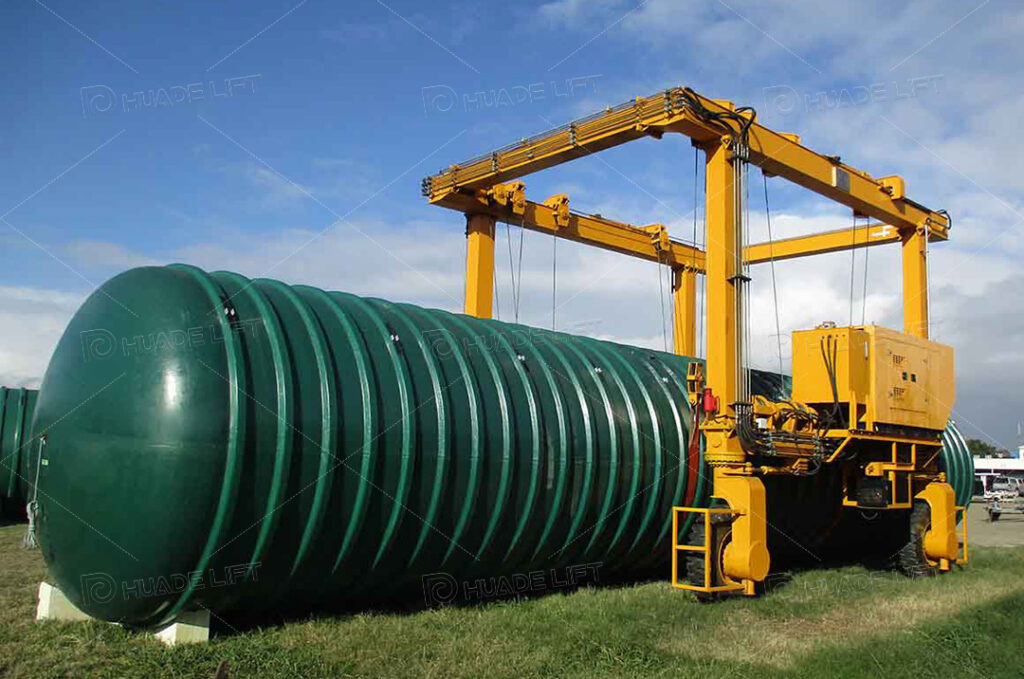
Core Features to Look for in a Top Safety RTG Crane
When selecting a model, it is necessary to assess the safety characteristics of tire-mounted cranes based on the specific operational scenarios and risk points of your industry to ensure the equipment meets actual safety requirements. First, prioritize equipment that has obtained international safety certifications (such as CE, ISO 10248) and relevant domestic safety certifications. These certifications indicate that the equipment’s safety performance meets certain standards, ensuring compliance with basic safety requirements. During the evaluation process, carefully review the equipment’s certification documents to confirm that the certification scope covers the equipment’s primary safety functions.
Second, focus on core safety functions based on industry characteristics. In the bridge construction industry, key focus should be placed on the crane’s overload protection capability, structural stability, wind resistance performance, and precise braking system; in the steel component manufacturing industry, emphasis should be placed on braking precision, vision assistance functions, and the equipment’s dust resistance and wear resistance performance; in the wind power facility installation industry, the equipment’s anti-slip performance, collision prevention technology, and emergency devices for coping with extreme weather conditions should be thoroughly evaluated. These core safety functions can be verified through on-site testing, simulated operations, and other methods.
Additionally, the manufacturer’s after-sales service is a critical evaluation factor. Quality suppliers provide comprehensive after-sales support, including regular safety inspections, component maintenance support, and safety training for operators. Regular safety inspections can promptly identify potential safety hazards during equipment use, ensuring the equipment remains in optimal operational condition; component maintenance support ensures timely access to high-quality original parts when replacements are needed, maintaining equipment safety performance; Operator safety training enables operators to master safe operating skills and emergency response methods, thereby enhancing operational safety from the operator’s perspective. When selecting a supplier, it is important to understand their after-sales service system, response speed, and reputation for service quality.
Additionally, one can refer to the usage experiences of other companies in the same industry to understand the safety performance and reliability of different brands and models of tire-mounted cranes. Through comprehensive research and evaluation, the most suitable equipment for specific operational needs can be selected to enhance the company’s production safety.
Conclusion
Rubber tire gantry cranes (RTGs) are vital in industrial sites, with safety critical for operations. Their safety features include structural robustness, precise operation controls, environmental adaptability, and emergency systems. Different industries like bridge construction, steel manufacturing, and wind power installation have varied safety needs. To assess rubber tyred gantry cranes, prioritize certified models, focus on industry-specific functions, and consider after-sales support. Proper evaluation ensures they meet safety demands, safeguarding personnel and projects.
