
Rubber tyred gantry cranes feature substantial weight and elevated lifting heights, involving multiple complex factors during operations. Their safe operation is the lifeline sustaining production order and personnel safety. This document comprehensively dissects the core safety protocols for rubber tyred gantry crane operation, integrating industry standards with practical experience. It establishes a multi-dimensional, multi-layered safety protection system for enterprises and operators across multiple dimensions, including personnel qualifications, equipment pre-inspection, load management, and emergency response to achieve dual safeguards for both safety and efficiency.
Why Safety Regulations Matter for Rubber Tyred Gantry Crane Operations
As a vital category of special equipment, rubber tyred gantry cranes possess formidable load-bearing capacity to handle diverse heavy cargo transportation needs. However, their operational environments often present multiple challenges, including confined spaces, complex personnel movement, and variable natural conditions where operational complexity and safety risks compound, making strict adherence to safety protocols paramount. Practical operations reveal that the root cause of most rubber tyred gantry crane accidents lies in the absence or inadequate enforcement of safety protocols.
Violations such as improper operation and failure to promptly address equipment hazards can trigger accidents. Such incidents not only cause direct injuries and equipment damage but also lead to production stoppages that create ripple effects, disrupting the entire industrial chain and resulting in significant indirect losses. From a regulatory perspective, relevant laws and regulations explicitly mandate that rubber tyred gantry crane operations strictly adhere to safety protocols.
Noncompliant enterprises and individuals face corresponding legal liabilities and financial penalties. Therefore, rigorous enforcement of safety standards is not merely a compliance requirement but a core prerequisite for ensuring production continuity, safeguarding employee safety, and maintaining long-term corporate development. It demands comprehensive attention and implementation.
Comprehensive Training and Certification
Operators form the first line of defense for rubber tyred gantry crane safety. Their professional competence and safety awareness directly determine the risk level of operations. Unqualified personnel operating without specialized training create inherent safety hazards on-site. In accordance with industry standards and safety protocols, all operators must complete systematic professional training and pass qualification assessments administered by authoritative bodies before obtaining the requisite Special Equipment Operation Certificate. Training content must form a comprehensive knowledge system covering three core areas: equipment operation, safety procedures, and emergency response. Each area requires practical assessments based on real world operational scenarios to ensure operators possess genuine independent competency.
- Equipment Operation Skills:Operators must thoroughly understand the control logic of core components such as the hoisting mechanism, travel mechanism, and boom swing mechanism. They must grasp the principles of coordinated operation across functional modules and achieve precise control according to varying operational requirements. They must also memorize all performance parameters and limitations, including maximum lifting height, working radius range, and rated load capacity. For diverse operations like container handling, steel transfer, and heavy equipment moving, operators must flexibly adjust techniques and force to ensure smooth, impact-free lifting, moving, and lowering. This prevents load swaying or uneven equipment stress from improper operation.
- Safety Procedure Awareness: Systematically study safety essentials throughout the entire operation cycle, including pre-operation equipment inspection protocols, risk monitoring methods during operations, and post-operation equipment return and maintenance standards. Master the “Ten No-Lifting Rules” safety guidelines to clearly understand prohibited operation scenarios. Cultivate a fundamental awareness of safety red lines, eliminate any complacency or non-compliant behavior, and ensure every step adheres to safety regulations.
- Emergency Response Capability: Conduct routine, realistic drills for common emergency scenarios such as sudden equipment shutdowns, abnormal load fixation, power system failures, and abrupt environmental changes. Master critical skills including emergency shutdown procedures, load securing methods, rapid evacuation routes, and preliminary fault diagnosis. Ensure swift, scientifically sound responses to minimize escalation risks during incidents.
Special equipment operation certificates require periodic recertification to ensure operators’ professional competence and safety knowledge remain aligned with industry advancements and equipment upgrades. Enterprises must establish routine retraining mechanisms, regularly organizing safety knowledge updates covering the latest safety regulations, new equipment operation techniques, and industry safety management practices. Competency verification should combine theoretical examinations with practical assessments. Personnel failing assessments must have their operational qualifications suspended. They should undergo specialized intensive training and coaching until they pass the assessment before being allowed to resume duties. Unqualified personnel must be strictly barred from participating in operations.
Conduct Pre-Operational Inspections
The pre-operation inspection before starting an rubber tyred gantry crane is a critical step in implementing the “prevention-first” safety philosophy. It serves as an essential preliminary procedure to eliminate initial equipment hazards and ensure operational safety. In accordance with relevant inspection regulations, pre-operation checks must follow standardized procedures and documentation. Only after both the operator and a dedicated inspector complete the inspection and sign off can the equipment be started. A scientifically sound and comprehensive pre-operation check effectively identifies potential faults arising from equipment idling or storage, reducing the risk of sudden equipment failures during operations at the source and providing a fundamental safeguard for subsequent operational safety. Pre-inspection must follow the principle of “external before internal, mechanical before electrical, core components before auxiliary systems” to ensure comprehensive, meticulous, and thorough coverage.
Tire System Inspection
Tires are the core components enabling rubber tyred gantry crane mobility and operational stability, with their performance directly impacting equipment maneuverability and safety. Inspections must focus on the physical condition and performance parameters of the tires. Carefully examine the tire surface for signs of damage such as wear, cuts, bulges, or cracks, ensuring the tire carcass is intact and free of defects. Additionally, use specialized tools to check tire pressure and adjust it strictly according to the standard pressure specified in the equipment manual to avoid safety issues caused by overinflation or underinflation. Overinflation can cause uneven tread pressure, increasing the risk of blowouts. Underinflation intensifies sidewall deformation, compromising crane maneuverability and accelerating tire wear. After inspection, document all tire conditions in a dedicated checklist. Report any abnormalities immediately for professional handling; never operate equipment with potential hazards.
Brake System Inspection
The brake system is the core safety component of rubber tyred gantry cranes, directly determining the equipment’s stopping reliability and load control capability. Its performance status must be rigorously verified. The rubber tyred gantry crane’s brake system typically includes the trolley travel brake, the crane travel brake, and the hoist brake. Among these, the hoist brake directly handles load braking tasks and is the primary focus of inspection. During inspection, conduct a visual examination of brake components first. Check critical parts such as brake pads and brake discs for wear, cracks, oil contamination, or other issues to ensure the friction surfaces are clean and intact. Subsequently, conduct brake performance tests. Through evaluations in various scenarios, including no-load braking, load braking, and emergency braking, verify the system’s responsiveness and reliability to ensure the equipment achieves smooth and rapid shutdown under all operating conditions. If any abnormalities are detected, such as delayed response, insufficient braking force, or unusual noises, immediately post a “Do Not Use” sign, halt equipment operation, and refer the issue to qualified maintenance personnel for comprehensive repair. Operators are strictly prohibited from making unauthorized adjustments or operating the equipment with faults.
Electrical System Inspection
The electrical system serves as the control core of rubber tyred gantry cranes, encompassing main circuits, control circuits, and lighting circuits. Its stability directly impacts equipment performance. During inspection, first disconnect the main power supply. Examine whether the insulation layers of cables and wires are intact and whether connections are secure to prevent safety hazards caused by poor contact. Then, reconnect the power supply and test the responsiveness of all switches and controllers to ensure accurate transmission of operating commands. If operators lack professional electrical inspection capabilities, they should contact qualified personnel for assistance. Maintain detailed records after completing the inspection.
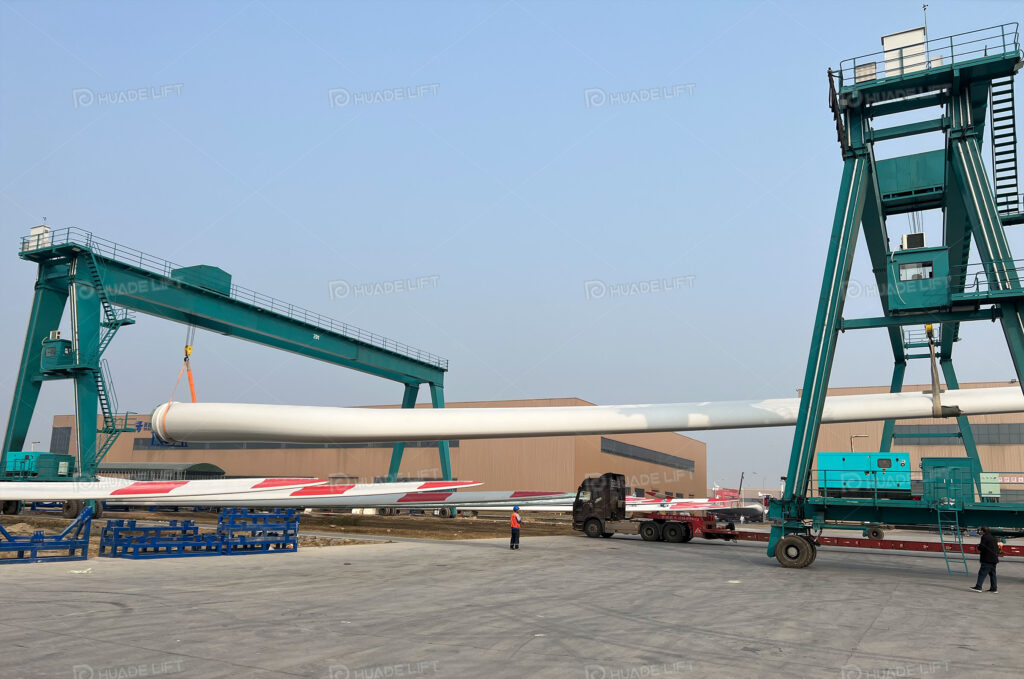
A-frame RTG crane lifting wind turbine components at a wind farm site.
Proper Load Handling Techniques
Load handling is a high risk phase in rubber tyred gantry crane operations, with accidents often stemming from non-compliant practices. Strict adherence to safety protocols is mandatory, eliminating complacency. Core operational requirements include:
Match Lifting Equipment: Before lifting, confirm the load’s weight and configuration. Select appropriate lifting accessories, ensuring their rated load capacity meets requirements and they are in good condition. If slings, hooks, or other accessories show wear, deformation, or functional failure, their use is strictly prohibited to prevent load drops during lifting due to faulty equipment.
Ensure Load Balance and Securement: For irregularly shaped loads, adjust lifting points to stabilize the center of gravity. When securing the load, control the angle between the sling and the load. Use specialized devices to firmly secure the load, preventing shifting or swaying after lifting.
Operate Smoothly and Avoid Abrupt Movements: When lifting a load, first raise it to a certain height and pause to observe load balance and sling tension. Only proceed with slow, controlled lifting after confirmation. Maintain a constant speed when moving the load. Sudden acceleration, abrupt stops, or sharp turns are strictly prohibited to prevent violent load swaying and associated safety risks.
Maintain Clear Visibility: Ensure operators have unobstructed sightlines to the load and surrounding environment throughout operations. If visibility is impaired by site conditions or equipment, assign a dedicated signaler to relay instructions via standardized communication protocols, preventing operational errors from misjudgments.
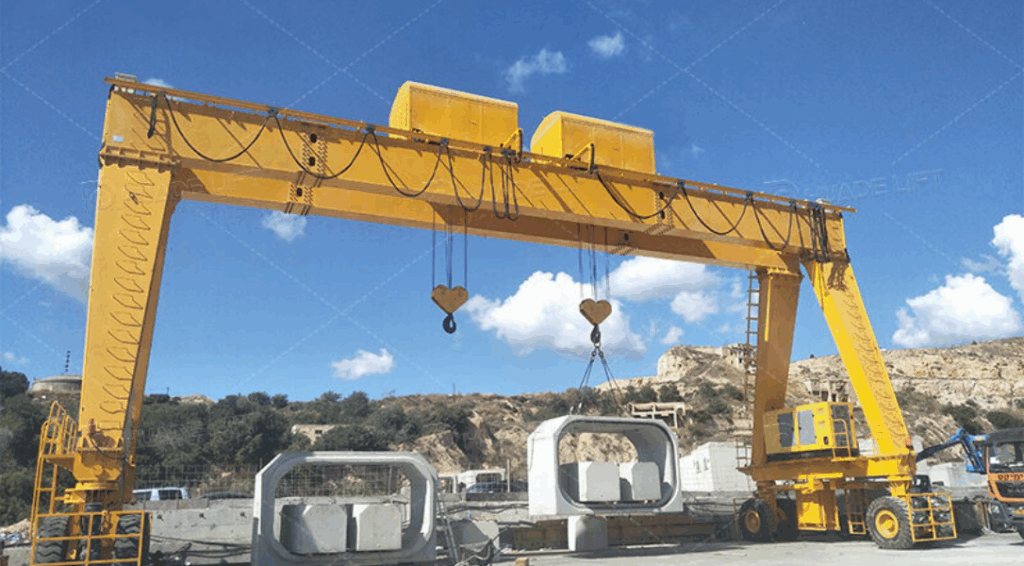
The rubber tyred gantry crane safely lifts a precast concrete beam for bridge construction tasks.
Implement Safety Protocols
Robust safety operating procedures form the institutional foundation for rubber tyred gantry crane safety. Enterprises must develop comprehensive control mechanisms aligned with regulatory requirements and operational contexts, focusing on three core elements:
Designate Restricted Zones: Use warning devices to demarcate dedicated work areas based on the crane’s operational range. Install conspicuous signage and activate warning lights at night. Simultaneously plan clear equipment movement routes, install safety barriers at critical points to prevent collisions with other machinery during overlapping operations, and assign dedicated personnel for traffic control when necessary.
Standardize Communication Protocols: Establish unified operational communication standards, clearly define signal meanings for hand gestures, walkie-talkies, and other command methods. Adopt a “command issuance + repeat confirmation” communication model to ensure accurate instruction transmission and eliminate operational errors caused by communication breakdowns.
Establish Operational Guidelines: Refine requirements for different working conditions. Ensure adequate lighting during night operations, suspend work during severe weather, and schedule reasonable rest breaks in high-temperature environments. Provide clear protocols for operators across all scenarios.
Regular Maintenance and Inspection
Routine maintenance and inspections form the foundation for ensuring the long-term safe operation of rubber tyred gantry cranes. Enterprises must establish a standardized maintenance system based on equipment manuals and relevant regulations, with core requirements as follows:
Implement a Tiered Maintenance Plan: Establish a multi-level maintenance system clarifying responsibility and core tasks for each cycle. Routine maintenance focuses on cleaning and basic inspections, while periodic maintenance requires lubrication, disassembly checks, and performance testing of critical components. Annual overhauls involve professional personnel conducting comprehensive inspections and component maintenance to ensure equipment performance meets standards.
Establish a Closed-loop Fault Resolution Mechanism: Equipment issues identified during maintenance must be promptly documented with assigned repair responsibilities and deadlines. Equipment may only be returned to service after passing post-repair inspections. Operation with existing faults is strictly prohibited. For major failures, promptly contact the equipment manufacturer for technical support to prevent safety hazards from improper repairs.
Maintain Equipment and Site Cleanliness: Regularly clean crane surfaces and core components, with special attention to wire ropes in hoisting mechanisms to prevent corrosion damage. Regularly sweep the work area, removing debris and standing water to prevent obstructions from affecting equipment operation or electrical faults caused by moisture accumulation, thereby creating a safe operating environment.
Emergency Preparedness
“Safety work prioritizes prevention, with emergency response as a supplement.” Even with comprehensive safety controls, unforeseen incidents may occur. In accordance with relevant regulations, enterprises must establish comprehensive rubber tyred gantry crane emergency preparedness plans to ensure rapid response during incidents. Core measures include:
Develop Specialized Emergency Procedures: Create detailed protocols for different emergencies such as fires, electrical failures, equipment overturns, and load drops. Clearly define evacuation routes, equipment shutdown steps, incident reporting procedures, and other operational standards to ensure orderly emergency response.
Stock and Regularly Inspect Emergency Supplies: Position fire extinguishers, first-aid kits, emergency lighting, and other critical supplies at key locations on-site. Assign personnel to periodically verify the integrity and effectiveness of these supplies, promptly updating or replenishing them to ensure operational readiness during emergencies.
Conduct Routine Emergency Training and Drills: Organize regular emergency training sessions to interpret response plans, explain emergency supply usage, and teach self-rescue and mutual aid techniques. Conduct realistic emergency drills simulating various scenarios to assess operators’ response capabilities. Post-drill reviews should optimize procedures to enhance emergency handling proficiency.
Building a Safety Culture for Operation
Short-term safety management relies on regulatory constraints, while long-term safety assurance requires fostering a robust safety culture where “everyone values safety and everyone participates in safety.” This is the fundamental approach to reducing rubber tyred gantry crane operational risks. Enterprises must construct a safety culture system across three dimensions: awareness cultivation, channel development, and policy implementation:
Strengthen Safety Awareness Training: Conduct regular safety meetings to disseminate safety-related information; establish safety culture display areas at worksites featuring safety slogans and operational standards; integrate safety knowledge into core new employee onboarding training. Utilize diverse methods to deepen operators’ and managers’ understanding of the dangers of non-compliant operations, instilling the principle that “no safety issue is too minor.”
Streamline Safety Feedback Channels: Establish a “Safety Hazard Instant Reporting” mechanism. Operators and maintenance personnel can report equipment hazards, process vulnerabilities, and other safety issues anytime via enterprise WeChat, suggestion boxes, or other channels.
Conclusion
The operational safety of tire gantry cranes is a critical component of enterprise production safety. From personnel training and equipment pre-inspection to load handling and emergency preparedness, every safety protocol demands unwavering adherence. Enterprises must rigorously implement safety protocols, while operators must maintain constant vigilance. Only through such diligence can accident risks be minimized, safeguarding personnel safety while preserving production stability and economic efficiency. Amidst the trend toward intelligent and efficient industrial production, safety remains the paramount prerequisite for rubber tyred gantry crane operations. Only by upholding this fundamental safety baseline can equipment value be fully realized, driving the healthy development of the industry.
