
What is a construction crane?
Construction cranes are core equipment in modern building projects, featuring powerful lifting capabilities and precise heavy-load handling. They are indispensable in complex construction projects, enhancing project efficiency and quality while reducing labor risks.
Their installation process follows strict protocols: specialized foundation design ensures load-bearing capacity compliance. Auxiliary equipment is used for sectional hoisting and precise tower assembly, with rigorous control over parameters like verticality and horizontality to guarantee structural stability and lay the foundation for safe operations. Construction cranes are widely used in scenarios such as steel structure installation and component hoisting, where their efficient and precise operations hold significant importance for construction projects.
Types of Cranes Used In Construction: Mobile vs.Static
Mobile Cranes
The defining feature of mobile cranes is their ability to relocate across sites. Their travel mechanisms include wheeled, tracked, or truck-mounted configurations, enabling flexible movement within construction areas. Some models can even transfer directly between different project sites.
These cranes offer the advantage of short installation and commissioning cycles, eliminating the need for long-term fixed positioning. They are ideal for short-term projects or works requiring frequent relocation.
Fixed / Static Cranes
Unlike mobile cranes, fixed cranes require permanent installation at designated locations. Some models necessitate specialized foundations or counterweights for stability and typically remain stationary throughout the project cycle. Their core advantages include high rated lifting capacity and elevated hoisting heights, making them suitable for projects demanding substantial lifting capabilities, such as super-high-rise buildings and large industrial plants.
However, these cranes involve complex installation processes requiring advance planning of the installation site. Once fixed, their operating area cannot be freely adjusted.
Common Types of Mobile Cranes
General-Purpose Mobile Cranes
As the foundational model of mobile cranes, general-purpose mobile cranes enable rapid relocation and deployment through their telescopic booms and self-propelled functionality. Their compact design makes them suitable for residential construction, warehouse loading/unloading, and other scenarios where maneuverability in confined spaces is essential. With relatively low rental costs, they align well with the needs of small to medium-sized projects, serving as a cost-effective and commonly used piece of equipment on construction sites.
Crawler Cranes
Crawler cranes utilize a crawler travel mechanism to achieve low ground pressure, providing exceptional stability when operating on soft or complex terrain. Their lattice boom design enables high rated lifting capacities, making them capable of heavy-duty hoisting tasks.
Widely used in industrial and infrastructure projects, these cranes excel in complex environments like power plant construction, bridge building, and remote mountainous areas. Their track structure provides outstanding mobility. Without requiring outriggers, they maintain operational stability solely on the ground, offering significant advantages in confined construction spaces.
Portable Crane
The portable crane features a compact body with full slewing capability. Its boom is mounted on a flat base, integrating lifting and short-distance transport functions. Its small size and tight turning radius make it ideal for confined spaces, excelling in scenarios like interior renovations, warehouse handling, and elevator maintenance—particularly in areas inaccessible to conventional cranes. Additionally, this model offers rapid installation and commissioning, efficiently meeting emergency and small-scale lifting demands.
Off-Road Cranes
Designed for complex terrain, off-road cranes feature large, wide-base tires and four-wheel drive systems, ensuring stable operation on dirt roads, gravel surfaces, and other unpaved terrain. Their telescopic outriggers provide stable support during operations, guaranteeing lifting safety.
Widely used in energy projects and mountainous road construction, off-road cranes excel in complex operations like remote oilfield rig assembly. Their outstanding off-road capability and stable support enable efficient lifting tasks. Additionally, the single-engine drive design simplifies maintenance, making them ideal for long-term outdoor operations.
Truck-Mounted Cranes
Integrated onto truck chassis, truck-mounted cranes enable self-transportation, significantly reducing relocation time. Their hydraulic telescopic booms adjust length as needed, offering a wide rated lifting capacity range. Ideal for short-term, multi-location lifting tasks like residential electrical upgrades or steel structure transfers, their efficient relocation boosts construction productivity. Furthermore, only certified personnel are required for lifting and movement operations, effectively lowering labor costs.
All-Terrain Cranes
All-terrain cranes combine the strengths of road vehicles and off-road cranes, enabling high-speed highway transfers and complex terrain operations. Their multi-axle chassis with all-wheel steering ensures agility in confined spaces. Featuring large-capacity telescopic booms, they are ideal for large-scale bridge construction, rapid relocation, and lifting on challenging terrain. In emergency response scenarios, they can swiftly reach disaster sites to clear debris and transport supplies.
Floating Crane
Floating cranes (crane barges) integrate lifting systems onto barges or specialized vessels, engineered specifically for waterborne operations. Their specialized stabilization systems effectively counteract wind, waves, and current interference, ensuring precise lifting and operational stability. As core equipment for waterborne engineering, they are widely used in cross-river bridge construction, port development, and shipwreck salvage. Their navigational mobility makes them essential lifting tools for coastal and riverine projects.
Railway Cranes
Railway cranes are specifically designed for railway construction and maintenance. Moving along tracks, their booms can rotate for operation. Suitable for track repairs, train derailment rescues, and new construction projects, they can move precisely along tracks without damaging track structures. They coordinate efficiently with rail transport, effectively ensuring system construction and safe operation.
Aerial Crane
Aerial cranes utilize helicopter-mounted lifting equipment to overcome terrain limitations, enabling operations in remote areas like deep mountains and gorges where ground machinery struggles to access. They demonstrate significant advantages in remote construction and disaster relief reconstruction, facilitating rapid lifting and transportation. However, their rated lifting capacity is limited, and operations must cease during adverse weather conditions.
Types of Fixed Cranes
Core Characteristics
Fixed cranes require on-site installation and anchoring. Some models necessitate concrete foundations or counterweights for stability, with fixed operating positions. Compared to mobile cranes, they offer greater lifting capacity and higher hoisting heights, making them suitable for large-scale projects with extended timelines and fixed work locations. Common types include tower cranes, floating cranes (for specific scenarios), hammerhead cranes, and stacker cranes, each possessing distinct technical characteristics and application ranges.
Tower Cranes
Comprising a tower body and luffing jib, tower cranes feature sectional tower extensions for height adjustment. Their rotating jibs provide extensive coverage. Requiring concrete foundations, high-rise projects often utilize attachment devices for enhanced stability. Essential for super-tall building construction, they are widely used in high-rise apartments and commercial complexes. Offering high hoisting precision, they meet demands like glass curtain wall installation, and continuous operation shortens project timelines.
Floating Cranes (Specific Fixed-Site Applications)
Anchored for long-term offshore projects, floating cranes offer substantial lifting capacity for heavy-duty operations like offshore wind farms and cross-sea bridges. However, their operation demands high proficiency, requiring operators to master hydro-meteorological knowledge and plan tasks according to natural conditions.
Hammerhead Crane
Named for its distinctive shape, the hammerhead crane features a slender truss tower structure with a small footprint. Its modular design facilitates disassembly, relocation, and assembly, making it suitable for space-constrained scenarios like old city renovations and subway station construction. However, its fixed boom length limits coverage range, and it has weak wind resistance, requiring suspension of operations during high winds.
Stacker Crane
Stacker cranes are used for indoor warehousing. Composed of columns and other components, they travel along tracks to vertically lift and retrieve goods, making them suitable for high-level shelving. In building material warehouses and precast component factories, they enhance space utilization and reduce damage. Automated models enable precise placement, but their operation is restricted by tracks and is only suitable for regular-shaped goods.
Specialized Cranes for Construction
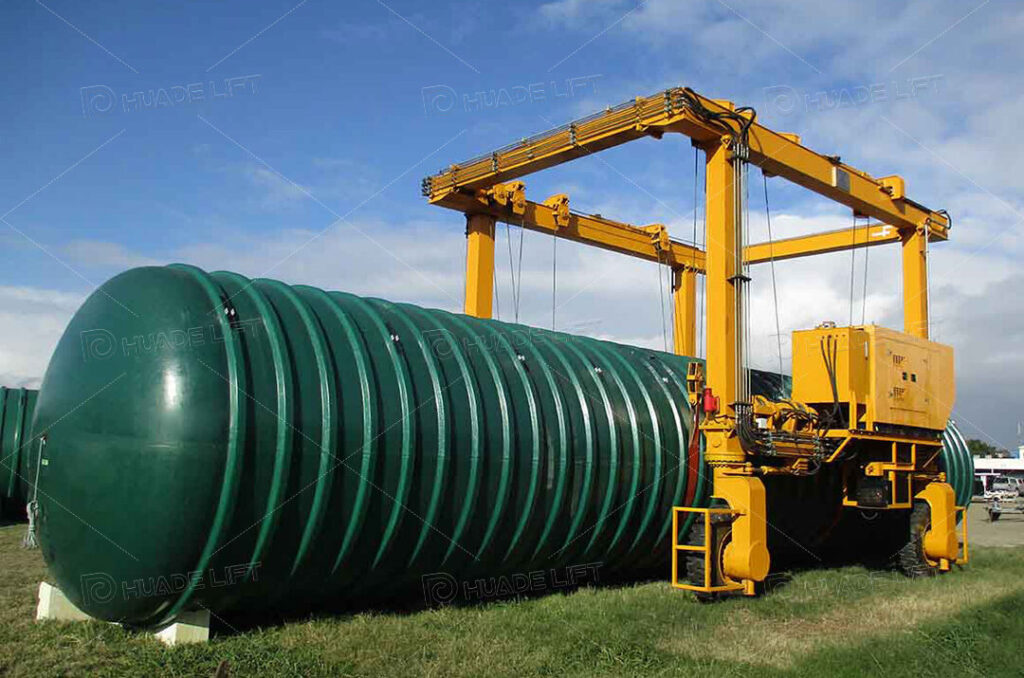
Straddle Carrier
The straddle carrier features a gantry frame structure that can “straddle” over cargo. Combined with a hydraulic lifting system, it enables the lifting and transportation of goods, making it a specialized piece of equipment designed for heavy-duty cargo transfer. With a high rated lifting capacity and equipped with wear-resistant tires, it can operate for extended periods on construction sites littered with gravel and rebar.
In precast concrete construction and steel fabrication plants, straddle carriers minimize damage rates during component handling while boosting transportation efficiency. Additionally, these models can adjust stacking heights based on storage requirements, effectively conserving on-site storage space and making them ideal for projects with high building material demands.
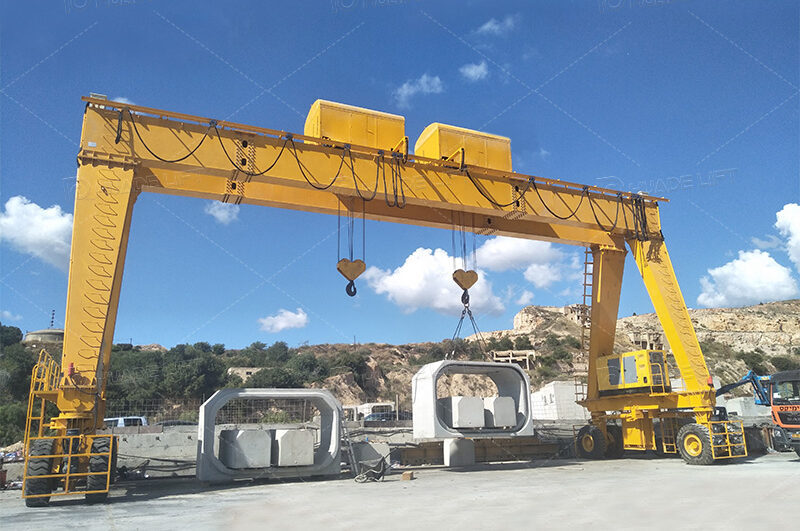
Rubber-Tired Gantry Crane
The Rubber-Tired Gantry Crane (RTG) features a gantry frame structure with rubber tires, eliminating the need for dedicated tracks and providing flexible mobility. Equipped with a high-precision positioning system, it ensures lifting accuracy. Its high lifting height accommodates multi-level cargo stacking requirements.
In precast concrete yards, steel structure storage management, and temporary component storage areas for wind power projects, RTG cranes save storage space and enhance turnover efficiency. Some models support remote operation, effectively reducing labor costs and alleviating construction personnel shortages. Additionally, the equipment features an intelligent load sensing system that monitors lifting weight in real time, preventing overload operations and ensuring construction safety.
Container Straddle Carrier
The container straddle carrier is a specialized piece of equipment designed for standard containers. Its core functions are lifting, transporting, and stacking containers, playing a significant role in the logistics phases of construction projects. The equipment utilizes a hydraulic lifting system, combined with a quick-connect device, resulting in relatively high operational efficiency. Its tires possess puncture-resistant properties, enabling stable operation on complex road surfaces at construction sites, which reduces equipment wear and maintenance costs.Within construction projects, the application scenarios for container straddle carriers include on-site container management, port-related construction projects, and cross-regional construction logistics. They help ensure the on-demand supply of building materials, shorten material transportation cycles, and optimize multi-modal transport processes.
How Do You Choose the Right Crane?
Selecting the appropriate crane requires a systematic analysis based on the project’s actual needs. Proper selection not only enhances construction efficiency but also reduces costs and safety risks.
Accurately Assess Core Project Requirements
Construction Site Environment Analysis
Prioritize surveying the working site conditions: Select equipment based on spatial constraints, foundation conditions, and traffic access. In confined spaces like urban cores, select compact models with small turning radii; for soft ground, choose models with low ground pressure; in areas with poor access, opt for modular designs that are easy to disassemble and reassemble.
Define Lifting Load Characteristics
Thoroughly document the weight, dimensions, shape, and lifting height of cargo: General-purpose mobile cranes suffice for lightweight building materials; For heavy components, select heavy-duty cranes with matching rated lifting capacities. If handling extra-long or extra-wide components, verify that the crane’s boom length and slewing radius accommodate horizontal transport requirements to prevent operational delays due to dimensional constraints.
Matching Key Technical Parameters
Lifting Height and Working Radius
Determine parameters based on project height and operational scope: For mid-to-low-rise construction, a tower crane with suitable lifting height suffices; for super-high-rise projects, select a tower crane with greater lifting height and attachment devices. For projects requiring extensive horizontal coverage, choose a model with sufficient boom length to maximize single-lift coverage, reducing equipment relocation and enhancing efficiency.
Mobility and Work Cycle
Select based on project duration and number of work points: For short-duration projects requiring frequent movement between multiple work points, cranes with efficient relocation capabilities offer advantages by reducing equipment transport time. For long-duration projects with fixed work points, stationary cranes with high stability and large lifting capacity better meet requirements. Though installation is time-consuming, they provide higher cost-effectiveness for long-term operations.
Strictly Adhere to Safety and Compliance Standards
Verify Equipment Certification and Safety Features
Selected cranes must comply with national and industry standards, accompanied by complete factory certificates and periodic inspection reports. Essential safety devices include overload sensors (preventing overloading), torque limiters (avoiding exceeding rated torque), emergency stop systems (rapid shutdown in emergencies), and wind speed monitors (real-time wind monitoring for elevated work safety).
Operator and Work Procedure Management
Operators must hold valid special equipment operation certificates and possess experience matching the selected crane model. Contractors must establish comprehensive work procedures, including pre-lifting equipment inspection protocols, standardized signal commands during operations, and adverse weather shutdown plans, ensuring every step complies with safety requirements.
Balancing Cost Efficiency and Long-Term Benefits
Total Cost of Ownership Analysis
Beyond equipment rental fees, consider transportation, installation/dismantling, and operational costs. For extended projects, negotiate long-term rental discounts with suppliers to reduce monthly expenses. If frequent crane usage is required, evaluate equipment purchase viability based on workload—long-term ownership may prove more economical than leasing.
Optimizing Equipment Utilization
Plan equipment usage schedules based on lifting requirements at each project phase to prevent idle time. For instance, during foundation construction, deploy smaller cranes for material handling while postponing heavy equipment rental. Introduce larger machinery during main structure construction. This staggered approach maximizes utilization rates and minimizes unnecessary expenditures.
Routine Maintenance Practices
The stable operation of cranes relies on standardized daily maintenance. Scientific maintenance not only significantly extends equipment lifespan but also substantially reduces failure rates, ensuring smooth construction progress.
Lubrication System Maintenance
Follow equipment manuals to precisely match lubricants for each component: Use high-temperature, wear-resistant lithium-based grease for rotating parts like boom pins and slewing bearings. Hydraulic systems require dedicated hydraulic oil—never mix brands or grades to prevent chemical reactions that could damage the system.
Lubrication operations must follow cyclical standards: high-frequency components require regular lubrication, while low-frequency components may have extended intervals. Clean component surfaces before lubrication to remove dust and contaminants. Control lubricant quantity during application—aim for uniform coverage within gaps to prevent excessive absorption of impurities that accelerate wear.
Structural Component Inspection
Critical Structural Component Testing
Conduct regular inspections of primary structural components like booms and towers: Perform weekly visual checks for cracks or deformation on structural surfaces, focusing on welded joints. Immediately halt operations if weld cracking is detected, and have qualified personnel perform repair welding. Periodically use specialized equipment to verify boom straightness; adjust if deviations exceed standards to prevent load displacement during operations due to structural distortion.
Fastener Tightening
Inspect the tightness of connecting components like bolts and pins: Weekly, use specialized tools to verify torque values on critical bolts, ensuring compliance with manual specifications. Tighten any loose bolts promptly to prevent component detachment. Periodically check pin wear; replace pins if wear exceeds standards to avoid connection failure.
Hydraulic System Maintenance
Fluid and Filter Management
Daily pre-operation checks: Verify hydraulic fluid level remains within acceptable range. Top up with matching hydraulic fluid if level is low.
Regularly replace hydraulic fluid filters and monitor fluid quality. Fully replace degraded fluid to prevent contamination clogging lines or corroding components.
Hose and Seal Inspection
Weekly inspect hydraulic hoses and joint seals. Replace seals or damaged hoses if leaks are detected. Avoid squeezing or impacting hoses; promptly repair any deformation to prevent rupture and oil leakage, which could compromise operational safety. Before seasonal operation, perform appropriate hydraulic system adjustments to prevent environmental factors from increasing hydraulic pump load.
Electrical System Maintenance
Wiring and Insulation Inspection
Weekly inspect electrical wiring insulation integrity. If wires are exposed or damaged, wrap with insulating tape or replace the wiring. Check terminals for looseness or oxidation. Clean oxidized surfaces and retighten to prevent circuit breaks due to poor contact. Maintain dry, clean electrical cabinets; remove dust monthly to prevent short circuits from accumulation.
Control and Safety System Testing
Monthly inspection of control panel buttons and indicator lights to ensure responsive operation and accurate display. Test response times for safety systems like overload protection and emergency stops. If delays occur, troubleshoot and repair faulty sensors or control modules. For automated cranes (e.g., intelligent stacking cranes), quarterly update control system software to maintain synchronization with the manufacturer’s latest version and ensure stable operation.
Summary
Selecting the right construction crane is crucial for project efficiency, cost control, and safety. Mobile cranes offer flexibility, fixed cranes provide stability, and specialized cranes deliver targeted solutions—such as portable cranes for confined spaces, crawler cranes for heavy-duty tasks, and tower cranes for super-high-rise construction. Precise matching to project requirements is essential.
Following scientific selection, standardized maintenance is indispensable. Regular lubrication, structural inspections, and system upkeep prevent equipment failures that could delay schedules. Combining scientific selection with standardized maintenance while strictly adhering to safety standards during construction is essential to maximize equipment performance.
As the construction industry transitions toward intelligent and green practices, crane technology continues to advance. Smart cranes featuring remote monitoring, automatic obstacle avoidance, and new energy drives will become the trend, enhancing efficiency and safety while promoting energy conservation and environmental protection. Construction companies should stay abreast of technological developments, adopt new equipment and management models, and optimize application solutions to align with industry evolution.
