
In modern industrial production and logistics transportation, efficient material handling equipment is crucial for ensuring smooth operational processes and enhancing operational efficiency. As a type of lifting equipment that combines flexibility with heavy-duty capacity, the rubber-tyred gantry crane plays an irreplaceable role in ports, factories, construction sites, and other scenarios thanks to its unique design and performance. This article will delve into the core advantages of rubber-tyred gantry cranes, providing industry professionals with a reference for equipment selection.
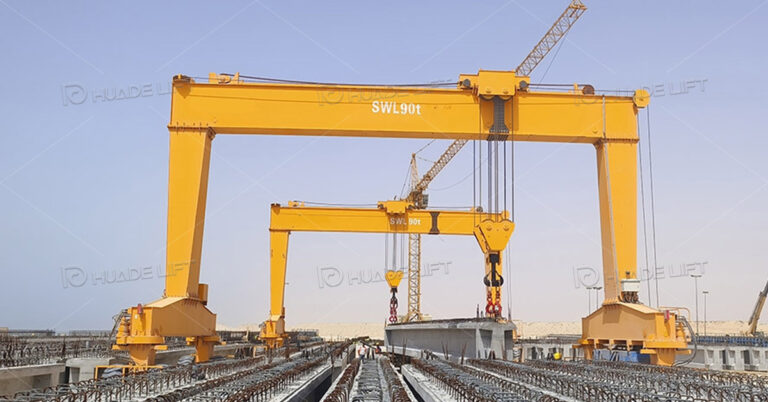
Rubber Tyred Gantry Crane
What is a Rubber Tyred Gantry Crane
A rubber-tired gantry crane is a mobile gantry crane system that uses rubber tires as its traveling components. Its main structure consists of a gantry frame, crossbeam, hoisting mechanism, and control system, enabling stable lifting and transportation of goods through its cross-span design.
The application scenarios for rubber-tyred gantry cranes are extremely diverse: in heavy machinery factories, they can move large machine tools within workshops; and in bridge precast yards, they efficiently transport precast concrete components. The core feature of this equipment lies in its ability to retain the heavy-load capacity of a gantry crane (typically capable of lifting 40-60 tons of cargo) while achieving flexible movement without track constraints through rubber tires.
Working Principle of Rubber Tyre Gantry Crane
The efficient operation of the tire-mounted gantry crane relies on the precise coordination of mechanical, hydraulic, and electrical systems:
Travel system: Powered by hydraulically driven rubber tires, it enables straight travel, 90-degree turns, and on-site rotation, adapting to positioning requirements in complex terrains.
Lifting mechanism: Driven by an electric motor, the steel wire rope drum, in conjunction with pulley systems, achieves vertical lifting of cargo, with a wide speed range (0.5-10 m/min), meeting the requirements of different precision levels.
Control system: Utilizes a PLC programmable logic controller, integrated with sensors and an operator panel, to precisely control lifting height, travel speed, and braking timing, ensuring operational safety.
This multi-system collaborative design enables the rubber-tyred gantry crane to handle heavy-load conditions while maintaining operational stability and precision.
Comparison: RTG Cranes vs Other Gantry Crane Types
Comparison with Track-mounted Gantry Cranes
Flexibility: RMG relies on fixed tracks for operation, limiting its operational range; the rubber-tyred gantry crane does not require tracks and can move on any flat surface, adapting to temporary site adjustments.
Infrastructure costs: RMG requires the installation of dedicated tracks and power supply lines, resulting in high initial investment costs; rubber-tyred gantry cranes only require a hardened surface to operate, reducing installation time by over 50%.
Comparison with Bridge Cranes
Operating Range: Bridge cranes are restricted by factory overhead crane tracks, with a fixed coverage area; tire-mounted gantry cranes can move across areas, easily connecting different workshops or storage zones.
Site Adaptability: Bridge cranes have high requirements for factory structural strength; tire-mounted gantry cranes have lower ground load requirements (typically ≥10 t/m²), making them more suitable for temporary sites.
Comparison with Truck Cranes
Continuous operation capability: Truck cranes are limited by chassis load capacity, and continuous operation can cause tire overheating; tire-mounted gantry cranes distribute weight through their gantry structure, enabling 24-hour continuous operation.
Stacking efficiency: Rubber-tyred gantry cranes have a span of 18–35 meters, enabling simultaneous coverage of multiple rows of stacked goods; truck cranes have limited reach, resulting in narrow stacking height and range.
What to Consider When Choosing an RTG Crane in Industrial Projects
Strong Site Adaptability, Reducing Reliance on Infrastructure
The rubber tire design of rubber-tyred gantry cranes eliminates the need for dedicated tracks, enabling operation on concrete, asphalt, or even compacted soil. For temporary sites or leased areas, this eliminates the costs and time associated with track installation, reducing project startup cycles by over 30%.
Flexible Scheduling, Improving Space Utilization
With 360-degree turning and precise positioning, rubber-tyred gantry cranes can operate in narrow spaces (such as workshop aisles), with cargo stacking heights reaching 6-8 layers (in container scenarios), improving warehouse space utilization by 50% compared to traditional equipment.
Multi-functional Configuration to Meet Diverse Needs
Equipped with extendable lifting devices, electromagnetic clamps, and container-specific attachments, it can handle the transportation of various goods such as steel and prefabricated components. A single device can cover multiple operational processes, reducing equipment idle rates.
Significant Potential for Intelligent Upgrades, Compatible with Modern Industry
The new generation of tire-mounted gantry cranes can integrate GPS positioning, remote monitoring, and automatic anti-sway systems. Operators can complete remote operations via video monitoring, reducing labor costs while enhancing safety (accident rates reduced by over 60%).
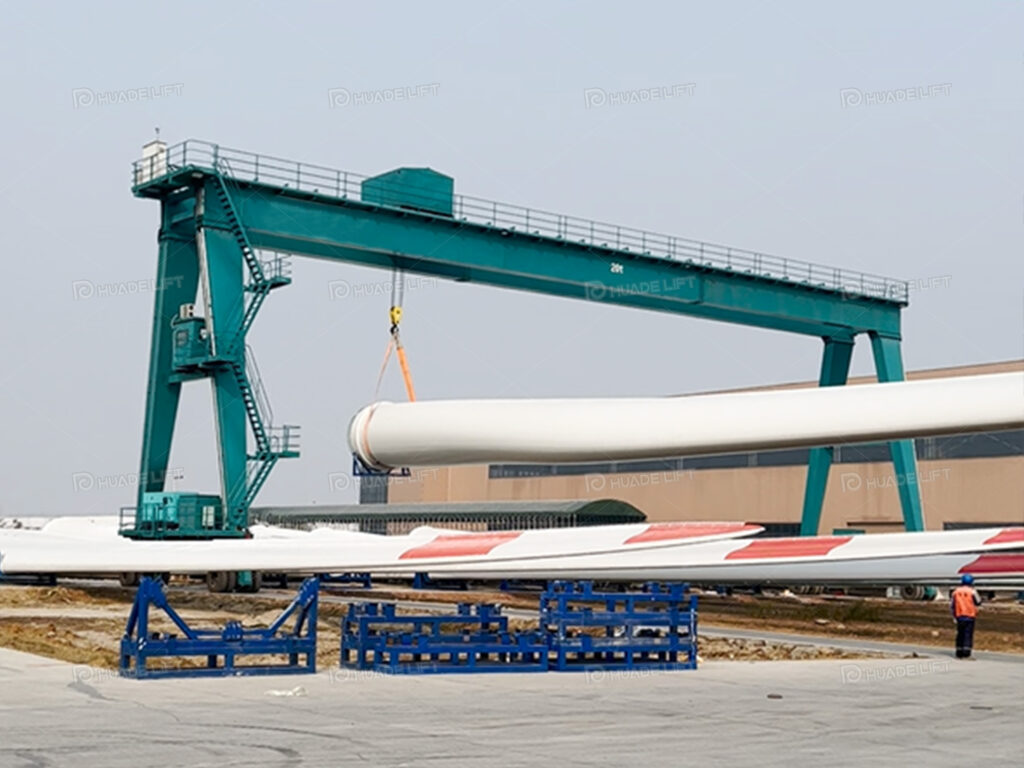
Selection Recommendations
Heavy-load, high-frequency scenarios: Choose a double-girder structure with reinforced tires and high-power hoisting motors (e.g., 50 tons or above).
High environmental standards: Prioritize electric tire-mounted gantry cranes or hybrid models to reduce noise and exhaust emissions.
Small-scale site operations: Opt for lightweight tire-mounted gantry cranes with a span of 10–15 meters, balancing flexibility and maneuverability.
Unique Demands and Key Advantages of RTG Cranes in Industrial Projects
In the complex ecosystem of industrial production, the selection of lifting equipment directly affects the flexibility, efficiency, and sustainability of a project. Rubber-tired gantry cranes have become key equipment for addressing the special needs of industrial scenarios due to their deep adaptability to dynamic operating environments. The following analyzes the irreplaceable advantages of tire-mounted gantry cranes from the perspective of the core requirements of industrial projects.
Adaptability to Dynamic Site Layouts
Industrial projects often face scenarios such as production line adjustments, factory expansions, or temporary warehousing. Traditional rail-mounted cranes with fixed paths struggle to address such dynamic requirements. Rubber-tired gantry cranes utilize a rubber tire travel system combined with fully hydraulic drive technology, enabling multi-angle steering and on-site rotation. They maintain stable operation across diverse ground conditions such as gravel and concrete. This feature enables them to quickly respond to sudden demands such as workshop reorganization or equipment relocation without interrupting production for foundation modifications.
For example, in the renovation of a stamping workshop in an automobile manufacturing plant, tire-mounted gantry cranes can transport heavy molds between different production lines without damaging the ground structure; in heavy machinery assembly plants, their flexible mobility can adapt to frequently changing workstation layouts, significantly reducing equipment downtime.
Universal Adaptability for Diverse Load Scenarios
Industrial production involves a wide range of load types, from standardized containers to irregular steel structures, placing extremely high demands on the versatility of lifting equipment. The tire-mounted gantry crane achieves this through modular lifting device design, enabling quick adaptation to different load forms such as steel coils, prefabricated components, and large mechanical parts. Its variable span design (typically 18-35 meters) covers all scenarios, from precision lifting in workshops to outdoor large-item transportation.
In the steel industry, tire-mounted gantry cranes can handle multi-layer stacking and cross-regional transportation of steel ingots; in bridge prefabrication yards, their large span characteristics can easily cover the movement paths of long components such as T-beams. This “multi-functional” capability significantly reduces reliance on specialized lifting equipment and optimizes equipment resource allocation.
Performance Assurance in Continuous Operation Environments
The uninterrupted operation of industrial production lines requires lifting equipment with high-intensity operational capabilities. The tire-mounted gantry crane has a work class rating of A7-A8, enabling it to withstand prolonged, high-frequency operations. Its variable frequency speed control system achieves efficiency balance between heavy and light load conditions. Advanced anti-swing technology and intelligent control systems ensure lifting precision, maintaining stability even when handling sensitive equipment such as precision machine tools.
The automated renovation case at Ningbo Port demonstrates that the upgraded tire-mounted gantry crane, through the integration of an intelligent scheduling system and terminal management software, significantly enhances operational continuity and reduces downtime caused by manual intervention. This efficiency makes it particularly suitable for industries requiring continuous production, such as automobile manufacturing and heavy machinery.
Dual Optimization of Cost and Environmental Protection
Strict cost control requirements in industrial projects necessitate equipment selection that balances short-term investment with long-term operational costs. Rubber-tired gantry cranes eliminate the need for track laying infrastructure, resulting in significantly lower initial investment costs compared to rail-mounted cranes, making them particularly suitable for short-term temporary projects. Modular design facilitates maintenance, with component replacements requiring minimal downtime, thereby reducing the risk of production interruptions.
In terms of environmental protection, hybrid-powered tire-mounted gantry cranes reduce emissions during operation by switching between diesel and electric modes, while hydrogen fuel cell models achieve zero-carbon emissions and low-noise operation (controlled below 75 decibels), meeting factory environmental standards and community environmental requirements. This green feature makes them more competitive in the face of increasingly stringent environmental regulations.
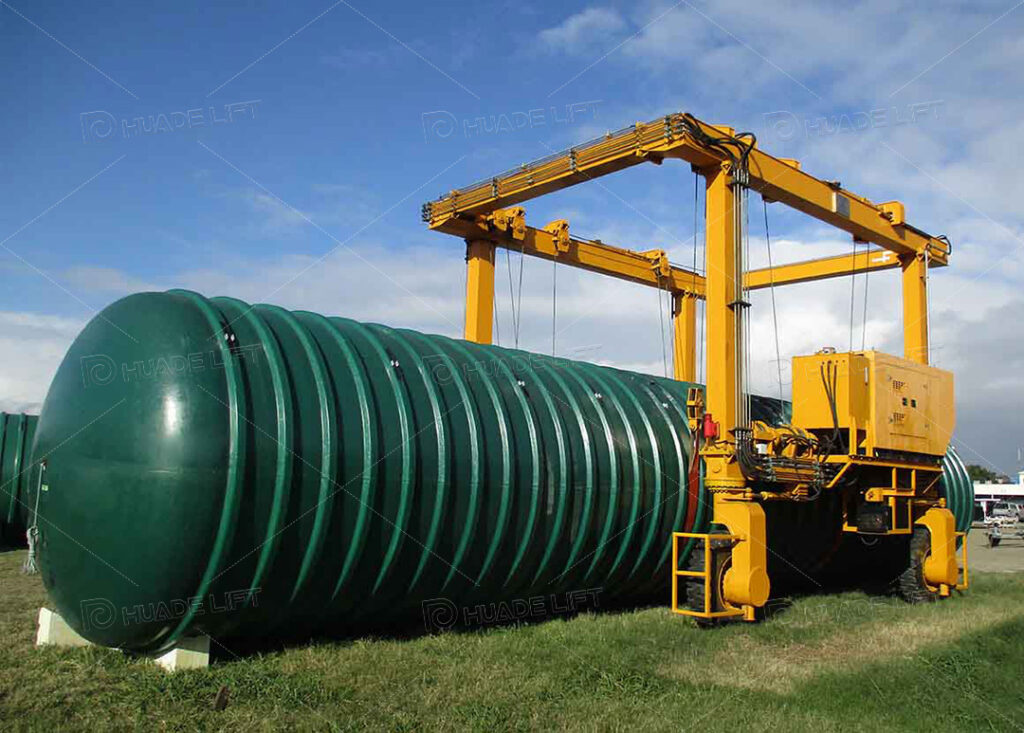
Conclusion
Rubber-tired gantry cranes, with their flexibility, adaptability, and multifunctionality, are the ideal choice for addressing dynamic operational scenarios in modern industry. Whether it’s container transshipment in port logistics or heavy equipment relocation in factory workshops, rubber tyred gantry cranes can create tangible value for businesses by reducing infrastructure dependence, improving space utilization, and enhancing operational efficiency. Under the trend of industrial intelligence and flexible production, the application scope of rubber tyred gantry cranes will further expand, becoming a key piece of equipment for enhancing supply chain competitiveness.
