
Understanding Rubber Tyred Gantry Cranes (RTGs)
A Rubber-Tired Gantry Crane (RTG) is a gantry crane that moves using rubber tires, eliminating the need for tracks and enabling free movement on flat surfaces. This feature makes it ideal for scenarios requiring flexible adjustment of working positions, and it is widely used in container terminals, large warehouses, and various industrial settings.
The core characteristics of RTGs include:
- Mobility: The rubber tire design frees RTGs from track constraints, allowing them to move freely within the work area. Whether on warehouse floors or open-air yards, as long as the ground is flat, they can handle it with ease. This high mobility gives them an unmatched advantage in scenarios requiring rapid switching between work areas.
- Flexibility: Since it does not rely on fixed tracks, the RTG can adjust its position at any time according to operational requirements, covering different areas of the yard or warehouse. This flexibility is particularly important for facilities with frequently changing layouts or those requiring frequent access to multiple operational zones, significantly enhancing operational efficiency.
- Diverse Power Options: RTGs typically have two power sources: diesel engines and electric motors. Diesel-powered RTGs offer greater mobility and are suitable for locations without stable power supply; electric RTGs, on the other hand, are more energy-efficient and environmentally friendly, with lower operating costs, making them ideal for warehouses and ports prioritizing sustainability.
- Lifting Capacity: RTGs typically have a lifting capacity ranging from 10 to 60 tons, with some models capable of even higher capacities, meeting the loading and unloading needs of most heavy containers and large cargo.
- Cost Considerations: The initial purchase cost of RTGs is relatively high, primarily due to their complex mobility systems and tire structures. Additionally, rubber tires require regular replacement, and maintenance of the drive system is relatively complex, resulting in higher long-term maintenance costs.
Understanding Rail-Mounted Gantry Cranes (RMGs)
A rail-mounted gantry crane (RMG) is a gantry crane that operates on fixed tracks, with its movement strictly confined to pre-set tracks. This design makes it excel in scenarios requiring high-precision positioning and stable operation, commonly found in large yards, warehouses, and industrial sectors with extremely high precision requirements.
Key features of RMG include:
- Fixed Pathway: RMG operates along a pre-set track system, which although limits its mobility range, ensures more stable and reliable operation along specific paths. This feature is a significant advantage in environments where crane movement paths are predictable and fixed operating points are required.
- High Precision: Due to the fixed nature of the tracks, RMG can perform high-precision, repeatable operations. In controlled environments, it can accurately position and handle heavy loads, significantly reducing operational errors and improving operational quality.
- Load Capacity: Compared to RTGs, RMG typically has a stronger load capacity, with some models capable of lifting over 100 tons, making it ideal for handling extremely heavy cargo loading and unloading tasks in scenarios requiring the handling of extreme heavy loads.
- Durability: RMG relies on tracks for support and operation, resulting in relatively less wear and impact on its structure, thereby extending its service life. The robust track structure also enables it to withstand high-intensity, high-frequency operational environments, demonstrating exceptional durability.
- Energy Efficiency: RMG is typically powered by electricity, and when using renewable energy or grid power, it achieves higher energy efficiency, lower operating costs, and greater environmental friendliness, aligning with modern industrial requirements for energy conservation and emissions reduction.
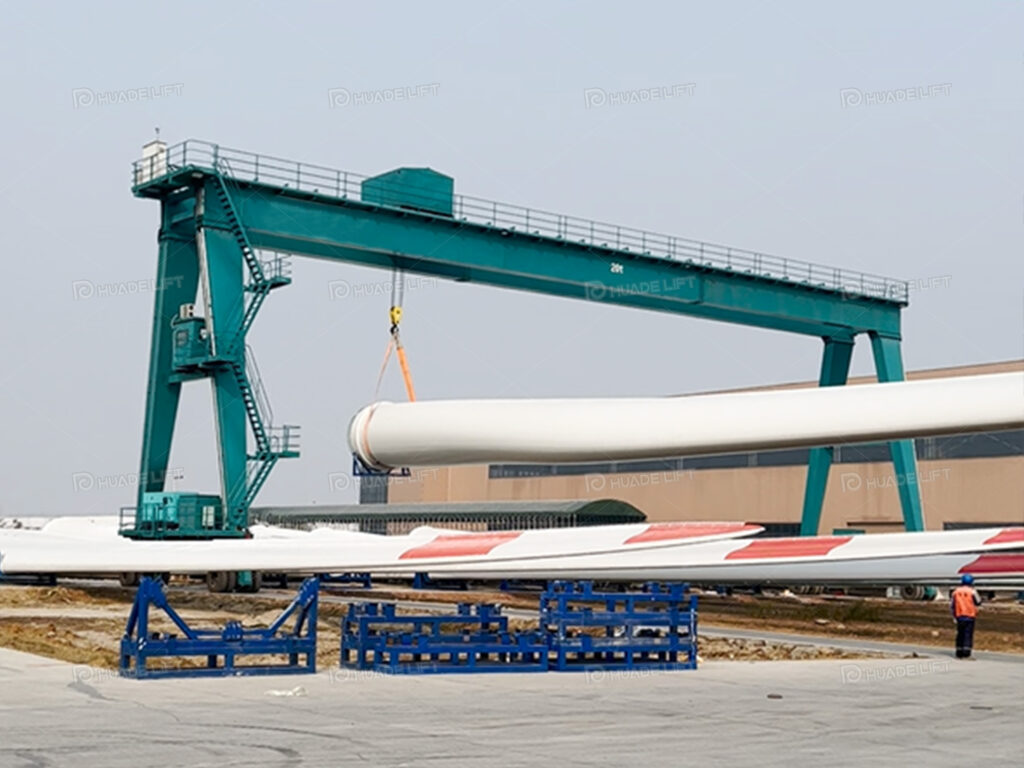
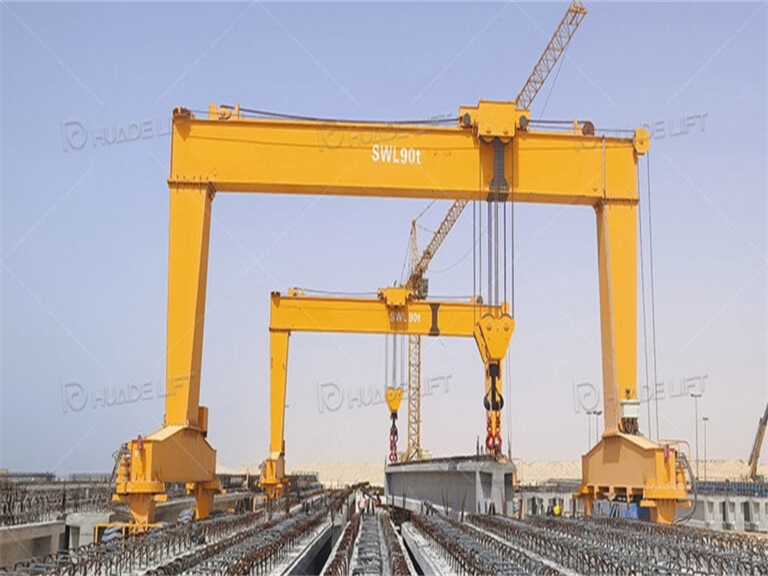
Structural Components Comparison: RTG vs. RMG
RTG and RMG share some structural similarities, with their typically box-shaped steel structure, and to reduce overall weight, truss structures may also be employed. However, there are significant differences in their supporting and core components.
RTG Structural Components
RTG is supported by eight rubber tires, typically using a self-propelled trolley design, with a telescopic hoist suspended below. Its main components include the steel structure, lifting mechanism, trolley running mechanism, crane running mechanism, operator cab, power transmission system, and hoist, among others, with each component connected via welding or flanges. The rubber tires, as the core components for support and mobility, provide the RTG with flexible movement capabilities, while the complex power transmission system ensures coordinated operation of all mechanisms.
RMG Structural Components
The RMG is supported by steel wheels and primarily consists of a gantry steel structure, hoisting mechanism, trolley running mechanism, crane running mechanism, electrical system, operator cab, and hoist. Additionally, the span and boom of the RMG can be customized according to the operational requirements of different yards, categorized into single-boom, double-boom, and boomless types. The interaction between steel wheels and tracks ensures the stability and precision of RMG operation, while the electrical system provides efficient power and control support.
Working Principle Comparison: RTG vs. RMG
RTG Working Principles
RTGs rely on rubber tires to move freely between different yards, adjusting their direction of travel via a dedicated steering mechanism. They possess the ability to move straight, sideways, and diagonally, offering excellent mobility and flexibility. However, due to their mobility, they require a gantry alignment system to maintain straight-line operation, resulting in relatively lower positioning accuracy compared to RMG. Traditional RTGs are primarily operated from the driver’s cab, while new RTGs support remote control and semi-automatic modes. Some automated RTGs also feature three operating modes: local driver’s cab operation, ground-based remote control operation, and remote control room operation, significantly enhancing operational flexibility.
RMG Working Principles
RMG operates on fixed tracks using a steel wheel travel system, achieving extremely high positioning accuracy. It is standardly equipped with a bidirectional flexible anti-sway system, combined with laser positioning technology, enabling stable operations. In terms of control, RMG supports fully automatic operation, seamlessly integrating with the yard management system through the control system, allowing it to be directly scheduled by the upper-level control system in automated yards and achieve collaborative operations with other equipment. Additionally, RMG typically offers three operating modes: manual, semi-automatic, and fully automatic, to meet the operational needs of different scenarios.
Mobility Comparison: RTG vs. RMG
Movement Flexibility
The key feature of the RTG is its high mobility achieved through rubber tires, enabling it to move freely within the operational area, limited only by ground conditions and layout. Whether navigating within the yard or repositioning as needed, no infrastructure modifications are required, allowing it to quickly adapt to layout changes.
In contrast, RMG is constrained by fixed tracks, with its operational path entirely determined by the length and configuration of the tracks. While this ensures precise positioning along the tracks, it also limits its mobility range. If changes to the RMG’s operational area or expansion are required, extensive civil engineering work is needed to lay new tracks, resulting in high operational complexity and costs.
Operational Versatility
RTGs can move in multiple directions, including forward, backward, and turning, giving them exceptional operational versatility. In scenarios such as container terminals, RTGs can easily transfer from one container stacking area to another, quickly adapting to changing operational requirements. Some advanced RTGs also feature programmable steering modes, such as four-wheel steering or crab steering, further enhancing their maneuverability.
RMG is more suitable for operations requiring repetitive, linear movements. On fixed tracks, its movement precision is unmatched, making it ideal for high-capacity container stacking operations with clearly defined and fixed layouts. However, its lack of flexibility makes it less suitable for scenarios where yard layouts frequently change or rapid redeployment of operational areas is required.
Infrastructure Dependency
RTGs operate on rubber tires and only require a flat, solid, and well-maintained paved surface, eliminating the need for specialized track infrastructure. This reduces upfront capital expenditures associated with civil engineering. Therefore, RTGs are the preferred choice for terminals requiring rapid installation and deployment or where site terrain is unsuitable for track installation.
RMG, on the other hand, must rely on a track system, whose installation and maintenance require significant infrastructure investment. Track layout must be carefully planned and constructed according to the yard’s operational processes, and any changes to the track layout are both costly and disruptive. However, tracks provide RMG with a stable and robust operating path, reducing wear and tear on the crane’s moving parts.
Speed and Travel Distance
RTGs have moderate travel speeds, typically around 20–30 km/h, depending on design and load conditions. Unrestricted by tracks, they can cover greater distances within the terminal, enabling efficient repositioning across a wide operational range.
RMG travel speeds are relatively slower, generally 10–15 km/h, and are limited by track length, with maximum travel distance determined by track length. Although its operational range is fixed, it achieves high operational efficiency within that range.
Terrain Adaptability
Rubber tires enable RTGs to better handle uneven or slightly rough surfaces, but they are still unsuitable for extremely rugged or soft terrain. Additionally, their mobility allows them to be deployed in various environments beyond container yards, such as industrial sites, logistics hubs, and construction sites.
RMG operation is strictly limited to areas where tracks can be laid and maintained, with poor terrain adaptability and difficulty in handling variable terrain or rapidly changing site conditions. Additionally, tracks must be carefully leveled and regularly inspected to ensure normal RMG operation.
Energy Consumption and Environmental Impact
Rubber tires have higher rolling resistance than steel wheels on tracks, resulting in higher energy consumption during RTG operation. However, many modern RTGs are equipped with electric drive systems and regenerative braking systems to optimize energy usage.
Steel wheels have lower rolling resistance on tracks, making RMG more energy-efficient during movement. Additionally, the track system can support heavier loads with less energy loss, making it more environmentally friendly than rubber tire systems.
Load Capacity
Both RTGs and RMGs have the capability to handle heavy loads, but there are significant differences in their load capacities. RMGs generally have stronger load capacities and are more suitable for heavy-duty applications. In scenarios such as large warehouses where bulk goods or oversized materials need to be handled, RMGs are the preferred choice. Their typical load capacity range is 50 to 100 tons, providing sufficient power for large-scale operations.
In contrast, RTGs have relatively lower lifting capacities, typically ranging from 10 to 60 tons, making them more suitable for medium-load handling tasks.
Cost Comparison: RTG vs. RMG
When selecting a crane, cost is an important consideration, including initial purchase costs, infrastructure costs, maintenance and long-term costs, and return on investment.
Initial Purchase Price
RTGs, due to their more complex design featuring self-propelled capabilities, rubber-tired installation, and integrated steering systems, often have higher initial purchase prices than RMG cranes. Especially when customized options such as multiple steering modes or anti-sway systems are included, RTG prices can rise further.
RMG cranes, which operate on fixed tracks, have simpler structures and control mechanisms, resulting in lower initial purchase costs. However, it is important to note that the cost of laying track infrastructure increases the total cost of the RMG system.
Infrastructure Costs
As mobile equipment, RTGs require only a flat surface and no special infrastructure, enabling them to move autonomously within container yards, construction sites, or manufacturing areas. This flexibility is appealing for businesses with dynamic layout changes or those needing to use cranes at multiple locations within the same site. However, reliance on rubber tires and steering systems increases maintenance and operational costs.
RMG systems, on the other hand, require a fixed track system, with tracks installed along the entire operational span of the crane, significantly increasing initial infrastructure costs. In ports or industrial yards where tracks are already in place, this issue is relatively minor, but if infrastructure needs to be built from scratch, costs can rise rapidly, as laying tracks over long distances involves extensive excavation, foundation work, and installation efforts.
Maintenance and Long-Term Costs
RTGs, due to their mobile nature, require more frequent maintenance. Rubber tires wear out over time and need replacement, and the steering system requires regular inspection and repair. Additionally, diesel-powered RTGs require regular maintenance of the engine and other components, increasing long-term maintenance costs.
RMG, which operates on fixed tracks, has fewer moving parts, resulting in less wear and tear on components and significantly reduced maintenance costs. While the track system itself requires regular inspection and maintenance, it is more durable and reliable in the long term, so RMG typically has lower overall maintenance costs and fewer operational disruptions due to failures.
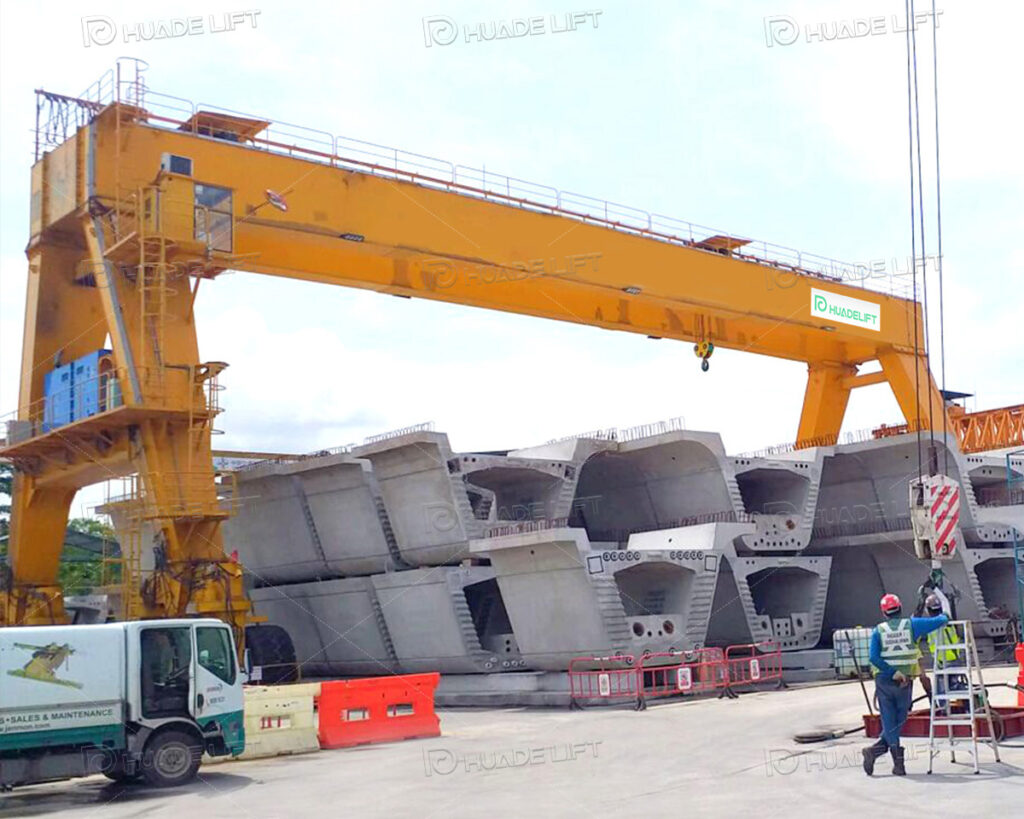
Application Scenarios Comparison: RTG vs. RMG
RTG Application Scenarios
RTG tire cranes are flexible and adaptable, capable of stacking 4-5 layers of containers and easily transferring between different yards, making them particularly suitable for multi-purpose terminals, medium-sized ports, and inland logistics parks. In highway transfer stations, RTGs can operate on semi-trailers without the need for complex docking systems. Additionally, diesel-powered RTGs can be used in areas with poor electrical infrastructure or temporary work sites, while modern terminals typically use more environmentally friendly electric RTGs.
RMG Application Scenarios
RMG rail-mounted gantry cranes feature high stability, large spans, and excellent automation compatibility, enabling high-density stacking of 5 or even 6 layers of containers. They are particularly suitable for high-intensity, high-efficiency long-term fixed operations at large container terminals. Their single or double boom designs effectively cover a broader operational area. Additionally, RMGs have widespread application in railway yards, seamlessly connecting with railway flatcars to efficiently complete container transshipment operations between railway and road transportation modes.
Key Factors to Consider When Choosing Which Crane
When selecting RMG and RTG cranes for container yards, multiple factors must be considered, including yard layout, operational requirements, and long-term costs.
Yard Layout and Scale
The physical layout of the yard is a critical factor in determining the type of crane. RTGs are suitable for container yards with irregular layouts or those requiring frequent repositioning of equipment. Their ability to move freely allows them to adapt to different stacking configurations, optimizing space utilization.
RMG cranes are best suited for container yards with fixed stacking areas and defined tracks. If the yard operates with high organization and efficiency, RMG cranes can streamline container handling processes and reduce delays.
Lifting Capacity and Efficiency
RTG cranes, which rely on rubber tires, have limited lifting capacity and are best suited for medium-capacity lifting requirements.
RMG, with its stable steel wheel design, can lift heavier loads. If the container yard frequently handles large volumes of cargo, RMG may be the better choice.
Energy Consumption and Environmental Impact
RTG is typically powered by diesel or hybrid engines, resulting in higher fuel consumption and carbon emissions. Some modern RTG are transitioning to electric or hybrid models to reduce their environmental footprint.
RMG are fully electric-powered, making them a more sustainable and cost-effective choice in the long term. Reducing reliance on fossil fuels also means lower long-term operational costs.
Maintenance and Downtime
RTGs require frequent maintenance due to their moving parts and reliance on rubber tires, which wear out over time.
RMG cranes have fewer moving parts and lower maintenance requirements. However, if an RMG crane malfunctions, repairs may take longer due to the complexity of the track system.
Environmental and Weather Conditions
RTGs may face challenges in harsh weather conditions, particularly in wet or slippery conditions. During heavy rain or snow, tire traction may be affected, thereby limiting operational efficiency. While RTGs offer mobility, extreme conditions may impact stability and performance.
RMG cranes perform reliably in extreme weather conditions such as heavy rain, snow, or strong winds. Their fixed design reduces risks associated with mobility, ensuring reliable operation even in adverse weather conditions and maintaining operational continuity.
