
In terminal operations, straddle carriers serve as the core equipment for handling containers and heavy cargo. Many operators and procurement managers fall into the trap of focusing solely on tonnage and price, resulting in equipment that fails to meet operational needs. The key to selection lies in aligning with the terminal’s actual requirements and clarifying five core dimensions: load capacity, power, and others.
Start with Load Capacity: How Much Do You Really Need
Load Capacity and Application Scenarios
The load capacity of a straddle carrier is the primary specification to clarify, as it directly determines whether it can meet daily operational requirements. Currently, common load capacities in the market range from 30 to 80 tons. Different load capacities are suited for distinct cargo types and scenarios, so there is no need to blindly pursue higher tonnage.
If a terminal primarily handles standard 20-foot and 40-foot single-container shipments, a 40-ton class straddle carrier is sufficient. This tonnage class offers agile maneuverability, lower energy consumption, and reduced maintenance costs, making it suitable for small to medium-sized terminals or standard container handling scenarios.
For frequent transport of double-stacked containers or oversized equipment (such as modular structural components or large machinery parts), a 60-70 tonne reach stacker is necessary. These units provide enhanced load-bearing capacity, reliably handling heavy loads to prevent equipment damage or safety hazards caused by insufficient load capacity.
When determining capacity requirements, base calculations on the maximum daily load demand and factor in operational frequency. Occasional oversized cargo does not necessitate an 80-ton class crane; instead, manage such loads efficiently using a 60-70 ton class crane through proper scheduling. However, if daily operations involve substantial heavy-load tasks, selecting a crane with matching capacity is essential to prevent prolonged equipment overload.
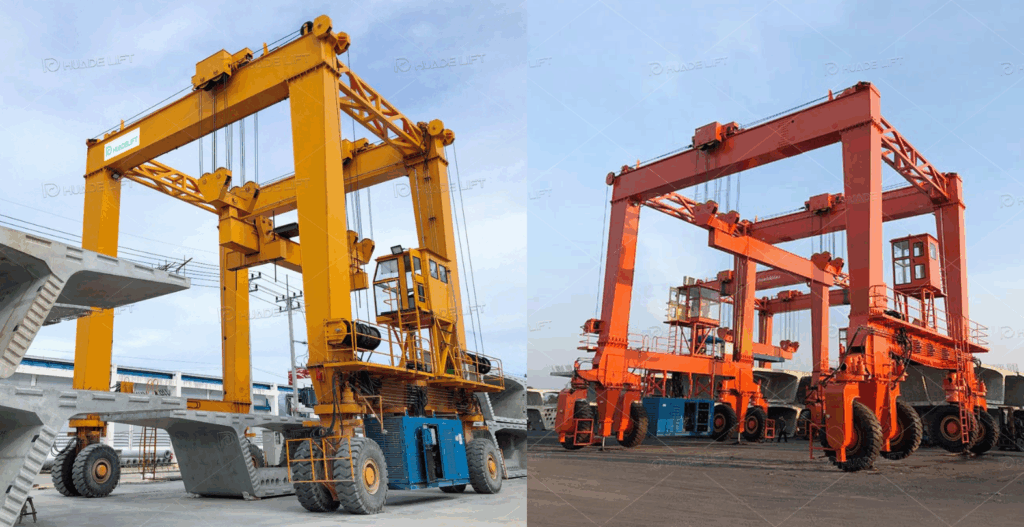
Analysis of Core Terms Related to Load Capacity
When consulting suppliers and reviewing equipment specifications, two easily confused core terms often arise. Understanding them clearly enables more precise determination of whether the equipment meets requirements.
The first is “straddle carrier capacity,” referring to the maximum weight the straddle carrier can safely handle—a core performance metric. Parameters provided by suppliers are rigorously tested and must not be exceeded arbitrarily, as doing so shortens equipment lifespan and risks safety incidents.
The second is “heavy load transport,” specifically referring to cargo transportation with high load requirements. Whenever a terminal has such needs, it is crucial to focus on the straddle carrier’s load capacity parameters and structural strength to ensure stable operation.
There’s no need to memorize these terms verbatim. Simply pay close attention to the corresponding load values and suitable scenarios when encountering these terms. By combining this information with your own operational context, you can make a basic assessment and avoid getting confused by complex terminology.
Engine and Power System
The engine and power system of straddle carriers directly impact operational stability, energy consumption, and maintenance costs. Neither diesel nor electric types are inherently superior; the choice depends on operational conditions.
Diesel straddle carriers are the most widely used traditional type, offering robust power and excellent range. They adapt well to diverse environments including high temperatures, high humidity, and low temperatures. No additional charging infrastructure is required, and they impose no special demands on facilities.However, diesel straddle carriers require more complex maintenance, including regular oil and filter changes, and emission system inspections. Based on experience, their engines require routine servicing every 500 hours. Failure rates increase in high-temperature, high-humidity environments, necessitating dedicated personnel for daily checks.
Electric motors have a simpler structure than diesel engines, lacking complex fuel and emission systems. Routine maintenance focuses primarily on the battery.Battery maintenance emphasizes temperature control and charge/discharge management. Avoiding high temperatures, overcharging, and over-discharging effectively extends battery life. Regular monitoring of capacity degradation is also crucial for timely maintenance or replacement to prevent operational disruptions.
When selecting equipment, avoid blindly pursuing “electrification”:
- Choose diesel models for sites with inadequate infrastructure, high operational intensity, and 24/7 continuous operation.
- Opt for electric models where charging facilities are well-established, environmental requirements are stringent, and operational intensity is moderate—this offers greater energy efficiency and cost savings.
How does Yard Layout Impact Terminal Efficiency
Core Influencing Dimensions of Terminal Layout
In reality, rational layout not only determines operational efficiency but also affects equipment lifespan, primarily influencing three aspects: space utilization, equipment deployment, and traffic flow management.
Space Utilization
A well-designed layout maximizes storage capacity while reserving sufficient operational space, enabling straddle carriers to operate flexibly and efficiently. Poor layout and narrow aisles increase travel distance and time for straddle carriers, reducing efficiency.
I’ve observed some smaller terminals excessively compressing aisles to increase capacity, resulting in difficult turns and collisions for straddle carriers. This not only impedes efficiency but also increases maintenance costs. The core principle of space utilization is “balancing storage and operational space,” not merely pursuing maximum storage volume.
Equipment Deployment
Beyond rubber tyred gantry cranes, terminals also utilize RMGs, and other machinery with distinct operational modes and varying space requirements. Rubber tyred gantry crane selection must accommodate these systems, ensuring storage block dimensions, aisle widths, and transfer point configurations align with vehicle dimensions and turning radii.
For rubber tyred gantry crane-operated terminals with wider block spacing, straddle carriers require greater maneuverability. In RMG-operated terminals with fixed rail tracks, the carrier’s operational range is constrained, allowing focus on body length and working radius.
Traffic Flow Management
During peak operations with multiple devices, poor planning leads to congestion and operational disruptions. Implementing a one-way traffic system with buffer and transfer zones maintains stable efficiency during high-demand periods while reducing equipment wait times.
Layout Adaptation Recommendations
When selecting straddle carriers, first clarify the specific parameters of the terminal’s existing or planned layout, and choose compatible equipment based on these parameters.
For existing layouts with narrow aisles and limited turning space, select models with compact bodies and small turning radii to avoid turning failures and collisions. For new or planned layouts, incorporate straddle carrier operational requirements to pre-plan aisle widths and storage block spacing, reserving flexibility for future equipment selection.
Simultaneously, determine operational range and maneuverability requirements based on storage bay spacing and aisle width:
- For wide spacing requiring long-distance travel, select equipment with strong range capabilities.
- For concentrated areas, prioritize maneuverability.
Power Type of Straddle Carrier
The main types of straddle carriers on the market are diesel, hybrid, and pure electric, each with its own advantages and disadvantages, suited for different scenarios. The core considerations for selection are environmental requirements, infrastructure, and cost budget.
Diesel Straddle Carrier
Diesel straddle carriers remain the preferred choice for many terminals due to their powerful performance, extended range, and independence from infrastructure. They can operate reliably even in remote or underdeveloped port facilities.
Their mature technology, ease of maintenance, and readily available parts enable swift troubleshooting and reduced downtime. However, they consume high fuel volumes, incur elevated operating costs, and generate noise and exhaust emissions.
Hybrid Straddle Carrier
Hybrid straddle carriers combine diesel and electric power, achieving energy savings through synergistic operation. They balance the range of diesel models with the environmental benefits of electric vehicles, requiring no charging infrastructure. This makes them suitable for ports transitioning toward green operations but lacking conditions for pure electric adoption.
However, their systems are complex, initial investment is high, and maintenance demands are significant, requiring specialized technicians. They are not recommended for terminals with unskilled maintenance teams or limited budgets.
Electric Straddle Carrier
Pure electric straddle carriers are core equipment for green terminal. They offer zero emissions, low noise, and low operational/maintenance costs. Routine maintenance focuses on batteries, making them more hassle-free than diesel models.
However, they heavily depend on charging infrastructure and power supply. Inadequate charging equipment or unstable power can disrupt operations. Limited battery range makes them unsuitable for terminals requiring 24/7 continuous operation.
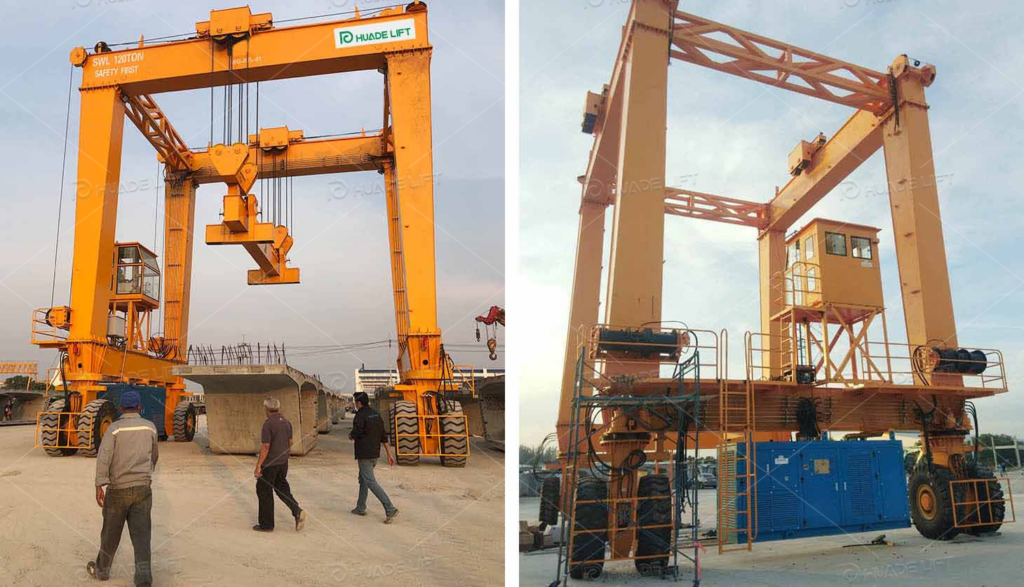
Operational Costs & Total Cost of Ownership for a Straddle Carrier Crane
Comparison of Initial Costs and Operating Costs
Key Consideration
Many terminals focus solely on equipment unit prices during procurement while overlooking subsequent operational costs, leading to increased overall investment. When selecting straddle carriers, greater emphasis should be placed on total cost of ownership (TCO)—the sum of initial procurement costs plus ongoing operational and maintenance expenses.
Initial Cost
The unit cost of a straddle carrier is higher than that of a basic rubber tyred gantry crane or reach stacker due to its complex structure, which integrates hydraulic, electronic, and heavy-duty chassis systems. For example, HuadeLift straddle carriers come standard with high-quality hydraulic and electronic systems and feature a heavy-duty chassis, naturally resulting in higher costs.
However, excessive fixation on unit price is unnecessary. Since straddle carriers require no rail infrastructure, the savings in civil engineering costs partially offset the higher unit price, making the overall project cost more competitive.
Operating Costs
Operating costs represent the core long-term investment, including fuel (or electricity), tire replacement, hydraulic fluid, and maintenance labor. Diesel models consume high fuel volumes, while hybrid and electric models offer greater long-term energy efficiency. Request energy consumption data from suppliers during consultation to facilitate budgeting.
Key Cost Items
Tires and batteries represent key cost items: Straddle carriers utilize large pneumatic tires that wear quickly and carry a high unit cost, necessitating a replacement budget. High-capacity batteries in pure electric models are expensive and have a finite lifespan; their replacement costs must be factored into the Total Cost of Ownership (TCO) assessment.
Maintenance Key Points and Cost Control
Maintenance of straddle carriers directly impacts equipment lifespan and operational costs. Many terminals experience frequent breakdowns due to neglecting maintenance, which increases costs and disrupts schedules. Performing routine maintenance and regular upkeep can effectively reduce failure rates.
Daily maintenance primarily involves pre-operation checks: Focus on inspecting lifting attachments and twist locks to ensure cargo safety; examine gap detection sensors (if equipped) and lift pins to guarantee proper equipment function; check tire pressure and wear, test horns, lights, and collision warning systems to safeguard personnel and equipment.Routine maintenance must adhere to manufacturer standards, prioritizing the hydraulic system and diesel engine. Regularly replace fluids and filters, and inspect hydraulic system seals.
Many straddle carrier lifting devices feature automatic lubrication systems, which reduce wear and extend maintenance intervals—a priority consideration during selection. Additionally, regularly inspect telescopic mechanisms and weighing systems, maintaining thorough records of maintenance and load testing to comply with safety regulations.
While standardized maintenance requires labor and material costs, it enhances equipment reliability, minimizes failures, and extends service life. Ultimately, this optimizes total cost of ownership, making it a cost-effective investment.
Safety Features
Overload Protection System
Straddle carriers are used for heavy cargo handling, where safety is paramount. The overload protection system is the most fundamental and critical safety feature, directly impacting the safety of equipment, personnel, and cargo.
Straddle carriers from reputable manufacturers are equipped with comprehensive overload protection systems, featuring core components such as load sensors and hydraulic pressure monitoring. Load sensors continuously detect cargo weight, triggering automatic alarms and restricting lifting operations during overloads. Hydraulic pressure monitoring activates protective mechanisms to prevent equipment damage from excessive pressure.
Never entertain the notion that “occasional overloading is acceptable.” Chronic overloading damages structural components and hydraulic systems, increasing the risk of malfunctions and accidents. When selecting equipment, verify that the overload prevention system is both robust and responsive.
Hydraulic and Structural Safety Mechanisms
Hydraulic systems and structural strength form the foundation for stable equipment operation. Hydraulic system safety relies on fail-safe devices that prevent sudden pressure surges and component damage, maintaining stable pressure to ensure smooth cargo lifting and lowering.
Regarding structural integrity, critical components such as the chassis, main beams, and columns must withstand immense loads. High-quality steel must be used and rigorously tested to ensure stability under heavy loads without deformation or fracture. When selecting equipment, review structural drawings and material inspection reports to avoid non-compliant units.
Emergency Shutdown and Load Balancing System
Emergency stop devices must be easy to operate and highly responsive, with buttons typically positioned within easy reach of operators. This enables rapid shutdown during emergencies to prevent accidents from escalating.
Load balancing systems are particularly critical when handling heavy or irregularly shaped cargo. They automatically adjust the boom to distribute the load evenly, stabilize the equipment’s center of gravity, and reduce the risk of tipping. When selecting equipment, ensure the emergency stop device is appropriately sensitive and that the load balancing system’s adjustment precision meets operational requirements.
Conclusion
The core of selecting a straddle carrier lies in aligning with terminal requirements. Evaluate based on five key dimensions: load capacity, power, layout, cost, and safety. Opt for diesel models for single-container operations or underdeveloped facilities; choose electric or hybrid models for green transition or well-equipped facilities. Select flexible models for compact layouts. Prioritize total cost of ownership and safety; consult suppliers for customized solutions.
