
Rubber Tyred Gantry Crane: Cost vs. Long-Term ROI
Understanding of Rubber Tyred Gantry Crane
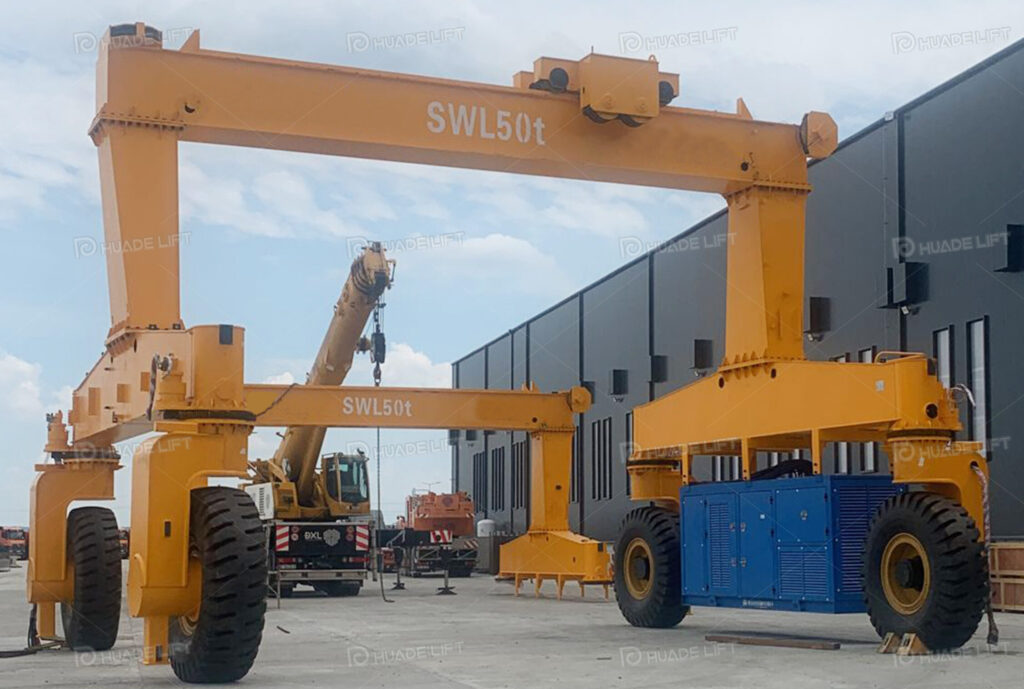
Rubber-tired gantry cranes (RTGs) are indispensable lifting equipment in ports, container yards, industrial zones, and logistics centers. As a mobile gantry crane, it can flexibly handle heavy loads in vast outdoor areas without the need for tracks.
RTG cranes are widely used in industries such as shipping, manufacturing, and construction. When considering the purchase of an RTG crane, many companies often focus primarily on its initial purchase price. However, understanding its long-term operational costs is equally important, as this helps make informed decisions to ensure the crane remains cost-effective throughout its lifespan.
Why Understanding Rubber Tyred Gantry Crane Price Matters
For logistics operators, port authorities, and industrial buyers, understanding the price of rubber-tired gantry cranes is key to accurate budgeting and project planning. Purchasing an RTG is a major fixed asset investment, and misjudging the price can directly impact the project’s economic viability. It is essential to balance performance and budget to avoid overspending or low-quality risks.
First, it helps plan capital expenditures by clarifying the base price of the equipment, modification costs, and installation fees, avoiding budget deviations caused by vague estimates and ensuring proper funding arrangements. Second, it facilitates comparisons between machine models and suppliers, enabling a comprehensive assessment of technical configurations, after-sales service, and other costs based on operational requirements to select the most cost-effective solution. Third, it helps identify cost drivers such as steel prices and policies, enabling the identification of cost-saving opportunities such as low-price procurement and subsidies. Fourth, it supports long-term operational budget planning by considering factors such as energy consumption and spare parts costs to ensure the economic viability of the equipment throughout its lifecycle.

Initial Investment and Purchase Cost of RTG Cranes
Factors Influencing the Initial Cost of RTGs
When considering equipment investment, the purchase price of the crane is the first factor companies assess. The initial purchase price of rubber-tired gantry cranes varies significantly due to multiple factors. The most significant factors include the crane’s load capacity, dimensions, and specific design features.
- Load Capacity: The stronger the lifting capacity, such as comparing a 40-ton crane to a 10-ton crane, the higher the price.
- Size and Design: Larger and more complex cranes require more materials and labor, resulting in higher costs.
- Environmental Adaptations: Cranes capable of withstanding extreme temperatures or corrosive environments typically have higher prices.
- Technology and Features: Advanced control systems, automation features, and other technologies can increase costs.
Impact of Customizations and Features
While standard RTG cranes have basic functionality, many operations require specific customization to meet unique needs. These customized solutions can significantly impact the cost of the crane.
- Load Capacity Adjustments: Changing the crane’s load limits, whether increasing or decreasing them, may increase costs.
- Operating Speed: RTG cranes with faster lifting and movement speeds are typically more expensive.
- Control Systems: Adding advanced control systems to improve efficiency or enable automation can lead to higher prices.
- Safety Features: Customized safety measures, such as collision prevention or anti-sway technology, can increase overall costs.
Long-Term Return on Investment (ROI) of RTG Cranes
While the initial purchase price is a significant upfront investment, the true cost of owning an RTG crane becomes apparent over its operational lifespan. Long-term costs may include maintenance, energy consumption, part replacements, and downtime.
Maintenance and Repairs
Regular maintenance is crucial for keeping the crane in optimal working condition. This includes:
- Routine inspections: Regular checks ensure that the crane’s components are functioning properly.
- Lubrication and cleaning: Preventive measures help avoid wear and tear.
- Part replacement: Over time, components such as tires, hydraulic systems, and lifting mechanisms may require replacement.
The frequency and cost of maintenance depend on the crane’s design and quality. Lower-priced cranes may have higher maintenance costs due to inferior materials and components.
Energy Consumption
RTG cranes consume significant amounts of energy, particularly those powered by diesel engines. Transitioning to hybrid or electric cranes can significantly reduce energy costs. For example, hybrid RTGs can reduce fuel consumption by up to 50%, while electric RTGs eliminate diesel costs entirely, resulting in long-term savings.
Downtime Costs
Operational downtime caused by mechanical failures or maintenance can result in financial losses. Investing in reliable, high-quality cranes can mitigate these risks. Additionally, proper training of operators and implementing regular maintenance schedules can reduce unexpected downtime.
Training and Labor Costs
Training operators to use cranes effectively and safely is a critical part of ownership. These costs are typically higher in the initial stages but decrease as operators gain experience.
Depreciation and Resale Value
The depreciation rate of RTG cranes impacts their overall cost-effectiveness. High-quality cranes with robust functionality tend to retain their value better and command higher resale prices at the end of their lifecycle.
Key Factors in Reducing Operational Costs with RTG Cranes
Fuel and Energy Efficiency
Energy consumption is one of the most significant operational costs in any container handling operation. Traditional diesel-powered RTG cranes, while effective, consume large amounts of fuel and emit significant greenhouse gases. Investing in energy-efficient cranes, such as hybrid RTGs or fully electric RTGs, can significantly reduce fuel costs.
Hybrid RTGs combine diesel engines with energy storage systems (batteries or supercapacitors). During low-load periods, the system uses stored energy, reducing reliance on the diesel engine. Electric RTGs (E-RTGs) are powered via cable reels or busbar systems. These cranes have the lowest energy costs per movement and are environmentally friendly.
【Cost-effectiveness】: Ports that have switched from diesel to electric RTGs report energy cost savings of up to 60%, while also reducing noise and emissions.
Reduced Maintenance Costs
Maintenance is a significant component of RTG crane operating expenses. Investing in newer, technologically advanced RTG models can reduce maintenance frequency and costs due to improved component reliability and easier diagnostics.
Electric RTGs have fewer mechanical components than diesel-powered ones (e.g., no diesel engine or transmission system), reducing wear and tear. Intelligent diagnostic systems monitor the crane’s condition and alert operators to potential issues before they become costly failures, enabling predictive maintenance.
【Cost-effectiveness】: Reducing unplanned downtime and extending component lifespan lowers repair costs and improves equipment availability.
Labor Optimization Through Automation
Labor costs account for a significant portion of RTG crane operations. Investing in semi-automated or fully automated RTG cranes reduces reliance on manual operations and improves consistency. Remote operation systems allow a single operator to control multiple cranes, enhancing labor efficiency. Automated features such as automatic steering, anti-sway control, and intelligent stacking reduce operator fatigue and errors, minimizing accidents and damage to containers or equipment.
【Cost-effectiveness】: Automation can reduce labor costs by 30%-50% while improving safety and productivity.
Extended Equipment Life and ROI
Selecting high-quality RTG cranes manufactured by reputable gantry crane manufacturers ensures durability and a long service life. Cranes with robust steel structures, weather-resistant coatings, and premium components can withstand harsh operating conditions and reduce the need for replacements. Additionally, the right crane can adapt to future needs. For example, modular RTG designs allow for upgrades to automation or electrification systems as technology advances.
【Cost-effectiveness】: Longer equipment lifespan and fewer major repairs mean better return on investment (ROI) and lower lifecycle ownership costs.
Improved Yard Capacity and Turnover
The right RTG crane improves operational efficiency by enabling faster and more precise container stacking. High stacking capacity (up to 6+1 container high and 6 rows wide) maximizes yard space utilization and reduces the need for expansion. Additionally, faster cycle times per container movement help increase throughput, enabling the terminal to handle more standard containers (TEUs) without adding personnel or expanding facilities.
【Cost-effectiveness】: Optimizing yard utilization minimizes land and infrastructure costs while maximizing operational capacity and revenue.
Comparing Initial and Long-Term Costs
When evaluating the cost of an RTG crane, it is crucial to consider both the upfront investment and the operational expenses over its lifespan. Here is a comparative analysis:
Cost-Benefit Analysis
A lower initial purchase price may seem attractive, but it could lead to higher maintenance and energy costs. Investing in advanced features such as hybrid systems or automated controls, while increasing initial costs, can result in significant long-term savings.
Operational Efficiency
High-quality cranes typically have better performance metrics, such as reduced fuel consumption and lower maintenance frequency. Energy-efficient cranes, though more expensive upfront, can significantly reduce operational costs in the long run.
Longevity
Lower-priced cranes may have shorter lifespans due to inferior materials and design, leading to higher replacement costs. High-end cranes, though more expensive initially, offer longer lifespans and reliability, ensuring better return on investment.

Cost Comparison: Rubber-Tired Gantry Cranes vs. Rail-Mounted Gantry Cranes
Initial Purchase Price
Compared to rail-mounted gantry cranes (RMG), RTG cranes typically have a higher initial purchase price due to their more complex design. RTG cranes are self-propelled, mounted on rubber tires, and equipped with an integrated steering system, providing mobility and versatility. These additional features increase the price of rubber-tired gantry cranes, especially when custom options such as multiple steering modes or anti-sway systems are included.
On the other hand, RMG cranes typically have lower upfront costs because they operate on fixed tracks, reducing structural complexity. RMG cranes are generally simpler in design and control mechanisms, which helps reduce initial procurement costs. However, it is important to note that the cost of laying track infrastructure increases the total cost of the RMG system.
Infrastructure Costs
RTG cranes: As mobile equipment, RTG cranes do not require any special infrastructure, only a flat operating surface. They can move independently within container yards, construction sites, or manufacturing areas. This flexibility typically makes them more attractive to businesses with dynamic layouts or multiple locations requiring cranes at the same site. However, this flexibility comes at the cost of the crane’s reliance on rubber tires and steering systems, which may increase maintenance and operational costs.
RMG Cranes: In contrast, RMG cranes require a fixed track system for movement. These tracks must be installed along the entire operational span of the crane, which can significantly increase initial infrastructure costs. This is not a major issue in ports or industrial yards where tracks are already in place. However, in cases where infrastructure must be built from scratch, costs can rise rapidly. Laying long-distance tracks involves extensive excavation, foundation work, and installation, so when considering these costs, the upfront costs of RMG cranes may be higher.
Maintenance and Long-Term Costs
RTG Cranes: Due to their mobility, RTGs require more frequent maintenance. Rubber tires wear out over time and require replacement, and the steering system needs regular inspection and repair. Additionally, the engines and other components of diesel-powered RTGs require regular maintenance, increasing long-term maintenance costs. The complexity of RTG crane systems also means that repair costs for any failures or malfunctions may be high.
RMG cranes: In contrast, RMG cranes have fewer moving parts since they operate on fixed tracks, reducing component wear. The absence of tires and an engine significantly reduces maintenance costs. While the track system itself requires regular inspection and maintenance, it is often more durable and reliable in the long run. Therefore, RMG cranes typically have lower overall maintenance costs and fewer operational disruptions due to failures.
Return on Investment (ROI)
RTG Cranes: The higher initial cost of RTG cranes may be offset by their flexibility and mobility, which can enhance operational efficiency in dynamic environments. Businesses that require cranes to be used at multiple locations or need to frequently adjust their operations may find that investing in RTG cranes is more advantageous in the long run.
RMG Cranes: For businesses with fixed, repetitive operations, RMG cranes’ lower operational costs, energy efficiency, and reduced maintenance can provide a better return on investment over time. Despite higher initial infrastructure costs, RMG cranes may be more cost-effective in the long run due to their efficiency and reliability.
Conclusion
The decision to invest in a rubber-tyred gantry crane (RTG) is not simply a matter of price comparison, but requires a long-term operational perspective to balance initial costs with lifecycle value. Therefore, enterprises should balance short-term and long-term investment returns (ROI). Choosing high-quality, energy-efficient RTGs with potential for automation upgrades may increase initial expenditure, but by reducing energy consumption, minimizing downtime, and extending service life, total cost optimization can be achieved over a 5-10 year lifecycle. Enterprises should understand that the cost-effectiveness of equipment does not lie in low-cost procurement, but in efficient utilization and higher returns.
