
In scenarios such as port terminals, manufacturing workshops, and warehousing and logistics, lifting equipment is the core of efficient operations. The most widely used representative equipment in these scenarios are rubber tyred gantry cranes and overhead cranes. Although both types of equipment are used for material handling tasks, their application scenarios differ significantly: rubber tyred gantry cranes rely on rubber tires to adapt flexibly to outdoor operations, while overhead cranes, which operate on fixed tracks, are more suitable for indoor operations along fixed routes.
The selection of lifting equipment directly impacts a company’s operational efficiency, operational costs, and site adaptability. Improper selection may lead to operational disruptions and resource wastage. Therefore, conducting a comprehensive comparison and analysis of the two before selection is a critical prerequisite for companies to make decisions that align with their specific needs.
What is a Rubber Tyred Gantry Crane?
Definition and Structural Features
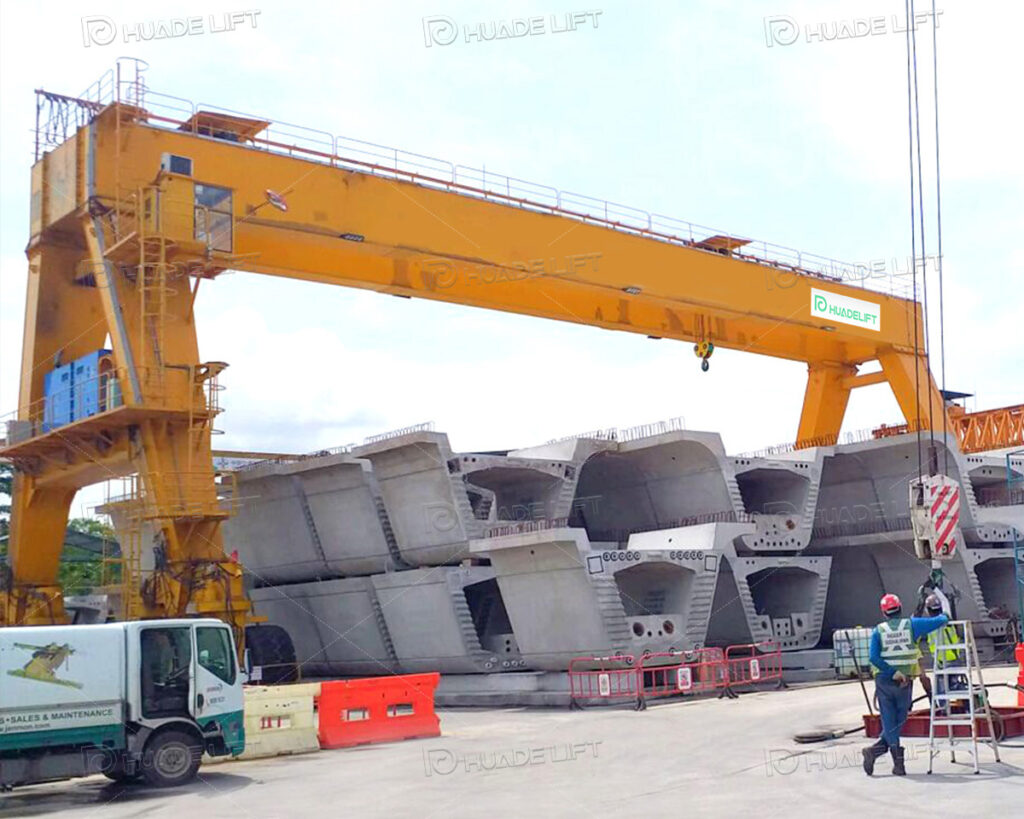
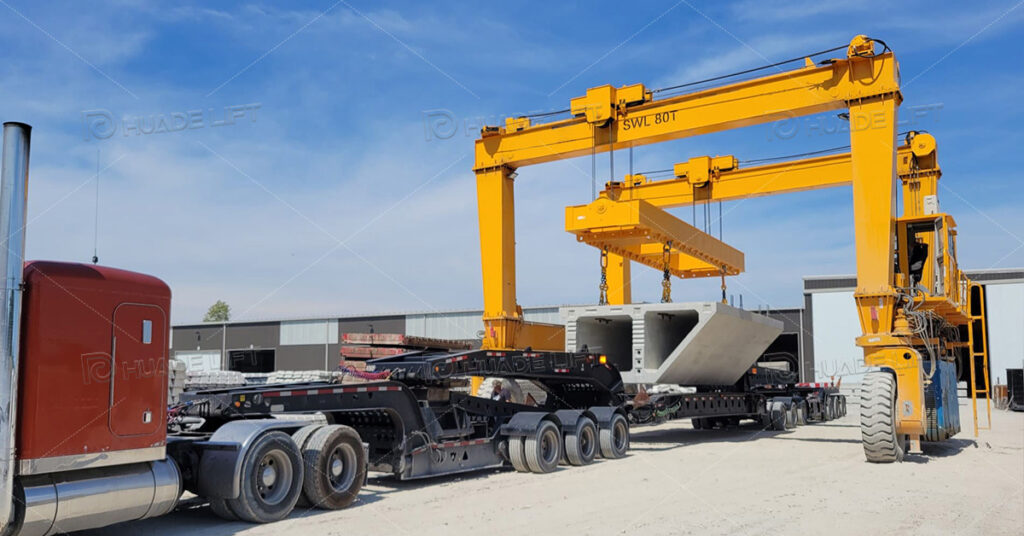
Rubber tyred gantry cranes move on rubber tires and feature an overall gantry-style metal frame structure, equipped with lifting mechanisms, trolley lateral movement mechanisms, and travel mechanisms. Some models are fitted with steering mechanisms, enabling 90-degree tire turns for flexible switching between different operational areas.
Core Functions
In container yards, rubber tyred gantry cranes can efficiently handle container unloading, stacking, and loading; in ports, they can quickly respond to ship loading and unloading operations to enhance throughput efficiency; in logistics parks and large warehouses, they can handle large equipment and palletized goods, enabling flexible material handling.
Technical Advantages
The primary advantage of rubber tyred gantry cranes is their high mobility. Unlike equipment requiring fixed tracks, it relies on tires to freely travel on flat, solid ground, adapting to various sites such as ports and logistics parks. When the work area is adjusted, it can be quickly relocated and deployed without laying tracks, saving costs and time.
Application Scenarios
Rubber tyred gantry cranes are primarily used in container terminals for rapid container turnover; in steel yards, they can lift steel of various specifications; In large logistics warehouses, it can flexibly handle cargo loading/unloading and storage, improving space utilization and turnover efficiency.
What is a Overhead Crane?
Definition and Structural Features
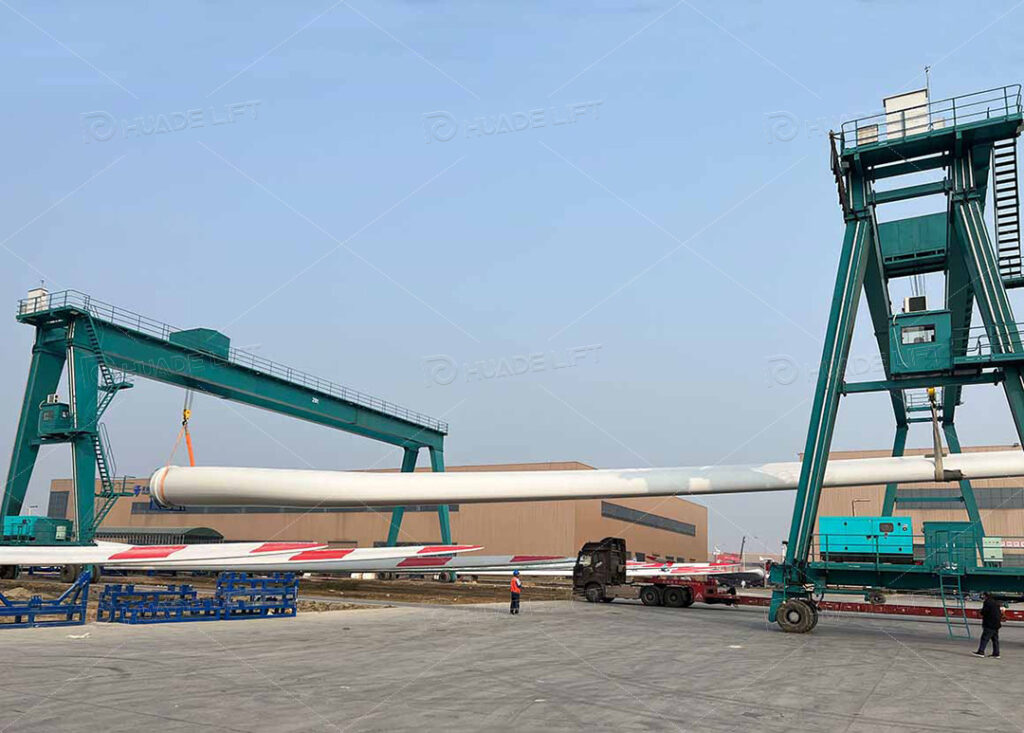
The bridge crane (overhead crane) consists of a bridge frame, main hoist travel mechanism, trolley travel mechanism, hoisting mechanism, and electrical system. The bridge frame moves longitudinally along tracks on both sides of the factory building, the trolley can move horizontally along the bridge frame, and the hoisting mechanism is responsible for lifting operations.
Core Functions
In workshops and factories, overhead cranes are used for lifting raw materials, components, and finished products. They are also widely used in maintenance workshops for inspecting and replacing large equipment components.
Technical Advantages
Overhead cranes have strong load-bearing capacity, with lifting capacities reaching hundreds of tons, meeting the heavy-duty requirements of industrial production. With electrical control and precision mechanical structures, they can achieve high-precision lifting, suitable for operations with high installation accuracy requirements. Their fixed track operation ensures operational stability and reliability.
Application Scenarios
In manufacturing assembly lines, bridge cranes can precisely transfer components to ensure production continuity; in assembly workshops, they assist in the precise assembly of large mechanical components; in industries such as steel and metallurgy, they can handle the lifting of heavy materials such as raw materials, steel ingots, and molten iron containers, adapting to high-intensity operational environments.
Rubber tyred Gantry Crane vs. Overhead Crane
Installation and Mobility
Rubber tyred gantry cranes do not require fixed tracks. As long as the ground conditions at the worksite permit, they can move flexibly on rubber tires, easily achieving straight travel, turns, or 90° turns, and quickly reaching different locations at the worksite. In contrast, overhead cranes require fixed tracks to be planned and installed during the initial construction phase of the facility. The crane runs along these tracks, limiting its operation to fixed indoor environments and predetermined tracks, resulting in poor mobility and difficulty adapting to temporary changes in the work site.
Operating Environment
Rubber tyred gantry cranes are primarily used in outdoor environments, particularly at ports and yards. These areas are open, with goods scattered across the site, allowing the rubber tyred gantry crane’s mobility and flexible operational range to fully leverage its advantages, adapting to different cargo layouts and frequent handling requirements. Overhead cranes are primarily used in indoor factory buildings, where the internal environment is relatively stable, with controllable temperature and humidity conditions. Their fixed tracks are installed within the factory building, unaffected by external factors such as adverse weather conditions, making them more suitable for material handling operations in such enclosed, stable environments.
Load Capacity and Span
Rubber tyred gantry cranes are suitable for handling large cargo and containers. Their lifting capacity typically meets the requirements of most port and logistics scenarios within a certain range, and the span can be adjusted according to actual operational needs to accommodate different widths of cargo yards and stacking layouts. Overhead cranes can achieve extremely high lifting capacities, reaching very high levels in some heavy industrial sectors. However, their span is primarily dependent on the design and construction of the factory building. Once the building is completed and the tracks installed, the span is largely fixed, making subsequent modifications difficult and costly.
Cost and Maintenance
Rubber tyred gantry cranes have relatively high costs due to their complex structure, advanced travel and steering systems, etc. If the drive system is fuel-powered, fuel consumption is a continuous operational cost, and maintenance of components such as engines is relatively complex, requiring professional technicians and regular maintenance inspections. If the drive system is electric, although energy costs are relatively low, maintenance of batteries and other equipment also requires certain technical expertise and cost investment. Overhead cranes require initial investment in infrastructure such as tracks during construction, but their maintenance is relatively straightforward during subsequent use, primarily focusing on lubrication of mechanical components and inspections of electrical systems. Additionally, due to a relatively stable operating environment, equipment wear is minimal.
Flexibility and Scalability
Rubber tyred gantry cranes offer excellent flexibility, enabling quick relocation to different work sites or rapid adjustment of work positions within the same site to adapt to diverse logistics applications, such as temporarily expanding work areas or addressing sudden cargo handling demands. Overhead cranes, however, are constrained by factory structure, making scalability challenging. If the operational range needs to be expanded or the lifting route altered, it may be necessary to modify the factory structure, which involves complex issues such as building structural safety and track reinstallation, resulting in high costs and lengthy construction periods.
How to Select the Appropriate Lifting Equipment?
Based on the Operational Environment
If the operational environment is primarily outdoors, with open spaces and unpredictable cargo handling locations, such as ports, terminals, or open-air yards, a rubber tyred gantry crane is a more suitable choice. Its mobility and ability to adapt to complex outdoor environments can be fully leveraged. If the operational environment is an indoor factory with relatively fixed handling routes and workshop layouts suitable for installing fixed tracks, an overhead crane is better suited to meet the requirements, operating efficiently in a stable indoor environment.
Based on the Transported Objects
When the transported objects are primarily containers, large steel materials, and other bulky goods that require flexible handling between different sites, the rubber tyred gantry crane’s powerful lifting capacity and flexible operational characteristics can effectively meet the requirements. For scenarios involving the handling of various mechanical components and small equipment within production workshops that require high-precision lifting, the overhead crane offers a significant advantage due to its precise lifting control capabilities. If the task involves moving super-heavy large machinery with a relatively fixed transportation route, the overhead crane’s robust load-bearing capacity becomes even more critical.
Based on Investment Budget
If a company has limited budget and prioritizes the initial one-time investment cost of the equipment, the overhead crane may be a better choice in scenarios where the equipment does not need to be frequently moved. Although it requires initial investment in track construction costs, the equipment itself may be relatively cheaper than the rubber tyred gantry crane. However, if a company considers long-term operational costs and the worksite is subject to frequent changes, requiring the equipment to have high flexibility, a rubber tyred gantry crane, although it has relatively higher equipment and maintenance costs, may offer a higher return on investment in the long run due to its efficient operational capabilities and flexible deployment characteristics.
Based on Flexibility Requirements
For fixed production lines where material handling routes and operational locations are relatively fixed, overhead cranes can operate stably and efficiently to meet production schedules. However, if a company faces dynamic work sites and diverse operational tasks in logistics or construction scenarios, such as construction sites or temporary logistics transfer centers, the rapid relocation and flexible operational capabilities of rubber tyred gantry cranes can better adapt to such flexibility requirements.
Future Development Trends
Electrification and Automation Trends for Rubber tyred Gantry Cranes
With increasing environmental protection requirements and technological advancements, rubber tyred gantry cranes are moving toward electrification. Electric drive systems can significantly reduce carbon emissions during equipment operation, minimize environmental pollution, and lower energy consumption costs. In terms of automation, by integrating advanced sensors, control systems, and artificial intelligence technology, rubber tyred gantry cranes will be able to achieve functions such as automatic positioning and automatic loading/unloading of goods, further enhancing operational efficiency and precision while reducing errors and safety risks associated with manual operations.
Application of Overhead Cranes in Intelligence and Remote Control
In the future, overhead cranes will become increasingly intelligent. Through intelligent systems, they can monitor equipment operational status in real-time, issue fault warnings, and automatically adjust lifting parameters based on production requirements. Additionally, the application of remote control technology will enable operators to perform tasks from a safe location away from the equipment, particularly in hazardous or harsh operational environments. Remote control ensures operator safety and, through network technology, enables centralized management of multiple devices, improving production management efficiency.
The Complementary Roles of Both in Digital Ports and Smart Factories
In digital ports, rubber tyred gantry cranes and overhead cranes will collaborate. Rubber tyred gantry cranes are responsible for the rapid loading, unloading, and transportation of containers and other goods at the port front and yards, with their flexible operational capabilities adapting to the complex and variable operational scenarios of ports; overhead cranes, on the other hand, can be applied in fixed locations such as logistics warehouses and maintenance workshops at the port rear, performing precise material handling and equipment maintenance lifting tasks. In smart factories, overhead cranes ensure efficient material flow on production lines, while rubber tyred gantry cranes can be used for receiving raw materials and temporarily storing and handling finished products in factories. The two complement each other, jointly building an efficient and intelligent production and logistics system.
Conclusion
In summary, rubber tyred gantry cranes and overhead cranes have significant differences in structural characteristics, adaptability to operational environments, load capacity, maintenance costs, and flexibility. When selecting lifting equipment, companies should fully consider their operational environment, transportation objects, investment budget, and flexibility requirements.
For projects requiring flexible and mobile operations, such as container terminals and logistics parks, the Rubber Tyred Gantry Crane is a more ideal choice; whereas for production operations within fixed factory buildings, such as manufacturing assembly lines and assembly workshops, the Overhead Crane can better leverage its advantages. It is important to emphasize that in actual industrial production and logistics operations, these two types of lifting equipment are not mutually exclusive but rather complementary, working together to provide strong support for efficient business operations based on different operational scenarios and requirements.
