
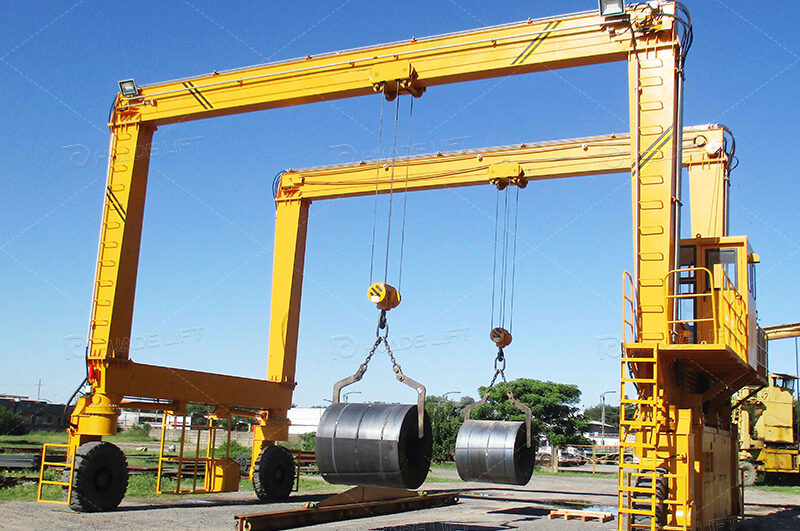
In port operations, container terminals, and industrial yards, rubber-tired gantry cranes (RTGs) serve as the “workhorses” of cargo handling. Their efficient operation directly determines material turnover rates and site operational rhythms. As the core component enabling flexible movement and precise positioning, steering system failures not only cause equipment downtime and increased maintenance costs but also disrupt the stability of the entire operational workflow. This article focuses on common issues within the steering systems of rubber tyre gantry cranes, providing professional, actionable troubleshooting methods and solutions. It aims to help port and industrial enterprises reduce failure risks and ensure the continuous, efficient operation of equipment.
Understanding the Core Components of RTG Crane’s Steering System
Rubber tyre gantry cranes must frequently adjust positions within open yet complex yard environments to lift, stack, and transfer containers. This process demands exceptional stability and precision from the steering system. The steering system is not a single component but a complex system where multiple key components work together. The core components and their functions are as follows:
Steering Axle
The steering axle serves as the fundamental mechanical structure enabling steering maneuvers. It bears the crane’s entire weight while driving wheel directional changes through axle rotation. Subjected to frequent load impacts and steering stresses over extended periods, its structural strength and stability directly determine the steering system’s overall performance.
Hydraulic Pump and Cylinder
As the “power source” of the steering system, the hydraulic pump converts mechanical energy into hydraulic energy and transmits pressure through hydraulic fluid. The hydraulic cylinder receives pressure signals, converting hydraulic energy back into mechanical energy to drive the steering axle’s turning motion. The matching of their performance parameters and operational status directly determine steering response speed and motion smoothness.
Control Valve
The control valve acts as the “regulating valve” of the steering system, primarily controlling hydraulic fluid flow rate, pressure, and direction. By precisely regulating hydraulic fluid parameters, they ensure strong controllability of steering actions, preventing issues like overshoot, delay, or angular deviation. These valves are critical components for maintaining steering precision.
Electronic Sensors
Electronic sensors primarily collect real-time steering-related data, including steering angle, wheel position, and load status. They transmit these data signals to the control system, providing essential support for precise steering. Common sensor types include angle sensors and pressure sensors, whose detection accuracy directly impacts the control precision of the steering system.
Operator Interface System
The operator interface system comprises the steering control lever, instrument panel, and fault alarm device within the cab. Operators issue steering commands via the control lever, monitor real-time system parameters through the instrument panel, and receive immediate alerts from the fault alarm device during system anomalies, enabling swift intervention.
These components form an integrated closed-loop system of “Command Issuance – Signal Acquisition – Power Transmission – Action Execution – Status Feedback” to ensure flexible and stable steering under various conditions, including empty and fully loaded states.
Six Common Issues in Rubber Tyre Gantry Crane Steering Systems
Operating in prolonged high-load, dusty, and vibration-intensive environments, rubber tyre gantry crane steering systems are prone to failures due to component wear, improper maintenance, or external environmental impacts. Below are detailed analyses of the causes and typical symptoms for the six most frequent issues, helping maintenance personnel quickly identify root causes:
Hydraulic Leakage or Insufficient Hydraulic Oil Pressure
Causes
The core causes of hydraulic leakage or insufficient pressure center on seal failure and improper fluid management. Firstly, hydraulic line seals (such as O-rings and oil seals) degrade due to prolonged use, wear, or uneven installation forces, leading to reduced sealing performance. Second, hydraulic hoses subjected to prolonged bending, friction, or low-temperature aging are prone to cracking and damage at joint connections. Third, loose fittings or damaged threads in hydraulic connectors and flanges can cause oil seepage. Additionally, insufficient oil replenishment or prolonged use leading to oil depletion below standard levels can result in pressure deficiency.
Symptoms
Typical manifestations include:
Increased steering effort, requiring greater force to move the steering lever;
Noticeable delay in steering response, with equipment taking time to initiate movement after command input;
Visible oil stains at hydraulic lines and fittings, potentially accompanied by hydraulic fluid dripping marks on the ground and a distinct hydraulic oil odor in severe cases;
Instrument panel displaying hydraulic pressure values below the normal range specified in the equipment manual.
Steering Cylinder Failure
Causes
Steering cylinder failures primarily stem from internal wear and external load impacts. On one hand, contaminants like metal debris or dust in hydraulic fluid can scratch and wear the cylinder walls, increasing the sealing gap between the cylinder body and piston. On the other hand, damaged internal seals cause internal leakage, preventing hydraulic fluid from effectively driving piston movement. Furthermore, prolonged exposure to unbalanced or impact loads can cause bending and deformation of the hydraulic cylinder piston rod, disrupting the piston’s linear motion trajectory.
Symptoms
When failure occurs, the steering process may exhibit “jerkiness” or “vibration,” with poor motion continuity; Inconsistent turning angles between left and right, or failure to automatically return to center after turning, requiring manual adjustment; In severe cases, the hydraulic cylinder piston rod may exhibit noticeable bending, with visible misalignment between the cylinder body and piston rod; Steering may function normally under no-load conditions but become weak or fail entirely under full load.
Electronic Sensor or Control System Failure
Causes
Electronic failures are often related to environmental impacts, wiring issues, and parameter abnormalities. Long-term exposure to dusty or humid environments can contaminate sensor probes and corrode wiring, degrading signal accuracy. Vibration-induced loosening or oxidation of sensor terminals, or wire harness fractures from friction/vibration, may interrupt signal transmission. Outdated control system software versions, electromagnetic interference, or voltage fluctuations can cause program malfunctions (e.g., PLC controller failures). Additionally, lost sensor calibration data or improper calibration procedures can cause detected values to deviate from actual operating conditions, triggering system anomalies.
Symptoms
The dashboard frequently displays “Inaccurate Steering Angle” alerts, with significant discrepancies between actual steering angle and commanded input;
Equipment often triggers steering system fault alarms (e.g., “Sensor Signal Loss,” “Control System Communication Failure”) despite no visible mechanical abnormalities; Steering drift occurs easily during turns, making straight-line driving impossible even on level surfaces and requiring frequent course corrections; Operator interface systems may experience black screens, lag, or chaotic steering parameter displays (e.g., angle values jumping, pressure readings resetting to zero).
Wheel Alignment Deviation and Uneven Tire Wear
Causes
Wheel alignment and tire wear issues primarily stem from load, pressure, and installation factors. Long-term lifting of overloaded weights deforms the steering axle, causing alignment parameters (e.g., toe-in, camber) to shift. Improper tire pressure—excessively high or low—disrupts load distribution: overinflation concentrates stress on specific tread areas, while underinflation creates uneven ground contact. Uneven ground surfaces in yards—featuring bumps, depressions, or loose stones—can cause alignment deviations after prolonged wheel contact. Additionally, improper tire installation during replacement or hub deformation leading to wheel-to-axle misalignment may trigger these issues.
Symptoms
During crane operation, “yawing” occurs, requiring constant steering adjustments to maintain direction and increasing operator fatigue. Noticeable vibrations accompany travel, transmitted from the wheels to the cab, becoming particularly pronounced at high speeds; Tire surface wear exhibits uneven patterns such as “uneven wear on one side,” “serrated wear,” or “bulging in the center of the tread,” significantly shortening service life; Increased rolling resistance during steering raises equipment energy consumption, while the steering angle range narrows, preventing tight-radius turns.
Hydraulic Pump and Control Valve Failure
Causes
The core causes of hydraulic pump and control valve failure are component aging and fluid contamination. After prolonged use, internal components like gears and spools in hydraulic pumps and control valves experience natural wear, degrading sealing performance. Failure to replace hydraulic fluid at specified intervals or malfunctioning filtration systems allow metal debris and contaminants to enter the fluid, causing scratches on pump bodies and spools. Air ingress at the pump suction port or clogged inlet filters can cause insufficient oil intake, resulting in “dry running.” Additionally, control valves operating under high-frequency conditions may experience spring fatigue failure, preventing normal valve opening or closing.
Symptoms
Steering response becomes noticeably sluggish, with steering speed significantly below normal even under no-load conditions.
Abnormally high temperatures on the hydraulic pump or control valve housing, feeling scorching to the touch.
Large fluctuations in hydraulic system pressure, with gauge readings fluctuating wildly above and below the normal range, causing inconsistent steering effort. In severe cases, the hydraulic pump may emit abnormal noises like “buzzing” or “screeching,” or the control valve may become stuck, rendering the steering system completely inoperable.
Operator Error and Calibration Issues
Causes
These issues often stem from human operation and maintenance procedures. Failure to calibrate the steering system per the equipment manual after maintenance (e.g., replacing steering sensors or adjusting hydraulic cylinders) leads to parameter mismatches. Inadequate operator training, coupled with unfamiliarity with the steering sensitivity variations under different loads, can cause system overload due to misoperation. Failure to account for actual yard conditions like ground slope and temperature during calibration causes discrepancies between calibrated data and real-world scenarios. Additionally, restarting the steering system without following standard procedures after emergency shutdowns can result in loss of control system memory parameters.
Symptoms
The crane’s turning radius significantly decreases, preventing previously achievable wide-angle turns and hindering operations in confined yard areas; The steering control lever exhibits “sluggish feedback”; after the operator pushes the lever, the equipment shows no noticeable steering response, requiring increased operating force. Under full-load steering conditions, an “overload alarm” may trigger despite the actual load not exceeding the equipment’s rated capacity. Different operators using the same equipment consistently report significant variations in steering feel, resulting in unstable operational difficulty.

Step-by-Step Troubleshooting Guide
When steering system abnormalities occur, blind disassembly and repair may not only expand the fault scope but also prolong downtime. The following step-by-step troubleshooting process, organized logically from “visual to precision, mechanical to electronic,” assists maintenance personnel in efficiently locating fault points:
Visual Inspection
Visual inspection forms the foundation of troubleshooting, aiming to eliminate obvious faults through visual observation and simple tactile checks. First, inspect the hydraulic system’s exterior. Carefully examine the hydraulic lines (from the hydraulic pump to the hydraulic cylinder and control valves), focusing on fittings, seals, and hose bends. If oil stains or leaks are detected, mark the leakage location and assess the severity (dripping, seepage, or spraying). Next, inspect mechanical components: examine steering axles, wheels, and hydraulic cylinder piston rods for visible deformation or cracks; check tires for uneven wear, bulges, or embedded foreign objects; verify wheel nuts are secure. Finally, inspect electronic components: confirm sensor probes are free of dust or damage; check sensor wiring harnesses for breaks or aging; verify no warning lights are illuminated or abnormal displays appear on the cab control panel. Visual inspections can quickly rule out simple faults like “obvious hydraulic leaks,” “foreign objects embedded in tires,” or “broken wiring harnesses,” saving time for subsequent in-depth troubleshooting.
Electronic System Diagnostics
Electronic system faults require specialized tools to ensure proper signal acquisition and transmission.
Sensor Testing
Use a multimeter to measure the sensor supply voltage. If abnormal, inspect the power circuit or power module for issues. Employ a dedicated diagnostic tool (e.g., OEM diagnostic equipment for rubber tyre gantry cranes) to read sensor data. Compare the actual steering angle with the sensor feedback angle. If significant deviation occurs, clean the sensor probe or recalibrate it.
Control System Inspection
Connect to the equipment’s PLC controller to check for fault codes (e.g., “Steering Sensor Communication Failure,” “Hydraulic Pressure Sensor Overload”). Use these codes to pinpoint the specific faulty module. Verify the control system’s software version; if outdated, contact the equipment supplier to update the firmware to prevent system malfunctions caused by software vulnerabilities.
Wiring Inspection
Inspect each sensor and controller terminal individually. Clean any oxidation from terminal surfaces and retighten connections to prevent signal loss due to poor contact. Use an insulation tester to assess wiring harness insulation integrity. If insulation resistance is too low, promptly replace damaged wiring harnesses to avoid short circuits or leakage risks.
Mechanical Alignment Adjustment
Mechanical alignment deviations directly impact steering precision and require parameter adjustment using specialized equipment.
Wheel Alignment Inspection and Adjustment
Use a wheel alignment machine to measure the steering wheels’ toe-in values and camber angles (refer to equipment manuals for specific parameters). If alignment parameters deviate, loosen the steering axle connecting bolts. Correct parameters by adjusting tie rod length and shim thickness. After adjustment, tighten bolts and re-inspect alignment parameters to ensure compliance with standards.
Hydraulic Cylinder and Steering Axle Calibration
Measure the piston rod extension length of the hydraulic cylinder. Compare the extension lengths of the left and right hydraulic cylinders. If significant deviation is found, adjust the position of the hydraulic cylinder connecting pins to ensure synchronized operation on both sides. Inspect the steering axle for deformation using a laser level to check the axle body’s horizontal alignment. If deformation is present, contact a professional manufacturer for correction or replacement to prevent subsequent failures caused by axle issues.
Calibration and Load Testing
After fault repair, perform calibration and testing to confirm system restoration to normal operation.
System Calibration
After component repair or replacement, use a diagnostic tool to perform “angle calibration” and “pressure calibration” on the steering system. Input standard parameters under rated load to ensure sensor and controller data alignment. Simultaneously conduct “steering return calibration”: operate the crane to complete multiple full-angle turns left and right, verifying automatic return after steering with minimal deviation.
Load Testing
First, perform an unloaded test: Operate the crane to execute straight travel, tight-radius turns, and specific-angle maneuvers. Observe steering response speed and smoothness, confirming no stuttering or abnormal noises. Then conduct a fully loaded test: Lift the equipment’s rated load (e.g., a standard container). Repeat the maneuvers from the unloaded test, recording steering pressure and angular deviation to ensure stable system operation under full load conditions.
Alarm Verification
Simulate fault scenarios (e.g., intentionally lowering hydraulic oil levels) to verify the alarm system’s sensitivity and accuracy. This prevents fault escalation due to alarm failure and ensures timely operator alerts during abnormal conditions.
Maintenance Techniques to Prevent Steering System Failures
Compared to post-failure repairs, regular, scientific preventive maintenance effectively reduces steering system failure rates, extends equipment lifespan, and minimizes downtime losses. The following outlines core maintenance points for tire-mounted crane steering systems:
Establish a Regular Hydraulic System Inspection Plan
Hydraulic system stability is fundamental to normal steering operation, requiring a comprehensive inspection mechanism. Regarding inspection frequency: Conduct visual inspections daily before operation, focusing on hydraulic system leaks and oil level status. Perform weekly hydraulic oil sampling tests to analyze contamination levels and performance metrics. Execute comprehensive monthly hydraulic pressure checks to ensure parameters meet standards. For inspection priorities: Promptly replace aged hydraulic hoses and seals, and regularly clean hydraulic tank filters to prevent contaminants from entering the system. For fluid management: Strictly adhere to…
Maintenance Techniques for Preventing Steering System Failures
Compared to post-failure repairs, regular and scientific preventive maintenance can effectively reduce steering system failure rates, extend equipment lifespan, and minimize downtime losses. The following outlines key maintenance points for tire-mounted crane steering systems:
Establish a Regular Hydraulic System Inspection Plan
The stability of the hydraulic system is fundamental to the steering system’s proper operation, necessitating a comprehensive inspection mechanism. Regarding inspection frequency: – Conduct a visual inspection before daily operation, focusing on hydraulic system leaks and oil level status. – Perform weekly hydraulic oil sampling tests to analyze contamination levels and performance indicators. – Conduct monthly comprehensive hydraulic pressure tests to ensure pressure parameters meet standards. For inspection priorities, promptly replace aged hydraulic hoses and seals, and regularly clean the hydraulic tank filter to prevent contaminants from entering the system. For fluid management, strictly adhere to the equipment manual when selecting hydraulic oil grades, replace hydraulic oil according to the specified cycle, and thoroughly drain old oil during replacement to avoid contamination from mixing old and new fluids.
Prioritize tire and wheel alignment maintenance
Tires and wheel alignment directly impact steering stability and equipment performance. For tire pressure management, use a tire pressure gauge daily before operation to verify pressure meets equipment specifications. Avoid overinflation causing accelerated tread wear or underinflation leading to rim deformation. For routine tire inspections, weekly clean foreign objects (e.g., gravel, nails) from tire surfaces and examine tread wear. Replace tires promptly when tread depth becomes insufficient to prevent steering issues caused by degraded tire performance. For wheel alignment calibration, inspect and adjust alignment parameters according to the equipment maintenance schedule. If yard ground conditions are poor (e.g., gravelly or uneven surfaces), shorten the calibration interval appropriately to ensure alignment parameters consistently meet standards.
Proactively Replace Wear-Prone Components and Aged Parts
Wear-prone components and aged parts are high-risk failure points requiring proactive replacement to mitigate hazards. For hydraulic pumps and control valves, replace internal gears, spool valves, and other vulnerable parts based on operating hours or when precursors like pressure fluctuations or abnormal noises occur to prevent sudden failures. For electronic sensors, conduct regular performance tests. If detection accuracy significantly declines, promptly replace the sensor to prevent operational errors caused by data inaccuracies. For wiring harnesses and connectors, regularly inspect insulation for aging and terminals for oxidation. Wrap and protect aged wiring harnesses, and apply conductive grease to oxidized terminals to ensure stable signal transmission and reduce electronic system failure risks.
Maintain hydraulic oil cleanliness and stable oil levels
Hydraulic oil cleanliness and stable oil levels directly impact hydraulic system performance. For contamination control, use oil filters meeting specified filtration precision when replenishing hydraulic oil to prevent introducing impurities through direct pouring. Seal the oil tank filler port to prevent dust and moisture ingress into the system. For oil level monitoring, if rapid oil depletion is detected during operation, immediately shut down the machine to inspect for leaks. Only replenish oil after eliminating leaks; never continue operation with low oil levels. For oil condition management, regularly test hydraulic oil viscosity, moisture content, and impurity levels using an oil analyzer. If any parameter exceeds specifications, immediately replace the oil and flush the system to ensure hydraulic oil remains in optimal working condition.
Regular Calibration and Operator Training
System calibration and operator proficiency are critical factors in ensuring steering system stability. For system calibration, conduct a comprehensive calibration of the steering system quarterly, including angle calibration, pressure calibration, and center-return calibration. Record detailed parameters after calibration and establish equipment calibration records for future traceability and comparison. After major repairs or replacement of core components, perform an additional calibration to ensure system parameter alignment. For operator training, new operators must complete specialized training on the rubber tyre gantry crane steering system before commencing work. This training emphasizes understanding steering characteristics under varying loads, methods for identifying fault alarms, and emergency response procedures to prevent system overload due to operational errors. Semi-annual refresher training is organized for maintenance personnel to learn the latest troubleshooting techniques and calibration tool usage, ensuring the team can address faults in newer steering systems and elevate overall maintenance standards.
Conclusion
As core handling equipment in ports, container terminals, and industrial yards, the stable operation of a tire-mounted crane‘s steering system directly impacts overall operational efficiency, cost management, and safety. The steering system’s core components—steering axle, hydraulic pump and cylinder, control valves, electronic sensors, and operator interface—interact synergistically to ensure agile movement and precise positioning. Failure in any component can trigger cascading malfunctions.
The preceding sections detailed six common steering system issues: hydraulic leaks, hydraulic cylinder failures, electronic sensor and control system malfunctions, wheel alignment deviations, hydraulic pump and control valve failures, and operator errors and calibration problems. For each category, we not only dissected root causes—such as seal failure, fluid contamination, component aging, and improper operation—but also identified typical symptoms, providing maintenance personnel with clear guidance for rapid fault identification.
For troubleshooting, a step-by-step process—“visual inspection → electronic system diagnostics → mechanical alignment adjustment → calibration and load testing”—enables maintenance personnel to systematically and efficiently pinpoint fault locations, preventing blind repairs that could exacerbate issues. Preventive maintenance is crucial for reducing failure rates. This involves establishing a hydraulic system inspection schedule, prioritizing tire and wheel alignment maintenance, proactively replacing wear-prone components, and ensuring hydraulic fluid cleanliness and stable oil levels.
