
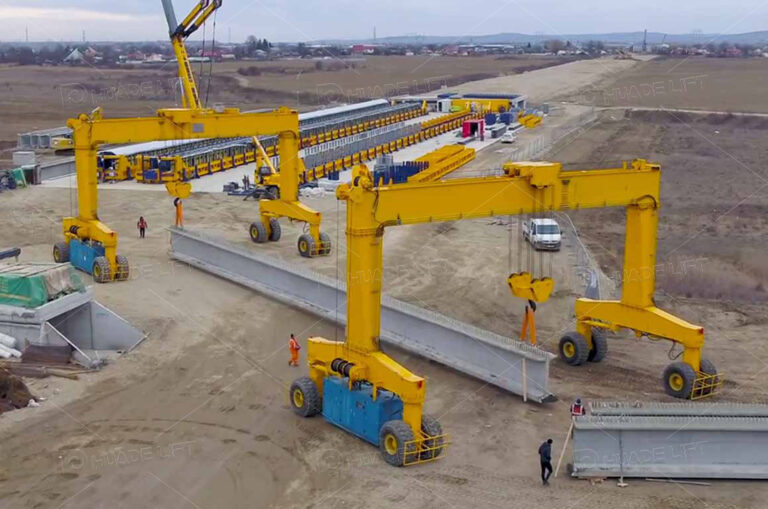
Rubber tyre gantry cranes, also known as tire-mounted gantry cranes, serve as core equipment for loading, unloading, and stacking oversized objects in steel, wind power, and concrete product industries. Their flexible mobility adapts to diverse operational scenarios. Understanding their failure causes enables proactive hazard identification and minimized downtime, significantly enhancing heavy-load handling efficiency and maintaining smooth operations.
Exploring the Working Principles of Rubber Tyre Gantry Cranes
Rubber tyre gantry cranes primarily consist of a metal structure, hoisting mechanism, traveling mechanism, slewing mechanism, and electrical control system. The metal structure bears the weight of the entire machine and the cargo load. The hoisting mechanism lifts and lowers cargo, the traveling mechanism moves the equipment, the slewing mechanism adjusts the working direction, and the electrical control system coordinates the operation of all mechanisms. Through the collaboration of multiple systems, these cranes accomplish the loading, unloading, and transportation of heavy objects.
Mechanical Failures
The mechanical system forms the foundation for a rubber tyre gantry crane’s operational functions. Subjected to prolonged heavy loads, friction, and impact, it is prone to structural fatigue and component damage. Failure to address these issues promptly not only reduces operational efficiency but may also lead to safety incidents.
Structural Fatigue and Metal Cracks
Rubber Tyre Gantry Cranes routinely handle heavy container loads, subjecting metal structures like main beams and outriggers to sustained high stress. Forces fluctuate during lifting, movement, and stationary periods, creating alternating stresses. Over time, these stresses cause microscopic internal damage that accumulates into fatigue and metal cracks. Initial cracks often form in hidden areas like main beam interiors or welded joints, making them difficult to detect visually. Crack propagation reduces structural load-bearing capacity, potentially causing catastrophic failures like main beam fractures or outrigger collapses. A comprehensive inspection system must be established, employing regular ultrasonic testing and magnetic particle inspection to detect and promptly repair early-stage cracks.
Hoisting Rope and Drum Wear
Hoisting ropes (typically steel wire ropes) and drums are core components of the hoisting mechanism. During operation, ropes repeatedly wind around drums and pass through pulley blocks. Long-term friction causes rope diameter reduction and surface wear. Insufficient lubrication and abrupt start/stop operations accelerate wear, leading to broken wires or strands. Once strength diminishes, rope failure may cause cargo drops. Drums suffer wear from rope compression and friction, causing groove deformation and surface scratches. This leads to rope tangling, groove jumping, and even drum shell tearing. Regularly inspect rope wear and broken strands, maintain proper lubrication, monitor drum condition, and promptly replace components exceeding wear limits.
Wheel Misalignment and Tire Damage
Wheels and tires affect equipment mobility stability. Uneven cargo distribution causes unilateral overload on the crane, leading to unbalanced wheel bearing stress and long-term axle misalignment. Rapid steering or frequent sharp turns also exacerbate misalignment. Misaligned wheels reduce tire contact area, increasing localized pressure and accelerating wear while raising operational resistance and energy consumption. Debris on the ground can easily scratch tires. Abnormal tire pressure under heavy loads can cause bulging and air leaks. Tire damage leads to equipment bumpiness and drifting, accelerating bearing wear. Regularly calibrate wheel alignment with professional equipment, inspect tire pressure and surface condition, and clear debris from the site.
Motor and Drive System Failures
Motors and drive systems power rubber tyre gantry cranes, but prolonged high-load operation increases failure risks:
– Blocked motor cooling, damaged fans, or overload can cause excessive motor temperatures, burning the winding insulation.
– Significant grid voltage fluctuations subject drive system components (inverters, contactors) to uneven stress and abnormal currents, leading to long-term damage. Loose wiring terminals in the motor and drive system can cause poor contact, generating arcs that burn out terminals. After failure, the hoisting and running mechanisms lose power, requiring costly component replacements and lengthy repairs. Regularly clean the motor cooling system, inspect drive components, stabilize grid voltage, and avoid overload operation.
PLC and Sensor Failures
The PLC serves as the control core, while sensors collect operational parameters. Their coordination ensures precise operation. Outdated or incorrectly updated PLC software versions can cause chaotic control logic, resulting in unstable lifting speeds and steering failures. Hardware exposed to dusty or humid environments for extended periods may experience corrosion and short circuits in power modules and I/O modules. Sensor probes can become covered in dust, reducing detection accuracy. Oxidation or loose connections at wiring points can interrupt signal transmission, preventing the PLC from obtaining accurate parameters and potentially causing overload or positioning errors. Regularly update PLC software, inspect hardware, clean sensor probes, and check wiring conditions.
Power Supply and Cable Reel Issues
Power supply and cable reels impact power stability. Heavy grid loads or aging wiring can cause voltage fluctuations or power outages, rendering electrical components inoperable. Unprotected wiring joints in humid or salt-fog environments are prone to corrosion and short circuits. During cable winding/unwinding, repeated coiling/uncoiling causes wear and copper core fractures. Insufficient lubrication or component wear in the reel’s drive motor and gearbox can cause jamming, leading to cable breakage from excessive tension. Long-term friction in slip rings and carbon brushes may cause poor contact, impairing current transmission. Regular inspections of the power grid and wiring are essential. Ensure proper joint protection, maintain the cable reel, inspect cable integrity, lubricate drive components, and replace worn slip rings and carbon brushes.
Hydraulic and Braking System Failures
The hydraulic system controls the precise movements of the rubber tyre gantry crane, while the braking system ensures operational safety. Failures in either system not only reduce efficiency but can also cause major accidents, requiring focused attention and maintenance.
Hydraulic System Leaks and Valve Failures
The hydraulic system enables crane functions like lifting, luffing, and steering. Loose pipe connections, aged seals, or vibration/impact damage can cause hydraulic fluid leaks. This wastes fluid and reduces system pressure, leading to slower lifting, reduced steering responsiveness, and decreased maneuverability. Insufficient hydraulic oil cleanliness allows contaminants to clog valve passages, causing spool sticking. Valve seals degrade under prolonged high pressure, leading to internal leakage that causes pressure fluctuations and compromises operational stability. This increases risks of cargo drop and steering failures. Regularly inspect pipe joints and seals, promptly replace worn components, filter hydraulic oil, and clean/calibrate valves.
Brake System Wear and Contamination
The brake system comprises service and parking brakes. Service brake shoes, through prolonged friction with brake discs, wear thin, reducing braking effectiveness and increasing stopping distances. Parking brake shoes, under constant partial engagement, suffer “drag wear,” shortening their lifespan. Brake fluid is highly hygroscopic. Prolonged use increases moisture content and lowers boiling point, causing bubbles to form during braking (“air lock”) that results in a soft pedal and delayed response. Contaminants in brake fluid corrode lines and seals, leading to blockages and leaks. Sticking brake calipers or wheel cylinders prevent full brake release, accelerating pad wear or even failure. Regularly inspect brake shoe wear and replace promptly. Test brake fluid quality and replace according to specifications. Bleed air from the lines.
Human and Operational Factors
Human factors are a major cause of rubber tyre gantry crane failures. Operator errors, inadequate training, and poor maintenance accelerate equipment damage and increase failure probability. Risks must be mitigated through standardized management and training.
Operator Errors
Common violations include: starting equipment without confirming secure cargo binding, causing loads to detach during lifting; overloading cargo, subjecting equipment to prolonged high stress that accelerates structural fatigue and component wear. Inexperienced operators lack familiarity with procedures and performance parameters, leading to errors in complex scenarios. Some operators exhibit inattentiveness during tasks, failing to detect abnormal noises or alarms promptly, thereby missing opportunities for hazard identification. Strict operating protocols must be established, clearly defining the “Three No-Lift Rules,” enhancing safety awareness education, and standardizing operations through supervision and assessment.
Insufficient Training
Some enterprises lack comprehensive training systems. New operators receive only brief pre-job briefings before working independently without systematic learning of equipment principles, operating standards, and emergency procedures. This leads to unaware overload risks due to unfamiliarity with load limits and neglect of critical pre-startup component checks. Companies lack regular retraining programs. After equipment upgrades, veteran operators fail to master new functions, persist with outdated methods that reduce efficiency or damage components, and demonstrate weak emergency response capabilities. A comprehensive training system must be established, incorporating systematic pre-job training and regular refresher courses. These should combine theory, hands-on practice, and case studies to enhance operator skills and emergency preparedness.
Poor Maintenance
Some enterprises prioritize usage over maintenance, lacking comprehensive maintenance protocols or failing to enforce them. Routine maintenance skips scheduled inspections, with repairs only occurring after equipment failure, missing opportunities for hazard identification. Components that meet scrap standards continue to be used, accelerating equipment wear. Maintenance personnel lack sufficient skills, performing repairs improperly—such as replacing hydraulic oil without cleaning the tank, introducing contaminants. Enterprises fail to establish maintenance records, leaving no reference for subsequent upkeep. Establish comprehensive maintenance protocols specifying periodic maintenance standards, assign qualified personnel, standardize procedures, and maintain detailed maintenance records.
Environmental and External Factors
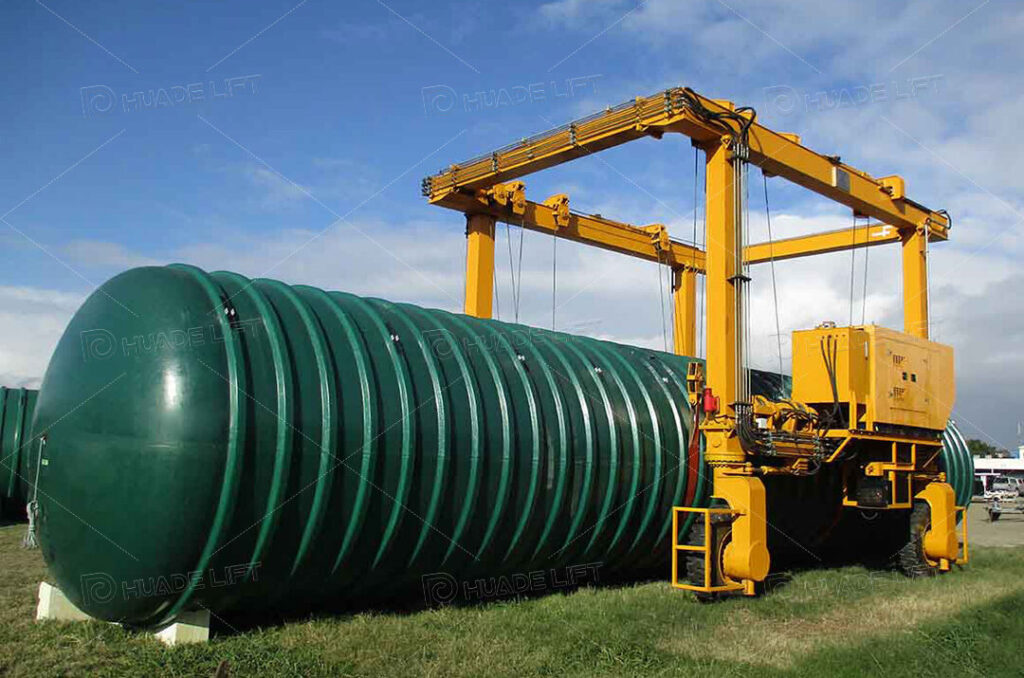
Rubber tyre gantry cranes primarily operate outdoors, enduring prolonged exposure to harsh conditions. External factors like corrosion, extreme temperatures, and site conditions accelerate equipment aging and trigger failures, necessitating targeted protective measures.
Corrosive Environments
High salt fog, humidity, and dust pose significant hazards:
– Chloride ions in salt fog corrode metal structures and paint coatings, causing steel rust, reduced strength, and structural deformation.
– Moisture entering electrical cabinets and sensors degrades component insulation, triggering short circuits and leakage. Dust accumulation on motor cooling fins and hydraulic reservoirs reduces heat dissipation efficiency, accelerating motor overheating and hydraulic oil degradation. Dust clogs sensor probes and contaminates hydraulic oil, intensifying wear on valves and hydraulic cylinders. Regular application of anti-corrosion paint on metal structures, installation of dehumidifiers and dust filters in electrical cabinets, and selection of corrosion-resistant critical components are essential.
Extreme Temperatures
During extreme heat, motors and drive systems struggle to dissipate heat. Exceeding temperature thresholds accelerates insulation degradation, potentially burning out motors and drive components. Hydraulic oil viscosity decreases, increasing leakage and compromising motion precision. Tire rubber softens, reducing load capacity and increasing blowout risk. In cold conditions, hydraulic oil viscosity increases, impairing flow and causing sluggish hydraulic system response. Electrical components become brittle and prone to cracking, while wiring loosens, disrupting signal and power supply. Brake fluid may solidify, causing brake failure. Install sunshades and cooling fans for high temperatures, and select high-temperature stable hydraulic fluid. For low temperatures, equip heating devices, switch to low-temperature compatible fluids, and insulate electrical components.
Poor Site Conditions
Uneven application sites cause equipment movement and jolts, subjecting metal structures to additional impact, accelerating fatigue deformation and cracking. Uneven tire contact with the ground intensifies wear on tires and bearings. Debris on the site can easily scratch tires, entangle components causing jams, or collide with equipment causing damage. Poor drainage leads to water accumulation after rain, increasing equipment movement resistance, accelerating tire corrosion, and causing water ingress into electrical cabinets and motors, triggering failures. Regular site leveling, debris removal, and drainage system improvements are required to optimize the operating environment.
Comprehensive Preventive Measures
Implement tiered maintenance plans covering daily, weekly, and annual intervals. Daily checks by operators should include visual inspections, brake fluid levels, tire conditions, and other fundamentals to ensure no obvious hazards exist before startup. Weekly inspections by professionals should cover critical components such as hoist rope wear, drum groove alignment, and wheel alignment, while simultaneously calibrating sensor and PLC control system parameters. Annual maintenance includes non-destructive testing of metal structures and hydraulic fluid replacement, with timely replacement of aged components to ensure stable equipment operation over extended cycles. Simultaneously, establish electronic records for each maintenance task to document component wear patterns. Dynamically adjust maintenance intervals based on equipment usage frequency to proactively mitigate potential failure risks and extend overall service life.
Personnel Training and Safety Audits
Regularly organize operator training covering equipment operation protocols, emergency fault handling, and safety risk identification, enhancing skills through practical drills. Conduct quarterly safety audits to verify strict adherence to the “Three No-Lifting” principle and completeness of operation records. Promptly correct violations and process gaps while updating training content to reinforce safety awareness and reduce human error.
High-Quality Spare Parts and Professional Services
Select original or certified premium spare parts compliant with national standards—such as hoisting ropes, hydraulic seals, and brake shoes—to prevent accelerated equipment wear caused by substandard components. For complex malfunctions, leverage our expert maintenance team’s technical expertise for rapid diagnostics. Additionally, regularly engage service providers for equipment performance evaluations and customized maintenance recommendations to extend operational lifespan.
High-quality spare parts and professional maintenance services minimize failures caused by substandard components or unprofessional maintenance, ensuring comprehensive equipment stability.
Conclusion
Rubber tyre gantry crane failures stem from mechanical, electrical, and hydraulic system issues, as well as human and environmental factors. Implementing scientific preventive measures—such as comprehensive maintenance, technical monitoring, and personnel training—significantly reduces failure rates and minimizes downtime. This approach ensures operational safety, enhances cargo turnover efficiency, and establishes a solid foundation for smooth operations.
