
Why Capacity Matters in Straddle Carrier Selection
Carrier capacity directly impacts safety, efficiency, and cost, making it a critical selection criterion. Insufficient capacity leads to low operational efficiency, overloading risks, equipment damage, and work interruptions; excessive capacity results in idle equipment, driving up procurement, energy consumption, and maintenance costs.
Model selection must adhere to the “compatibility” principle: meeting current load demands to ensure safe and efficient operations while accommodating business growth. This balances short-term needs with long-term planning, avoiding resource wastage from ‘overkill’ or “underutilization.”
Factors Affecting the Load Capacity of Straddle Carriers
A straddle carrier’s load capacity isn’t determined by a single component but results from the coordinated performance of core elements like the frame, wheels, and power system. Understanding these factors helps businesses accurately assess a machine’s actual load potential and avoid selection errors.
Frame and Chassis Design
The frame and chassis form the load-bearing core, with their strength and stability determining the equipment’s upper load limit. Frames constructed from high-tensile-strength steel effectively minimize deformation under heavy loads. Designs incorporating “box-section profiles” and “reinforced stiffeners” enhance chassis rigidity, prevent localized stress concentration, and boost overall load capacity.
Chassis design must also balance stability and weight distribution. Optimal layout ensures load stability on uneven terrain or at high speeds, reducing safety risks from center-of-gravity shifts.
Wheels and Suspension System
Wheels and suspension are critical ground-contact components, directly impacting load support and operational stability. Larger or reinforced tires increase load capacity limits, preventing tire damage from excessive loads. A high-quality suspension system effectively absorbs vibrations during operation, reducing impact on both the equipment and cargo. It also ensures even weight distribution across all wheels, further enhancing load stability and safety.
Power and Drive System
The power and drive system forms the core of a straddle carrier’s load-bearing capability. A robust engine or motor ensures ample power during heavy-load operations, preventing power shortages. Reliable drive components—such as transmission gears and hydraulic assemblies—efficiently transmit power, guaranteeing optimal travel speed and maneuverability.
Electric drive systems, valued for their high efficiency, environmental friendliness, and stable power output, are becoming the mainstream choice for modern straddle carriers. They effectively balance green operations with high-load requirements.
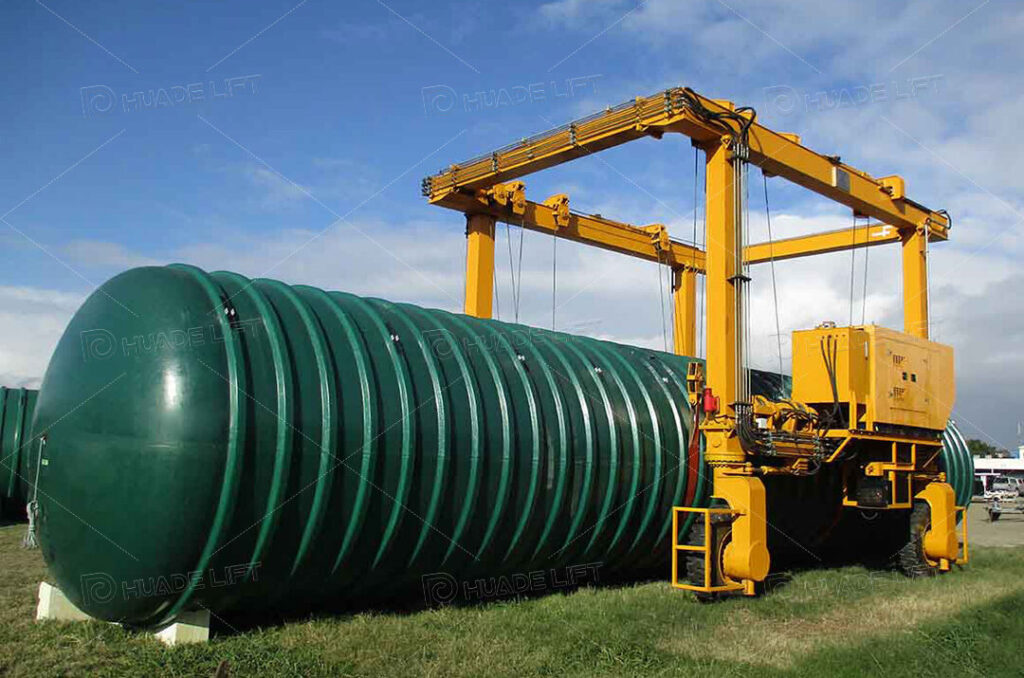
Common Straddle Carrier Capacities Explained
Straddle carriers feature diverse load capacity specifications, with different models suited for varied operational scenarios and load requirements. Understanding common load capacities and their applicable ranges helps businesses quickly narrow down selection options to find equipment that meets their specific needs.
35-Ton Class Straddle Carriers
35-ton class straddle carriers are primarily suited for handling light to medium loads. Leveraging their high flexibility and ease of operation, they are widely used in scenarios such as CNC machine tool transportation, warehouse logistics, and internal factory transfer of semi-finished goods.
The core advantage of these straddle carriers lies in their relatively compact size, enabling agile operation in confined spaces like warehouse aisles and factory workshops. They also feature lower procurement, energy consumption, and maintenance costs, making them a cost-effective and practical choice for businesses with stable load requirements and limited budgets. Additionally, some 35-ton straddle carriers feature low-vibration design and precise control functions, effectively protecting precision equipment (such as CNC machine tools) from damage during transport.
60-ton straddle carriers
The 60-ton straddle carrier represents a “balanced” solution that harmonizes load capacity with cost efficiency. Widely deployed in factories (e.g., automotive manufacturing plants, electronics assembly facilities), port yards, and steel fabrication workshops, it accommodates diverse load handling requirements.
Its core advantage lies in adaptability: it handles intra-factory transfers of components of varying weights, short-distance transport of standard containers in port yards, and internal movement of heavy steel beams and plates within structural steel workshops. This prevents operational delays caused by insufficient load capacity while avoiding the excessive costs associated with larger-tonnage equipment. Furthermore, the maintenance costs of 60-ton straddle carriers remain relatively manageable. For businesses in expansion phases needing to balance production capacity and expenses, they represent an optimal choice for achieving efficient operations.
80-Ton and Above Gantry Cranes
80-ton and above gantry cranes are heavy-duty equipment primarily suited for handling super-large loads in sectors such as shipbuilding, wind turbine manufacturing, and heavy construction machinery production. They meet the transportation needs for oversized cargo like wind turbine blades, large ship components, and complete heavy machinery units.
These cranes typically feature large-span structures and powerful drive systems, enabling stable handling of super-heavy loads. They also offer strong impact resistance and terrain adaptability, ensuring reliable operation even in complex environments like mines and large construction sites. However, their higher procurement, maintenance, and energy costs make them more suitable for large enterprises or specialized logistics providers with dedicated heavy-duty handling requirements.
How to Choose the Right Straddle Carrier Capacity
Selecting the capacity for a straddle carrier requires a systematic analysis that integrates current operational needs, future development plans, and load characteristics to ensure precise model selection.
Determine the Basic Load Capacity Range Based on Actual Needs
Define core load parameters
Identify the maximum weight, dimensions, and weight distribution of daily transported goods. The selected straddle carrier’s load capacity must cover the maximum load while reserving a 10%-20% safety margin to prevent overloading.
Analyze operational scenario characteristics
Consider workspace dimensions (aisle width, turning radius), floor conditions (levelness, load-bearing capacity), and efficiency requirements (handling frequency, single-trip distance). For example, choose compact, low-tonnage equipment for confined spaces, while prioritizing power stability and load-bearing durability for high-frequency heavy-duty handling.
Ensure compatibility with auxiliary equipment
Verify that the Straddle carrier’s load capacity aligns with cranes, racking systems, and other supporting equipment to prevent operational disconnects.
Anticipate future requirements
Forward-looking business analysis
Systematically evaluate the potential impact of strategic initiatives—such as capacity expansion, product line diversification, and new operational scenarios—on Straddle carrier load demands based on the company’s 1-3 year business development plan.
Dynamic load capacity planning
Establish a flexible selection mechanism to accommodate potential increases in load weight or handling volume. Reserve 20%-30% load capacity redundancy to ensure equipment adaptability for business growth.
Total Lifecycle Cost Control
Implement proactive selection strategies to avoid frequent equipment replacements due to insufficient load capacity, effectively reducing hidden costs associated with upgrades, downtime for commissioning, and operational maintenance.
Focus on Load Distribution and Stability
Mechanism of Load Distribution Impact on Equipment Operation
Uniform load distribution directly affects the operational safety of straddle carriers. Uneven loads (e.g., center of gravity shifts, single-side overloading) can cause equipment tilting and increased vibration even without exceeding rated capacity, accelerating wear on steering systems, suspension, and tires while significantly elevating rollover risks.
Technical Selection Considerations Based on Load Characteristics
For high-center-of-gravity cargo: Opt for low-center-of-gravity chassis models with long wheelbases, equipped with active anti-rollover systems (including dynamic balance adjustment and tilt-linked braking).
For irregular cargo: Prioritize adaptability of the equipment’s load-bearing apparatus:
Adjustable specialized clamps: Support multi-dimensional adjustment of angle and clamping force;
Modular support structures: Facilitate rapid reconfiguration;
Intelligent pressure monitoring systems: Provide real-time load status feedback and early warnings.

straddle carrier used in port container
Straddle Carrier Key Benefits
Straddle carriers have become core equipment in material handling not only due to their adaptable load-bearing capacity but also because of their multifaceted operational advantages. They enhance efficiency, reduce costs, optimize safety, and improve space utilization for enterprises:
Decoupled Operations
Straddle carriers enable “decoupling of crane operations from container (or cargo) transfer”—cranes can focus solely on loading/unloading without waiting for transfer completion, while straddle carriers handle horizontal cargo movement. This independent operation reduces equipment downtime and boosts overall efficiency. For example, in port yards, after cranes unload containers from ships, STVs can immediately transport them to designated areas. Cranes do not need to idle, significantly accelerating cargo turnover.
Highly Flexible
Compared to heavy yard cranes, straddle carriers offer greater flexibility: they can be deployed to either the land-side or dock-side as operational needs dictate, and can rapidly adjust their working areas based on vessel arrival schedules or fluctuations in cargo throughput. For instance, when congestion builds in a specific area, multiple straddle carriers can be swiftly deployed to alleviate bottlenecks. Within factory premises, they can move flexibly between workshops to meet the handling demands of multiple production lines.
Optimized Efficiency
Straddle carriers enable “single-equipment completion of the entire horizontal transport process,” eliminating reliance on multiple devices (such as forklifts or trailers) for coordination. This simplifies workflows and reduces inter-device handover times. For instance, in logistics parks, straddle carriers can directly transfer goods from warehouses to transport vehicles without intermediate handling, significantly shortening cargo turnaround times and enhancing overall operational efficiency.
Space Optimization
Straddle carriers offer flexible stacking capabilities, adjusting cargo height and arrangement based on site conditions to maximize existing space utilization. This advantage is particularly crucial for ports, warehouses, or factories with limited space—by optimizing stacking, more goods can be stored within the same footprint, enhancing site utilization and reducing leasing or expansion costs.
Cost Optimization
Straddle carriers replace multiple traditional handling equipment (such as forklifts, tow tractors, and small cranes), reducing corporate investment in purchasing and maintaining diverse machinery. Simultaneously, their efficient operation lowers labor requirements, further cutting personnel costs. Long-term, selecting appropriately sized straddle carriers significantly reduces overall operational expenses and enhances corporate profitability.
Safety Enhancement
Straddle carriers are designed with safety as a priority, featuring stable load-bearing structures, anti-rollover systems, and emergency braking systems to effectively reduce accident risks during handling operations. Furthermore, the adoption of automated straddle carriers minimizes human intervention, preventing personnel exposure in heavy-load zones and enhancing operational safety.
Environmental Advantages
Modern straddle carriers predominantly utilize eco-friendly power systems (e.g., hybrid, pure electric), effectively reducing carbon emissions and noise pollution while aligning with global sustainability trends. For enterprises prioritizing environmental stewardship and green operations, adopting eco-friendly straddle carriers not only minimizes environmental impact but also qualifies for policy incentives (e.g., energy-saving subsidies), elevating corporate social value.
Common Mistakes When Selecting Straddle Carrier Capacity
During actual selection processes, companies often make incorrect judgments about requirements or overlook long-term factors, leading to selection errors. Below are key common pitfalls to avoid:
Underestimating or Overestimating Capacity Requirements
Underestimating load requirements is one of the most dangerous pitfalls: Some companies opt for equipment with slightly lower capacity than needed to reduce procurement costs, relying on “overloading” to complete tasks. While this appears cost-effective short-term, it accelerates equipment wear (e.g., frame deformation, hydraulic system leaks), increases accident risks, and ultimately incurs higher costs through repairs, downtime losses, and cargo damage.
Overestimating load requirements leads to resource waste: Some companies blindly pursue “high tonnage,” selecting equipment far exceeding actual needs. This results in prolonged underutilization, high idle rates, and significantly increased procurement, energy consumption, and maintenance costs, thereby reducing overall operational efficiency.
Neglecting Long-Term Growth
Some companies focus solely on current needs during equipment selection without considering potential load changes from future business expansion. This leads to equipment becoming inadequate for new operational demands within a short timeframe, forcing premature replacement. For example, a factory initially required only light component handling and selected a 35-ton straddle carrier. However, as production capacity increased, the need arose to handle heavy components. The original equipment proved inadequate due to insufficient load capacity, necessitating the purchase of a 60-ton unit—wasting the initial investment.
Therefore, long-term growth must be factored into equipment selection. Even if current load demands are low, if clear expansion plans exist, load capacity standards should be appropriately elevated to extend equipment lifespan.
Neglecting Maintenance and Total Cost of Ownership
Total Cost of Ownership (TCO) encompasses equipment procurement costs, operating expenses (energy consumption, consumables), maintenance costs, and disposal expenses. Some enterprises focus solely on purchase price during selection, overlooking significant differences in maintenance and operational costs between equipment with varying load capacities.
Typically, higher-capacity equipment carries a greater purchase price, and its critical components wear out faster, substantially increasing maintenance frequency and costs. If actual load requirements are not fully considered during selection and equipment with excessively high load capacity is chosen, it not only inflates upfront procurement costs but also significantly reduces the overall cost-effectiveness of the equipment in the long run due to high maintenance and operating expenses.
Therefore, comprehensive evaluation of total cost of ownership is essential during selection, rather than focusing solely on the single aspect of purchase cost, to ensure the equipment maintains sound economic viability throughout its entire lifecycle.
Maintenance for Straddle Carriers Based on Capacity
Straddle carriers with different load capacities exhibit varying component wear patterns and maintenance requirements. A rational maintenance strategy extends equipment lifespan, reduces failure risks, and ensures stable load-bearing capacity.
Load Capacity-Based Maintenance
Small-tonnage straddle carriers
These units handle relatively light loads with slower component wear rates. Maintenance focuses on routine inspections and basic upkeep—such as tire pressure checks, hydraulic fluid level monitoring, and brake system calibration—to maintain operational agility and maneuverability. Given their frequent operation in confined spaces, steering systems and chassis structures require thorough inspection to prevent collision-induced damage.
Medium-Capacity Straddle Carriers
These units experience high usage frequency and significant load fluctuations. Maintenance emphasizes periodic inspections of critical components and timely replacement of worn parts. This includes lubrication and wear checks for transmission systems (gears, chains), sealing performance tests for hydraulic systems, and stress inspections of frame structures to prevent load capacity degradation due to component wear.
Heavy-duty straddle carriers
These units handle heavy loads with accelerated component wear. Maintenance emphasizes in-depth inspection and upkeep of heavy-duty components, including crack detection on the frame and chassis, tire wear assessment (frequent tire replacement is required for heavy-duty equipment), and performance testing of the power system (engine, motor). Additionally, due to complex operating environments, enhanced maintenance of suspension systems and anti-rollover systems is essential to ensure stability under heavy loads.
Preventive Maintenance
Preventive maintenance is critical for maintaining stable load-bearing capacity. Develop customized maintenance plans based on the equipment’s load capacity and usage frequency:
Daily Inspections: Before each shift, check tires, brakes, hydraulics, and controls for abnormalities. After operation, clean the equipment and inspect components for looseness or damage.
Scheduled Maintenance: Follow the equipment manual for periodic (e.g., monthly, quarterly, annual) comprehensive maintenance, including oil/hydraulic fluid changes, filter replacements, lubrication of critical parts, and adjustment of braking/steering systems.
Specialized Inspections: Conduct periodic specialized inspections for heavy-duty or high-frequency equipment (e.g., frame stress testing, hydraulic system pressure checks, power system performance evaluations) to promptly identify and address potential issues.
Impact of Maintenance on Operational Efficiency
Proper maintenance ensures cross-carriers operate at peak performance, minimizing downtime due to failures: Regular upkeep prevents sudden component failures that disrupt operations, ensuring smooth material handling. Additionally, maintenance extends equipment lifespan, reduces replacement frequency, and lowers long-term investment costs.
Conclusion
Selecting the appropriate load capacity for straddle carriers is not merely a procurement decision—it is a critical component of corporate operational strategy. It serves as a vital enabler for enhancing overall operational efficiency, reducing costs, and achieving sustainable development. Scientific selection and maintenance strategies further extend equipment lifespan, ensure stable load capacity, and enable the equipment to continuously generate value for the enterprise, securing a competitive edge in the market.
