
Introduction
In container yards and multimodal transport hubs, container straddle carriers are indispensable core equipment. As a key performance indicator, lifting height directly impacts space utilization and operational efficiency. For logistics operators facing tight yard space and high turnover pressure, selecting the right lifting height not only solves storage challenges but fundamentally optimizes workflows and reduces overall costs.
Product Description
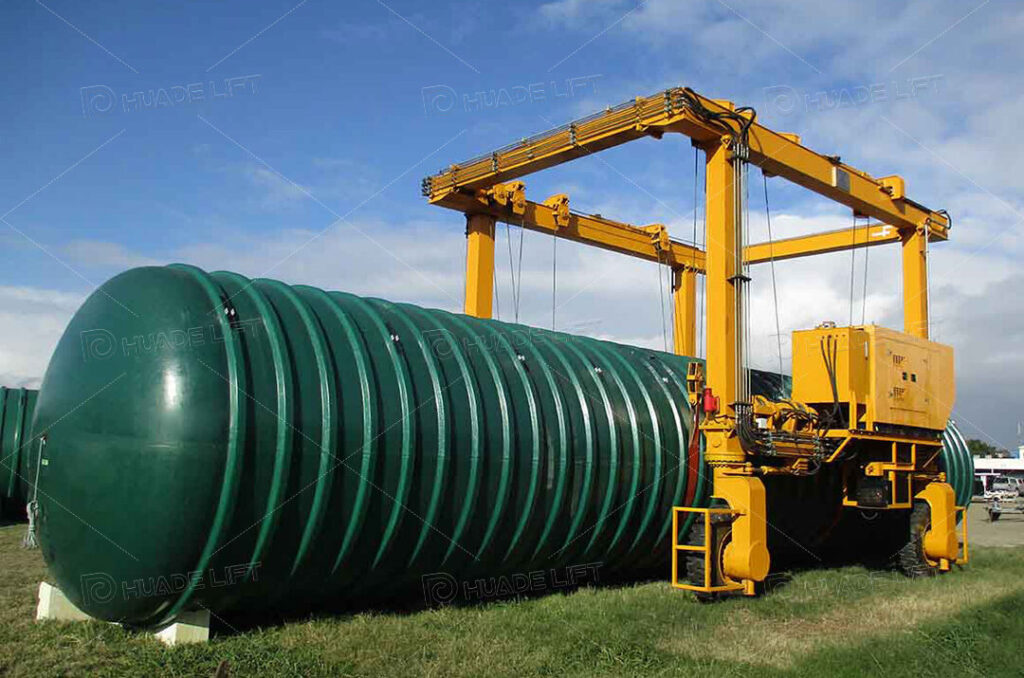
A container stacker reach stacker is specialized equipment for container handling, widely deployed in container yards, logistics hubs, and multimodal transport centers. Without requiring fixed tracks or additional crane assistance, it can directly straddle containers to lift, stack, and transport them from the ground or trailer platforms. Its flexible and efficient characteristics make it an ideal choice for space-intensive operations.
In logistics operations and modular construction, stacking height is a core factor in maximizing site utilization. As land resources become increasingly scarce and the spatial value of terminal sites continues to rise, safely storing more containers within limited areas has become a common challenge for logistics enterprises. The lifting height directly determines the number of stacking layers achievable by a container straddle carrier, thereby impacting yard density, operational workflows, and operating costs. This makes it a critical parameter that cannot be overlooked during equipment selection.

Container Straddle Carrier
Features of Container Straddle Carrier
The prominence of container stacker reach trucks as primary handling equipment stems from their purpose-built core features, collectively enabling efficient and safe operations.
Container Lifting Mechanism
Equipped with specialized lifting attachments, these trucks precisely grasp containers for smooth lifting. The spreader design conforms to standard ISO container dimensions, ensuring stability and accuracy during lifting while accommodating varying stacking heights.
Heavy-Duty Wheels and Chassis
To handle heavy container loads, straddle carriers feature heavy-duty wheels with robust load-bearing capacity and wear resistance. The reinforced chassis withstands stresses during lifting and transport, ensuring durability under intensive operations.
Extensive Lifting Capacity Range
The straddle carrier’s lifting capacity accommodates diverse requirements, effortlessly handling containers of various specifications—from standard 40-foot containers to oversized cargo—through appropriately matched models, supporting multifaceted operational scenarios.
Four-Wheel Steering System
Most straddle carriers feature four-wheel steering, significantly enhancing maneuverability. In confined yard spaces or complex environments, they enable agile turning and precise positioning, effectively reducing blind spots and improving container handling and stacking efficiency.
Superior Visibility and Ergonomic Cab
The cab is positioned above the chassis, providing operators with expansive visibility to clearly observe containers and surrounding areas, minimizing operational risks. Additionally, the ergonomically designed cab features a rational control layout that balances comfort and convenience. This helps operators maintain optimal performance during extended shifts, thereby enhancing operational safety and efficiency.
Diverse Power Options
Hyundai container straddle carriers offer a wide range of power solutions, including conventional engines, hybrid systems, and pure electric systems. Hybrid and electric models not only reduce energy consumption but also minimize exhaust emissions and noise pollution, aligning with the trend toward environmentally friendly logistics.
Factors Influencing Straddle Carrier Height
The lifting height of a straddle carrier is not determined by a single parameter but is influenced by multiple factors that directly impact the equipment’s performance, safety, and suitability for specific applications.
Wheelbase, Frame Rigidity, and Center of Gravity Control
Wheelbase design impacts stability. A well-balanced wheelbase paired with high-strength frame rigidity enables support for greater lifting heights. Simultaneously, center of gravity control is critical. Higher lifting heights shift the equipment’s center of gravity upward, necessitating scientific structural design and counterweight configuration to ensure balance and stability during operations.
Lifting Device Type
The type of lifting device directly affects lifting precision and height potential. Common options include telescopic, hydraulic, and automated hoists. Each type varies in adaptability, operational flexibility, and lifting stability, thereby affecting the crane’s maximum lifting height and operational efficiency.
Lifting Capacity and Safety Interlock Devices
Lifting height is closely tied to lifting capacity. Higher lifting heights require corresponding capacity designs to prevent safety risks from overloading. Additionally, safety interlock devices are critical for securing high-lift operations, automatically triggering protective mechanisms during anomalies to prevent accidents.
Power System
The power system provides energy for the straddle carrier’s lifting and transport functions. The performance of its engine, hybrid, or electric system directly impacts lifting speed, continuous operation capability, and stability. Sufficient power reserves form the foundation for achieving greater lifting heights, ensuring smooth operation even under full load conditions.
Ground Conditions and Operating Environment
Ground bearing capacity and surface levelness directly influence the reach stacker’s lifting height. Soft or uneven ground may cause equipment tilt, limiting maximum lift height. Environmental factors like wind and temperature must also be considered, particularly in open-air yards where strong winds can compromise stability during high-lift operations.
Benefits of Choosing a Higher Lifting Height
For logistics enterprises facing space constraints and efficiency demands, reach stackers with greater lift heights deliver multifaceted operational benefits, becoming a key driver for enhancing competitiveness.
Increased Yard Density
Greater lift heights enable more stacking layers, allowing storage of more containers within the same yard area and significantly improving space utilization. For logistics parks and inland freight hubs with limited land resources, this effectively “expands” the site capacity without requiring additional land acquisition.
Adapting to Land-Constrained Terminal Sites
In areas with scarce land resources, terminal site expansion is often restricted. Reach stackers with greater lifting heights fully leverage vertical space potential, achieving higher operational efficiency within limited areas and avoiding bottlenecks caused by insufficient space.
Reduced Container Handling Operations
Equipment with limited lifting heights often requires frequent container flipping to access lower-level containers, which is not only time-consuming and labor-intensive but also increases operational risks. Reach stackers with greater lifting heights can directly access upper-level containers, eliminating unnecessary flipping operations, simplifying workflows, and enhancing overall turnaround efficiency.
How Lifting Height Influences Yard Efficiency
Lift height is a core factor influencing overall yard operational efficiency, affecting workflow, turnover speed, and resource utilization throughout the entire operation.
Efficiency Differences Between High-Stack and Limited-Stack Yards
Yards utilizing high-lift reach stackers enable multi-tier stacking, offering greater flexibility in container storage and retrieval while streamlining operations. In contrast, yards with limited lift heights face constraints on stacking layers, often leading to yard congestion and operational delays, significantly compromising overall efficiency.
Optimization Potential for Yard Density
Lift height directly determines the upper limit of yard density. Reasonably increasing lift height can substantially boost container storage capacity per unit area without expanding land use, maximizing the value of limited site resources—particularly beneficial for handling peak-period container throughput.
Impact on Container Turnover Speed
Greater lifting heights reduce redundant operations like container flipping, streamlining the entire process from arrival and storage to retrieval. Operators can swiftly lift, transport, and stack containers, shortening individual handling times. This accelerates overall yard turnover, meeting the timeliness demands of logistics transportation.
Applications of Container Straddle Carrier
Container straddle carriers play a vital role across multiple logistics segments due to their flexible and efficient characteristics, serving as key equipment connecting different modes of transportation.
Intermodal Transport
In intermodal scenarios, straddle carriers facilitate container transfers between ships, railways, and trucks. They seamlessly shuttle between different transport modes, rapidly loading, unloading, and transferring containers. This ensures smooth intermodal connections and enhances overall logistics efficiency.
Bulk Container Handling
At major logistics hubs and freight distribution centers, where large volumes of containers arrive simultaneously, straddle carriers enable efficient bulk handling and stacking. This meets bulk cargo processing demands, prevents container backlogs, and ensures orderly cargo turnover operations.
Distribution Center Operations
Within logistics distribution centers, straddle carriers transfer containers from receiving areas to storage zones or from storage to shipping zones, supporting subsequent sorting and delivery operations. Their flexible maneuverability adapts to complex facility layouts, boosting cargo throughput efficiency.
Warehouse Management
In container storage yards, straddle carriers precisely stack containers according to designated layouts, facilitating future retrieval and extraction. Optimal stacking not only maximizes storage space but also minimizes container damage risks, enhancing the standardization and efficiency of warehouse management.
Heavy-Load Transportation
For oversized or overweight containers and cargo, straddle carriers leverage their substantial lifting capacity and stable performance to safely execute handling and transportation tasks. They serve as indispensable equipment in heavy industrial logistics and large-scale equipment transport scenarios.
Safety Considerations
Safety is paramount in container operations. Increased lifting heights impose higher safety demands on stacker reach trucks, necessitating comprehensive safeguards across multiple dimensions.
Stability and Balance Control
Greater lifting heights shift the equipment’s center of gravity upward, intensifying stability challenges. Therefore, straddle carriers must possess reliable balance control capabilities. Through optimized counterweight design, reinforced chassis structures, and advanced suspension systems, they ensure sustained stability during lifting, transport, and stacking operations, preventing tipping risks.
Wind Load Impact and Mitigation
Taller straddle carriers face greater wind load impacts during outdoor operations. Increased frontal area can cause swaying or tilting, significantly elevating safety risks in high-wind conditions. To counter this, carriers employ streamlined designs to reduce aerodynamic drag and incorporate wind load sensors with stability control systems. These systems automatically adjust operational parameters based on wind strength to ensure safety.
Safety Protection Device Configuration
Beyond fundamental structural design, straddle carriers must incorporate comprehensive safety protection devices. For instance, overload protection prevents operation beyond rated capacity; limit switches control maximum lifting height to avoid excessive elevation; and emergency braking systems enable rapid shutdown during unexpected events, minimizing accident damage. Collectively, these devices form the defense line for safe operation.
Choosing the Right Equipment
Choosing the lift height for a straddle carrier requires a comprehensive assessment of your operational needs, site conditions, and future plans. Avoid blindly pursuing high lift heights or neglecting actual requirements.
Daily Throughput Requirements
First, determine your daily container handling volume. For high throughput requiring rapid turnover, higher lift capacity equipment increases yard density and operational efficiency while preventing congestion. For lower throughput with ample yard space, select a moderate lift height based on actual stacking needs.
Yard Area and Stacking Density Targets
The actual yard area is the fundamental factor determining lift height. Smaller yards require higher lifting heights to maximize stacking density and meet storage capacity. Larger yards can flexibly choose based on stacking density targets, balancing efficiency and cost.
Container Types and Load Combinations
Different container types vary in size and weight, and load combinations also impact lifting requirements. For primarily standard-sized containers, lifting height can be designed for conventional stacking layers. For handling heavy or tall containers, equipment with matching lifting capacity and height must be selected to ensure operational safety.
Future Scalability and Growth Requirements
Equipment selection should account for future business expansion. If plans include increased throughput or yard expansion, choosing equipment with some lifting height redundancy avoids short-term reinvestment in replacements and accommodates operational pressures from business growth.
Cost Comparison Across Height Levels
Straddle carriers with different lifting heights exhibit variations in acquisition, operational, and maintenance costs. Higher-lift equipment carries higher initial costs but reduces site space requirements and enhances efficiency. Lower-lift models offer lower upfront investment but may limit future operational potential. Comprehensive calculation of total long-term costs is essential to select the most cost-effective solution.
Conclusion
The lifting height of a container straddle carrier is a core parameter influencing logistics operations. The equipment’s lifting mechanism, chassis design, and power system determine its performance ceiling, while a reasonable lifting height optimizes yard density, reduces container shifting operations, and directly enhances turnover efficiency and economic benefits.
When selecting equipment, comprehensively consider throughput capacity, yard area, container types, and development plans to avoid blind choices. Whether in space-constrained terminal yards or efficiency-driven logistics hubs, precisely matching lift height maximizes equipment value while achieving dual wins in operational efficiency and investment returns.
Fundamentally, lift height selection is a strategic decision based on operational requirements. Correct selection unlocks site potential, streamlines workflows, and builds competitive advantages for enterprises.
