
In U.S. port operations, heavy industrial manufacturing, prefabricated component production, and large-scale infrastructure construction, Rubber Tyred Gantry Cranes (RTGs) are progressively replacing traditional rail-mounted cranes as the core equipment for enhancing operational flexibility and efficiency.
However, most American buyers encounter a common challenge during procurement: RTG crane quotes vary dramatically across suppliers, ranging from over $300,000 to more than $1.5 million. Even within the same tonnage range, price differences can exceed 50%.
This article systematically deconstructs the core factors influencing Rubber Tired Gantry Crane pricing in the USA. Drawing from engineering fundamentals, cost structure logic, and real-world market cases, it helps you move beyond the “price-only” mindset and develop a procurement decision-making framework grounded in operational requirements and long-term value.

What exactly is a Rubber-Tired Gantry Crane? Why is demand in the U.S. market continuously growing?
The Engineering Essence of RTG Cranes
From an engineering systems perspective, RTG cranes are not merely a simple “crane + tires” combination. They are integrated systems comprising self-supporting gantry steel structures, all-terrain tire travel mechanisms, high-precision electrical control systems, and safety protection systems.
Its core technological advantage lies in breaking the fixed foundation dependency of rail-mounted gantry cranes (RMG) through its tire-mounted travel mechanism, enabling flexible expansion of operational areas.
Compared to RMG cranes, the fundamental difference between the two lies in foundation adaptability and operational flexibility, not merely lifting capacity: RMG cranes require high-precision rail installation, specialized concrete foundations, and permanently fixed workstations, making modifications extremely costly.
RTG cranes, however, can be rapidly deployed and operational as long as the site ground meets specified bearing capacity requirements (typically requiring hardened concrete surfaces of C30 grade or higher with a bearing capacity ≥30MPa). Their operating radius can be flexibly adjusted as needed, and they can even be relocated across different areas for operations.
This difference also defines their respective application boundaries: RTGs are better suited for dynamically adjusting operational demands, while RMG cranes are more appropriate for long-term, fixed, high-frequency operations.
Core Reasons Behind the U.S. Market’s Preference for RTGs
In recent years, the U.S. RTG crane market has maintained an annual growth rate exceeding 6.2%, far surpassing the growth of traditional lifting equipment. This growth is not coincidental but stems from three critical pain points in American industrial and infrastructure sectors, where RTGs provide targeted solutions:
Persistently high labor costs
Average hourly wages in U.S. manufacturing and logistics have surpassed $38, with a 12% shortage of skilled crane operators. RTG cranes’ automated capabilities—such as precise positioning and remote operation—can reduce personnel requirements per task by over 50%, offsetting rising labor costs through enhanced equipment efficiency. For instance, a Houston precast component factory reduced its component transfer crew from 8 to 3 workers after introducing two 32-ton RTGs, saving over $1.2 million annually in labor costs.
Project timelines are generally shortening
Following streamlined approval processes for U.S. infrastructure projects, the average project cycle has compressed from 18 months to 10-12 months, with temporary and phased projects now accounting for over 35% of the total. For such projects, the 3-4 month construction period required for RMG tracks and foundations no longer aligns with overall project timelines. In contrast, RTG cranes can be delivered, commissioned, and operational within just 2-4 weeks, significantly shortening project preparation cycles.
Constrained infrastructure investment
U.S. local governments and enterprises have grown more cautious about long-term fixed asset investments. The upfront costs for RMG installations—including track laying and foundation pouring—typically account for 30%-40% of total equipment expenses, with subsequent retrofitting being difficult and residual values low. RTGs, however, require no additional civil engineering investment, reducing upfront costs by over 40%. The equipment can be relocated and reused after project completion, maintaining a residual value rate above 60% (far exceeding the 45% for RMGs).
These advantages have expanded RTG crane applications in the U.S. beyond traditional ports to non-port industrial sectors like precast component factories, steel yards, wind turbine assembly bases, and heavy modular component production workshops, establishing them as versatile, high-efficiency lifting equipment across multiple industries.
The True Price Range and Root Causes of Variation for Rubber-Tired Gantry Cranes in the USA
The Core Reason for Significant Price Disparities: RTGs Are “Designed for Specific Applications,” Not “Sold by Model”
Many buyers initially wonder: “Why does Supplier A quote $550,000 for a 32-ton RTG, while Supplier B charges $800,000?”
The core answer lies in RTG pricing logic: “application-specific adaptation” rather than “tonnage standardization.” While tonnage may appear identical, fundamental differences in structural safety factors, span height, wind resistance ratings, and compliance requirements underpin these variations, ultimately driving price disparities.
Price variations in the U.S. RTG market primarily stem from four core design and configuration differences, which are critical prerequisites to clarify during procurement:
Lifting capacity and structural safety factor: The U.S. market generally requires a safety factor ≥1.5 (significantly higher than the 1.2 standard in some emerging markets). A higher safety factor necessitates greater steel usage and more rigorous structural design;
Span, height, and wind resistance rating: Wind resistance requirements vary significantly by region (e.g., Gulf Coast requires Category 12+ resistance, while inland areas typically require Category 8-10). Structural costs increase substantially with each additional meter of span or height;
Electrical and control system configurations: Differences in configurations—such as standard variable frequency drives versus high-precision PLC automation, local operation versus remote intelligent monitoring—can result in cost variations of 15%-25%;
U.S. compliance and certification requirements: Meeting OSHA (Occupational Safety and Health Administration) standards, ANSI (American National Standards Institute) crane specifications, and obtaining FM (Factory Mutual) certification (mandatory in certain industrial settings) directly impacts equipment design costs and certification expenses.
Mainstream Price Reference for the U.S. Market
Based on over 120 RTG crane procurement projects across North America from 2022 to 2024 (covering ports, precast component plants, wind power bases, and other scenarios), we have compiled actual price ranges for RTGs of different tonnages. We also clarify typical application scenarios and configuration requirements for each range, providing an intuitive reference for procurement decisions:
20–30 ton RTGs
Primarily used in precast component plants (e.g., handling concrete slabs and small steel structures) and steel yards (stacking small-to-medium steel sections and plates). Core specifications for this range include: 12–18 meter span, 6–10 meter lift height, standard variable frequency drive control, and compliance with OSHA basic safety standards. Reference Price: USD 300,000 – 500,000.
32–40 ton RTG
This is the most mainstream specification for U.S. industrial users, suitable for scenarios including large precast component plants (transporting precast bridge beams), port container yards (handling small-to-medium containers), and heavy machinery assembly workshops (lifting equipment components). Core specifications: 18–24-meter span, 10–14-meter lifting height, high-precision PLC control, collision avoidance system and wind speed monitoring system, compliant with both OSHA and ANSI standards. Reference price: USD 500,000 – 900,000.
Custom RTGs of 50 tons and above
Primarily used for wind power equipment assembly (wind turbine blade and hub transfer), heavy modular component manufacturing (e.g., petrochemical modular equipment), and large-scale port bulk cargo handling (e.g., ore, large equipment containers). RTGs in this range feature fully customized designs with core configurations determined individually based on operational requirements. Typical specifications include: 24-30m span, 14-20m lifting height, fully automated control systems, wind resistance rating of 12 or higher, redundant safety systems (e.g., dual braking, emergency power supply), and FM certification. Reference Price: USD 900,000 – 1,500,000+.
Core Engineering Factors Determining RTG Crane Pricing
Lifting Capacity
Many novice buyers hold a misconception: they believe increasing an RTG crane’s lifting capacity from 32 tons to 40 tons merely involves “adding a few more steel plates,” assuming minimal cost increase.
However, from an engineering design perspective, increasing the lifting capacity triggers cascading design changes across the entire system. Each modification corresponds to a significant cost increase, explaining why prices often rise non-linearly with each capacity upgrade.
Specifically, the core design changes resulting from increased lifting capacity include:
Redesigned main girder cross-section
The 32-ton RTG’s main girder typically uses a box-type cross-section with a height of approximately 1.2-1.4 meters. The 40-ton RTG requires a taller girder (1.6-1.8 meters) and thicker steel plates (from 16mm to over 20mm), increasing main girder steel consumption by over 30%.
Significantly increased wheel load
Single-wheel load for 32-ton RTGs is approximately 12-15 tons, while 40-ton RTGs require 18-22 tons per wheel. This necessitates upgrading from single-wheel sets to dual-wheel sets, along with larger bearing specifications and increased drive motor power for the travel mechanism;
Tire specification upgrade
Standard 32-ton RTGs use 14.00-24 tires (specialized construction machinery tires), while 40-ton RTGs require upgrading to 16.00-25 specifications. The tire ply rating increases from 16 to 20 plies, raising the cost per tire from approximately $3,500 to over $5,500. A typical RTG is equipped with 8-10 tires, resulting in an approximate tire cost increase of $20,000;
Recalculation of anti-tipping stability
After increasing the lifting capacity, the RTG’s center of gravity rises accordingly. Ensuring anti-tipping stability requires measures such as adding overall machine weight and optimizing outrigger structures, which further increases steel consumption.
Span and Height
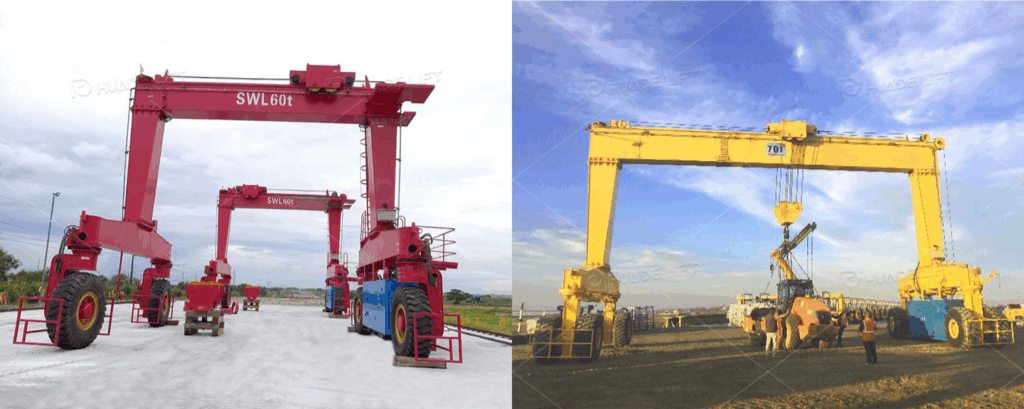
During RTG procurement, many buyers prioritize lifting capacity while overlooking the cost implications of span and lifting height. In reality, span and height are core factors influencing RTG structural costs, often referred to within the industry as “hidden cost killers.”
This is because the gantry steel structure of an RTG constitutes a large-span load-bearing framework. Increasing span and height directly elevates structural stress complexity, significantly boosting steel consumption and design difficulty.
Engineering data reveals a pronounced incremental effect of span on cost: For identical lifting capacity and height, each additional meter of span increases the RTG’s steel structure weight by 5-8%, with corresponding cost escalation of 5-8%. For example, increasing the span of a 32-ton RTG from 18 meters to 24 meters (a 6-meter increase) raises the steel structure weight from approximately 45 tons to over 60 tons, representing a roughly 30% cost increase.
The impact of lifting height on costs manifests in two primary ways: increased steel consumption due to taller columns, and additional costs stemming from heightened wind resistance requirements.
For every 1-meter increase in lifting height, the RTG’s mast height must also increase by 1 meter, correspondingly raising steel consumption. Simultaneously, the increased lifting height enlarges the equipment’s wind-exposed surface area, demanding higher wind stability. This necessitates enlarging the mast’s cross-sectional dimensions, optimizing the guy cable structure (if equipped), or even adding wind-resistant anchoring devices.
Power System Selection
RTG cranes primarily utilize three types of power systems: diesel-powered, electric-powered, and hybrid-powered. Significant differences exist in the procurement costs of these systems, which directly impact long-term operational expenses. This represents a core factor requiring careful consideration in procurement decisions—one must not focus solely on the initial purchase price but instead calculate the total cost of ownership (TCO) over a 10-20 year service life.
From a short-term procurement perspective, diesel-powered RTGs hold the greatest advantage: for equivalent tonnage and configurations, diesel RTGs cost 10%-15% less than electric models and 20%-25% less than hybrid variants. However, in the long-term operational context of the U.S. market, the cost advantages of electric and hybrid systems gradually emerge:
First, energy consumption costs differ significantly. U.S. diesel prices consistently range between $3.50–$4.50 per gallon. A 32-ton diesel RTG consumes approximately 8,000 gallons annually, resulting in average annual fuel costs of around $30,000. In contrast, an electric RTG consumes approximately 120,000 kWh annually. With the average U.S. industrial electricity rate at $0.15/kWh, its annual energy cost is only $18,000, yielding annual savings of $12,000. Over a 20-year operational cycle, electric RTGs can save $240,000 in energy costs—far exceeding the initial purchase price difference.
Second, environmental compliance costs. The U.S. Environmental Protection Agency (EPA) is progressively tightening emission standards for diesel equipment, particularly in regions like California and New York State. These areas have begun restricting the use of high-emission diesel equipment, mandating the installation of exhaust treatment systems (such as DPF particulate filters). This imposes additional equipment retrofitting and maintenance costs. Electric and hybrid RTGs, however, produce zero or low emissions, eliminating environmental retrofitting costs. In some regions, they qualify for environmental subsidies (e.g., California’s Clean Energy Equipment Subsidy, covering up to 10% of the purchase price).
Third, maintenance cost differences. Diesel-powered RTGs require frequent maintenance of components like engines and transmissions, with average annual maintenance costs around $25,000. Electric-powered RTGs feature simpler maintenance for motors and electronic control systems, averaging only about $10,000 annually. Hybrid RTGs, integrating both diesel and electric systems, incur slightly higher maintenance costs (approximately $18,000/year) but remain lower than diesel models.
Using actual operational data from a Houston port as an example: The port purchased 10 diesel-powered RTGs in 2018 and another 10 electric-powered RTGs in 2020, both with a 32-ton capacity. By 2024, the average annual comprehensive cost (energy consumption + maintenance) for diesel RTGs reached approximately $55,000 per unit, while electric RTGs averaged around $28,000 per unit—saving $27,000 annually per unit. Over a 20-year operational cycle, the 10 electric RTGs cumulatively saved $5.4 million, far exceeding the initial purchase price difference (an additional $80,000 total purchase cost for the 10 units).
Furthermore, hybrid RTGs are better suited for scenarios with unstable power supply and variable operational locations (e.g., temporary material yards, remote wind power bases). They combine the flexibility of diesel power with the low energy consumption of electric drive. Although their initial purchase cost is higher, they eliminate the additional civil engineering costs associated with laying power lines (approximately $150,000 to $250,000), offering superior overall cost-effectiveness.
U.S. Domestic Manufacturing vs. Chinese Manufacturing
Core Root of Price Disparity
In the RTG crane market, a significant price gap exists between U.S. domestic and Chinese manufacturing: under identical technical specifications and compliance with the same U.S. regulatory requirements, U.S.-made RTGs typically command a 20%-40% premium over Chinese counterparts. This disparity stems not from “brand premium” but from differing cost structures and production models.
Three core factors underpin the higher cost of U.S.-made RTGs:
Elevated labor costs: Average hourly wages in U.S. heavy industrial manufacturing range from $45 to $60—3 to 4 times higher than comparable positions in China. As RTGs combine labor-intensive and technology-intensive production, labor costs account for 25%-30% of total manufacturing expenses, directly inflating prices.
Production model centered on small-batch customization: U.S. crane manufacturers typically have low annual output (less than 50 units per plant), preventing economies of scale. This results in higher component procurement and production management costs;
Upfront service costs: U.S. manufacturers typically include post-sale installation, commissioning, maintenance, and technical support in the initial equipment quote, whereas Chinese manufacturers often price these services separately, making their initial offers more competitive.
The cost advantage of Chinese-made RTGs stems from a mature heavy industry supply chain and large-scale production capabilities:
Comprehensive supply chain: China has established a complete heavy industry supply chain spanning steel production, component manufacturing (e.g., motors, gearboxes, tires), and final assembly, reducing component procurement costs by 20%-30% compared to the U.S.;
Mass Production: Leading Chinese RTG manufacturers achieve annual output exceeding 300 units. Mass production significantly reduces unit costs while boosting efficiency;
Extensive Engineering Customization Experience: Chinese manufacturers routinely provide customized RTG solutions globally, accumulating rich expertise in adapting to diverse operating conditions and compliance requirements. This enables optimized designs that meet regulations while controlling costs.
For example, a 32-ton RTG with a 20-meter reach meeting OSHA and ANSI standards: U.S. manufacturers quote approximately $750,000, while Chinese manufacturers quote around $550,000—a price difference of 26.7%. For larger purchase volumes (e.g., 10 units or more), the cost advantage of Chinese manufacturing becomes even more pronounced, offering further reductions of 5%-8%.
Core Risks of Importing Chinese-Made RTGs
While Chinese-made RTGs offer significant price advantages, U.S. buyers must focus on three major risks during procurement to avoid falling into pitfalls due to “low prices”—price advantages must be built on compliance and reliability, otherwise subsequent losses may far exceed initial savings.
Whether U.S. compliance standards are genuinely understood and met
This is the core prerequisite for importing RTGs and the most common point of failure. Some Chinese manufacturers lack deep understanding of U.S. crane regulations like OSHA and ANSI, potentially resulting in “superficial compliance” rather than “substantive compliance.” For instance, while the equipment’s safety protection system may meet basic requirements, it might neglect U.S. market specifics like emergency brake response time, English-language interface adaptation, or standardized safety warning signage. This can result in equipment failing acceptance upon arrival, necessitating costly retrofits. It is advisable to request manufacturers provide compliance acceptance documentation from previous U.S. projects (e.g., OSHA certification, ANSI compliance reports) and engage third-party agencies for compliance audits.
Do they possess North American project delivery experience
RTG delivery involves not only equipment transportation but also on-site installation, commissioning, personnel training, and coordination with local construction teams. Manufacturers lacking North American project delivery experience may cause delays due to unfamiliarity with local construction codes, logistics processes, and communication practices. For instance, incomplete customs documentation could lead to port delays after equipment arrival, or poor coordination with local civil engineering teams during installation could impact commissioning schedules. Prioritize manufacturers with at least three completed North American project deliveries and request detailed delivery schedules and contingency plans.
Assess long-term technical support and after-sales service capabilities
With RTGs operating for up to 20 years, sustained technical support and spare parts availability are critical. Some Chinese manufacturers lack service networks in North America, resulting in delayed responses to equipment failures and spare parts lead times extending to 1-2 months—severely impacting operational efficiency. It is recommended to clearly specify the manufacturer’s North American service network coverage, fault response time (requiring on-site service within 48 hours), and parts supply cycle (guaranteed inventory for core components, supply cycle ≤7 days) during procurement, and incorporate these terms into the purchase contract.
Additionally, attention must be paid to exchange rate fluctuations and trade policy risks. Fluctuations in the USD/CNY exchange rate may impact final procurement costs, while U.S. trade policies affecting Chinese heavy equipment (such as tariffs and anti-dumping duties) could increase import expenses. It is advisable to establish an exchange rate adjustment mechanism in the procurement contract, stay informed about the latest trade policies, and select suppliers with relevant trade qualifications.
Engineering-Level Analysis of RTG Crane Pricing Structure
The price of an RTG crane is not a “black box” but rather the sum of costs from multiple core modules. Deconstructing its pricing structure from an engineering perspective helps buyers more clearly assess quote validity, avoiding misguidance from “inflated quotes” or “low-price traps.”
Below is an analysis of the cost logic and proportion distribution for RTG crane core modules (based on a 32-ton mainstream model with a total quoted price of $550,000–$800,000):
| Core Modules | Cost Proportion | Cost Logic | Implications for Procurement Decisions |
| Steel Structure System (Main Beams, Columns, Legs, etc.) | 35%-40% | Cost is primarily determined by steel consumption, steel grade (e.g., Q355B, Q460C), and welding process (standard welding vs. submerged arc welding). Higher steel grades and more advanced welding techniques increase costs but also enhance the equipment’s load-bearing capacity and service life. | Cost is primarily determined by steel consumption, steel grade (e.g., Q355B, Q460C), and welding process (standard welding vs. submerged arc welding). Higher steel grades and more advanced welding techniques increase costs but also enhance the equipment’s load-bearing capacity and service life. |
| Travel System (Tires, Travel Mechanism, Drive Motors, etc.) | 20%-25% | Cost is primarily determined by tire specifications and brand, travel motor power, and reducer precision. Premium tires (e.g., Michelin, Goodyear) cost 30% more than standard tires but offer over twice the service life. | Cost is primarily determined by tire specifications and brand, travel motor power, and reducer precision. Premium tires (e.g., Michelin, Goodyear) cost 30% more than standard tires but offer over twice the service life. |
| Electrical and Control System (PLC, VFD, sensors, etc.) | 15%-20% | Cost variations stem from control precision and brand. High-precision PLCs (e.g., Siemens S7-1500 series) and imported inverters carry higher costs but deliver superior control accuracy and lower failure rates. | Specify electrical component brands and models to avoid unbranded or refurbished parts. Select control precision based on operational requirements—avoid blindly pursuing “top-tier configurations.” |
| Safety Systems (Collision Prevention Devices, Wind Speed Monitoring, Emergency Braking, etc.) | 8%-12% | Mandatory in the U.S. market. Costs depend on the number and precision of safety devices. For example, laser collision prevention systems cost 50% more than infrared systems but offer higher detection accuracy. | Must comply with OSHA and ANSI safety standards; provide certification documents for safety systems. Select appropriate safety configurations based on operational scenarios (e.g., high-precision collision avoidance required for multi-device coordination). |
| Corrosion Protection and Coating | 3%-5% | Cost depends on coating process (e.g., conventional spraying vs. electrostatic spraying) and coating thickness. Coastal areas require corrosion-resistant coatings like fluorocarbon paint, incurring higher costs. | Select appropriate corrosion protection processes based on operating environments. Coastal and high-humidity regions necessitate increased coating thickness and corrosion resistance levels to extend equipment lifespan. |
| Design and Certification Costs | 5%-8% | Includes custom design fees and certification expenses (e.g., OSHA/ANSI/FM). Complex operating conditions and multiple certification requirements increase these costs. | Clearly define certification requirements upfront to avoid costly rework due to omissions. Select suppliers with extensive custom design experience to reduce design expenses. |
How to Make RTG Procurement Decisions in the U.S. Market Without Overdoing It or Falling into Pitfalls?
Define Operating Conditions First, Then Discuss Price
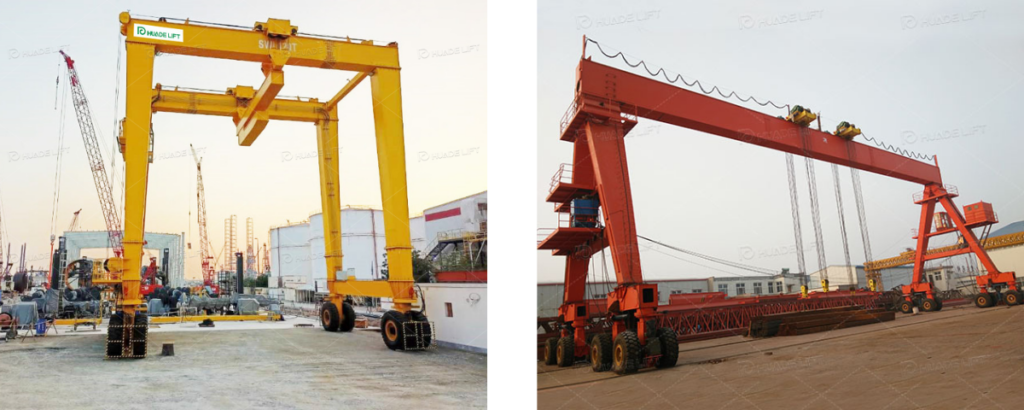
Many procurement failures stem from the flawed sequence of “asking about price before defining requirements.” The customized nature of RTGs means discussing price without considering operating conditions is meaningless—it can lead to either “over-configuration” (wasting money) or “under-configuration” (failing to meet operational needs). The correct procurement sequence is: clarify operating conditions → determine core parameters → develop technical solutions → compare quotes.
When defining operating conditions, clarify these core details—they directly determine the RTG’s design and price:
Core operational parameters: Maximum lifting capacity, typical load weight and dimensions, operating frequency (e.g., lifts per hour);
Site conditions: Work area dimensions, ground bearing capacity, span requirements (required operational width coverage), lifting height requirements (maximum lift height);
Environmental conditions: Operating region (coastal/inland/low-temperature areas), wind resistance requirements, humidity and corrosion exposure;
Compliance and certification requirements: Need for OSHA/ANSI/FM certifications, environmental emission standards (e.g., California zero-emission requirements);
Operational needs: Power system type (diesel/electric/hybrid), automation functionality requirements, usage cycle (short-term temporary vs. long-term permanent deployment).
Requiring “Verifiable” Technical Specifications
During procurement, many suppliers make vague promises such as “premium steel,” “renowned brand electrical components,” or “compliant with U.S. standards.” These claims often signal “low-price traps.” Professional procurement decisions require converting such ambiguous promises into verifiable technical details and demanding suppliers provide supporting documentation to ensure quote rationality and equipment reliability.
Key technical details requiring verification include:
Steel Standards: Specify steel grades (e.g., Q355B, ASTM A572) and yield strength metrics, requiring material certification;
Core Electrical Brands: Identify brands and models of critical electrical components (e.g., Siemens PLCs, ABB inverters), demanding brand authorization proof;
Design specification basis: Require suppliers to provide design calculation documents based on OSHA/ANSI standards, specifying critical metrics like structural safety factors, wind resistance ratings, and brake response times;
Welding and inspection standards: Specify welding processes (e.g., submerged arc welding, gas shielded welding) and require non-destructive testing reports for welds (e.g., UT ultrasonic testing reports);
Certification documents: OSHA certification certificates, ANSI compliance reports, and other relevant certifications must be provided to ensure legal market entry in the United States.
Replacing unit price with TCO
RTG cranes have a service life of up to 20 years, making the initial purchase price only a portion of long-term costs. Professional procurement decisions must calculate Total Cost of Ownership (TCO)—the sum of all costs over the equipment’s entire lifecycle, including initial purchase cost, energy consumption cost, maintenance cost, compliance retrofit cost, residual value, etc.
When calculating RTG TCO, focus on the following factors:
Initial Purchase Cost: Equipment quotation, transportation fees, customs clearance fees, installation and commissioning fees;
Energy consumption costs: Calculate total energy expenses over 20 years based on the power system type, average annual operating hours, and energy unit price;
Maintenance costs: Include routine maintenance expenses (e.g., lubricant and filter replacements), component replacement costs (e.g., tires, bearings), and repair expenses. Reference supplier-provided average annual maintenance data and industry benchmarks for estimation;
Compliance retrofit costs: Account for potential future equipment modification expenses due to environmental policy or safety standard upgrades (e.g., exhaust treatment retrofits for diesel equipment);
Residual value: RTG residual value typically ranges from 30%-60% of initial purchase price, with premium brands and compliant configurations commanding higher residual values.
Using a 32-ton RTG as an example, we compare the TCO of two scenarios (calculated over a 20-year lifecycle):
Option 1: Diesel-powered RTG with an initial purchase cost of $550,000, average annual energy cost of $30,000, average annual maintenance cost of $25,000, compliance retrofit cost ($50,000 for exhaust treatment), and residual value of $165,000 (30%). TCO = $550,000 + ($30,000 + $25,000) × 20 + $50,000 – $165,000 = $1,585,000.
Option 2: Electric-powered RTG, initial purchase cost $630,000, average annual energy cost $18,000, average annual maintenance cost $10,000, no compliance retrofit cost, residual value $315,000 (50%). TCO = 63 + (1.8 + 1) × 20 + 0 – 31.5 = $1,075,000.
It is evident that although the electric RTG has an initial purchase cost $80,000 higher, its 20-year TCO is $510,000 lower, offering superior long-term value. This underscores the importance of “making decisions based on TCO”—especially in the U.S. environment of high labor and energy costs, where long-term operating expenses significantly outweigh initial purchase costs in determining total ownership value.
FAQ: RTG Pricing Questions Most Concerning to U.S. Buyers
Q1: Do RTG cranes in the U.S. market come with a warranty? How long is the typical warranty period?
A1: Yes. U.S.-manufactured RTGs typically include a 1-2 year warranty (for the entire machine) + 5 years (for the steel structure). China-manufactured RTGs usually come with a 1-year warranty (for the entire machine) + 3 years (for the steel structure). Some suppliers offer extended warranty services for an additional 5%-10% fee. It is recommended to clarify the warranty scope (e.g., whether it includes parts replacement and labor costs) and the response time for faults during the warranty period when purchasing.
Q2: How long does installation and commissioning take after purchasing an RTG? Are these costs included in the quotation?
A2: The installation and commissioning period depends on the equipment tonnage and operating environment, typically lasting 2-4 weeks. Quotes from US manufacturers often include installation and commissioning costs; quotes from Chinese manufacturers typically exclude these, requiring separate pricing (installation and commissioning for a 32-ton RTG costs approximately $30,000–$50,000). It is advisable to clarify the responsible party for installation and commissioning, completion timeline, and cost allocation during procurement to avoid future disputes.
Q3: What are the approximate customs duties and clearance fees for importing a Chinese-made RTG?
A3: U.S. tariffs on Chinese crane products range from approximately 7.5% to 12% (depending on equipment type and specifications), while customs clearance fees account for about 1%-2% of the total equipment value. For example, a $550,000 32-ton RTG would incur tariffs of roughly $41,250–$66,000 and customs fees of approximately $5,500–$11,000, totaling additional costs of $46,750–$77,000. It is advisable to discuss trade terms (e.g., FOB, CIF) with suppliers in advance to clarify responsibility for tariffs and customs clearance fees.
Q4: What is the service life of RTG tires? Is replacement costly?
A4: RTG tire lifespan depends on operating conditions and usage frequency, typically ranging from 2 to 5 years. Premium brand tires (e.g., Michelin) incur higher replacement costs, with a single 16.00-25 tire costing approximately $5,500–$6,500. Replacing a full set of tires (8–10 tires) for one RTG costs about $44,000–$65,000. It is advisable to request the supplier to provide the warranty period for tires during procurement and to stock 1–2 spare tires to avoid operational disruptions due to tire failures.
Conclusion
The price of a Rubber Tired Gantry Crane in the USA is not a simple “quoted figure,” but rather the result of multiple factors including engineering design, compliance requirements, power system selection, and long-term operating costs. For American project managers and procurement leaders, the core of RTG procurement is not “finding the lowest quote,” but “finding the solution best suited to the operating conditions and offering the most optimal long-term value.”
Contact us today with your specific operational requirements (lifting capacity, span, working environment, etc.) to receive a customized RTG crane solution and precise pricing analysis tailored to your project.
