
What is Rubber Tyred Gantry (RTG) Crane?
A Rubber-Tired Gantry Crane (RTG) is a large-scale piece of equipment used for handling containers or other large items, widely deployed in ports, container yards, and intermodal hubs. Its most distinctive feature is the use of rubber tires as its mobility components, enabling it to move flexibly within the yard without being constrained by tracks. It can freely adjust its operational path based on container stacking conditions, significantly enhancing site utilization efficiency and operational flexibility.
In terms of power supply, modern RTG cranes offer diverse options to accommodate different operational environments and requirements. Electric RTGs rely on electric power, diesel RTGs use diesel fuel, while hybrid RTGs combine the advantages of both, enabling them to switch power sources based on actual conditions. This diversity in power sources allows RTG cranes to perform effectively in various complex scenarios.
Power Supply Options of RTG Cranes
Electric RTG Cranes: These models feature three-phase AC motors, providing smooth and energy-efficient performance. They are typically favored in regions with stable power infrastructure.
Diesel-Powered RTG Cranes: Diesel models are specifically designed for environments with unstable or unavailable power supplies. They deliver robust performance across a wide range of operating conditions.
Hybrid RTG Cranes: Hybrid systems combine electric and diesel power sources, offering flexibility and improved fuel efficiency. They enable seamless switching between power sources based on availability and operational requirements.
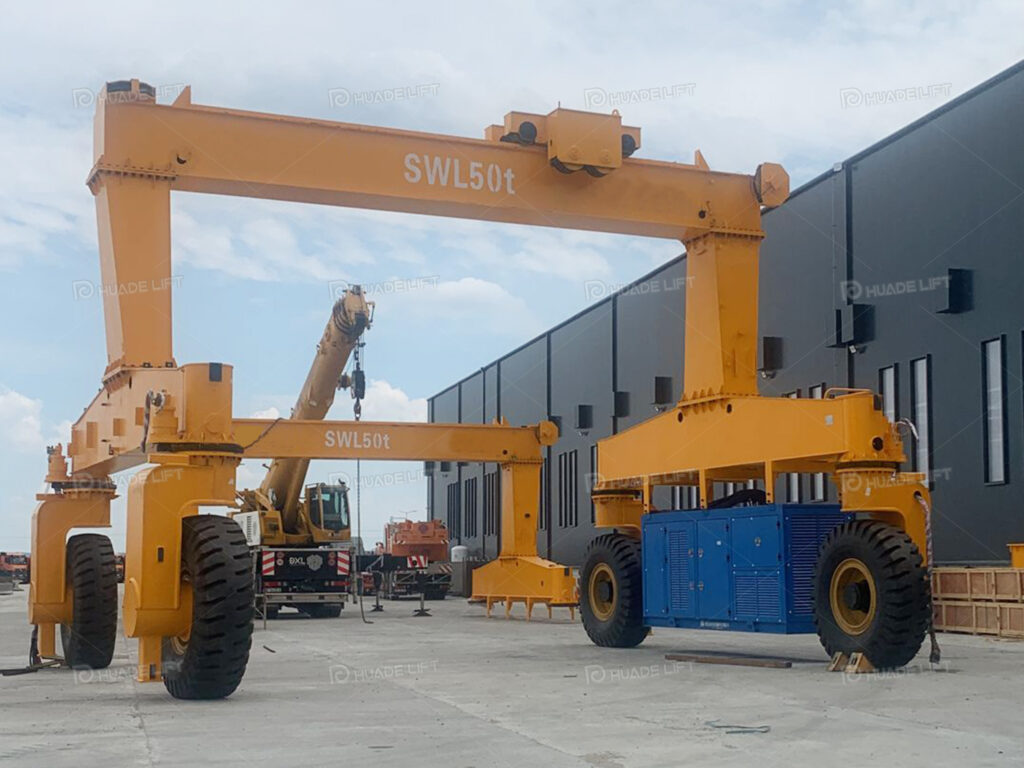
Comparison of Electric RTG and Diesel RTG
Device Size Comparison: Electric vs. Diesel RTG
One of the key features of electric RTG cranes is their relatively compact size. Compared to traditional cranes of the same type, some models have a more refined structural design, enabling flexible operation in spaces with limited area. This characteristic gives them a clear advantage in environments with complex layouts and numerous obstacles.
In terms of size, diesel RTGs are typically larger due to the need to accommodate components such as engines and fuel tanks, making them less compact than electric RTGs. This limits their flexibility in confined spaces or areas with numerous obstacles, potentially preventing access to certain work zones.
Environmental Impact Comparison: Electric vs. Diesel RTG
Electric RTGs operate with zero emissions, producing no harmful pollutants, which fundamentally reduces their impact on air quality, helping ports and yards achieve green operations and comply with increasingly stringent global environmental regulations and sustainable development goals. In the meanwhile,electric RTGs operate with extremely low noise levels. This is achieved through the smooth operation of electric motors and related soundproofing technologies, creating a more comfortable working environment for operators while minimizing noise disturbance to surrounding residents
However, the most prominent issue with diesel RTGs is environmental pollution. Their engines emit large amounts of exhaust gases during operation, which not only cause air pollution but also exacerbate the greenhouse effect, contradicting current environmental protection trends. In regions with strict environmental regulations, they may face restrictions and penalties. Additionally, diesel RTGs produce significant noise during operation, causing severe noise pollution in the work environment, which can impair operators’ hearing health and work efficiency while also disrupting the lives of nearby residents.
Power Dependency Comparison: Electric vs. Diesel RTG
The primary limitation of electric RTG cranes lies in their reliance on power supply. If the worksite lacks stable power infrastructure or experiences power outages, their operations can be severely impacted. Additionally, the operational range of electric RTGs is another factor to consider. Even with energy storage batteries, their continuous operating time typically lasts around 8 hours. Operators must fully account for charging time when scheduling operations, which may somewhat impact operational continuity, especially for sites requiring 24/7 uninterrupted operations, necessitating sufficient charging infrastructure and a reasonable charging schedule.
But compared to the lengthy charging process of electric RTGs, diesel RTGs are equipped with diesel engines as independent power sources, making refueling extremely quick. During peak operational periods, the brief refueling time minimizes downtime, ensuring operational continuity. This advantage is particularly evident in sites requiring high-intensity, uninterrupted operations and is also more suitable for temporary or remote yards without access to power.
Cost Comparison: Electric vs. Diesel RTG
Although the initial investment for the electric RTG requires a certain amount of cost for the construction of charging infrastructure, its driving system is relatively simple, with significantly fewer moving parts in the motor compared to diesel engines, resulting in lower wear and tear and reduced likelihood of failures. Consequently, the frequency and cost of maintenance are also reduced. Additionally, electric RTGs do not require fuel refueling, oil changes, or exhaust system maintenance, further lowering long-term operational maintenance expenses.
Compared to electric RTGs, diesel RTGs typically have lower infrastructure requirements and purchase costs. For companies with limited budgets that cannot afford high initial investments in the short term and where environmental requirements are not stringent, diesel RTGs offer a more economical solution. But the operational costs of diesel RTGs are relatively high. On one hand, diesel fuel prices are highly volatile, resulting in higher long-term usage costs; on the other hand, diesel engines require more complex maintenance, including regular oil changes and engine inspections, with higher maintenance costs and frequencies compared to electric RTGs.
Performance Comparison: Electric vs. Diesel RTG
Electric RTGs are typically equipped with advanced control and automation systems that support remote monitoring and diagnostics, predictive maintenance, automatic container positioning, collision avoidance technology, and intelligent energy management. The application of these technologies not only reduces human operational errors and optimizes operational processes but also enhances the overall operational efficiency and safety of the terminal or yard.
Diesel engines deliver strong torque, maintaining stable performance even under heavy loads and high-frequency operations, meeting the efficiency requirements for continuous container stacking operations. Besides, diesel RTGs can operate normally under extreme weather conditions with minimal impact on performance. In contrast, electric RTGs may experience significant declines in battery performance under extreme temperatures.

Key Factors to Consider When Selecting a Power Supply System
When choosing between electric RTGs and diesel RTGs, multiple factors must be considered comprehensively to ensure the selected equipment meets actual operational requirements while balancing economic and environmental benefits.
Site Infrastructure and Mobility Requirements
First, consider whether the site has adequate electrical infrastructure. If the worksite is a large container terminal or yard with a stable power grid and fixed operational routes, an electric RTG is an ideal choice, as it can obtain power via cable reels or busbar systems to achieve continuous and stable operation.
Conversely, if the crane needs to move frequently between multiple sites or operates in remote areas with unreliable power supply, a diesel RTG is more suitable, as it does not rely on external power and can achieve complete self-sufficiency. Hybrid RTGs can serve as an intermediate option, providing a more flexible power solution in scenarios with certain mobility requirements.
Environmental Regulations and Sustainability Goals
As global attention to environmental protection grows, environmental regulations are becoming increasingly stringent worldwide. In countries and regions with strict emissions restrictions, choosing electric RTGs or hybrid RTGs can better meet regulatory requirements, avoiding risks such as fines or operational restrictions due to emissions exceeding limits.
If a company prioritizes sustainability as a key strategic goal and is committed to reducing its carbon footprint, electric RTGs are undoubtedly the superior choice. Not only does it reduce environmental impact, but it may also qualify for government environmental incentives or green funding support, bringing long-term environmental and economic benefits to the company.
Operational Costs and Energy Efficiency
The choice of power system directly impacts long-term operational costs. Diesel RTGs have higher fuel and maintenance costs, especially in regions with significant fluctuations in diesel prices, making operational costs difficult to control. In contrast, electric RTGs have relatively lower energy costs, particularly in areas with lower electricity prices, resulting in significant cost savings over the long term.
In terms of energy efficiency, electric RTGs are significantly more efficient than diesel RTGs, with energy regeneration technology further enhancing energy utilization. Hybrid RTGs strike a balance between the two, reducing fuel consumption without requiring substantial investment in full electrification infrastructure.
Initial Investment and Return on Investment (ROI)
Initial investment is a key consideration for many companies during the selection process. Diesel RTGs typically have lower purchase costs, making them suitable for businesses with limited budgets. However, from a long-term perspective, their higher operational costs can lead to increased overall costs.
Electric RTGs and hybrid RTGs have relatively higher initial investment costs, especially electric RTGs, which may require additional funding for infrastructure such as charging facilities. However, by calculating the payback period, long-term energy cost savings, and potential government subsidies, they often offer higher ROI and are more economical in the long run.
Maintenance Requirements
Maintenance requirements vary significantly across different power systems. Diesel RTGs have complex engine structures that require regular maintenance, including oil changes, engine inspections, and emissions control system maintenance. This not only results in high maintenance costs but may also increase downtime due to frequent maintenance.
Electric RTGs have lower maintenance requirements. With fewer moving parts in the motor, they experience lower wear and tear and a reduced risk of failure, requiring only routine inspections and maintenance. This effectively reduces downtime and improves equipment utilization.
Hybrid RTGs require maintenance for both the engine and battery systems. While overall maintenance costs are lower than diesel RTGs, they are higher than electric RTGs.

Real-World Application Scenarios
Different operational scenarios have varying performance requirements for RTG cranes. The following are selection recommendations for several typical scenarios:
Port Terminals with Fixed Crane Routes
In such environments, the crane’s operational route is relatively fixed, and there is typically a well-developed power infrastructure. Electric RTGs are the optimal choice. Powered via busbars or cable reel systems, electric RTGs enable continuous, efficient, and low-emission operations. Combined with automated control systems, they further enhance terminal operational efficiency and management standards.
Industrial Yards with No Power Infrastructure
For industrial yards located far from the grid and lacking power supply, diesel RTGs remain a viable option to meet basic operational needs. However, if the site has certain environmental requirements and the crane’s mobility range is relatively limited, hybrid RTGs are a better alternative, ensuring operational autonomy while reducing fuel consumption and emissions.
Large Container Yards with Semi-Fixed Operations
In such yards, cranes operate within designated areas while requiring a certain degree of mobility. Hybrid RTGs can effectively adapt to these requirements, operating in electric mode in areas with sufficient power supply and switching to diesel mode when moving to areas without power, thereby ensuring operational efficiency while achieving energy conservation and emissions reduction.
Conclusion
Electric RTGs and diesel RTGs each have their unique advantages and applicable scenarios; there is no absolute “better,” only “more suitable.” When selecting a model, it is essential to comprehensively consider factors such as site conditions, environmental requirements, operational costs, initial investment, and maintenance needs. Combine these with your actual operational requirements and long-term development plans to make a rational decision.
If your worksite has ample power supply, high environmental requirements, and prioritizes long-term economic benefits, an electric RTG is undoubtedly the ideal choice. If your worksite lacks power supply, requires high mobility and autonomy from the equipment, and has limited budget constraints, a diesel RTG is more suitable. With the continuous advancement of technology, hybrid-powered RTGs also offer a new option for scenarios requiring a balance between environmental protection and flexibility. Regardless of the power system chosen, ensuring it is highly compatible with the operational environment is essential to maximize the performance of the RTG crane and provide robust support. If you are looking for the most suitable rubber-tired gantry crane solution for your business, please contact us directly.
