
What is a Straddle Carrier?
A straddle carrier is a special type of freight vehicle. The core difference from traditional trucks is that its cargo-carrying position is beneath the frame rather than on top. This unique structure enables it to independently complete the loading and unloading of goods without the need for auxiliary equipment such as cranes or forklifts, significantly simplifying the operation process.
In industrial production and logistics transportation scenarios, the independence advantage of straddle carriers is particularly prominent, reducing the reliance on multiple types of equipment and making the handling of goods smoother. Its core application scenarios are concentrated in industrial logistics parks, heavy manufacturing plant areas, and construction sites, with both horizontal transportation and vertical stacking functions.
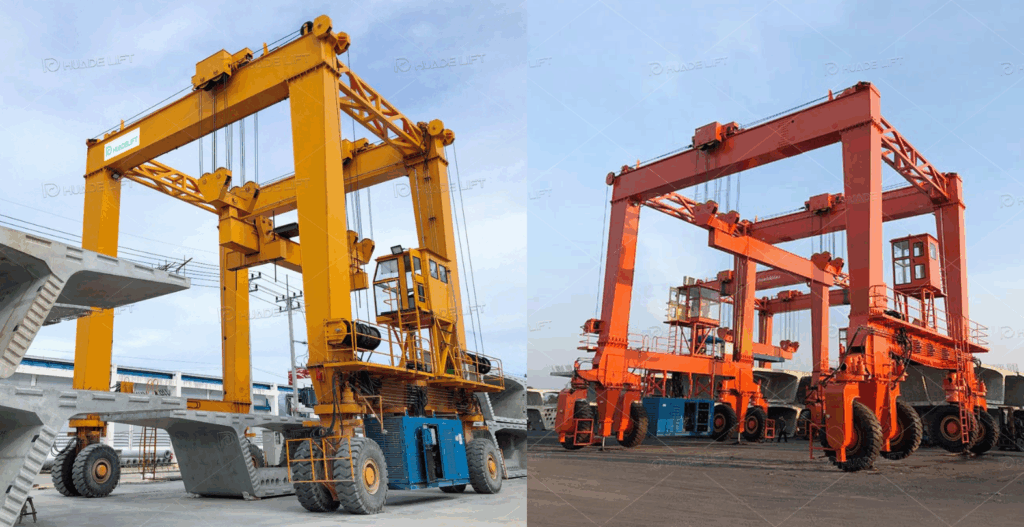
Straddle Carrier Structure and Components
Structural Frame
The structural frame of a straddle carrier adopts a telescopic design, mainly composed of outer guide rods and inner guide rods. The outer guide rods can slide along the inner guide rods, and the lifting power is provided by hydraulic cylinders, allowing for flexible adjustment of the frame height to meet the needs of different cargo handling and stacking.
The hydraulic cylinders are equipped with one-way balance valves to prevent the outer guide rods from accidentally falling in case of pressure loss, ensuring operational safety. The frame is designed in a gantry style, with two outer guide rods forming the main body and four inner guide rods at the corners providing support for the sliding tracks, preventing the equipment from tilting during heavy loads, turns, or travel on uneven ground. The modular layout also makes subsequent maintenance and component replacement more convenient.
Lifting System
The lifting system of a straddle carrier is powered by hydraulic cylinders, which pull the steel wire rope to lift the lifting gear. One end of the hydraulic cylinder is fixed to the gantry frame, and the other end is connected to the steel wire rope assembly, enabling the vertical lifting of the lifting gear. The lifting system is also equipped with a one-way balance valve to further enhance operational safety. The lifting gear also has a lateral movement function, allowing for position adjustment within a certain range.
The types of lifting gear are divided into three based on cargo requirements: standard container lifting gear conforms to universal standards and fixes the cargo through corner twistlocks, equipped with mechanical and electrical interlock devices; multi-lifting point frame lifting gear is used for non-standard size cargo and connects to the steel wire rope or lifting strap through shackles, connecting to the dedicated lifting points of the cargo; main beam lifting gear with compatible lifting points adds additional lifting points on both sides of the main beam, suitable for cargo that is not convenient to fix with twistlocks.
Driving System and Steering Modes
The driving system of a straddle carrier combines hub reduction gears and hydraulic motors to provide power to the wheels. It can be selected for four-wheel or two-wheel drive according to operational needs, adapting to different ground conditions and load situations. The wheels use solid tires, available in four-corner and three-point layouts, with strong wear resistance and ensuring stability under heavy loads.
Straddle carriers are equipped with multiple steering modes. Front-wheel steering is suitable for regular driving, Ackermann steering reduces turning wear, four-wheel steering, crab steering, and turntable steering are suitable for narrow spaces, and longitudinal driving is suitable for long-distance straight transportation. The combination of multiple modes can adapt to various complex operating environments.
Power Type of Straddle Carrier
Straddle carriers are mainly divided into diesel, hybrid, and pure electric types based on power sources, with differences in performance, operating costs, and applicable scenarios, allowing for selection based on actual needs.
Diesel-powered Straddle Carriers
Diesel-powered straddle carriers are the most traditional and widely used type, with diesel engines as the core, providing strong power output and strong adaptability. They do not rely on external infrastructure and can continuously operate in various complex environments. Their range is suitable for long-term and high-intensity operations, especially suitable for construction sites or remote factories with incomplete infrastructure. However, they have the disadvantages of high fuel consumption, high operating costs, and the generation of noise and exhaust emissions, which do not meet the requirements of some environmentally friendly scenarios.
Hybrid-powered Straddle Carriers
Hybrid-powered straddle carriers combine diesel engines and electric motors, aiming to reduce fuel consumption and emissions while maintaining strong power output. They are suitable for scenarios where environmental protection requirements are high and long-term operation is needed. However, they have higher initial costs and more complex maintenance. Hybrid straddle carriers combine diesel engines, electric motors, and battery systems to enhance energy utilization efficiency through energy recovery and power distribution. Compared with pure diesel models, they significantly reduce fuel consumption and exhaust emissions. They retain the long-range advantage of diesel power while featuring the environmental benefits of electric power, making them suitable for enterprises that want to transition to green operations but have not yet fully developed charging infrastructure. The downside is that the system structure is complex, with high initial investment and maintenance costs, and requires a certain level of professional maintenance personnel.
Pure Electric Straddle Carriers
Pure electric straddle carriers use batteries or charging stations as power sources. They operate with zero emissions and low noise, making them an ideal choice for green operations. They have low operating costs and simple daily maintenance, requiring no frequent replacement of engine oil, filters, and other components. They are suitable for industrial parks and logistics centers with high environmental requirements and well-developed charging infrastructure. Their main drawback is their strong dependence on charging infrastructure and limited battery range, making them suitable for medium and short-distance, intermittent handling.
How Does a Straddle Carriers Work?
The core working principle of straddle carriers is to control the spreader through the lifting frame between the high lifting legs to complete the lifting, transportation, and stacking of goods. The entire process is divided into four steps: positioning, lifting, transportation, and stacking.
The operator first drives the straddle carrier to the position of the goods and adjusts the body to align the spreader with the lifting points of the goods; then starts the lifting system, fixes the spreader to the goods firmly, and starts lifting; during transportation, keep the body stable and avoid sudden acceleration and braking; finally, adjust the height of the spreader to place the goods stably, release the fixation, and enter the next round of operation. Each step requires precise control, and the structure and functional configuration of the straddle carrier are designed to make the process smoother and safer.
Features of a Straddle Carrier
Lifting and Handling
The spreader is adjustable and can adapt to goods of different sizes without frequent replacement; the lifting frame is made of high-strength materials and, in combination with the hydraulic system, achieves smooth and precise lifting, avoiding the shaking of goods. Some models are equipped with double spreaders that can simultaneously lift two goods. The spreader also has rotation, tilting, and side-shifting functions, facilitating precise alignment with the stacking position, especially suitable for handling irregular heavy components.
Driving and Mobility
Straddle carriers have diverse drive systems, including diesel, hybrid, and pure electric types, to meet the needs of different scenarios. The multi-wheel configuration balances heavy-load stability and mobility flexibility. The independent wheel steering design enables multiple steering modes, adapting to different working spaces. The suspension system can buffer the vibrations caused by uneven ground, protecting the goods and equipment and reducing the risk of goods damage and operator fatigue.
Operator Comfort and Control
The cab of straddle carriers is designed with humanization in mind, emphasizing ergonomics and field of vision. The cab is equipped with adjustable seats and air conditioning systems to reduce fatigue from long-term operation and ensure operator comfort. The control panel is simple and easy to understand, with buttons and control levers arranged reasonably for quick operation. Some high-end models are equipped with joysticks, touch screens, and 360° cameras to further enhance control convenience and safety.
Safety and Automation
Safety is the primary prerequisite for straddle carrier operations. They are equipped with various safety devices to ensure comprehensive safety, including collision detection and alarm systems, emergency stop buttons for quick shutdown in emergencies, and various sensors to detect the fixation of goods and the operating status of the equipment. The application of automation technology is becoming increasingly widespread. Automated models, guided by GPS and sensors, can achieve autonomous navigation, automatic lifting, and automatic stacking, improving efficiency and reducing the risk of operational errors.
Energy Conservation and Environmental Protection
With the increasing awareness of environmental protection, the energy conservation and environmental protection features of straddle carriers have attracted much attention. The promotion of pure electric and hybrid models effectively reduces exhaust emissions and noise pollution, aligning with the trend of green development. The energy recovery system can recover and utilize the kinetic energy generated during the operation of the equipment, store the excess energy during braking and descent, and use it for subsequent operations, reducing energy waste and lowering operating costs.
Maintenance and Durability Features
The operating environment of straddle carriers is complex, and they have high durability requirements. Their frames and core components are made of high-strength and corrosion-resistant materials, combined with protective coatings, which can resist the erosion of harsh environments and extend their service life. The modular design makes maintenance more convenient, with key components installed in reasonable positions for easy inspection, repair, and replacement. The diagnostic system can monitor the equipment’s operating status in real time, promptly detect potential faults, and alert for handling.
What is a Straddle Carrier Used For?
Straddle carriers have a wide range of application scenarios, mainly in heavy manufacturing, engineering construction, energy storage, and other fields. They have broken away from the traditional application limitations in ports and have become indispensable handling equipment in industrial production and engineering construction.
Container Handling in Industrial Parks and Logistics Centers
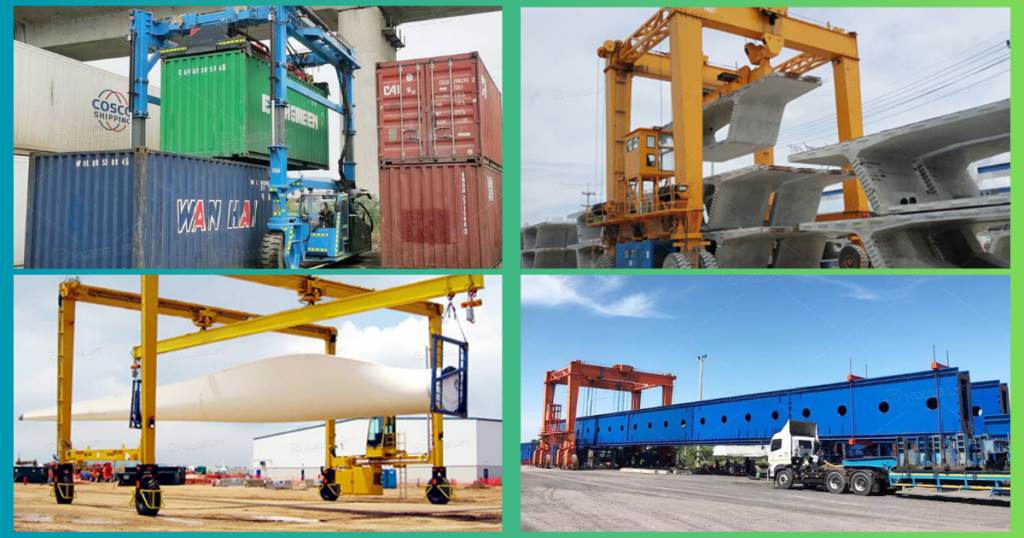
In industrial logistics parks, manufacturing bases, and logistics centers, straddle carriers are mainly used for the handling and stacking of containers. They do not require large port loading and unloading equipment, and their independent advantages can be fully utilized. They can move flexibly in narrow spaces, achieving efficient container circulation. The stacking function can also make full use of space and reduce storage area.
Wind Power Industry
Core components in the wind power industry are large in size and heavy in weight, making their handling and installation difficult. Straddle carriers can transport wind turbine blades, nacelles, towers, and other components from the production workshop to the storage area and then to the designated installation location. During the component assembly process, straddle carriers can precisely position and cooperate with assembly equipment to complete the operation, avoiding component damage and effectively improving handling and assembly efficiency.
Infrastructure Bridge Construction
At bridge construction sites, straddle carriers are mainly used for the handling and positioning of large structural components such as prefabricated bridge beams and piers. These components are heavy and difficult for traditional equipment to handle independently. The gantry structure and heavy load capacity of straddle carriers can easily handle them, precisely transporting the prefabricated components to the installation location and adjusting their angles, reducing the reliance on large cranes, improving construction efficiency, and lowering safety risks.
Handling of Energy Storage Pipes and Tanks
Energy storage facilities often have heavy pressure equipment such as energy storage pipes and tanks. Straddle carriers can directly complete the loading and unloading of such equipment without the need for additional auxiliary equipment. In the construction and maintenance of energy storage facilities, straddle carriers can efficiently transport energy storage pipes and tanks.
Handling and Positioning of Steel Components
In the construction of industrial plants and the manufacturing of heavy equipment, the handling and positioning of a large number of steel beams, columns, and prefabricated steel components cannot do without the support of straddle carriers. They can adapt to steel components of different sizes and weights, transporting them from the production workshop to the installation site and precisely positioning them, improving installation efficiency. They can also move flexibly in narrow construction sites and adapt to complex environments.
Other Application Scenarios
In heavy industrial factories, straddle carriers can be used as flexible handling equipment, covering areas that fixed lifting equipment cannot reach, handling large and heavy components in production and storage; during peak production periods, they can be used for temporary storage of goods; in emergency maintenance scenarios, they can quickly transport large equipment components.
Advantages of Using Straddle Carriers
Straddle carriers can be widely applied in multiple industries. They can reduce the reliance on auxiliary equipment, independently complete loading, unloading, handling, and stacking operations without the need for cranes or forklifts, simplifying processes and reducing equipment investment costs. The stacking function can make full use of vertical space, making them suitable for sites with limited space.
In the long term, straddle carriers can reduce overall costs. Electric models have low energy consumption, and the modular design keeps maintenance costs under control. In terms of safety, multiple safety devices and stable structural designs can effectively reduce the risk of operational accidents. Their versatility is prominent, allowing them to adapt to different industries and types of goods, meeting diverse operational needs.
Things to Consider When Buying a Straddle Carrier
Core Purchase Considerations
When purchasing a straddle carrier, it is essential to first clarify the volume of work, the type of goods, and the load-bearing requirements. Based on the daily handling volume and the size and weight of the goods, select the appropriate specifications and types of lifting devices. The driving distance, layout, and infrastructure of the operation site determine the choice of power type. For long-distance handling, models with strong endurance should be selected. If there are charging facilities available, electric models can be given priority.
The working environment of the operator also needs to be considered. For long-term, night, or extreme temperature operations, models with comfortable cabs and good visibility should be chosen. Safety performance is of paramount importance. It is necessary to confirm that the equipment is equipped with necessary safety devices. After-sales service and technical support are equally crucial. Comprehensive after-sales service can reduce the impact of faults, and timely technical support can solve operational problems.
Technical Specification Sheets to be Requested
When comparing equipment from different manufacturers, detailed technical specification sheets should be requested to clarify core parameters. Pay special attention to the load-bearing capacity (single and double lifting range), the extension range of the lifting device, the lifting and lowering speed, the empty and loaded driving speed, the steering type, the tire size and type, the power system parameters, the fuel or energy capacity, and the cab configuration to ensure they meet your operational needs.
Contract and Warranty Considerations
When signing a purchase contract, pay attention to the supply cycle of key components to avoid prolonged downtime due to component shortages in case of faults. Clearly define the terms of after-sales service, including the scope of maintenance, response time, and charging standards. You can choose a maintenance contract based on your needs. Pay attention to the training services for operators and technicians to reduce operational and maintenance errors. Confirm that the manufacturer provides factory acceptance and on-site testing to ensure that the equipment performance meets the contract requirements.
Factors Influencing Straddle Carrier Costs
The cost of straddle carriers is influenced by multiple factors. When purchasing, a comprehensive assessment of the cost-effectiveness should be made by considering the long-term operating costs. The stronger the load-bearing capacity and the larger the size, the higher the requirements for structure and materials, and the higher the initial cost. Different power types have significant cost differences. Diesel models have a lower initial cost, while electric and hybrid models have lower long-term operating costs.
The higher the degree of automation, the higher the equipment cost, which is suitable for efficient operation requirements. Customized demands will increase design and production costs. Well-known brand equipment has better quality but is more expensive, with a longer service life and lower maintenance costs. Fluctuations in market supply and demand, import tariffs, and transportation costs also affect the final cost of the equipment.
How to Drive and Operate a Straddle Carrier?
The driving and operation of straddle carriers require professional training. Operators must have the corresponding qualifications, be familiar with the equipment structure, functions, and operation norms to ensure safe and efficient operation.
Core Operation Points
Before starting the equipment, check the engine, battery, hydraulic system, tires, etc., and confirm that there are no abnormalities before starting. After starting, perform preheating or other preparations based on the power type. When operating the hydraulic system, operate the control lever smoothly to avoid sudden lifting and lowering. The lifting and lowering speed of the lifting device should be uniform. When driving, choose an appropriate speed and steering mode based on the site conditions. Slow down in narrow passages and precisely control the direction. During operation, always pay attention to the safety system prompts. If any abnormalities are found, stop the machine immediately for inspection.
Safety Operation Norms
Before daily operations, the equipment must be inspected, with a focus on key components such as the engine, hydraulic system, braking system, and lifting device. It is strictly prohibited to operate with faults. When lifting goods, ensure that the lifting device is precisely aligned with the goods and securely fixed before starting the lifting. When driving, maintain a safe speed and avoid sudden acceleration, braking, and sharp turns. When heavily loaded, drive even more smoothly. During operation, make full use of auxiliary visual equipment to observe blind spots and comply with on-site safety regulations. Keep a safe distance from other equipment and personnel.
Conclusion
Straddle carriers play an irreplaceable role in industrial production, engineering construction and other fields, and can efficiently solve the problem of transporting large and heavy goods. When choosing, it is necessary to comprehensively consider parameters and costs in combination with operational needs. In the future, pure electric and automated models will be the trend. Standard operation and regular maintenance can ensure their safe and efficient operation.
