
At core logistics sites such as multimodal transport yards, straddle carriers serve as essential equipment for container stacking and short-distance transport. Their gantry-style structure enables direct operation over containers, meeting demands for high-density stacking, small-to-medium-sized yards, and confined space maneuvers. These machines are critical heavy-duty machinery within modern logistics warehousing systems.
Exceptional professional skills are the core safeguard for mitigating risks and enhancing efficiency. Qualified straddle carrier operators must master comprehensive competencies including fundamental controls, equipment knowledge, risk anticipation, and emergency response, while maintaining professional integrity and a commitment to continuous learning. Novices must solidify foundational knowledge, while experienced operators need to refine advanced skills and adapt to specialized scenarios (low visibility, high-risk environments, etc.).
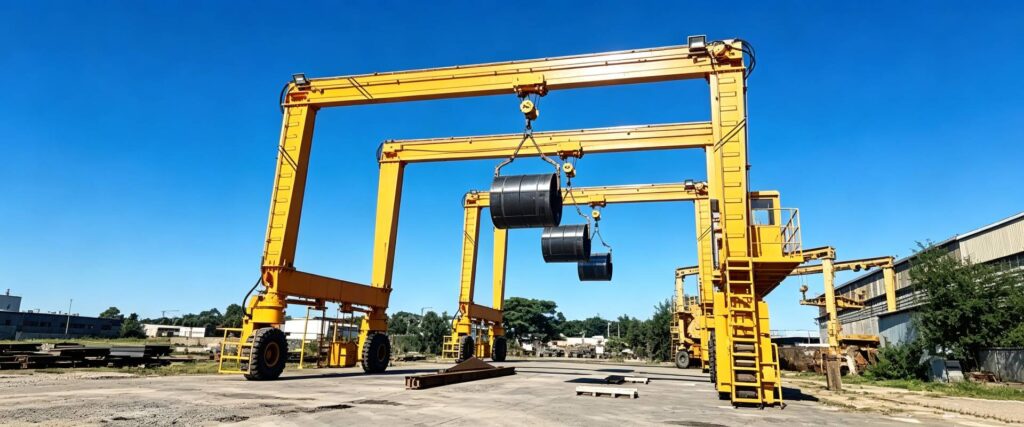
Essential Foundational Skills
Foundational skills form the core prerequisite for safe and standardized operation of straddle carriers, serving as the cornerstone of their functionality. New operators must master three fundamental competencies: equipment familiarity, basic controls, and pre-operation inspections.
Equipment Recognition and Structural Identification Skills
The primary prerequisite for operating a straddle carrier is a comprehensive understanding of its structure and functions, fundamentally preventing operational errors caused by insufficient knowledge. The core structure of the straddle carrier is designed around “stable load-bearing and flexible operation.” Recognizing the functions of key components and the three core systems—hydraulic, power, and electrical—is an essential competency for operators.
Core Structure
The core structure comprises four vertical struts, a top lifting device, a reinforced bottom chassis, drive shafts, and wheels. The vertical struts utilize reinforced trusses to ensure stable load-bearing capacity of 60 tons (equivalent to two standard containers). The top lifting device features adjustable width to accommodate containers of varying dimensions. The wheels are arranged in a rectangular pattern, enabling omnidirectional movement for maneuverability in confined spaces.
Core Systems
- The hydraulic lifting system ensures smooth hoist movement, directly impacting lifting safety.
- Power transmission systems come in diesel and electric variants; modern models predominantly use electric power, requiring mastery of startup procedures and basic fault diagnosis.
- The electrical control system integrates GPS navigation, obstacle-avoidance sensors, PLCs, and other components, serving as the core for precise operation and safety alerts.
Core Skill Implementation
Clearly understand equipment limit parameters (maximum stacking height: 3-4 layers; maximum load capacity: 60 tons). Develop the ability to quickly identify basic hazards through visual inspection, such as hook wear, hydraulic leaks, and loose bolts. New operators are advised to combine equipment manuals with on-site observation to systematically identify component functions, master the roles and operational precautions of core structures and systems.
Basic Control Skills
Core requirements for basic operating skills are “precision, stability, and standardization,” covering three dimensions: cab controls, lifting equipment operation, and driving maneuvers.
The cab, situated atop the equipment, features shatterproof glass providing unobstructed 360-degree visibility. The cab’s control lever manages lifting and moving the lifting gear, while the steering wheel controls directional movement. The display panel provides real-time feedback on equipment status. Operators must first adjust the seat and rearview mirrors, confirm no fault alerts are present, and then proceed with operation. Throughout the process, smooth control is essential—avoiding abrupt lifting, lowering, stopping, or turning to prevent container swaying or falling.
Lifting operations must adhere to the principles of “precise positioning, secure grasping, and smooth release”: Adjust the lifting device width according to container dimensions, slowly lower and clamp after precise alignment, and confirm stability before lifting. During release, lower the container steadily; only move the equipment after complete disengagement. Moving while still attached is strictly prohibited.
Core driving principles are “steady travel, agile steering, precise positioning.” Maximum speed with load is 30 mph (approx. 48 km/h). Reduce speed in confined spaces or crowded areas. Continuously monitor surroundings to avoid obstacles and blind spots, maintain safe distances, and anticipate steering angles with slow, controlled maneuvers.
Novice operators should transition from empty-load to full-load operations under instructor supervision. Begin with basic lifting and driving maneuvers before progressing to complex positioning and stacking tasks, ensuring each step is executed with precision and adherence to protocols.
Pre-Operation Inspection Skills
Pre-operation inspections serve as the first line of defense for safe operations and constitute a standardized procedure. Operators must strictly adhere to the “inspect first, operate later” principle, thoroughly identifying potential hazards before starting equipment. Operating equipment with existing faults is strictly prohibited.
Visual inspections require walking around the vehicle to check for damage or deformation of core structures, loose or missing bolts, tire pressure and wear, and the integrity of lifting claws. Simultaneously, clear surrounding obstacles.
System inspections focus on three core areas:
- Hydraulic system: Check fluid levels, quality, and pipeline leaks.
- Brake and steering system: Test responsiveness and flexibility; verify fluid levels and absence of leaks.
- Electrical system: Confirm proper functioning of lights, alarms, and display panels.
Emergency system checks must test:
- Effectiveness of emergency stop buttons.
- Integrity of safety guards.
- Availability of emergency equipment (e.g., fire extinguishers).
Post-inspection logs must be completed according to standard procedures, documenting equipment ID, time, inspection items, identified hazards, and corrective actions. Minor hazards should be addressed promptly, while major hazards require immediate shutdown and reporting for maintenance.
Core Principle
Always cultivate the sound operational habit of “inspection before operation.” Conduct thorough and comprehensive checks, eliminate complacency, and ensure the safety of personnel, equipment, and cargo from the source.
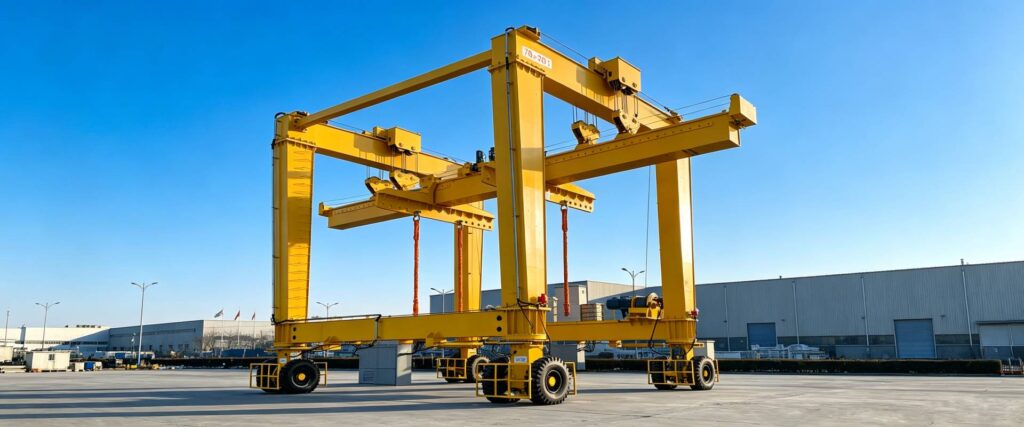
Advanced Core Skills
Foundational skills serve as entry qualifications, while advanced skills represent the core competencies for enhancing operational efficiency and mitigating complex risks. When confronting complex operational environments, demanding tasks, and unforeseen situations, operators must build upon a solid foundation to prioritize developing three advanced skills: environmental assessment and risk anticipation, emergency response, and efficiency optimization.
Environmental Assessment and Risk Prediction Skills
The operating environment for straddle carriers is complex and dynamic, characterized by dense container clusters, intermingled pedestrian and vehicle traffic, confined spaces, and significant weather impacts. Operators must possess exceptional environmental assessment and risk anticipation skills to ensure sustained operational safety.
Prior to operations, conduct site surveys to assess layout, container distribution, aisle widths, and ground load-bearing capacity. Identify obstacles and plan travel routes. Monitor weather conditions; suspend operations during severe weather such as high winds, heavy rain, or dense fog.
Core Risk Anticipation: In scenarios involving high-density stacking, maneuvering in confined spaces, fully loaded travel, and multi-person coordination, anticipate potential risks like tipping or collisions in advance and maintain safe distances.
Operators must master blind spot locations, eliminate their impact by adjusting seating positions and mirrors, and dismount to verify when necessary to prevent collision accidents.
Path to Improvement: Accumulate field experience during routine operations, summarize core risk points across different scenarios, proactively study industry accident cases, learn from lessons, and continuously enhance the accuracy and timeliness of risk anticipation.
Emergency Response Skills
In the event of sudden equipment failure or safety incidents, operators must maintain composure, respond swiftly, make precise judgments, and immediately activate standardized emergency protocols to minimize casualties and property damage.
Equipment Failure Response: For hydraulic leaks, unstable lifting gear, electrical faults, etc., immediately shut down the machine, disconnect power sources, and set up warning signs. Minor hazards may be addressed on-site; major hazards must be reported for maintenance. Unauthorized disassembly of components is strictly prohibited.
Safety Incident Response: In collision accidents, prioritize rescuing injured personnel, securing the scene, and reporting the incident. If personnel enter restricted work zones, immediately halt operations, issue warnings, and resume work only after personnel have evacuated.
Remote Control Emergency: If signal interference or delays occur, immediately switch to manual control from the cab, reduce operating speed, and ensure precision and safety.
Career Advancement Path: Regularly participate in company-organized emergency drills. Memorize and master response procedures for various emergencies and emergency contact numbers. Accumulate practical emergency experience to ensure calmness and appropriate handling when incidents occur.
Efficiency Optimization Skills
In bulk handling scenarios such as ports and yards, efficiency optimization is the core competency of seasoned reach stacker operators. The primary objective is to maximize operational efficiency through process optimization, enhanced coordination, and parameter control—all while strictly ensuring safety.
Process Optimization: Plan optimal travel and stacking routes; adopt a “centralized operation” model to reduce unnecessary trips; refine operational movements to enhance efficiency per task.
Collaborative Operations: Coordinate effectively with equipment like reach stackers and transport vehicles, as well as on-site personnel; communicate proactively to ensure smooth workflow.
Parameter Control: Strictly adhere to equipment limits (load capacity ≤ 60 tons, 3-4 stacking layers), flexibly adjust travel and lifting speeds based on operational scenarios to balance safety and efficiency.
Improvement Path: Regularly review personal workflows, analyze inefficient segments for targeted improvements, proactively learn efficient techniques from experienced operators, and integrate them with personal habits to continuously enhance batch operation efficiency.
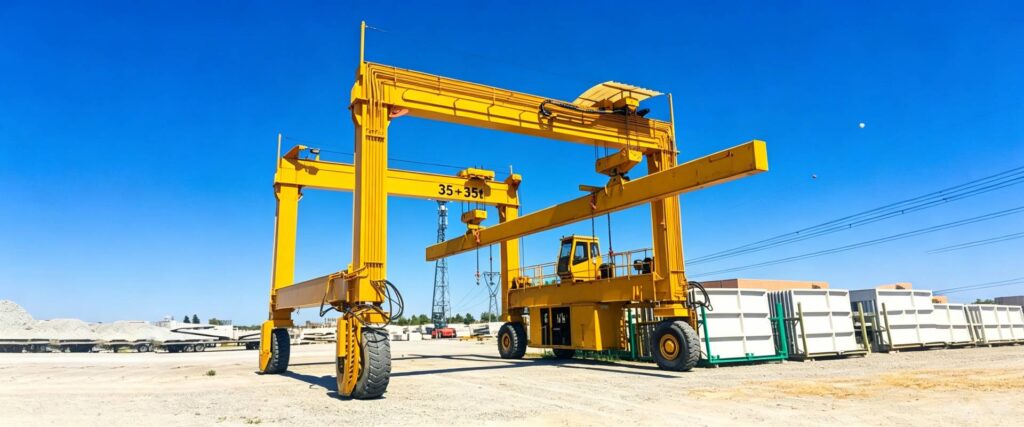
Special Scenario Adaptation Skills
With the rapid development of the logistics industry, the operational scenarios for straddle carriers are becoming increasingly diverse. Beyond conventional port and yard operations, they must also adapt to special conditions such as low visibility, high-risk environments, and extremely confined spaces. Operators require specialized skills tailored to these scenarios to ensure safe and efficient operations in all situations.
Remote Control Skills
Remote control skills are primarily suited for operations in special scenarios such as low visibility and high-risk environments (flammable, explosive, toxic, or hazardous areas). Operators can control equipment from a safe distance, with the core requirements being mastery of three key points: equipment operation, signal control, and mode switching.
Operators must be proficient in using remote control terminals, understand operational logic, and be mindful of signal latency issues. Before operations, signal strength should be checked to avoid interference, and operators should be able to flexibly switch between remote and cab control modes.
Skill Development Path: Complete specialized training covering remote control equipment principles, operational protocols, and signal issue resolution. Progress through simulated and field practice sessions to progressively enhance proficiency and precision in remote operation.
Differentiated operational skills
Straddle carriers and reach stackers are two commonly used types of container handling equipment in logistics scenarios. Their structures and operational focuses differ significantly, and confusing their operations can easily lead to safety incidents. Operators must clearly understand their core differences and master the specialized operating techniques for straddle carriers.
The straddle carrier’s gantry structure is optimized for high-density stacking and confined space operations, focusing on straddling, stacking, and short-distance transport. The reach stacker’s telescopic boom structure emphasizes long-distance loading/unloading. Their operational habits must not be interchanged.
Specialized Techniques:
Leverage omnidirectional mobility for confined spaces.
Precisely control stacking positions and spacing to ensure safe and accurate operations.
Automation Function Operation Skills
Intelligent and automated systems represent the core development trends in the straddle carrier industry. Modern straddle carriers are typically equipped with automated features such as GPS navigation, sensor-based obstacle avoidance, and semi-autonomous/fully autonomous operation. Operators must master the operational skills for these functions to meet the demands of intelligent operations.
Core Requirements: Understand the core components and operational principles of automation systems. Proficiently operate semi-autonomous/fully autonomous modes. Monitor equipment status in real time. Possess fundamental troubleshooting capabilities and emergency manual intervention skills to ensure smooth automation operations.
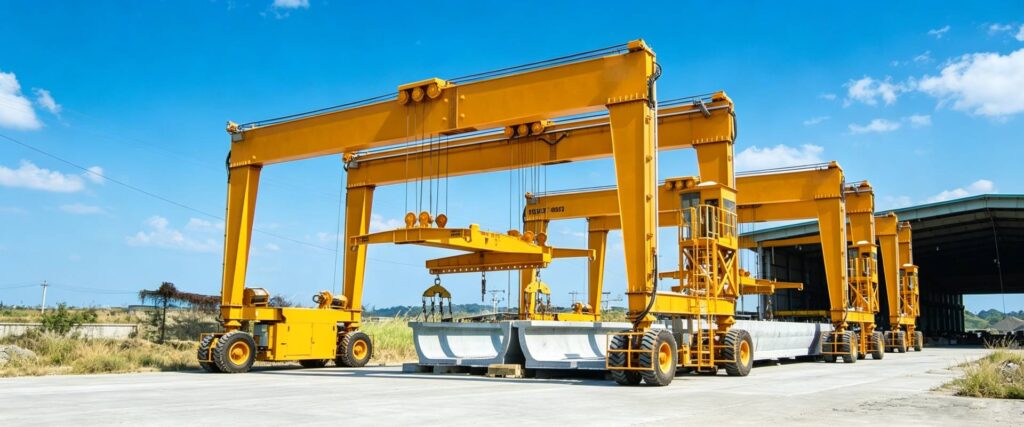
Essential Professional Competencies
Professional skills form the core competency for safe and efficient operation of straddle carriers, while strong professional ethics serve as the vital foundation for effective skill implementation. An outstanding straddle carrier operator must embody four core professional qualities throughout the entire operational process.
Safety Awareness: Uphold the core principle of “safety first,” strictly adhere to operating procedures, eliminate overloading, exceeding height limits, and unauthorized operations, and ensure personal safety protection; Patience and Attention to Detail: Maintain prolonged operational focus, execute each procedure with precision, and promptly identify subtle hazards and environmental changes; Accountability: Proactively identify equipment and environmental risks, courageously assume operational responsibility, safeguard equipment, and ensure cargo security; Continuous Learning: Stay abreast of industry technological advancements and operational context shifts, actively participate in training and assessments, and persistently enhance personal skills and professional conduct.
Skill Development Path
The skill development of straddle carrier operators is not achieved overnight but rather through a gradual, continuous accumulation process. To evolve from a novice to an industry expert, one must progress through three core stages: introductory, advanced, and mastery. Each stage has distinct learning priorities and competency objectives.
Entry Stage (1-3 months): The core objective is to solidify foundational knowledge, mastering three essential skills: equipment recognition, basic operation, and pre-operation checks. Through professional training and practical assessments, operators achieve independent work readiness while developing standardized operating procedures and safe work habits.
Intermediate Stage (3-12 months): The core objective is to enhance practical skills, focusing on developing four advanced competencies: environmental assessment, risk anticipation, emergency response, and efficiency optimization. Operators should confidently handle complex operational scenarios and continuously refine work methods by leveraging the experience of senior operators.
Expert Stage (1+ years): The core objective is to expand capability boundaries by mastering specialized skills for unique scenarios, such as remote operation and automated function control. Develop team coordination management and newcomer training capabilities to evolve into a versatile core talent within the industry.
Conclusion
Operating a straddle carrier is a specialized profession demanding exceptional skill, professionalism, and experience. Foundational skills form the entry requirement, advanced skills drive efficiency, specialized scenario adaptation ensures diverse operational needs are met, and professional integrity is the cornerstone for implementing all capabilities. These four elements are interdependent and indispensable.
Novice operators must build a solid foundation step by step, avoiding impatience for quick results, and cultivate standardized, safe work habits. Experienced operators must pursue continuous learning, proactively adapting to the industry’s intelligent and diversified trends. They should evolve from merely “operating” to becoming versatile professionals who “understand technology, excel in management, and drive innovation.” Regardless of their stage, all operators must uphold the core principles of “safety as the foundation, precision as the priority, and standardization as the framework” to achieve mutual success in personal career value and industry advancement.
May every reach truck operator stay true to their original aspirations and pursue excellence. Through continuous skill enhancement and professional growth, become the backbone of the industry, contributing to the safe, efficient, and high-quality development of modern logistics. If you have questions about skill improvement or wish to share experiences during reach truck operation, feel free to leave comments below!
