
In the dock, prefabrication yard and other cargo handling scenarios, straddle carriers are increasingly widely used, many corporate buyers and operators will ask: Are Straddle Carriers Hard to Drive? In fact, this concern is normal, but as a perennial contact with the straddle carrier engineers, I can clearly say that it is not as difficult as imagined, the core lies in the understanding of the equipment and the environment adaptability! The core is knowledge of the equipment and environmental adaptation, and novices can get started with short-term training.
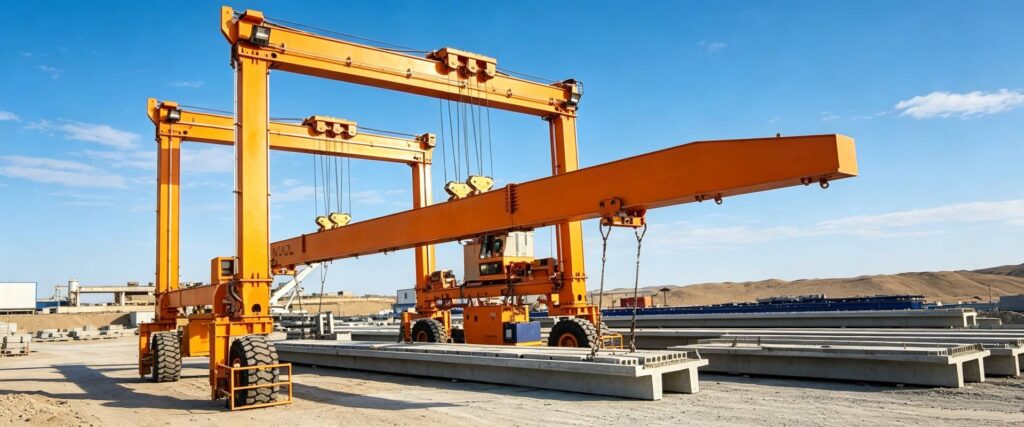
Main Parts of a Straddle Carrier
Overall Composition and Core Role of Core Components
To determine whether the straddle carrier is difficult to drive, first look at its core components, the design and quality of the components directly determines the driving threshold, high-quality components can reduce the operating difficulty from the source, to reduce the learning cost of novices and operating concerns.
Straddle carrier infrastructure consists of bridge, crane operating mechanism, trolley, electrical equipment, which box-type welded frame is extremely stable, there will be no obvious shaking in the driving process, which can effectively reduce the difficulty of manipulation.
Rubber tires wheels move flexibly, whether it is the hardened road surface of the dock, or the temporary site of the prefabrication yard can be well adapted to the operator without spending too much effort to adapt to the road surface differences.
Meanwhile, it supports dual-mode operation by cab or wireless remote control, which can be flexibly switched according to the operator’s habit and operation scenario, further enhancing the convenience of operation.
Critical Operational Components
The lifting mechanism is driven by a hydraulic motor to drive the winch, and it is also equipped with an additional brake cylinder, which ensures that the cargo lifting process is smooth and stable, and there will be no sudden shaking or slipping, so that even novices can easily control it.
The steel structure, as the “skeleton” of the transporter, undergoes strict welding inspection and third-party testing, which is solid and durable, and can reduce driving troubles caused by equipment failures, so that the operator can feel more at ease.
The hydraulic components adopt a combination of hard and soft pipe layout, the pipelines are arranged in an orderly and reasonable manner, with high-quality hydraulic cylinders, the running response is smooth and free of lag, to avoid the hydraulic failure affecting the operating feel.
Optimization of Driving Difficulty by Auxiliary Components
The customized tires have strong grip, which can effectively avoid the risk of skidding in the operation; the integrated generator has stable power supply, and the imported hydraulic control valve has precise control, which further reduces the threshold of operation for novices.
The customized pin weight sensor can display the weight of the lifted cargo in real time, which can remind the operator to avoid the risk of overloading, avoiding the control failure caused by overloading, and indirectly reducing the driving difficulty.
HuadeLift always takes “easy to operate and highly stable” as the principle in the selection and matching of core components of straddle carriers, and matches the components with the requirements of actual operation scenarios, so as to make the equipment more suitable for the actual operation needs of operators.
How Straddle Carrier Works?
Core Principles and Overall Characteristics of the Workflow
Many people feel that the straddle carrier is difficult to drive, mostly because they do not understand its workflow, and subconsciously think that the operation of large equipment is necessarily complex. Cross-traffic trucks are large in size, easy to make people have the illusion of “high operating difficulty”.
In fact, its process is clear and simple, each step has a clear logic, no unnecessary complex links, which is the core reason for its easy operation. Beginners do not need to be afraid to follow the process of gradual familiarization, you will soon be able to find the operating feel.
Step-by-step Analysis of Core Operational Aspects
When picking up cargo, simply position the lifting mechanism precisely over the cargo, such as containers, bridge components, etc. This process is just like driving a car in reverse, and can be easily mastered after practicing a few more times.
The hydraulic system can be activated during the lifting process. High-quality hydraulic components allow the lifting mechanism to securely hold the cargo without shaking or slipping. The operator only needs to control the lift button smoothly and control the speed.
When transporting, the rubber tire type straddle carrier is highly maneuverable and suitable for a variety of terrains; the rail type moves along the designated track without worrying about deviating from the route, which makes the operation more hassle-free.
Both types are not difficult to maneuver and can be easily handled by novices. Positioning can be accomplished quickly with the help of a flexible steering system and adjusting the direction to control the alignment angle.
The descending part is also simple, gently controlling the speed, avoiding the impact of goods on the ground or support structure, protecting the safety of goods and equipment, and the whole operation is gentle and controllable.
Process Adaptability and Newbie Friendliness
The whole set of process is completely standardized, each step has a clear specification, the manufacturer will provide detailed operating instructions, the operator does not need to feel their own way, novice can also be quickly familiar with.
After short-term training and familiarization with the operating points, operators can master the whole set of processes. This further proves that transporters are not as difficult to drive as imagined.
As long as they are familiar with the process and master the basic skills, they can successfully complete the operation without worrying too much about the difficulty of operation.
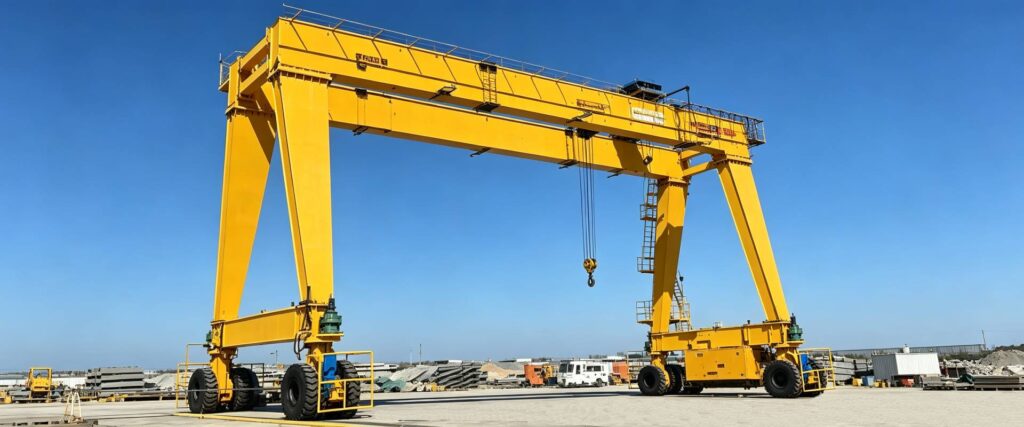
How to Operate a Straddle Carrier?
Pre-operation Preparation and Inspection Process
There are clear standards for the operation of transporters, and they can be easily handled according to the specifications. Before operation, you need to complete a simple check: visually check the equipment for damage, leakage, clean up wheel obstacles, and confirm that the lights, alarms and other safety devices are normal; the mechanical inspection focuses on the wear and tear of the spreader, wheels and other key components, and the manufacturer will provide clear guidelines; and the control inspection tests the cab controls and familiarizes you with the layout to avoid operational errors.
Start-up Process and On-site Cooperation Points
The start-up process is standardized according to the manufacturer’s guidelines, in order to turn on the main power supply, start the engine, initialize the control system, the steps are clear, and novices can follow the guidelines to complete step by step. After the startup, we need to check the safety system to make sure the emergency stop, brake and other functions are normal, and then establish a clear communication with the ground personnel on the site, so that a clear division of labor can guarantee the smooth operation.
Core Operations and Post-operation Closeout
The core operating action is simple and easy to grasp: flexible steering, novice can first practice the feel in the open area; lifting and lowering operation smooth control, strict attention to the load limit; straddle riding skills only need to align the legs, adjusting the width, the placement of the goods is slowly approaching the precise positioning, slow descent, the operation of compliance with the load limit, familiar with the emergency operation, to ensure the safety of the ground personnel can be.
After the completion of the operation, you need to firmly fix the goods in the designated position, and then park the equipment in a flat area, tighten the parking brake, according to the manufacturer’s recommended order to shut down the machine, the entire operation process is simple and clear, without the need for complex operating skills.
Control System
Cab Control Mode Details
The control system of transporter is the key to reduce the difficulty of driving and the core reason why novices can get started quickly. It is mainly divided into two modes: cab control and wireless remote control, both of which follow the humanized design, are easy to operate, and can be quickly adapted by both novice and veteran drivers, and can be flexibly adapted to different operating habits and operating scenarios. The cab adopts protective structure, firmly fixed on the frame, which can provide a safe and comfortable operating environment for the operator and avoid external interference and accidental collision.
The control buttons are scientifically laid out and clearly organized, and each button corresponds to a clear function, such as raising and lowering, which makes the operation intuitive and easy to understand without spending a lot of time to memorize. The cab control responds quickly and can react in time in case of emergencies, which is especially suitable for emergency intervention and scenes with dense cargo and complex working conditions. Operators can quickly get started without the need for complex specialized knowledge after simple pre-service training by the manufacturer to familiarize them with the button functions and basic skills.
Wireless Remote Control Mode Details
Of course, the cab control also has limitations, the most obvious is the limited field of vision, affected by the installation position there is a blind spot, can not see all-round operation area. In this case, it is necessary to cooperate with the real-time guidance of the ground personnel in order to avoid operational errors, especially in the cargo-intensive dock scene, this cooperation is even more important.
In addition, the operator needs to work on site, encountering low visibility, falling objects and other dangerous environments, there will be a certain risk of personal safety. Wireless remote control can make up for this shortcoming, allowing the operator to control the equipment remotely from a safe distance without entering the danger zone, suitable for low visibility and high risk factor scenarios.
Comparison of the Two Control Modes and Adaptation Recommendations
It can not only protect the safety of the operator, but also does not affect the progress of the operation, and the flexibility is very strong, according to the needs of the scene to quickly switch the control mode, to enhance the convenience of operation. The effect of wireless remote control depends on the quality of the signal, and may be slightly interfered in the environment of dense equipment and complex signals, but the interference is weak, and the operator can control it smoothly with a little attention.
The control feedback is slightly delayed compared to the cab control, but the magnitude is negligible and does not affect the workflow and control accuracy. The two control modes have their own advantages and complement each other, there is no absolute advantage or disadvantage, the operator can combine with the operating scenario and their own habits to choose, which can not only reduce the difficulty of driving, but also improve operational efficiency and safety.
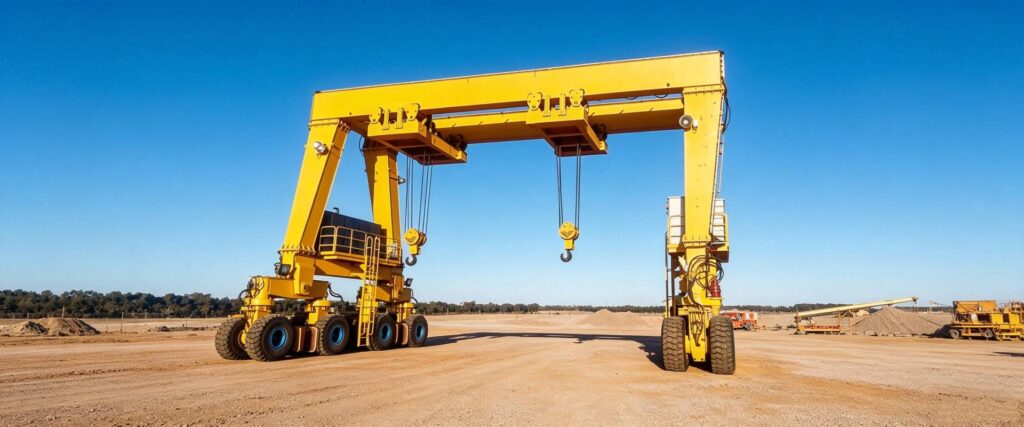
Safety Design in Straddle Carrier Electrical Control Systems
Intelligent Monitoring and Fault Warning Design
The electrical control system of the transporter adopts a multi-level safety design, which is the core of safeguarding operational safety, and also effectively avoids misoperation and reduces driving difficulty. Intelligent monitoring and diagnostic function will continuously monitor the electrical and control parameters, real-time capture the subtle changes in the operating status of the equipment, so as to achieve early detection and early warning.
Once the equipment has circuit failure, parameter abnormality and other problems, the system will immediately issue sound and light warning signals, while providing detailed diagnostic feedback to assist maintenance personnel to quickly troubleshoot. This design can avoid driving troubles caused by faults in advance, reduce the pressure of operators to deal with unexpected equipment problems, and make the driving process smoother and smoother.
Redundant Fault Tolerance and Emergency Control Design
Redundant fault-tolerant architecture is an important component of the safety design, specially equipped with redundant circuits for safety-critical functions, forming a double guarantee to avoid the impact of a single circuit failure on the operation. The VCU built-in dedicated fault-tolerant control logic, optimized through rigorous debugging, can accurately identify the abnormal state of the equipment, and start the standby control mode in a timely manner.
When the equipment is abnormal, the system can realize controlled degradation and keep the core operation function normal to ensure that the operator can control the equipment smoothly and reduce the difficulty of emergency driving. The precise control of operation protection has anti-collision logic, which can accurately control the operation amplitude and speed of the actuator, effectively reducing misoperation, so that even novices can drive safely.
Optimization of Driving Difficulty by Safety Design
This perfect safety protection system covers the whole link of equipment operation and operation control, which can guarantee the operation safety of personnel, goods and equipment in all aspects. At the same time, it can effectively reduce the operator’s driving pressure, reduce the fear of misoperation, equipment failure caused by safety accidents.
For novices, this safety design is equivalent to the “invisible protective net”, which can help them quickly adapt to the operation of the equipment and enhance operational confidence. Whether in complex working conditions or routine operations, this safety design can provide reliable protection for operators, further lowering the threshold for transporter driving.
Driving Environmental Factors
Impact of Different Operating Sites on Driving
Core point: The environment affects driving difficulty more than the equipment itself. Dock environment is crowded, cargo is dense, working space is limited, the requirement for driving accuracy is a little higher, but high quality straddle carriers have strong maneuverability and precise control, which can effectively reduce the difficulty.
The prefabrication yard is open, the goods are scattered, and there is no space constraint for operation, so the driving difficulty is even lower, and novices can quickly adapt to it after simple familiarization, and do not need to worry too much about operating errors.
The Impact of the Natural Environment on Driving and How to Deal With It
Strong outdoor wind will affect the stability of the equipment, especially after lifting the cargo, the center of gravity rises, easy to produce shaking, increasing the pressure of control, but the stable steel structure and high quality tires of the high quality straddle carriers can effectively alleviate the impact of the wind.
Insufficient light at night makes it easy to have a blind spot in the field of vision, which is inconvenient for cargo positioning and avoidance. The light warning and precise positioning device of high-quality equipment can effectively make up for the lack of vision and reduce the difficulty of driving at night.
Core Solutions for Environmental Adaptation
As long as you choose a high-quality straddle carrier, you can effectively offset the operational disturbances caused by different environments, and guarantee that you can safely and conveniently complete your work in various scenarios such as docks and prefabrication yards.
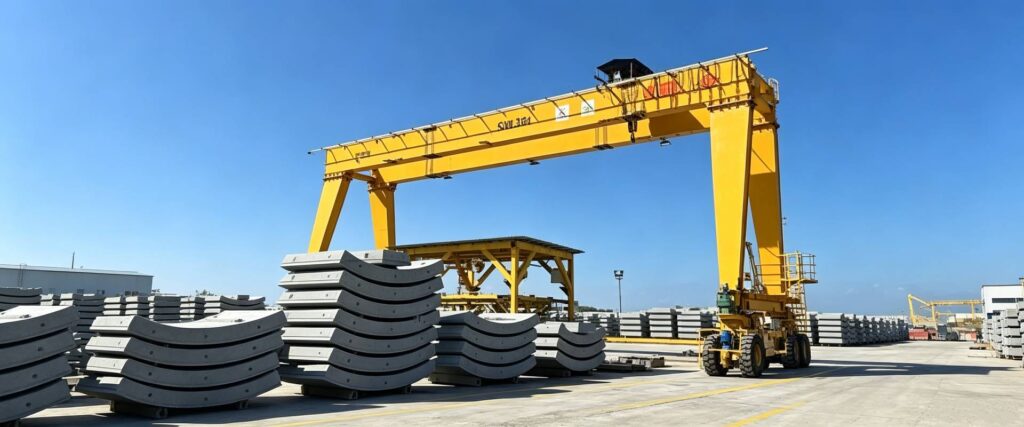
Choosing an Easy-to-Operate Straddle Carrier
Selection of Core Evaluation Indicators
When enterprises are purchasing, they only need to focus on four core points, and then they can choose an easy-to-operate straddle carrier. First, it is easy to recruit drivers: high-quality cross-traffic vehicle operation standardization, humanization, without special skills, low recruitment threshold; second, low training costs: simple process, manufacturers provide professional training, novice short-term can be on duty. Choosing the right manufacturer can greatly reduce operator difficulty.
Key Considerations for Manufacturer Selection
By choosing the right manufacturer, you can get customized adaptation, perfect after-sales and technical support, which further reduces driving difficulty and improves operational efficiency.
The Value of Selection to Business Operations
Back to the original question: Are Straddle Carriers Hard to Drive? The answer is clear – they are not hard to drive. It has a clear process, humanized control, perfect safety design, and the difficulty of driving is mainly affected by the environment, which can be effectively offset by choosing the right quality equipment and manufacturer. Choosing easy-to-operate straddle carriers can solve the core pain points of enterprises and help improve operational efficiency and control costs.
Conclusion
In summary, the driving difficulty of straddle carriers need not be overly worried, the core lies in familiarizing with the characteristics of the equipment, mastering the basic operation, and then combining high-quality equipment with the support of the right manufacturer, it can be easily managed. It can efficiently empower docks, prefabrication yards and other scenarios, taking into account safety and convenience, and is a high-quality choice for enterprise cargo handling.
