
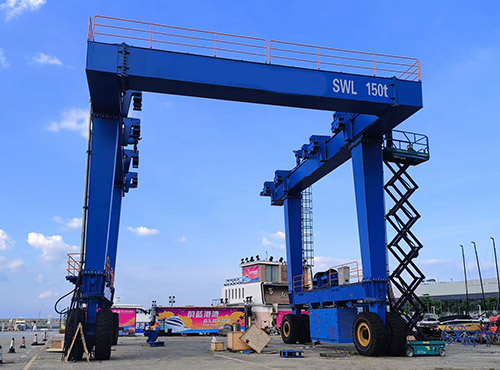
Marine travel lifts operate continuously at docks, shipyards, and other marine environments, frequently performing tasks such as lifting, transferring, and launching vessels. Compared to ordinary industrial equipment, they must not only bear the significant weight of vessels but also endure prolonged exposure to saltwater, humid air, temperature fluctuations, and ultraviolet radiation. These environmental factors gradually affect the equipment’s mechanical structure, hydraulic systems, electrical components, and other critical parts.
For ship repair yards, yacht marinas, and vessel operating companies, equipment failure not only means increased repair costs but can also disrupt vessel turnaround schedules and even pose serious safety risks.
Why Marine Travel Lift Maintenance Matters
Marine travel lifts typically operate in environments close to seawater. Salt in the air easily adheres to metal surfaces, humid conditions accelerate the corrosion of steel and electrical connections, and prolonged exposure to sunlight can cause some protective materials to age.
At the same time, the equipment must withstand significant dynamic loads during lifting operations. Frequent lifting, turning, and traveling operations subject steel structural joints, hydraulic lines, steel cables, and moving parts to continuous mechanical stress. Without proper inspection and maintenance, even minor wear and tear can gradually develop into malfunctions that affect equipment operation.
Risks of Marine Travel Lift Equipment Failures
In the event of a failure in a marine travel lift, the impact extends beyond the equipment itself to include the vessel being lifted and on-site personnel.
For example, abnormal pressure in the hydraulic system may cause unstable lifting movements, affecting synchronization among multiple lifting points. If lifting slings exhibit severe wear or localized cuts, they may snap while supporting the vessel’s weight, causing the hull to suddenly list and resulting in structural damage to the vessel.
The consequences can be even more severe in the event of a major failure of steel cables, support structures, or connecting components. The vessel may lose stable support during the lifting process, potentially leading to a fall or even sinking.
Benefits of Regular Maintenance
A standardized maintenance plan helps companies identify issues before they escalate, rather than waiting until the equipment is inoperable to schedule repairs.
Regular inspections of load-bearing structures, lifting slings, and hydraulic systems reduce the likelihood of critical components failing during operations. At the same time, promptly replacing worn parts helps prevent minor issues from escalating into major repair projects requiring extended downtime.
Marine Travel Lift Sling Inspection
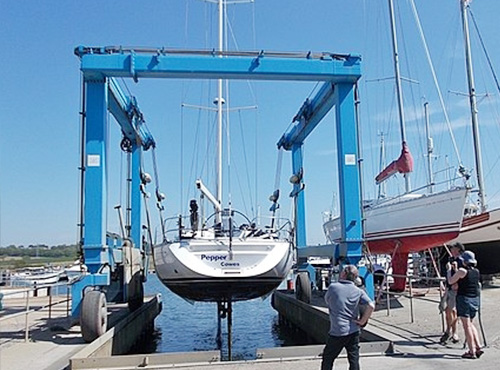
Slings are the most direct load-bearing connection between the marine travel lift and the vessel’s hull. In most systems, multiple slings collectively support the hull and distribute the vessel’s weight according to predetermined positions.
The condition of the slings directly affects the balance of forces during the lifting process. Even if only one sling suffers severe damage, it can alter the overall load distribution, causing the vessel to list and resulting in damage to both the hull and the equipment structure. Therefore, sling inspection should be a critical step before every lifting operation.
Overall Condition of Slings
During prolonged use, slings may be subjected to factors such as compression against the hull’s edges, abrasion from external objects, repeated bending, and overloading. These conditions can gradually weaken the slings’ load-bearing capacity.
Before each use, operators should inspect the surface of the sling for obvious wear, deformation, tears, or other abnormalities. Slings that show signs of aging should not be used simply because they appear to be in acceptable condition.
If obvious damage is found, use of the sling should be stopped immediately, and it should be handled in accordance with the manufacturer’s inspection standards and replacement requirements. Slings whose safety status cannot be confirmed should not be used in lifting operations.
Cuts and Fraying on Lifting Slings
Cuts and fraying on the surface of a lifting sling are relatively easy to spot, but if not detected in a timely manner, they can lead to serious consequences.
When a sling is subjected to loads exceeding its rated capacity or experiences continuous friction against sharp edges of the ship’s hull, the surface fibers may become frayed, loose, or fuzzy. As the damage continues to spread, the sling’s effective load-bearing capacity will gradually decrease.
Therefore, during inspections, one should not only check for breaks in the sling but also look for abnormal wear, cuts, and loose fibers in specific areas.
Lifting Sling Pad Installation
Different parts of the hull vary in shape and structure, and some edges may be sharp. If the slings come into direct contact with these areas, they are susceptible to crushing and cutting during the lifting process.
Sling pads reduce direct friction between the hull and the slings while helping to protect the hull’s surface. Maintenance personnel must verify that the keel pads and side pads are installed correctly and check for damage, misalignment, or visible wear.
Proper use of sling pads not only extends the service life of the slings but also reduces the risk of scratches and indentations on the hull’s surface during the lifting process.
Materials Selection
Common sling materials for marine travel lifts include nylon and polyester fiber, which differ in terms of load-bearing performance under stress and load-bearing capacity after water absorption.
The actual service life of slings is also influenced by factors such as load, frequency of use, storage conditions, and maintenance. Regardless of the material used, slings should be inspected and replaced regularly in accordance with the manufacturer’s specifications. They should not be used indefinitely simply because there is no visible damage to the surface at the moment.

Prioritize Hydraulic System Maintenance
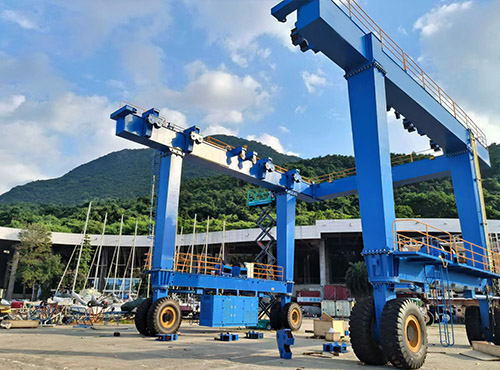
The hydraulic system is a critical component of the marine travel lift for lifting and lowering vessels. It transmits power through components such as hydraulic pumps, cylinders, valve assemblies, and piping, enabling the equipment to perform lifting and control operations according to preset requirements.
Abnormal pressure, hydraulic fluid contamination, or line leaks in the hydraulic system can compromise the equipment’s operational stability. Therefore, routine maintenance should not focus solely on ensuring adequate hydraulic fluid levels. It must also include inspections of the entire system’s operational status.
Monitoring Hydraulic Fluid Level
Maintenance personnel should regularly check the fluid level in the reservoir to ensure it remains within the range specified by the equipment manufacturer.
If a persistent drop in fluid level is detected, do not simply top off the hydraulic fluid. Instead, conduct a thorough inspection of the reservoir, hydraulic lines, fittings, and cylinders to determine if there are any leaks.
Check for Leaks
Hydraulic lines are subjected to constant pressure and are affected by equipment vibration, temperature fluctuations, and mechanical movement. As usage time increases, hoses may age, crack, or develop loose fittings.
During maintenance, special attention should be paid to inspecting hydraulic hoses, metal lines, fittings, and connection points for oil stains, leaks, or abnormal deformation.
If a leak is detected, the equipment should be shut down immediately for inspection, and repairs should be performed by qualified personnel. Any work on the hydraulic lines that does not meet safety requirements must not be carried out while the vessel is still carrying a load.
Replace Filters Regularly
Hydraulic filter elements are primarily used to filter particulates and contaminants from the hydraulic fluid, reducing the likelihood of impurities entering the hydraulic pump, valve assemblies, and other precision components.
If filter elements are not replaced for an extended period, contaminants will gradually accumulate, affecting fluid flow and increasing wear on internal hydraulic system components. Maintenance personnel should schedule filter element replacements based on equipment operating hours, the working environment, and the manufacturer’s recommendations.
Test Hydraulic Pressure
Hydraulic pressure directly affects the lifting capacity and operational stability of the marine travel lift.
During equipment maintenance, appropriate testing tools should be used to measure system pressure and compare the results with the technical specifications provided by the manufacturer.
If the test results show significant fluctuations, or if pressure performance under different operating conditions deviates from normal levels, this may indicate a malfunction in the hydraulic pump, control valves, or other components.
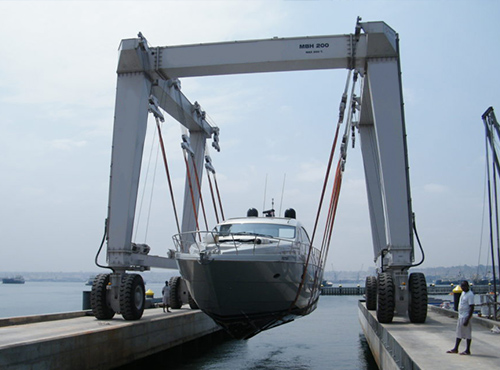
Electrical System Maintenance for Marine Travel Lifts
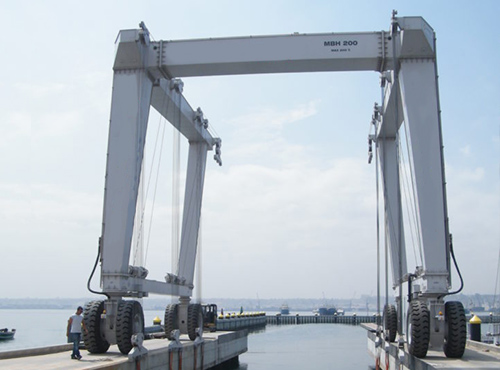
The electrical system controls the movement, steering, lifting, and lowering of marine travel lifts, and also handles safety control functions such as emergency stops and alarms.
Because the equipment is constantly exposed to humid and salt-fog environments, wiring, terminals, and electrical components are susceptible to corrosion. Electrical system maintenance should focus on connection reliability, control functions, and safety protection devices.
Wiring and Connections
During prolonged operation, wiring insulation may wear down due to equipment vibration, repeated bending, or external friction.
Additionally, salt fog and humid air can cause corrosion of terminal blocks, compromising the stability of electrical connections.
Maintenance personnel should regularly inspect the appearance of wiring and connection points, paying particular attention to issues such as damaged insulation, loose joints, and rust on metal surfaces.
Control Functions
A marine travel lift typically performs actions such as moving forward, backward, turning, raising, and lowering. Any malfunction in these control functions may affect on-site operations.
Emergency stop buttons and alarm devices also require regular testing. Emergency stop devices must be capable of halting relevant operations in accordance with design requirements, while alarm systems must be able to issue timely alerts in response to corresponding abnormal conditions.
If a discrepancy is found between control commands and the equipment’s actual movements, relevant operations should be halted, and the control circuits, sensors, or control components should be inspected.
Fuses and Relays
Fuses and relays are common components in electrical control systems. After prolonged operation, they may experience aging, poor contact, or degraded performance.
When replacing these components, use parts that meet the original design specifications. Do not arbitrarily alter the rated parameters, as this may compromise electrical protection functions.
Battery Condition
For marine travel lifts powered by batteries or equipped with auxiliary power sources, the battery condition must be inspected regularly.
Inspections should include battery charge level, charging status, terminal connections, and the condition of the battery casing. If corrosion is found on the terminals, they should be cleaned in accordance with safety operating procedures to prevent disruption to the power supply.
For equipment that remains unused for extended periods, charging and maintenance should be scheduled according to the battery type and manufacturer’s requirements to prevent prolonged discharge from affecting subsequent startup.
Protecting Marine Travel Lift Components From Corrosion
Corrosion is one of the primary causes of equipment deterioration in marine environments. The steel structures, steel cables, fasteners, and joints of a marine travel lift are continuously exposed to salt spray. Without proper protection, they are prone to rust, surface damage, and even a reduction in structural strength.
Steel Cables
Steel cables play a critical role in transmitting force and bearing loads during the operation of a marine travel lift. Even when the equipment is used properly, steel cables may experience strand separation, corrosion, and changes in tension over time.
If there are inconsistencies in the tightness of different steel cables, this may indicate a problem with tension distribution. Uneven cable tension can affect the balance of forces during equipment operation. Therefore, visual inspection alone is insufficient to determine whether the cables are in normal condition.
Steel cables exhibiting severe corrosion, broken wires, or other conditions that compromise their load-bearing capacity should be replaced promptly in accordance with relevant technical requirements.
Support Structures
The stable operation of a marine travel lift depends not only on the equipment’s own structure but also on its installation location and the condition of the supporting foundation.
Depending on the on-site installation method, relevant support structures may include piles, seawalls, or pier foundations. Subjected to long-term loads, wave action, and environmental erosion, these structures may develop cracks, corrosion, or loose connections.
If any abnormalities are detected in the foundation structure, professional personnel should be arranged to conduct further inspections to prevent changes in support conditions from affecting the safe operation of the equipment.
Pulleys and Rope Sheaves
Pulleys and rope sheaves are used to guide the movement of steel cables, enabling them to complete reeling, unwinding, and lifting operations along the designed path.
If moving parts such as pulley pins and joints lack lubrication, or if dust and impurities accumulate over time, friction between components will increase, accelerating wear.
During maintenance, use grease suitable for marine environments to lubricate the pulley pins and other relevant lubrication points.
For equipment used frequently, increase the frequency of inspections and lubrication as appropriate. Generally, perform relevant maintenance at least twice a year, adjusting the schedule based on actual usage conditions.
Bolts and Fasteners
During operation, the marine travel lift is subjected to continuous loads and mechanical vibrations. After prolonged use, some bolts and fasteners may become loose.
For equipment with high load-bearing capacity, even if only a single connection point becomes loose, it can gradually compromise structural stability.
It is recommended to conduct a thorough inspection of locations such as crossbeams, support arms, cable clamps, and winch bases at least once every two months.
During inspections, verify whether bolts are loose, washers are missing, or brackets show cracks or rust. Components requiring tightening should be tightened to the torque specified by the manufacturer.

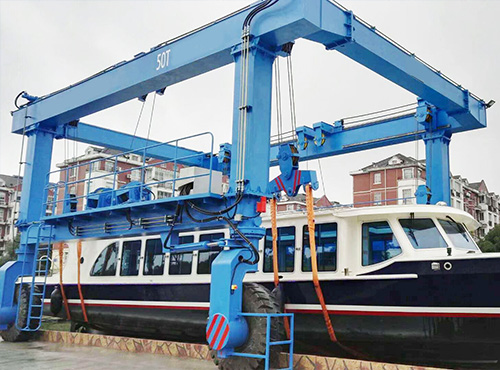
Long-Term Maintenance Strategy for Marine Travel Lifts
Inspecting individual components alone cannot fully guarantee that a marine travel lift will remain in good operating condition over the long term. What truly matters is scheduling all maintenance tasks on a fixed cycle to establish a continuous, traceable management system.
Since equipment varies in structural configuration, frequency of use, and operating environment, maintenance intervals should be based on the manufacturer’s maintenance manual and adjusted according to actual operating conditions.
Daily Routine Inspections
Daily inspections primarily focus on the equipment’s exterior and easily detectable abnormalities. They are best scheduled before the equipment is started or after the day’s operations are completed.
Inspection items may include:
- Check the steel structure’s surface for peeling paint, rust spots, or obvious damage.
- Check the lifting slings for cuts, fraying, and abnormal wear.
- Check hydraulic lines and fittings for signs of oil leaks.
- Test control functions, emergency stop buttons, and safety alarm devices.
- Remove debris, salt deposits, and dirt from the equipment surface to keep it clean and dry.
Daily inspections do not require complex disassembly; the focus is on promptly identifying abnormalities that may affect that day’s operations.
Weekly Maintenance
Weekly maintenance should focus on mechanical moving parts, structural connections, and control precision.
It is recommended to check the following:
- Inspect and maintain moving parts that require lubrication, such as travel bearings and steering hinges.
- Check the frame connection bolts to ensure they are not loose.
- Check the synchronization of the hydraulic lifting system and observe whether the movements at each lifting point are coordinated.
- Organize cables and hydraulic lines to prevent prolonged kinking, tangling, or friction against other components.
- Check the operational status of pressure sensors and position sensors according to equipment specifications.
The focus of weekly maintenance is not simply to repeat the daily checks, but to further monitor whether the equipment’s performance has changed after continuous operation.
Quarterly Comprehensive Overhaul
Quarterly maintenance should involve more comprehensive inspections, with a focus on components prone to performance degradation.
Key tasks include:
- Inspect and replace hydraulic fluid and filters according to the manufacturer’s specifications.
- Inspect the surface condition of the main load-bearing structures and apply necessary rust-proofing treatments to areas showing corrosion.
- Conduct a comprehensive inspection of tire wear, the condition of lifting slings, and other vulnerable components.
- Replace components that are nearing the end of their service life or show obvious damage in a timely manner.
- Conduct load tests in accordance with equipment maintenance requirements to verify the operation of the hydraulic system and the lifting synchronization system.
Quarterly maintenance helps assess the equipment’s condition from a holistic perspective, rather than focusing solely on individual components.
For equipment that is used frequently or operates long-term in a salt fog environment, additional specialized inspections may be added based on actual conditions to ensure that maintenance intervals align with the marine travel lift’s actual wear rate.
Long-Term Corrosion Prevention Measures
Corrosion prevention should not be limited to addressing rust after it appears but should be implemented throughout the entire service life of the marine travel lift.
If the protective coating on steel structures shows signs of peeling, cracking, or localized damage, surface treatment and touch-up painting should be performed promptly. For areas continuously exposed to salt spray, schedule periodic recoating or secondary anti-corrosion treatment based on the existing coating system and on-site conditions.
Certain components in the hydraulic and electrical systems also require appropriate waterproofing and anti-corrosion protection. Install suitable protective covers on relevant parts according to the equipment design to minimize the impact of rainwater and seawater splashes.
Whenever the marine travel lift is exposed to rain or seawater splashes, residual salt and contaminants on the surface should be promptly cleaned off, and the equipment should be thoroughly dried to prevent the long-term accumulation of corrosion.
It is important to note that anti-corrosion treatment is not a substitute for structural inspections. Even if the surface coating remains intact, welds, fasteners, and load-bearing components should be inspected regularly to ensure there is no hidden corrosion or structural damage.
