
From conceptual design and manufacturing through delivery to operation, a container straddle carrier incurs ongoing costs related to energy consumption, routine maintenance, spare parts replacement, personnel training, and equipment upgrades. If procurement decisions are based solely on the initial quote, actual expenditures may deviate significantly from the budget. Different power sources, work shifts, load requirements, and site conditions can also affect the equipment’s long-term economic performance.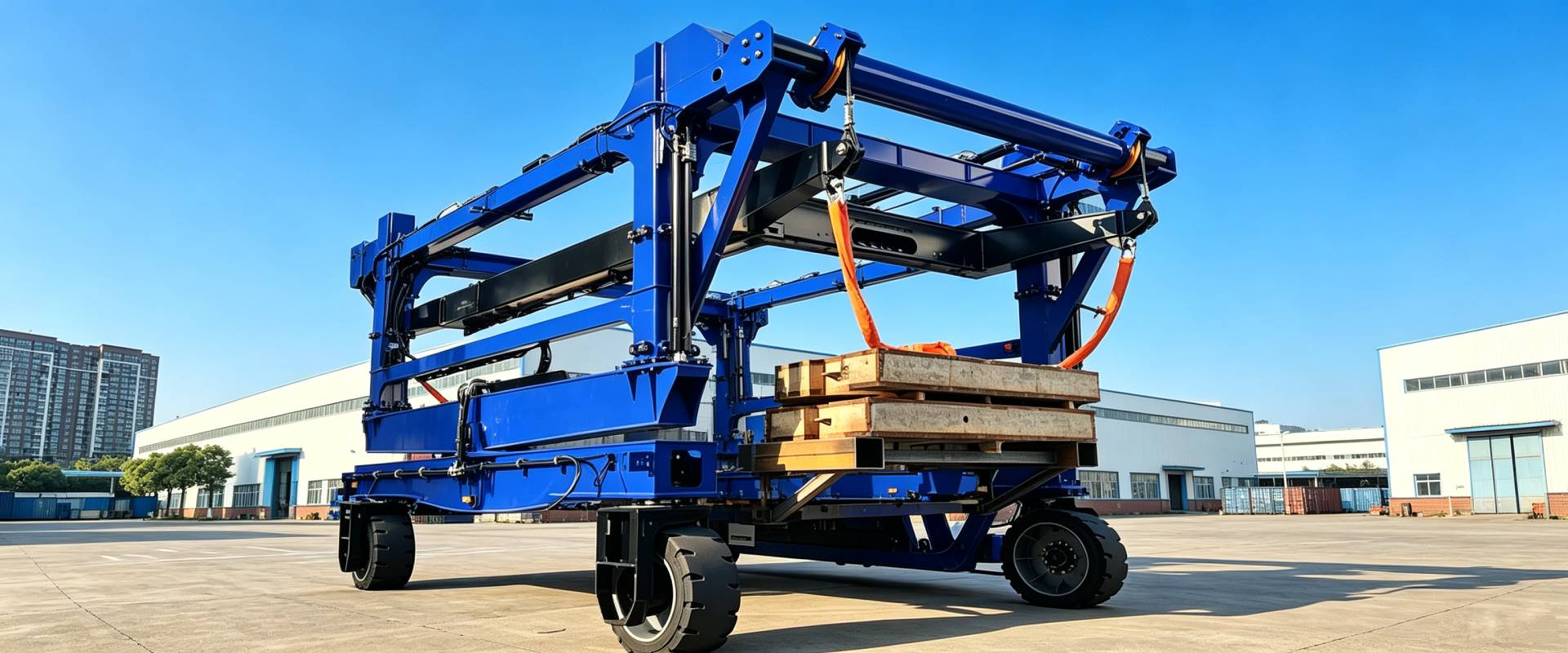
What Determines Container Straddle Carrier Operating Costs
The operating costs of container straddle carriers are not limited to fuel or electricity expenses. They are also influenced by equipment configuration, control systems, service scope, spare parts supply, and on-site operating conditions. The technical solutions determined during the procurement phase often impact the equipment’s operating expenses for years or even more than a decade to come.
Configuration Scope
Quotes from different suppliers may correspond to different configuration levels. Some quotes include only the basic equipment, while others already include container spreaders, cabs, safety devices, remote control systems, and some spare parts.
Purchasers should confirm whether the quote includes container spreaders, hoisting mechanisms, hydraulic attachments, lighting systems, surveillance cameras, alarm systems, and necessary safety protection equipment.
The control system also warrants attention. For example, operating modes, steering modes, cab visibility, fault diagnosis functions, and safety interlock designs can all affect the equipment’s price and subsequent maintenance requirements. Configuration choices should be based on actual operating conditions rather than a mere pursuit of additional features.
Power and Drive System
Diesel, hybrid, and all-electric container straddle carriers differ in terms of initial investment, energy costs, and maintenance requirements. Diesel equipment typically has a lower initial purchase threshold, but fuel expenses will continue to accumulate as operating hours and load conditions vary.
For hybrid and all-electric solutions, it is also necessary to clarify whether the quote includes the battery system, charging equipment, electrical protection devices, and related on-site infrastructure to avoid omitting essential expenses from the budget.
After-sales Service
Equipment delivery does not mean the procurement project is fully complete. Factory testing, shipping packaging, on-site installation, commissioning, operator training, and the delivery of technical documentation can all impact the total project cost.
If the equipment is to be used overseas, it is also important to confirm whether the supplier can provide remote technical support, troubleshooting guidance, and spare parts procurement services. For companies lacking professional maintenance personnel on-site, service response times and technical support methods are particularly critical.
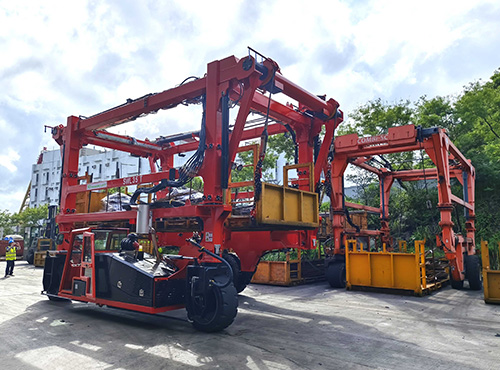
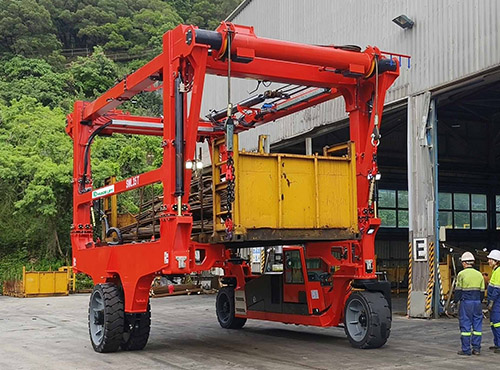
Initial Investment in a Container Straddle Carrier
Engineering and Customization Costs
The operating environments and task requirements for container straddle carriers vary. The equipment’s rated lifting capacity, lifting height, span, container dimensions, travel speed, steering method, and operating frequency all influence structural design and system configuration.
For example, equipment frequently handling heavy-load containers requires careful consideration of structural strength, wheel set loads, braking performance, and hydraulic system workload. If the site includes ramps, uneven surfaces, or narrow aisles, travel and steering plans must be determined based on actual conditions.
Special operating conditions may also require the addition of protective devices, adjustments to the cab layout, or the installation of specialized control systems. While these design elements increase initial engineering costs, they can reduce subsequent retrofitting and operational expenses by addressing on-site challenges.
Shipping and Logistics Expenses
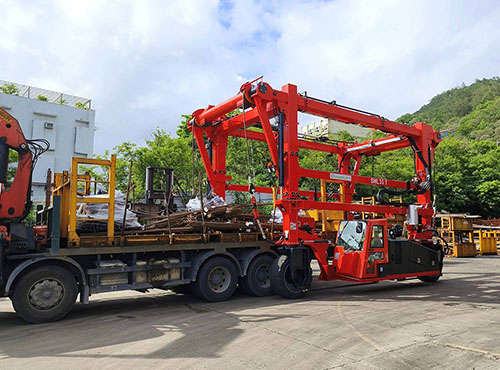
Container straddle carriers are large, heavy-duty pieces of equipment, and their transportation plans must be arranged based on the unit’s overall dimensions, weight, and disassembly capabilities. Transportation costs depend not only on distance but are also influenced by loading methods, oversize requirements, route conditions, and destination service fees.
For international procurement projects, the suitability of ocean freight or other transportation methods should be verified in advance, and it should be confirmed whether the equipment will be transported as a complete unit or in disassembled parts. Oversized cargo may require special loading procedures, dedicated transport vehicles, oversize transport permits, and additional loading and unloading operations.
Upon arrival at the destination, additional costs may arise for terminal handling, temporary storage, customs declaration, customs clearance agency fees, and inland transportation. If the final point of use is far from the delivery location, or if local roads have restrictions such as minimum turning radii or bridge weight limits, the transportation plan will need to be further adjusted.
Installation and Commissioning Costs
Upon arrival, the equipment may require structural assembly, mechanical connections, electrical wiring, hydraulic system inspections, and control system commissioning. For equipment shipped in disassembled parts, the scope of on-site assembly work will also be influenced by the disassembly method and installation conditions.
Installation and commissioning typically require the involvement of specialized technical personnel. If the purchaser lacks personnel with the necessary experience, it may be necessary to arrange for the supplier’s technical staff to be on-site or to engage a qualified third-party service team. Personnel travel expenses, on-site labor hours, lifting and auxiliary equipment, and temporary operational facilities should all be included in the budget.
How Container Straddle Carrier Types Affect Costs
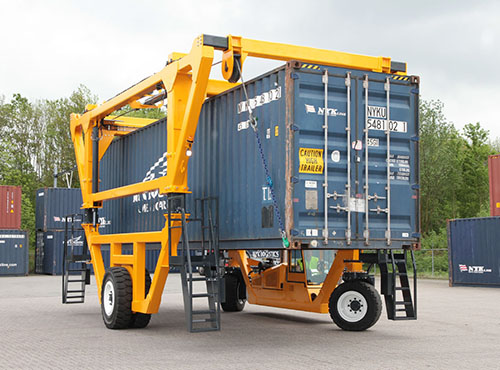
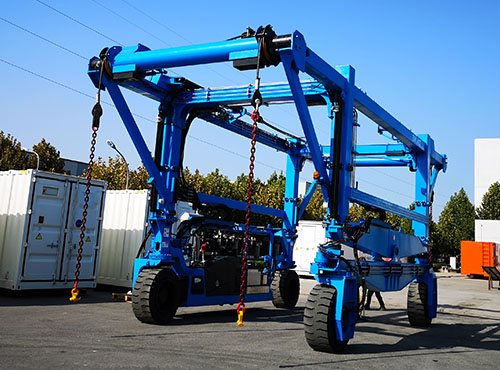
The power source is a key factor in determining the long-term costs of a container straddle carrier. However, the economic viability of any particular solution cannot be assessed in isolation from actual operating conditions. Equipment utilization rates, energy prices, work shifts, environmental requirements, and on-site infrastructure all influence the return on investment.
Diesel Container Straddle Carriers
Diesel container straddle carriers feature relatively mature powertrain technology and a broad maintenance service network. They are typically suitable for sites with limited initial budgets, relatively low usage frequencies, or those that currently lack charging infrastructure.
Their main advantages lie in the relatively low purchase cost and flexible refueling options. For sites with short daily operating hours, the lower initial investment may be more attractive than the long-term savings from energy efficiency.
However, diesel equipment incurs ongoing costs for fuel, engine maintenance, and the replacement of lubricants and filters. High-intensity, multi-shift operations increase fuel consumption and maintenance workload, and emissions regulations may also limit the equipment’s operational scope.
Hybrid Container Straddle Carriers
Hybrid container straddle carriers typically operate through the coordinated work of an engine and an energy management system. Some models can recover energy during braking or descent and use start-stop control to reduce unnecessary engine idling.
For multi-shift operations, hybrid solutions offer the potential to reduce fuel consumption while retaining the strong continuous operation capabilities of traditional fuel-powered equipment. Compared to all-electric equipment, hybrid vehicles typically do not rely entirely on charging infrastructure and reduce the need for strict charging schedules.
However, hybrid equipment does not achieve the same energy-saving results under all operating conditions. Actual performance is closely related to load variations, lifting frequency, braking frequency, operating routes, and energy management strategies.
Full-Electric Container Straddle Carriers
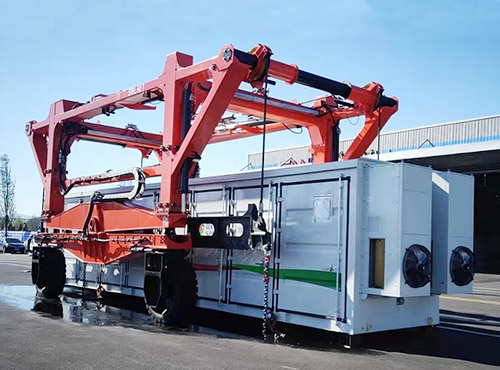
Full-electric container straddle carriers feature zero exhaust emissions during operation, relatively low noise levels, and lower energy consumption due to electric propulsion. They are suitable for sites with clear emission reduction targets, high operating frequencies, or strict local emission requirements.
Compared to diesel equipment, full-electric equipment can reduce routine maintenance tasks related to the engine. However, their economic viability requires a comprehensive consideration of battery capacity, charging efficiency, electricity rates, charging infrastructure development, and battery lifespan.
Therefore, all-electric straddle carriers are best suited for selection when usage intensity, power supply conditions, and environmental requirements are well-aligned. Only by incorporating electricity consumption, maintenance costs, and battery replacement into a unified calculation can their long-term economic viability be assessed.
Maintenance Costs of Container Straddle Carriers
Hydraulic System
The hydraulic system typically handles lifting, steering, and other operational functions, and its operating condition directly affects the equipment’s operational stability. Routine inspections should focus on fluid condition, abnormal temperature rises, pressure fluctuations, and leaks. Any signs of hose wear, loose fittings, or seal failure should be addressed promptly to prevent minor issues from escalating into more serious malfunctions.
Maintenance intervals should be based on the manufacturer’s technical documentation and scheduled according to the equipment’s actual operating hours and working environment. If the equipment is subjected to prolonged high loads, frequent use, or dusty conditions, inspection requirements may need to be adjusted in accordance with the manufacturer’s recommendations.
Tires and Wheels
The service life of tires and undercarriage components is closely related to the equipment’s load, tire specifications, steering frequency, travel speed, and ground conditions. Frequent turns while fully loaded increase lateral forces on the tires, while ground joints, potholes, sharp debris, and uneven areas can also accelerate wear.
Even if the ground surface appears level, it is necessary to confirm that its load-bearing capacity meets the requirements for fully loaded equipment operation. For routes with ramps, expansion joints, or localized subsidence, the potential impact and additional loads generated when the equipment passes over them should be assessed.
Properly planning travel routes, controlling turning speeds when fully loaded, and promptly repairing ground defects can help reduce wear on tires and related undercarriage components.
Routine Maintenance Costs
Routine maintenance costs typically include lubrication, fluid and filter replacements, tire inspections, brake inspections, electrical diagnostics, and hydraulic system maintenance. These expenses occur on a regular cycle and are best budgeted on a monthly or annual basis.
The major overhaul projects that may arise during the equipment’s five- to ten-year service life depend on the model, operating intensity, maintenance quality, and working environment. Therefore, five to ten years can serve as a reference range for medium- to long-term cost planning but should not be regarded as a uniform maintenance cycle for all equipment.
Extending the Service Life of Container Straddle Carriers
The service life of equipment is determined not only by manufacturing quality but is also closely related to load matching, operating practices, daily maintenance, and subsequent upgrades. Proper usage management can reduce abnormal wear and delay the need to replace certain critical components.
Matching Capacity to Actual Handling Needs
The rated lifting capacity of a container straddle carrier should meet actual handling requirements while taking into account the weight of lifting gear and other related attachments, as well as the load conditions specified by the manufacturer. When selecting equipment, it is essential to distinguish the relationship between cargo weight, lifting gear weight, and the equipment’s rated capacity. Load requirements should not be determined solely based on the external dimensions of the container.
Insufficient equipment capacity may lead to operational limitations or even the risk of overloading. Conversely, significantly excessive capacity may increase procurement costs, energy consumption, and maintenance expenses.
Preventive Planning
The focus of preventive maintenance is to identify abnormalities before components suffer serious failures. Compared to repairs performed after a failure occurs, regular inspections make it easier to schedule personnel and spare parts, and also help reduce unplanned downtime.
Before the start of each shift, inspect tires, brakes, hydraulic lines, control devices, lighting, and alarm systems. After operations are completed, pay attention to loose components, unusual noises, fluid leaks, and other noticeable changes.
Upgrades and Modernization
After years of use, some systems may no longer fully meet new operational requirements. However, this does not necessarily mean the entire machine must be replaced immediately. Provided the structural condition and overall technical condition permit, the feasibility of partial upgrades can be evaluated.
Common areas for improvement include updating the powertrain, retrofitting control systems, upgrading drive components, enhancing visibility, and installing collision warning systems. For sites with strong energy transition needs, options such as powertrain retrofits or electrification solutions can also be explored.
Ways to Reduce Container Straddle Carrier Costs
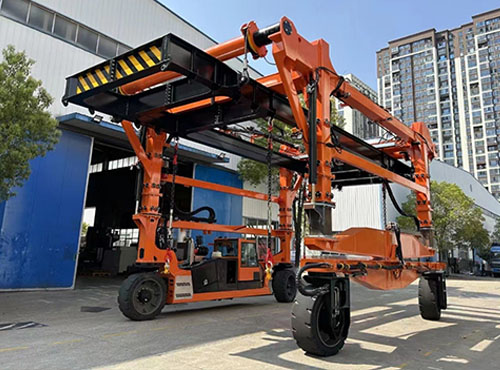
Controlling total life-cycle costs requires simultaneous attention to equipment usage patterns, maintenance management, and power solutions. Simply reducing a single cost item may not necessarily lower total expenditures. What truly matters is the comprehensive cost per handling task and whether the equipment can consistently meet production demands.
Optimize Equipment Utilization
Container straddle carriers represent a significant capital investment. If equipment frequently idles while waiting for tasks, travels empty for extended periods, or remains unused due to inefficient scheduling, the value of the initial purchase cost and fixed maintenance expenses cannot be fully realized.
Companies can schedule shifts based on workload, task priority, and equipment capacity to reduce unnecessary waiting and redundant dispatching. In facilities where multiple units operate together, tasks should be allocated reasonably to avoid overloading some units while others remain idle for extended periods. By properly balancing operational and maintenance schedules and avoiding prolonged overloading, companies can optimize both equipment output and service life.
Implement Preventive Maintenance Programs
Unexpected breakdowns not only incur repair costs but can also disrupt subsequent task schedules. For critical equipment, establishing a fixed inspection system, spare parts management process, and fault-handling mechanism typically makes it easier to control overall costs than relying on ad hoc repairs.
Companies should develop plans based on the manufacturer’s maintenance requirements and actual operating conditions, clearly defining who is responsible for inspections, the spare parts request process, and the fault escalation mechanism. For recurring faults, the root causes should be further analyzed.
Opt for Energy-Efficient Technologies
The economic viability of power solutions should be calculated based on local energy prices and projected operating intensity. While the initial investment for diesel equipment may be lower, ongoing fuel consumption accumulates year after year. Hybrid equipment may reduce some fuel expenses and all-electric equipment requires consideration of electricity costs, charging infrastructure, and battery replacement costs.
Purchasers can adopt a standardized analysis cycle to compare the acquisition costs, annual energy expenses, maintenance budgets, and key component replacement costs of different models. For solutions with a higher initial price, it is also important to calculate how many years it will take to recoup the additional investment through operational savings.
If operating conditions vary significantly across different solutions, the comparison results should reflect these differences. For example, sites with low utilization rates may not see a sufficient return on investment from high-priced energy-efficient equipment, while sites operating multiple shifts with high utilization rates may place greater emphasis on long-term energy costs.
Streamline Container Handling Processes
The operating costs of container straddle carriers are closely tied to the distance traveled for each task, the duration of waiting periods, and whether duplicate handling occurs. Even if the equipment itself remains unchanged, inefficient workflows can increase energy consumption, tire wear, and labor hours.
Companies can optimize container storage locations, retrieval sequences, and transfer routes to reduce unnecessary back-and-forth trips. By standardizing operational information, promptly updating container location records, and ensuring dispatchers are aware of equipment status, companies can minimize time wasted searching for cargo and on redundant dispatching.
In suitable facilities, companies can also evaluate the value of implementing automated stacking systems, container tracking systems, and dispatch management tools. However, related investments should be commensurate with business scale, equipment compatibility, and expected returns to avoid incurring unnecessary management costs simply to introduce new systems.
Conclusion
Purchasing decisions for container straddle carriers should not be limited to comparing initial quotes from different suppliers. Equipment configuration, transportation and installation, power source, routine maintenance, spare parts supply, and service life all affect the costs a company will incur over the equipment’s entire lifecycle.
When selecting container straddle carriers and discussing project proposals, we recommend that customers comprehensively evaluate equipment configurations and operating costs based on actual payloads, site conditions, shift schedules, and long-term maintenance requirements. Rather than simply pursuing the lowest initial price, it is better to choose an equipment solution that can consistently meet operational requirements, is easy to maintain, and offers a reasonable total cost of ownership.
