
A Travel Lift (Marine travel lift) is a heavy-duty mechanical device specifically designed for lifting and moving ships, widely used in the marine and shipbuilding industries. Its operation relies on a powerful hydraulic system, enabling efficient performance in various environments. Travel Lifts not only enhance ship handling efficiency but also ensure safety and stability throughout the lifting process. This article will delve into the definition, functions, applications, types, and importance of travel lifts in ship handling.
Understanding Travel Lifts
Definition and Functions
A Travel Lift is a self-propelled lifting device with a heavy steel frame structure, typically composed of a main structure, rubber tires, lifting mechanisms, steering mechanisms, hydraulic transmission systems, and electrical control systems. Its primary function is to lift vessels from the water to a dry location for maintenance, repair, or storage.
It provides smooth operation and reliable power through its hydraulic system, capable of accommodating various types of vessels, such as motorboats, sailboats, and catamarans. Notably, the travel lift offers both upward and downward lifting capabilities, granting it exceptional flexibility in vessel handling.
High Adaptability
The unique feature of the travel lift lies in its strong adaptability, enabling it to handle vessels of different shapes and sizes. Its lifting capacity typically ranges from 10 tons to hundreds of tons, making it suitable for a wide range of application requirements. Compared to traditional lifting equipment, the mobile boat hoist offers higher adaptability and lifting capacity, making it the preferred choice in the field of vessel handling.
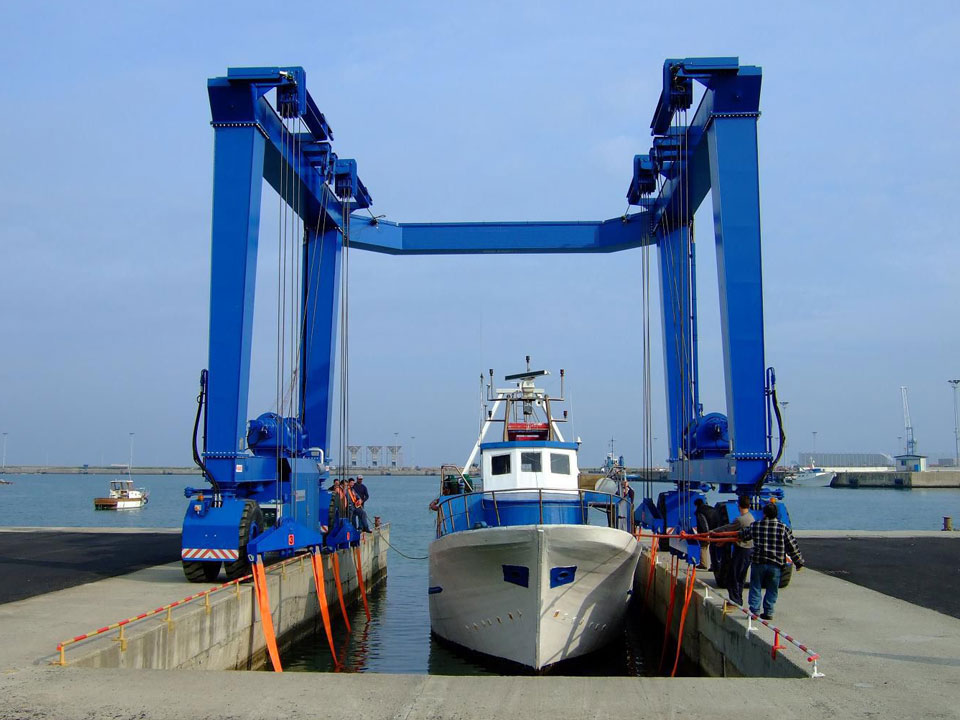
Components of the Vessel Travel Lift
Main Structure
The main structure of the travel lift typically adopts an N-shaped design, providing sufficient stability during vessel lifting. This design not only effectively distributes the load but also enhances the equipment’s durability. The main frame is usually constructed from high-strength steel, ensuring safety and stability during prolonged use.
Lifting and Steering Mechanisms
The lifting mechanism is the core component of the travel lift, typically driven by a hydraulic system to ensure smooth and safe lifting of vessels. The hydraulic system design enables the equipment to maintain efficient performance under various working conditions. The steering mechanism allows the travel lift to operate flexibly in confined spaces, enhancing operational efficiency. Many modern mobile boat hoists are also equipped with a 90-degree steering system, significantly improving maneuverability in narrow areas.
Control System
Modern travel lifts are equipped with advanced control systems, including remote control and cockpit control, allowing users to choose the operating method according to their needs. The introduction of remote control systems enables operators to monitor and control the equipment from a safe distance, further enhancing operational safety and convenience. Additionally, many boat travel lifts are equipped with safety monitoring systems that can monitor the equipment’s operational status in real-time, ensuring no unexpected issues arise during operation.
Features of Travel Lifts
Design and Manufacturing
Huadelift specializes in the design and manufacturing of Marine travel lifts, committed to creating value for customers and providing the most economical and efficient material handling solutions. Each travel lift crane is meticulously designed to ensure reliability and stability in various working environments. Our equipment is constructed using high-strength steel, capable of withstanding heavy loads while maintaining performance under harsh conditions. Through advanced manufacturing processes, we ensure that each piece of equipment meets international standards.
Soft Belt Design
One of the core elements of the travel lift’s unique design is its soft yet sturdy belts. These belts evenly distribute force, preventing damage to the vessel’s surface and structure.
The advantage of using soft belts lies in their ability to adapt to the vessel’s curves, reducing pressure concentration during lifting. This design not only protects the vessel’s appearance but also extends its service life and reduces maintenance costs.
Hydraulic Steering System
Our travel lift is equipped with an efficient hydraulic steering system controlled by cylinders or rotary reducers. This design not only reduces wear on internal components but also lowers overall operating and maintenance costs. Compared to traditional mechanical steering systems, the hydraulic steering system offers smoother and more precise control, enhancing flexibility when maneuvering in complex environments. Users can easily handle various steering requirements, improving operational efficiency.
Operating Modes
The travel lift offers up to 8 selectable walking functions, accommodating diverse operational requirements. It features a 4% climbing capability, ensuring stability even on uneven terrain.
This flexibility is a key advantage of the travel lift crane, particularly during ship berthing or maintenance operations, where it can adapt to various complex environments and scenarios. Whether moving in a straight line or making lateral adjustments, the mobile boat hoist handles tasks with ease.
Self-Powered Design
The travel lift’s self-powered design enhances the equipment’s mobility, enabling it to move freely across different work environments. The self-powered feature not only improves flexibility but also reduces reliance on external power sources, thereby lowering operational costs. For applications involving smaller tonnage, Huadelift can also design an economical all-electric drive system to further enhance energy efficiency. This design philosophy aligns with modern environmental trends, minimizing the impact on the environment.
Main Beam Design
The main end beam features a jointed design that effectively eliminates stress generated when traveling on uneven terrain. This design not only improves the equipment’s stability in complex terrain but also enhances the overall structural durability, ensuring safety and reliability.
Fuel Savings
Travel Lift design prioritizes energy efficiency, combining steady-state engine speed with proportional control to significantly reduce fuel consumption. These savings are not only reflected in short-term costs but also provide long-term economic benefits for customers. Based on customer needs, we can also offer all-electric drive options, particularly suitable for small-tonnage applications. This not only enhances the equipment’s environmental performance but also enables customers to achieve higher economic returns in operations.
Safety Features
Safety is another key consideration in travel lift design. We have integrated multiple safety monitoring systems into the equipment to continuously monitor its operational status, ensuring no unexpected incidents occur during operation.
Whether it’s overload protection, hydraulic system monitoring, or emergency stop functions, Huadelift provides users with comprehensive safety safeguards. These safety features enabletravel lift to minimize accident risks and ensure staff safety in busy ports and ship repair yards.
Application Areas of Travel Lifts
Common Use Cases
Travel Lifts are widely used in ports, primarily for lifting vessels out of the water for maintenance and storage. In ship repair yards, travel lifts efficiently move vessels to dry areas for detailed repairs and maintenance. Additionally, yacht clubs frequently use mobile boat hoists for vessel launching and recovery, helping boat owners complete operations quickly and safely.
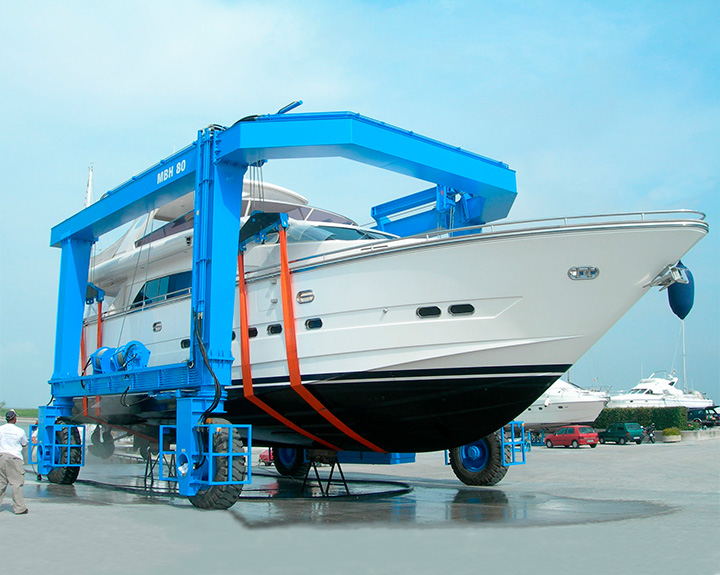
Marine Travel Lift in ports
Different Industry Applications
Travel Lifts are not only used in civilian sectors but also play a crucial role in fishing ports and military bases. In fishing ports, Boat travel lifts are commonly used to lift fishing boats out of the water for repairs or to replace fishing gear. In military bases, mobile boat hoists are used for the maintenance and upkeep of naval vessels to ensure their reliability during missions.
Furthermore, various industrial sectors are increasingly adopting travel lifts for the lifting and transportation of heavy equipment and cargo.
Types and Capacities of Travel Lifts
Lightweight Models
Lightweight travel lifts, such as 25-ton, 30-ton, and 50-ton models, are suitable for medium-sized vessels and small yachts. These models offer excellent lifting capacity and portability, making them ideal for various marine applications. The design of lightweight models is typically more compact, enabling flexible operation in environments with limited space.
In practical applications, the 25-ton travel lift crane is suitable for use with medium-sized and small yachts, easily lifting vessels out of the water and moving them to dry areas. The 30-ton and 50-ton models, on the other hand, can handle larger vessels, meeting the needs of different customers.
Medium-Duty Models
Medium-duty travel lifts, such as the 100-ton, 150-ton, and 200-ton models, are suitable for large commercial vessels and heavy-duty ships. These models are designed for durability, capable of withstanding heavy loads while maintaining efficiency and stability during operation. For example, the 100-ton travel lift is ideal for maintaining medium-sized commercial vessels, while the 150-ton and 200-ton models meet the needs of large vessels, widely used in ship repair yards and large yacht clubs.
Heavy-duty models
Heavy-duty travel lifts, such as the 300-ton and 500-ton models, are specifically designed for vessels requiring extremely high lifting capacity, meeting various stringent marine operation requirements. These models are typically constructed using high-strength materials to ensure stable performance under extreme conditions.
Generally, the 300-ton travel lift crane is ideal for the maintenance and repair of large commercial vessels, while the 500-ton model can handle ultra-large vessels, ensuring their safe operation in various complex marine environments.
Travel Lift Operating Modes
Movement Types
The basic operating modes of the travel lift include linear movement and 90-degree lateral movement. These modes enable the equipment to operate flexibly in ports and confined spaces. In linear movement mode, the mobile boat hoist can directly move vessels forward and backward, suitable for most common berthing and lifting operations. The 90-degree lateral movement mode allows for flexible adjustments in narrow spaces, making it ideal for use in crowded port environments.
Special Steering Technologies
The travel lift is also equipped with various special steering technologies, such as Ackerman steering and front/rear swing. These steering modes enhance the travel lift’s operational flexibility, enabling it to handle complex berthing situations with ease.
Factors Influencing Travel Lift Prices
Key Factors
The price of a travel lift is primarily influenced by its size and load capacity. Generally, larger-tonnage lifting equipment tends to be more expensive, while smaller models are more cost-effective. Additionally, brand and manufacturing quality are significant factors affecting price. Well-known brands typically offer higher-quality equipment, though at a higher cost, with greater assurance of durability and safety.
Additional Costs
Customized travel lifts, transportation, and installation costs also impact the total price. Many customers may need to customize equipment based on specific operational requirements, which increases overall costs. Furthermore, long-term maintenance and operational costs are also important factors in determining price, and customers should consider these aspects comprehensively when selecting a travel lift.
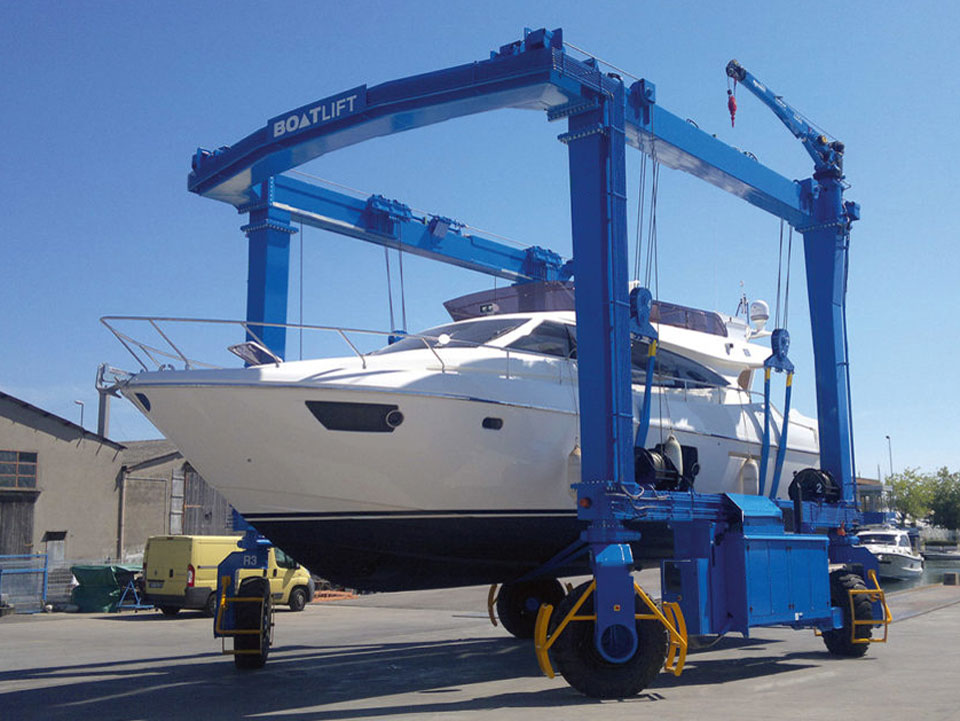
Why Choose Huadelift as Your Partner
Product Quality and Reliability
Huadelift is committed to providing high-quality travel lifts, adhering to strict production standards to ensure the reliability and durability of each piece of equipment. Our equipment undergoes rigorous quality inspections to ensure it meets industry standards before leaving the factory. Additionally, we offer a warranty of up to 12 months to ensure customers’ investments are fully protected.
Customized Solutions
Our engineering team provides customized ship handling solutions tailored to customers‘ specific needs, ensuring optimal performance and efficiency. Whether it’s lifting capacity, dimensions, or control methods, we can adjust according to customer requirements to ensure the equipment perfectly aligns with actual operational needs.
Comprehensive Support and Services
Huadelift not only provides high-quality products but also offers comprehensive support and services. We have specialized teams for equipment installation, operator training, and after-sales service, ensuring customers receive timely assistance and guidance during use. Our after-sales service team regularly communicates with customers to ensure the equipment remains in optimal condition and promptly addresses any issues that may arise.
Conclusion
The importance of travel lifts in ship handling is self-evident. Whether at ports, ship repair yards, or yacht clubs, travel lifts provide efficient and safe ship lifting solutions. As the marine industry continues to develop, the application of mobile boat hoists will become increasingly widespread.
If you have any needs related to travel lifts, please feel free to contact Huadelift. We will provide you with professional services and support to help you find the most suitable ship handling solutions.
