
What Is a Straddle Carrier
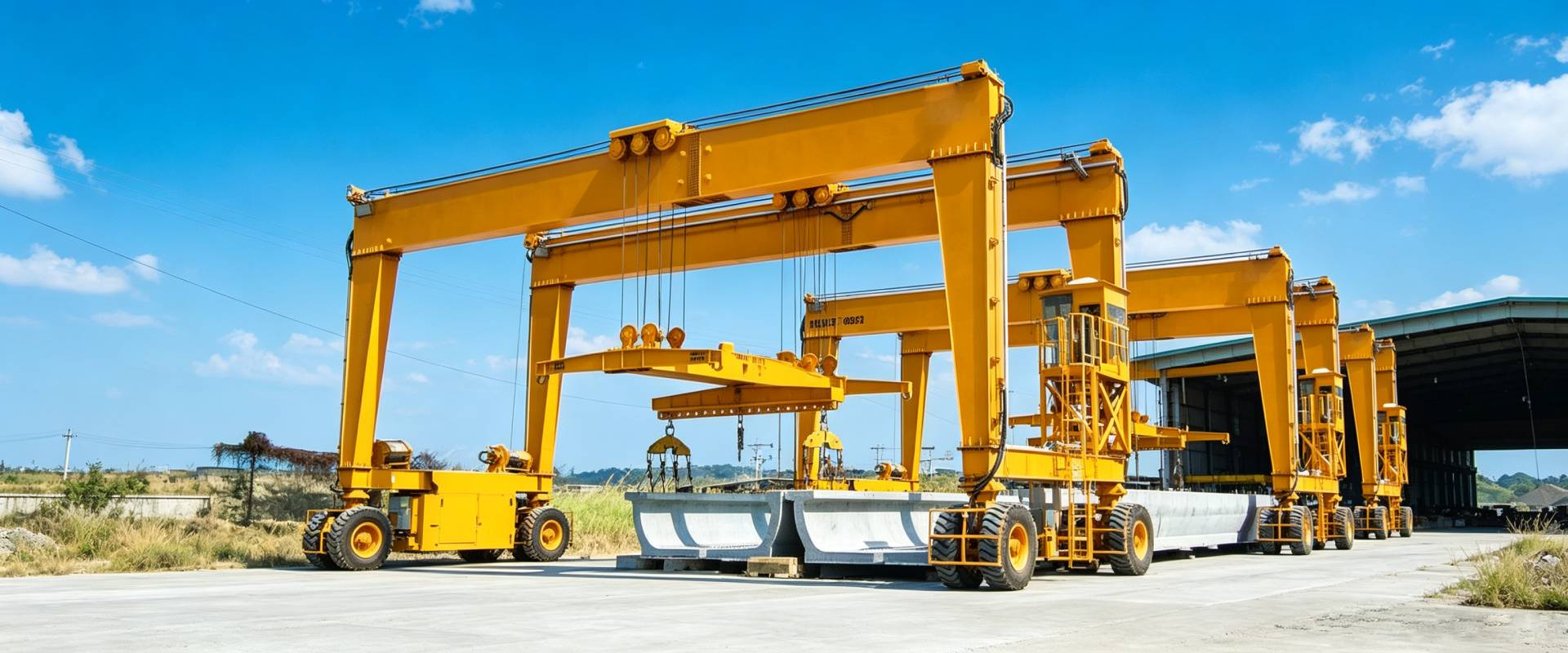
Straddle carriers are heavy-duty wheeled lifting devices commonly used in construction projects and logistics yards. Their most distinctive feature is the ability to operate freely throughout the entire site without the need for fixed tracks. Unlike the stationary operation mode of traditional rail-mounted gantry cranes, straddle carriers rely on a gantry-style frame structure that spans above the cargo, independently completing the entire process—including lifting, transporting, and stacking. They are currently among the heavy-duty material-handling equipment with the strongest site adaptability and highest overall utilization rates. Huadelift’s straddle carriers feature structural designs optimized for various construction sites and port conditions. With strong mechanical stability, they can adapt to diverse operational needs, including complex sites, high-frequency operations, and low-carbon construction.
Most traditional material handling operations rely on the coordination of multiple pieces of equipment, such as cranes and transport vehicles, resulting in cumbersome workflow transitions, long wait times, and low overall throughput efficiency. The straddle carrier achieves integrated single-unit operation, independently completing tasks ranging from cargo pickup and short-distance movement to organized stacking without the need for auxiliary equipment. This significantly simplifies on-site construction processes, making material handling more seamless and efficient, and is particularly well-suited for large-scale, routine heavy-load handling scenarios.
The equipment consists of an ultra-high gantry frame and a fully tire-mounted travel mechanism. The gantry frame bears the primary load, directly determining the equipment’s working span, lifting height, and heavy-load stability, and is capable of withstanding heavy loads and travel vibrations over the long term. The tire-based travel system completely eliminates the constraints of rails, supporting on-the-spot turning, diagonal travel, and tight-radius U-turns. It can maneuver flexibly between dense stacks of cargo and construction equipment, adapting to all types of narrow and irregular work sites.
How Does a Straddle Carrier Work
The operational logic of the straddle carrier is simple and clear. Through the coordinated interaction of the gantry frame, hydraulic lifting device, and tire-driven travel system, it forms a closed-loop operational process. The entire process requires no manual handling assistance or transfer between multiple pieces of equipment; a single unit can complete the full sequence of operations—including picking up, transporting, placing, and stacking—making it convenient to operate and highly tolerant of errors.
Traditional heavy-load handling processes are fragmented and inefficient in terms of coordination. The coordination of multiple pieces of equipment not only consumes space but also makes it easy for processes to become disjointed. The straddle carrier’s integrated operation mode streamlines the workflow, maintains a steady operational rhythm, ensures consistent precision in repetitive tasks, and enables long-term continuous operation. It is well-suited for large-scale operational scenarios such as high-frequency cargo turnover in ports and continuous infrastructure construction.
Precise Alignment and Positioning
Before beginning operations, the operator controls the equipment to slowly approach the cargo, fine-tuning straddle carrier’s position and angle to position the cargo within the central working area of the frame. This seemingly simple alignment process is the foundation for ensuring stable lifting and operational safety, directly impacting overall operational efficiency and equipment wear and tear.
Cargo deviation from the center causes uneven stress distribution on the lifting gear, which can lead to cargo tilting and irregular stacking, while also accelerating frame deformation and hydraulic system wear. Long-term misalignment accelerates equipment aging and increases operation and maintenance costs. Precise positioning ensures the lifting attachment fits the cargo perfectly, enabling a smooth lifting and transport process and shortening the cycle time for each operation.
Spreader Locking
Once the straddle carrier is properly positioned, the telescoping lifting attachment descends smoothly to align with the cargo’s standard interface. Through a high-precision rotary locking mechanism, it automatically locks into place, creating a secure mechanical lock. Purely mechanical locking offers high reliability, eliminating safety hazards such as cargo loosening, shifting, or falling at their source, and ensuring stability during heavy-load operations.
The equipment features a built-in locking self-check function that monitors the rotary lock status and cargo load distribution in real time. Lifting is initiated only after confirming that the load is fully secured and the force is evenly distributed. If any abnormalities are detected, the equipment immediately pauses operations, preventing startup under hazardous conditions and ensuring every lift remains under control.
Lifting and Traveling
After the self-check is complete, the hydraulic system smoothly raises the cargo to the standard transport height. This height effectively clears ground obstacles while ensuring straddle carrier’s center of gravity remains stable, making it suitable for various complex yard conditions.
Once the cargo is lifted into position, the straddle carrier travels slowly and smoothly to the target area. The electronic stability system adjusts the vehicle’s balance in real time, and combined with multi-mode steering capabilities, it can flexibly navigate confined spaces such as narrow aisles and dense stacks of cargo. Operators can flexibly adjust speed and route based on on-site conditions to ensure safety and stability throughout the entire transport process.
Placement and Release
Upon reaching the stacking point, the equipment fine-tunes its posture, and the lifting attachment descends at a uniform, controlled speed. Utilizing a cushioning logic for placement, it eliminates impact loads, thereby protecting the cargo from damage while preventing road surface subsidence or cracking caused by heavy pressure, thereby enhancing construction compliance.
Once the cargo has settled securely, the rotary lock automatically unlocks and the lifting attachment detaches smoothly, allowing the straddle carrier to immediately depart and begin the next cycle of operations. This cyclic operation mode is well-suited to the high-frequency, assembly-line handling demands of ports and construction sites, offering strong continuous operational capability.
Main Components of a Straddle Carrier
Portal Frame Structure
The gantry frame is the core load-bearing structure of the straddle carrier, determining the equipment’s load capacity, operational stability, and operational precision. The frame is welded from high-strength low-alloy steel, offering high structural rigidity and excellent resistance to compression, deformation, and vibration, making it suitable for long-term, continuous heavy-load operations.
The accumulation of minute deformations can lead to alignment deviations, sensor malfunctions, and component aging; therefore, a high-strength, rigid frame is an essential core component of heavy-duty straddle carriers.
Spreader and Lifting System
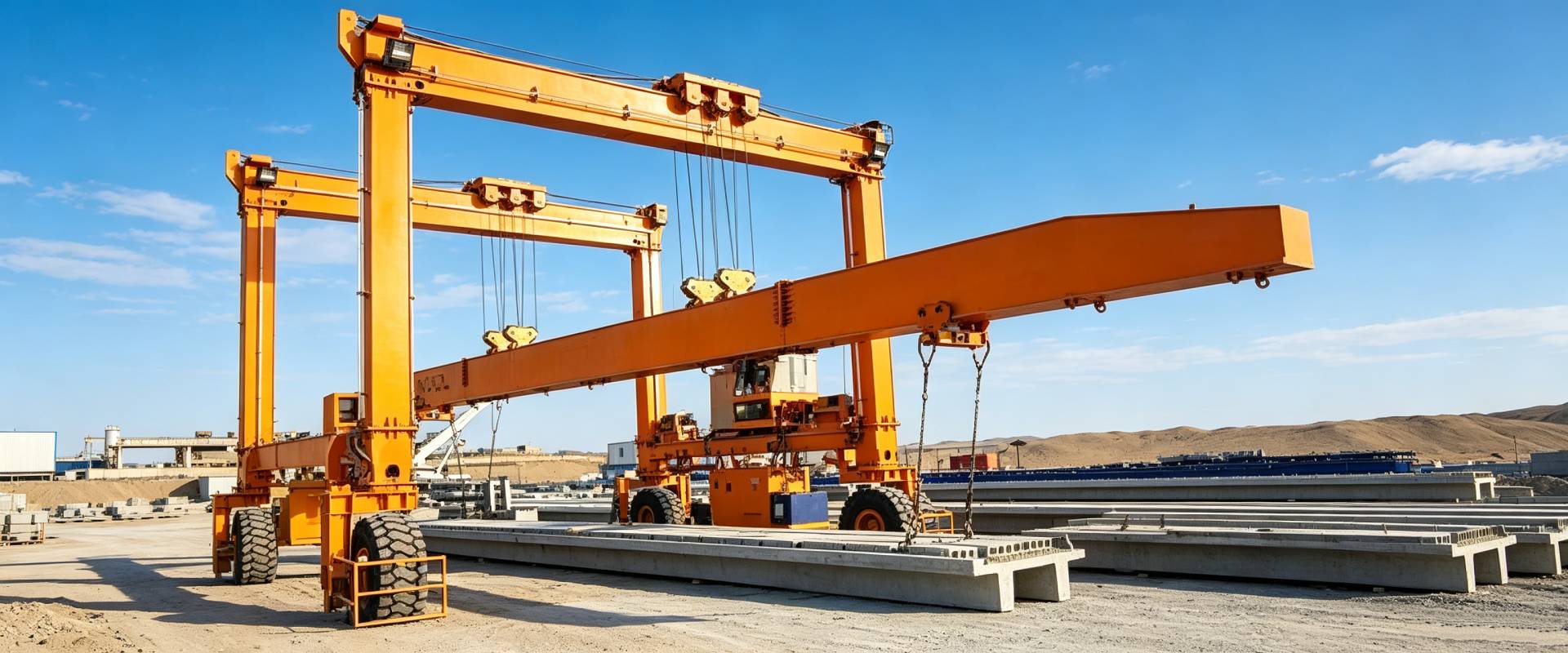
The telescoping lifting device equipped on the straddle carrier is a core component designed for multi-scenario operations. With exceptional compatibility, it can flexibly handle various heavy-load materials, including standard containers, large steel structural components, precast concrete modules, and engineering pipes, fully meeting the mainstream handling needs of infrastructure projects and prefabricated construction. The lifting device features a high-precision mechanical rotary locking mechanism that precisely engages the standard fixed interfaces of various cargo types. It provides a tight fit and secure lock, preventing issues such as loosening or misalignment during operations, thereby ensuring the stability of heavy-load lifting at the hardware level.
At the same time, the telescoping structure automatically adjusts the working span based on cargo dimensions. It can accommodate the handling of materials of different specifications without the need for frequent component replacement or additional modifications, significantly enhancing on-site operational flexibility and convenience. The equipment’s hydraulic lifting system has been finely calibrated to deliver uniform, linear power output, ensuring smooth and seamless lifting and lowering movements throughout the entire process—free from sudden speed fluctuations, jerks, or vibrations. A dedicated low-speed cushioning design automatically slows the operation during the final stage of cargo placement, gradually releasing the load pressure. This not only maximizes protection of the cargo’s structural integrity—preventing damage caused by impacts or crushing—but also reduces the impact of heavy loads on the ground foundation, thereby minimizing site wear and tear and effectively lowering overall construction losses and operational and maintenance costs.
Power and Transmission Systems
Straddle carriers are available in two power modes—diesel and all-electric—to suit different operating conditions. Customers can flexibly select the appropriate model based on operation duration, power supply conditions, and environmental requirements.
The diesel model is equipped with a turbocharged engine, offering ample range and rapid recharging. It is suitable for remote construction sites, locations without power infrastructure, and all-weather continuous construction scenarios, capable of delivering stable power output over extended periods.
The all-electric model is the mainstream choice for low-carbon construction. Equipped with a high-capacity lithium-ion battery and an intelligent electronic control system, it features low operating noise, zero emissions, and low energy consumption costs, making it suitable for routine operations in standardized ports, municipal construction sites, and fixed industrial parks.
Steering and Travel System
The travel and steering system is the core strength of the straddle carrier, completely freeing it from the constraints of rails. Its multi-mode travel design adapts to all types of narrow and complex work sites, offering maneuverability far surpassing that of traditional rail-based lifting equipment.
The straddle carrier’s travel and steering system is the cornerstone of its on-site flexibility. Unlike the limitations of traditional fixed lifting equipment, the machine is equipped with multi-mode travel control capabilities that support a variety of travel modes, including tight-radius turns, diagonal travel, and crab-style travel. The entire steering control system offers precise, responsive handling and accurate angle control, eliminating the need for large turning radii. Even in confined workspaces with narrow aisles and densely packed cargo, the vehicle can navigate freely, reposition flexibly, and achieve precise maneuvering, significantly improving overall space utilization in the yard.
Tire Configuration
The heavy-duty straddle carrier’s tires feature high load-bearing capacity, fully meeting the force requirements for driving, steering, and braking under full load, ensuring smooth operation of the entire machine.
Tire service life is influenced by site levelness, operating habits, and turning frequency. Proper operation and regular maintenance can effectively slow wear and tear, reducing long-term operation and maintenance costs.
Hydraulic and Braking Systems
The hydraulic system provides power for straddle carriers. The load-sensing hydraulic design allocates flow on demand, ensuring high power utilization efficiency. It is suited for high-frequency, continuous operations, delivering stable performance and a low failure rate.
With high hydraulic control precision, the machine’s lifting, steering, and fine-tuning movements are smooth and consistent, free from jerks or fluctuations, meeting the construction requirements for high-precision lifting and layered stacking.
The braking system employs a combination of dual-circuit service brakes and spring-applied parking brakes, offering high fault tolerance and fast response times. It enables rapid stopping in emergency situations, effectively preventing safety incidents such as tipping or collisions, and reinforcing operational safety.
Electronic Control and Safety Monitoring System
The electronic control system coordinates all operational movements of the equipment, ensuring that all components work in a coordinated and orderly manner. It can interface with intelligent yard management systems and is compatible with the operational needs of smart construction sites and smart ports.
The system can automatically detect anomalies such as overloading, tilting, unsecured loads, and obstacles ahead, simultaneously triggering alarms and shutdown protection. This compensates for blind spots in manual observation, effectively reduces operational errors, and enhances operational safety.
How Straddle Carriers Handle Heavy Loads Efficiently
High Load Capacity and Stability
The straddle carrier has undergone meticulous mechanical optimization and features a high-strength chassis, heavy-duty tires, and a high-power hydraulic system. When operating at full load, it maintains a balanced center of gravity with no noticeable vibration or deviation, ensuring excellent stability under heavy loads.
The straddle carrier is suitable for high-intensity operating conditions, such as continuous port operations and round-the-clock infrastructure construction. It delivers low failure rates and stable performance during long-term, high-frequency operation, meeting the continuous operational demands of large-scale projects.
One-Stop Handling Solution
Traditional heavy-load operations require the coordination of multiple pieces of equipment, resulting in high procurement, maintenance, and labor costs, as well as frequent gaps in workflow coordination, leading to low overall efficiency.
The straddle carrier completes the entire workflow independently, eliminating the need for extensive auxiliary equipment and on-site personnel, which significantly reduces overall operating costs. It ensures seamless workflow transitions and strong continuous operation capabilities.
In large-scale material handling applications, it effectively increases material throughput, shortens project timelines, and offers outstanding value for money over the long term.
Strong Site Adaptability
Traditional rail-based equipment has a fixed operating range, and modifications or adjustments are costly and time-consuming. The straddle carrier is not restricted by tracks and can operate freely on any level surface, allowing for flexible switching between work locations.
Whether on temporary, irregular construction sites, narrow stockpiles, or standardized ports, the equipment can be rapidly deployed and put into operation, offering far greater site adaptability than traditional lifting equipment.
Efficient Space Utilization
Most construction sites and ports have limited space and dense cargo concentrations, making it difficult for traditional large-scale equipment to access these areas—which often leads to underutilized space and haphazard material stacking.
With agile turning and excellent maneuverability, straddle carriers can precisely perform handling and stacking operations in confined spaces, maximizing space utilization. They increase storage capacity without requiring site expansion, thereby addressing the industry’s pain point of limited space.
Applications of Straddle Carriers
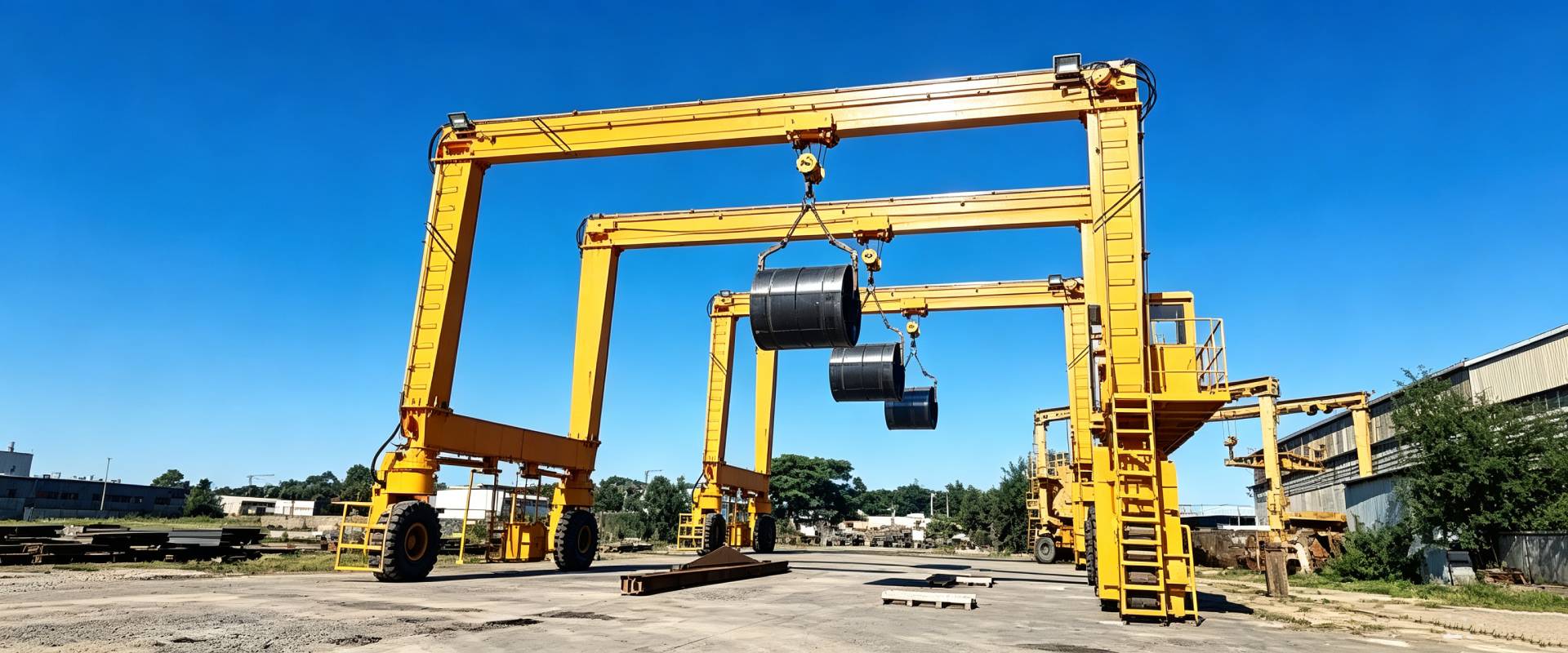
Material Transport at Construction Sites
At infrastructure construction sites, the handling of heavy building materials is challenging and occurs frequently. Manual handling is inefficient and risky, and traditional, rudimentary equipment struggles to keep pace with the construction schedule.
Straddle carriers can operate directly over materials, precisely delivering building materials to construction sites, reducing the need for secondary handling, adapting to complex site layouts, and ensuring that material supply keeps pace with construction progress.
Relocation of Heavy Construction Equipment
Relocating heavy equipment such as excavators and cranes within a construction site is difficult, and moving them under their own power can easily damage the machinery and the pavement.
Straddle carriers can smoothly transport all types of heavy machinery, offering fast relocation speeds and high stability, effectively improving equipment scheduling and site turnover efficiency.
Storage and Stacking of Materials
Haphazard piling of materials at construction sites can lead to rust, loss, and difficulty in retrieval. The straddle carrier can neatly stack materials and store them at designated locations, enabling standardized warehouse management, optimizing site layout, ensuring a clean and orderly construction site, and reducing construction downtime.
Precast Concrete Placement
Precast components for prefabricated buildings are heavy and require high precision; traditional lifting methods often result in significant swaying and frequent deviations.
Straddle carriers operate smoothly and position components with precision, enabling accurate lifting and installation of precast components, strictly controlling assembly accuracy, and improving the quality and efficiency of prefabricated construction projects.
Steel Erection
Steel structure projects—including beams, columns, and truss components—require strict precision in assembly; any deviation during lifting can compromise structural stability.
The straddle carrier delivers stable performance under heavy loads, effectively minimizing component sway, ensuring assembly accuracy, and reducing the need for subsequent correction procedures. It is suitable for the construction of various types of steel structure industrial plants and high-rise buildings.
Bridge Construction
The hoisting of heavy components such as box girders and steel beams in bridge construction places extremely high demands on the stability of lifting equipment. With robust load-bearing capacity, smooth handling, and minimal positioning error, the straddle carrier is capable of handling the transportation and installation of large bridge components, meeting the high-standard construction requirements of bridge engineering.
Conclusion
With their core features—trackless and flexible operation, integrated material handling, and exceptional stability—straddle carriers are well-suited for a wide range of heavy-load construction and warehousing applications, aligning with the industry’s trends toward low-carbon and intensive development. Huadelift continuously optimizes equipment performance and safety features, providing reliable material handling solutions for various engineering applications through gantry trucks that offer high adaptability, low operating and maintenance costs, and excellent value for money.
