
In modern logistics and shipping industries, the efficient operation of heavy equipment is crucial for ensuring smooth cargo turnover. As a core piece of equipment, the rubber-tired gantry crane (RTG crane) has become an indispensable “heavyweight player” in scenarios such as ports and yards, thanks to its powerful lifting capacity and flexible mobility. This article of our company will comprehensively interpret tire-mounted gantry cranes from multiple dimensions, including definition, structure, working principles, and types, to unveil the mystery behind this industrial giant.
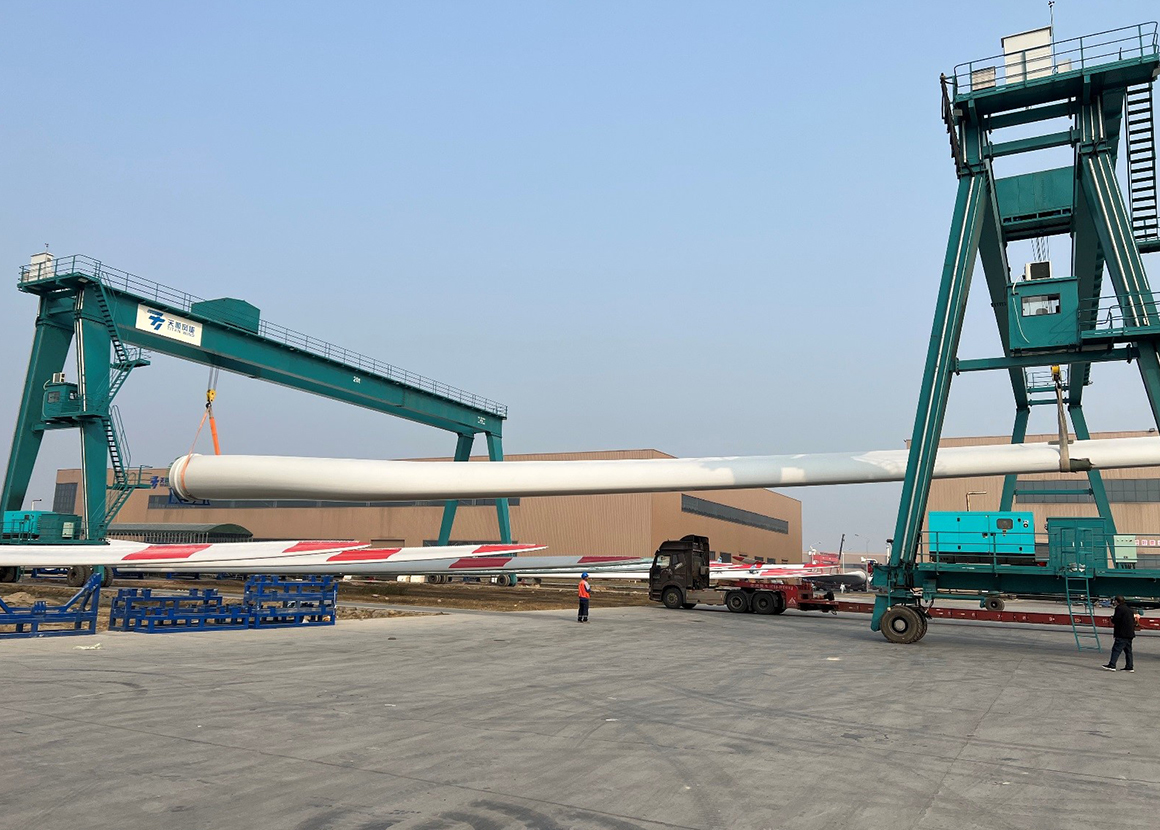
Rubber Tyred Gantry Crane for Wind-Energy
What is a Rubber-Tired Gantry Crane?
The rubber-tyred gantry crane, abbreviated as RTG crane, is a heavy-duty lifting device used for port operations and cargo handling. It is specifically designed for moving and lifting heavy cargo and plays a crucial role in the shipping and logistics industries, serving as one of the core devices ensuring efficient cargo turnover.
In the shipping and logistics industries, cargo handling and transportation rely heavily on efficient lifting equipment. The RTG crane, with its outstanding performance, can quickly and safely handle large volumes of heavy cargo, significantly improving cargo handling efficiency, reducing labor costs, and providing strong support for industry development.
What are the Main Components of a Rubber-Tired Gantry Crane
Chassis
The chassis is the foundation of the RTG crane, serving as the “skeleton” of the equipment and providing stable support for the entire crane. Whether during lifting operations or movement, the chassis ensures the equipment’s balance and stability, serving as a critical safeguard for safe crane operation.
Gantry Crane
The gantry crane is mounted on the chassis and serves as the core component responsible for lifting and moving heavy loads. Through its complex mechanical structure, it can perform various actions such as lifting, rotating, and moving heavy loads, precisely delivering cargo to designated locations.
Wheeled Mobile Platform
The wheeled mobile platform is the key to the high mobility of tire-mounted gantry cranes. Equipped with a power system and wheels, it enables the crane to move freely across various surfaces such as roads, railways, and trailer platforms, significantly expanding the equipment’s operational range.
Gantry Crane Tonnages & Specifications
Powerful Lifting Capacity
The lifting capacity of tire-mounted gantry cranes is truly remarkable, with some models capable of effortlessly lifting hundreds of tons of heavy loads. This powerful performance enables them to meet the lifting requirements of large-scale cargo, playing an irreplaceable role in heavy industry.
Reliable Lifting Mechanism
The crane uses a winch, ropes, and chain systems to secure and lift cargo. The winch provides power, while the ropes and chains transmit this power to the load. Through precise control, the load is safely and stably lifted and moved. This reliable lifting mechanism has been rigorously tested over time and ensures smooth operation in various complex environments.
Storage and Maintenance Features of Tire-Mounted Gantry Cranes
Convenient Storage Methods
Tire-mounted gantry cranes are equipped with telescoping axles and mobile platforms. When the equipment is not in use, these components help the crane achieve convenient positioning and storage. By adjusting the positions of the telescoping axles and mobile platforms, the crane can be compactly stored, saving space while also facilitating equipment maintenance and upkeep.
Comfortable Operator Cabin
The operator cabin is where the crane operator works, and its design fully considers ergonomic principles. The spacious layout, reasonable design, and comfortable seating allow the operator to maintain a good state during prolonged operations, enhancing operational precision and efficiency. Additionally, the cabin is equipped with various advanced control devices and instruments, providing the operator with clear information on the equipment’s operational status.
Maintenance-friendly design
To ensure the long-term stable operation of the tire-mounted gantry crane, regular maintenance is essential. The equipment is designed with maintenance convenience in mind, with key components easily accessible for inspection, repair, and replacement by operators and maintenance personnel. Additionally, the equipment is equipped with a dedicated maintenance platform, further facilitating maintenance work and reducing maintenance costs and time.
How Does a rubber tyred Gantry Crane Work?
Differences and similarities with traditional gantry cranes
Traditional gantry cranes are typically installed on roads or railways, using cables connected to hooks to lift containers, which are then moved to stacking areas or loaded onto trailers for transportation.
The working principle of tire-mounted gantry cranes is similar to that of traditional gantry cranes, as they also lower cables with hooks to lift containers. However, the most significant difference is that the entire tire-mounted gantry crane can move freely, while traditional gantry cranes are fixed on specific tracks. Additionally, the crane above the tire-mounted gantry crane can also move flexibly, making its operations more flexible and efficient.
Applications in emergency situations
Due to their high mobility, tire-mounted gantry cranes can play a crucial role in emergency situations. For example, when a temporary container yard needs to be set up, it can quickly arrive at the site and be put into use. In cargo handling operations in remote areas, it can also handle tasks with ease. After natural disasters or hurricanes, it can also be used for emergency rescue work such as removing damaged rail cars from the tracks.
Advantages of the mobile design
The mobile design of tire-mounted gantry cranes offers numerous advantages. After completing a task, it can be conveniently transported to other yards to continue operations, meaning there is no need to invest in traditional fixed crane equipment for each yard, significantly reducing corporate costs. Additionally, this mobility allows the equipment to be flexibly allocated according to the operational requirements of different yards, improving equipment utilization.
Types of Electric Rubber Tyred Gantry Cranes
Lightweight RTG Cranes
Light-duty RTG cranes are primarily used in scenarios with lighter loads and lower operational requirements, and are widely applied in industrial fields rather than large-scale cargo handling sites such as ports.
Their features include: compact and space-efficient design, enabling operation in narrow spaces; suitability for lifting industrial components such as steel beams and pipes; although their load capacity is relatively lower, they offer higher mobility, enabling rapid transfer between different work sites.
Heavy-duty RTG cranes
Heavy-duty RTG cranes are specifically designed for handling extremely heavy loads and large volumes of materials, and are widely used in industrial and construction environments where high lifting capacity is required.
Its features include: a robust structural design with extremely high load capacity; advanced lifting mechanisms capable of handling bulky and heavy materials with ease; and enhanced safety devices to ensure safety in high-stress operational environments.
U-Frame RTG Crane
The U-Frame RTG Crane features a unique U-shaped frame design, which provides distinct advantages when handling specific types of cargo, thereby enhancing operational efficiency.
Its key features include: the U-shaped frame provides better clearance for specific types of cargo; it performs exceptionally well in specialized industrial applications; it offers superior structural stability and more balanced load distribution, ensuring safe and reliable operations.
Overview of Key Features and Benefits
Exceptional Maneuverability and Flexibility
Enhanced Operability: The rubber tire design frees tire-mounted gantry cranes from the constraints of fixed tracks, enabling them to move freely in any direction. This allows them to easily handle complex operational layouts and narrow spaces, operating flexibly in various environments—a level of operational flexibility unmatched by track-mounted cranes.
Surface adaptability: Whether on concrete, asphalt, or compacted soil, tire-mounted gantry cranes can operate stably on various surfaces. This strong surface adaptability enables them to perform effectively in diverse settings such as ports, factories, and construction sites.
Excellent shock absorption: Rubber tires have excellent shock absorption properties, reducing the impact of uneven surfaces on the crane structure. This not only helps maintain equipment stability but also extends the crane’s service life, ensuring long-term stable operation.
Reduced infrastructure costs: Compared to rail-mounted cranes, tire-mounted gantry cranes do not require the installation and maintenance of complex track systems. This significantly reduces infrastructure construction and maintenance costs while also shortening equipment installation and commissioning time, enabling rapid deployment.
Convenient relocation capability
Quick deployment: Tire-mounted gantry cranes can be rapidly deployed to job sites and put into use. In scenarios where operational requirements frequently change, such as ports and industrial sites, this rapid response capability is critical for promptly meeting diverse operational needs.
High operational flexibility: Due to their ease of relocation, tire-mounted gantry cranes can be moved to different areas within a facility as needed. Operators can flexibly adjust the equipment’s position based on changes in workload, optimizing space utilization and thereby improving overall operational efficiency.
Significant cost-effectiveness: Relocating tire-mounted gantry cranes results in minimal downtime and minimal disruption to normal operations, making it an economical and efficient solution for adapting to new operational requirements. In contrast, reconfiguring rail-mounted cranes requires significant time and resources, resulting in relatively higher costs.
Excellent scalability: As businesses grow and operational demands increase, tire-mounted gantry cranes can be easily scaled up or down. Companies can add or reduce the number of cranes as needed without requiring major modifications to existing infrastructure, effectively aligning with the pace of business development.
Reduced environmental impact: During relocation, tire-mounted gantry cranes do not require extensive infrastructure modifications, resulting in minimal environmental disruption. This is particularly important in environmentally sensitive areas, ensuring compliance with environmental regulations.
Excellent load capacity and lifting height
Wide load capacity range: Tire-mounted gantry cranes offer a broad load capacity range, typically between 20 and 65 tons. This enables them to handle various cargo weights with ease, whether it be lightweight containers or heavy industrial materials. High-capacity models are particularly suitable for environments requiring frequent lifting of heavy loads, such as container terminals and large industrial facilities.
Diverse lifting heights: Different models of tire-mounted gantry cranes offer varying lifting heights to accommodate diverse operational requirements. Standard models can stack 4–5 containers, while specially designed models can stack 7–8 containers. This customizable lifting height allows the crane to adapt to different site conditions and operational requirements, whether it’s low-stacking operations in small yards or high-stacking operations in busy ports.
Customizable span and width: The span (the distance between the crane’s legs) and width of tire-mounted gantry cranes can be customized according to specific operational requirements. Standard spans typically range from 23 to 30 meters, with larger span models also available to handle large areas and multiple rows of containers.
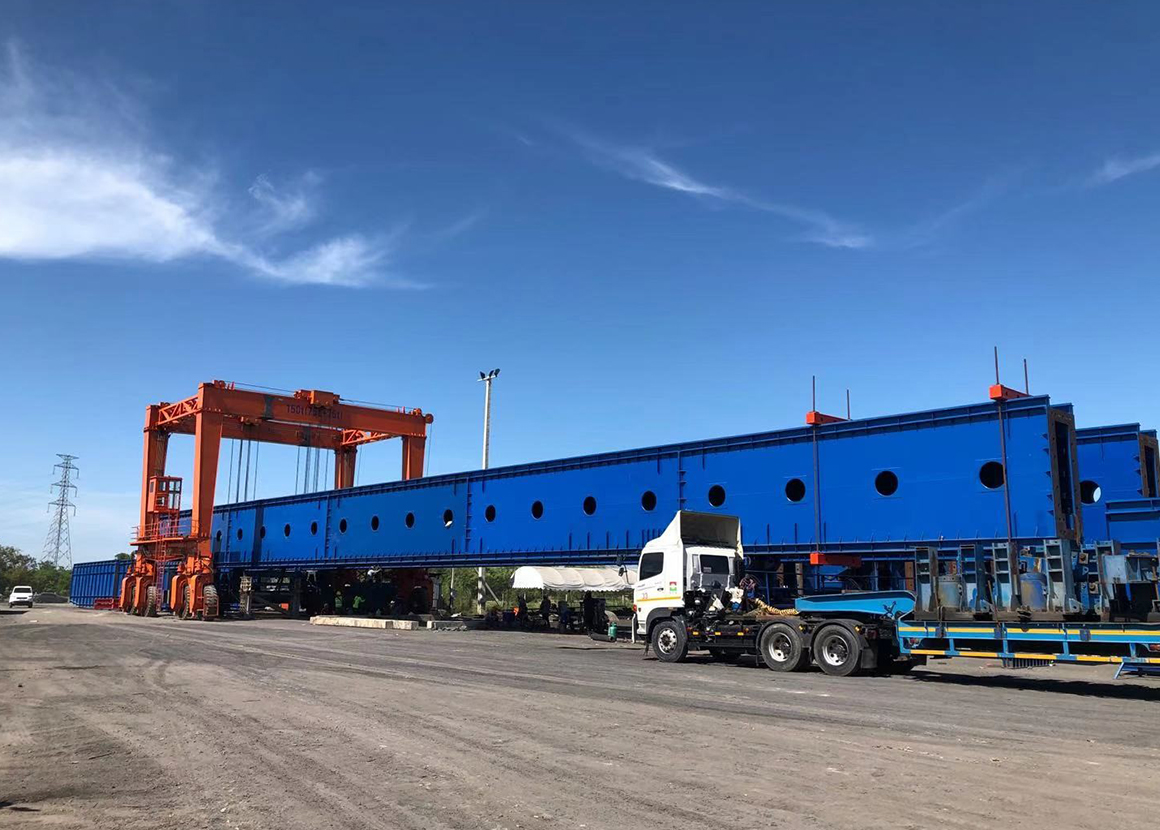
Rubber Tyred Gantry Crane for Transporting Steels
Diverse specialized models
Standard RTG models: These models are designed for general container terminals and industrial sites, balancing load capacity, lifting height, and maneuverability. They are suitable for medium to large-scale operations and can meet most conventional cargo handling requirements.
High-Capacity RTG Models: Specifically designed for heavy-duty environments, these models feature higher load capacity and greater lifting height. They are typically equipped with more powerful lifting mechanisms and reinforced structural components, enabling them to easily handle bulky and heavy materials. They are suitable for large container terminals and industrial plants where extremely high lifting capacity is required.
Hybrid/Electric RTG Models: With growing environmental awareness, hybrid and electric tire-mounted gantry cranes are increasingly favored. Hybrid RTG cranes combine diesel and electric power, while fully electric RTG cranes completely eliminate diesel engines. These models maintain the same load capacity and lifting height as diesel models while significantly reducing emissions and operational costs, making them more environmentally friendly and economical.
Customizable RTG Models: For specific operational requirements, manufacturers can provide customizable tire-mounted gantry cranes. These models can be tailored to meet customers’ specific needs in terms of load capacity, lifting height, span, and control systems, ensuring the crane perfectly aligns with specific operational processes to maximize efficiency and productivity.
Automated RTG models: With the continuous advancement of technology, automated tire-mounted gantry cranes are gradually becoming the trend in the industry. These models reduce reliance on manual operation, achieving precise lifting and positioning tasks through advanced control systems and sensors, thereby enhancing operational safety and efficiency.
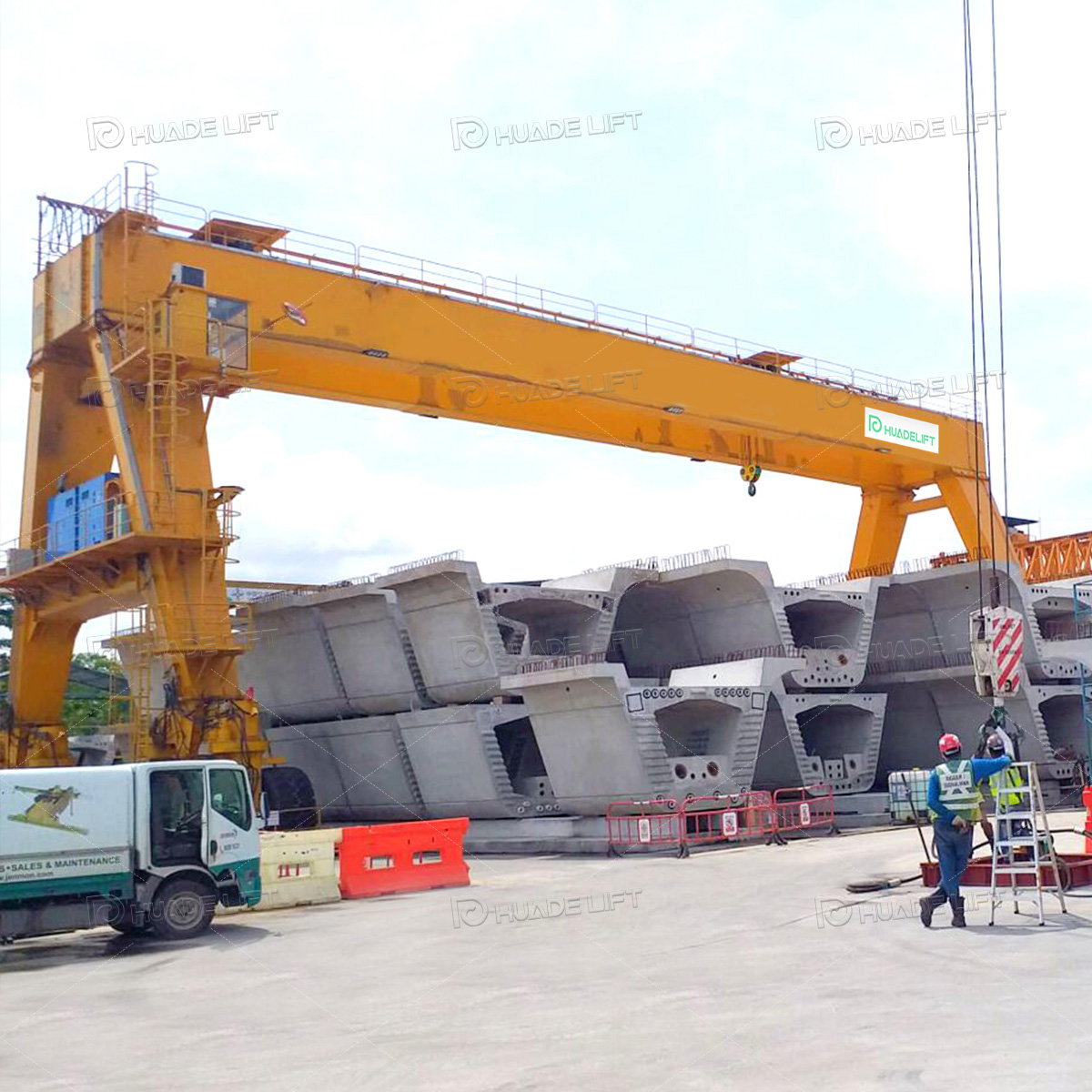
Proper Operating Procedures for Rubber-Tired Gantry Cranes
Positioning and Alignment
When operating a rubber-tired gantry crane, the first step is to accurately position it above the container. This process requires the operator to use visual observation and the crane’s positioning sensors to align the crane’s wheels with the designated lanes in the yard. Precise positioning and alignment are the foundation for ensuring safe and efficient lifting operations.
Engaging the Lifting Device
After the crane is positioned, the operator must lower the lifting device onto the container. During this process, it is essential to ensure that the lifting device is precisely aligned with the container’s corner fittings to achieve a secure lock. To assist the operator in this precise operation, the crane is equipped with cameras and alignment assistance devices, enhancing operational accuracy and efficiency.
Lifting and Transportation
After the lifting device is securely locked onto the container, the operator must lift the container smoothly to the required height. During the lifting process, it is important to avoid any swaying or sudden movements of the container to ensure operational safety. Once the container is lifted to the appropriate height, the operator maneuvers the crane to move it to the designated stacking area or transport vehicle, completing the entire lifting and transportation process.
Applications and Development of Tire-Mounted Gantry Cranes
Current Wide-Ranging Applications
Currently, tire-mounted gantry cranes are widely used across multiple industries. In the logistics sector, they serve as critical equipment for cargo handling, ensuring efficient loading, unloading, and transportation of goods; in the shipping and port industries, they perform container lifting and stacking tasks, forming the core of port operations; in industrial and construction sites, they are used for the handling and installation of various heavy materials, providing strong support for the smooth progress of projects.
Technological Advancements Drive Development
With the widespread application of intelligent technologies across industries, the functionality and performance of tire-mounted gantry cranes are continuously improving. The integration of advanced technologies such as the Internet of Things (IoT), big data, and artificial intelligence (AI) is driving cranes toward automation and intelligence. For example, IoT technology enables remote monitoring and management of cranes; big data analysis optimizes operational workflows and maintenance schedules; and AI technology enhances the cranes’ autonomous operation capabilities and operational precision.
Future Development Trends
In the future, tire-mounted gantry cranes will place greater emphasis on environmental protection and energy efficiency. During design and manufacturing, more environmentally friendly materials and energy-saving technologies will be adopted to reduce the equipment’s energy consumption and emissions.
Frequently Asked Questions (FAQ)
What are the main differences between tire-mounted gantry cranes and rail-mounted gantry cranes?
The main difference lies in their mode of movement. Tire-mounted gantry cranes rely on rubber tires to move freely across various surfaces without the need for fixed tracks, whereas rail-mounted gantry cranes can only operate on fixed tracks and have limited mobility. Additionally, both the overall equipment and the crane above it can be moved in a tire-mounted gantry crane, while a rail-mounted gantry crane is typically fixed to the tracks.
What is the typical maintenance cycle for a tire-mounted gantry crane?
The maintenance cycle for tire-mounted gantry cranes varies depending on factors such as equipment usage frequency, operating environment, and workload intensity. Generally, daily routine inspections are conducted daily to check the equipment’s operational status and the integrity of critical components; weekly or monthly inspections and maintenance are performed, including lubrication and tightening; and an annual comprehensive inspection and maintenance is required, involving a thorough examination and repair of all equipment systems.
What are the advantages of automated tire-mounted gantry cranes?
Automated tire-mounted gantry cranes offer numerous advantages. First, they reduce manual operation, lowering the risk of human error and enhancing operational safety. Second, they enable 24/7 continuous operation, significantly improving operational efficiency. Additionally, through precise control and positioning, they enhance the accuracy of cargo stacking and optimize the utilization of yard space. Finally, the automated system enables remote monitoring and management of the equipment, facilitating timely identification and resolution of issues while reducing maintenance costs.
Conclusion
As a critical heavy-duty lifting device, the tire-mounted gantry crane plays an irreplaceable role in modern logistics, shipping, and industrial sectors due to its powerful lifting capacity, flexible mobility, diverse types, and wide range of applications.
With ongoing technological advancements, tire-mounted gantry cranes will continue to improve in performance, environmental friendliness, and intelligence, providing stronger support for the development of various industries. It is believed that in the future, they will continue to adapt to market demands, innovate, and develop, becoming a key driving force for global logistics and industrial progress.
