
Introduction
In modern logistics and industrial fields, the rubber tyred gantry crane (RTGC) plays an indispensable role as a flexible and efficient material handling device. Thanks to the mobility provided by its rubber tires, it is free from track constraints and can operate freely in various scenarios such as ports, terminals, yards, and industrial parks, significantly improving cargo turnover efficiency. Whether it’s the rapid loading and unloading of containers or the precise handling of large steel structures and prefabricated components, its busy presence is evident.
Through customization, rubber tyred gantry cranes can be perfectly adapted to specific operational environments, cargo types, and workload intensities, thereby maximizing their performance to help businesses reduce operational costs and improve production efficiency.
This article will delve into how to customize rubber tyred gantry cranes for different scenarios, covering everything from understanding application requirements to customizing key components, analyzing real-world cases, considering technical and safety factors, selecting manufacturers, and exploring future trends, providing you with a comprehensive customization guide.
Understanding Your Application Requirements
Specific Operational Environment Analysis
Different operational environments impose varying demands on rubber tyred gantry cranes. In ports and terminals, the areas are typically vast, with extremely high cargo throughput, and the ground is mostly hardened pavement. However, they may be affected by environmental factors such as sea winds and humidity, requiring the crane to have excellent corrosion resistance and the ability to operate over a large range.
The environment in yards is relatively more complex, with some yards having uneven ground and numerous obstacles. Therefore, the crane must have strong ground adaptability and flexible maneuverability.
The operational environment in industrial parks is even more diverse, with potential constraints from facilities such as factories and equipment, which impose specific requirements on the crane’s height, width, and other dimensional parameters. Additionally, coordination with other production equipment must be considered.
Cargo Types and Specifications
The types and specifications of cargo are one of the key factors determining the performance parameters of rubber tyred gantry cranes. When handling containers, standard container sizes (such as 20 feet, 40 feet, etc.) must be considered, as well as any special containers with excessive height or weight, which can impact the crane’s lifting capacity and hook design.
For goods like steel, which come in various shapes such as steel plates, steel pipes, and structural steel, and have differing weights, the crane’s hook must securely grip the cargo without causing damage.
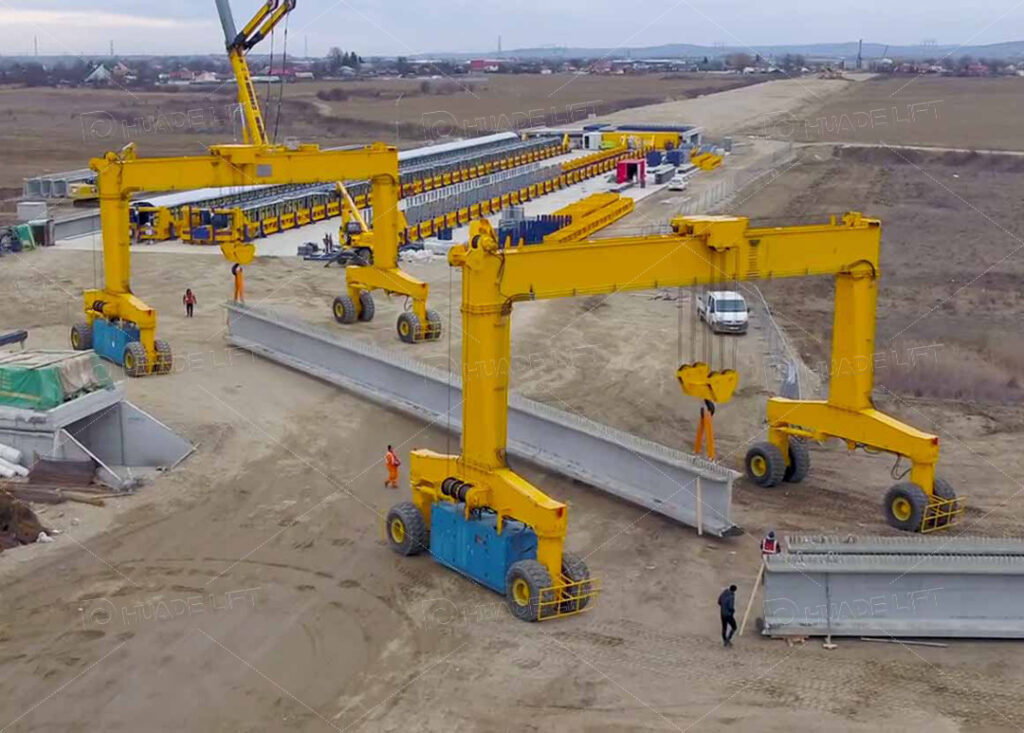
Precast components often have large dimensions and weights, as well as irregular shapes, which require the crane to have higher lifting precision and stability to ensure safety during handling.
Operational Frequency and Intensity
Operational frequency and intensity directly impact the durability and efficiency of rubber tyred gantry cranes. If the operational frequency is high, with the crane needing to operate continuously for multiple hours daily, the crane’s components must have high fatigue strength to withstand prolonged high-intensity operations.
High operational intensity, such as frequent handling of heavy loads, requires the crane’s power system, lifting mechanism, and other core components to have sufficient load-bearing capacity, while also ensuring good heat dissipation performance to prevent overheating from affecting normal operation.
Budget and Return on Investment Expectations
When customizing a rubber tyred gantry crane, budget is an important consideration. Different configurations and functions can lead to cost variations, so companies must establish a reasonable budget based on their financial capabilities.
Additionally, investment return expectations must be considered. While customized cranes may have higher initial costs, if they significantly improve operational efficiency and reduce operational costs, they can generate substantial returns for the company in the long term. Therefore, during the customization process, a balance must be found between performance and cost to select the most suitable customized solution.
Key Components and Functions of Customized RTG Cranes
The performance of a rubber tyred gantry crane (RTG) is largely determined by its key components and functions. Customizing these components according to specific requirements can enhance the crane’s performance.
Customization of the Hoisting Mechanism
The hoisting mechanism is one of the core components of an RTG. Customization primarily involves three aspects: lifting height, load capacity, and lifting speed.
Lifting height must be determined based on the stacking height of goods in the operational environment and the crane’s operational range. In ports and large yards, where space utilization is prioritized, goods are often stacked at greater heights, requiring the crane to have a larger lifting height.
Load capacity must be set based on the maximum weight of goods to be transported, while also accounting for a safety margin to address potential overloading scenarios.
Customization of lifting speed must balance operational efficiency and safety. In scenarios with high efficiency requirements, such as container handling in ports, lifting speed can be appropriately increased; however, when handling precision equipment or fragile goods, lifting speed must be reduced to ensure cargo safety.
Customized Lifting Device Design
The lifting device is the part of the rubber tyred gantry crane that directly contacts the cargo, and its design directly affects handling efficiency and cargo safety. Common types of lifting devices include standard lifting devices, rotating lifting devices, and long lifting devices.
Standard lifting devices are suitable for conventional-sized containers, steel, and other cargo, featuring a simple structure and convenient operation.
Rotating lifting devices can rotate 360 degrees, enabling goods to be rotated to the desired angle without moving the crane. They are particularly suitable for operations requiring adjustments to the cargo’s orientation, such as installing large equipment within a factory.
Long lifting devices are primarily used for handling elongated cargo such as steel pipes or structural steel. Their length can be customized to match the cargo’s dimensions, ensuring stable load-bearing capacity.
Tire and Chassis Configuration
Tires and chassis are critical for the mobility of rubber tyred gantry cranes, and their configuration must adapt to different ground and environmental conditions.
On flat, hardened surfaces, standard rubber tires can be used to reduce costs. However, on uneven terrain, muddy surfaces, or gravel roads, special tires with strong traction and wear resistance must be selected to ensure the crane’s stability and safety during operation.
The structural design of the chassis is also critical, requiring sufficient strength and rigidity to support the crane’s overall weight and the weight of the cargo. Additionally, the chassis suspension system can be adjusted based on the degree of ground unevenness to enhance the crane’s comfort and stability during operation.
Automation and Intelligent Configuration
With the development of technology, automation and intelligent configuration are increasingly being applied to rubber tyred gantry cranes.
A remote control system allows operators to control the crane from a control room away from the worksite, not only improving operational safety but also reducing the impact of harsh environments on operators.
A positioning system can precisely determine the crane’s location and the cargo’s location, enabling the crane to perform operations with greater precision and improve operational efficiency.
Sensor integration enables real-time monitoring of the crane’s operational status, such as lifting weight, lifting height, and operating speed. In the event of abnormal conditions, it can promptly issue an alarm to ensure safe crane operation.
Energy System Selection
Rubber tyred gantry cranes offer three energy system options: electric, hybrid, and traditional fuel-powered, each suited for specific applications.
The electric power system offers advantages such as environmental friendliness, low noise, and low operating costs, making it suitable for scenarios with high environmental requirements, such as indoor yards and industrial parks. However, it requires a stable power supply.
The hybrid power system combines the advantages of electric and traditional fuel systems, using electric power when a power supply is available and fuel when it is not. It is suitable for scenarios with a wide operational range and unstable power supply.
Traditional fuel-powered systems offer strong power and long-range capabilities but have higher emissions and relatively higher operating costs. They are suitable for outdoor scenarios with high power requirements and no power supply.

Customization Case Analysis Based on Application Scenarios
Different application scenarios have varying requirements for rubber tyred gantry cranes. The following analysis examines customization key points across different scenarios through several actual cases.
Port Container Handling
Ports are one of the most common application scenarios for rubber tyred gantry cranes, with container handling operations demanding high efficiency and stability from the cranes.
In a customization project for a large port, considering the massive cargo throughput, the crane needed to have high operational efficiency. Therefore, in the customization of the lifting mechanism, a higher lifting speed and greater lifting capacity were selected to meet the demand for rapid container handling.
Additionally, the port’s operational environment is harsh, with sea winds and humid air prone to causing corrosion on equipment. Therefore, the crane’s metal structure underwent special anti-corrosion treatment to extend its service life.
Furthermore, to enhance operational precision, the customized crane for this port was equipped with advanced positioning systems and remote control systems. Operators can precisely control the crane for loading and unloading operations from the control room, significantly improving operational efficiency and safety.
Steel Mill Material Handling
Steel mill material handling environments are complex, with cargo primarily consisting of heavy steel materials, and operational sites may involve high temperatures, dust, and other challenging conditions.
To address the specific needs of a steel mill, the customized rubber tyred gantry crane (RTG) prioritizes enhanced load-bearing capacity of the lifting mechanism, utilizing high-strength steel for the lifting equipment to ensure safe handling of heavy steel materials.
Considering the impact of high-temperature environments on equipment, the crane’s motors, hydraulic systems, and other critical components were treated for high-temperature resistance, and effective cooling devices were installed.
Additionally, to minimize the impact of dust on equipment operation, the equipment’s sealing performance was optimized, and regular cleaning and maintenance were conducted.
Precast Component Logistics
Precast components are typically large in size, heavy in weight, and irregular in shape, placing high demands on cranes during logistics operations.
In a customization project at a precast component production base, custom-made ultra-long lifting devices and higher lifting heights were designed based on the dimensions and weight of the precast components to meet the handling requirements of different specifications.
Since precast components must not be subjected to collisions or damage during handling, the crane’s operating speed was set relatively slow, and it was equipped with a precise positioning system to ensure smooth placement of precast components at designated locations.
Additionally, considering that the logistics site for precast components may not be sufficiently level, the crane’s tires were selected with special tires featuring strong traction and vibration damping performance, enhancing the crane’s stability on complex terrain.
Warehouse Logistics Environments
Warehouse logistics environments demand a high level of intelligence from rubber tyred gantry cranes to improve warehouse space utilization and cargo turnover efficiency.
In a custom project for a large warehouse center, the crane was equipped with an advanced automated control system integrated with the warehouse management system, enabling automatic cargo identification, positioning, and handling.
By monitoring cargo storage conditions in real-time via sensors, the crane can automatically plan its operational path according to system instructions, significantly improving operational efficiency.
Additionally, to adapt to the limited space within warehouses, the crane’s dimensions were optimized with a compact structural design, enabling it to maneuver flexibly in narrow aisles.
Technical and Safety Considerations in the Customization Process
During the customization of rubber tyred gantry cranes, technical and safety considerations are two critical aspects that must be prioritized to ensure the customized crane meets performance requirements while guaranteeing operational safety.
Compliance with International Safety Standards and Industry Regulations
The customization of rubber tyred gantry cranes must strictly adhere to international safety standards and relevant industry regulations. These standards and regulations establish clear requirements for all stages of the crane’s design, manufacturing, installation, and use, serving as a critical basis for ensuring safe operation.
During the design phase, it is essential to ensure that the crane’s structural strength, stability, and safety protection devices comply with standard requirements. During manufacturing, materials and components that meet standards must be selected, and production must strictly follow manufacturing processes to ensure product quality.
Additionally, during installation and acceptance, operations must be conducted in accordance with relevant standards to ensure that the installation quality meets requirements and the crane can be safely put into use.
Key Points for Structural Strength and Stability Design
Structural strength and stability form the foundation for the safe operation of rubber tyred gantry cranes. During customization, detailed mechanical analysis and calculations must be performed on the crane’s metal structure to ensure it can withstand loads under various operating conditions.
For critical structural components such as the boom and gantry, high-strength steel must be selected, and reasonable structural designs must be adopted to enhance their load-bearing capacity and resistance to deformation.
Additionally, the stability of the crane during operation must be considered, with measures such as appropriately setting counterweights and optimizing the chassis structure to prevent dangerous situations like overturning during operations.
During the design process, computer simulation technology can be utilized to conduct simulated tests on the structural strength and stability of the crane, enabling the timely identification and resolution of potential issues.
Operator Training and Human-Machine Interface Customization
The skill level and operational habits of operators directly impact the safety and efficiency of rubber tyred gantry crane operations. Therefore, while customizing the crane, it is essential to prioritize operator training.
Training content should cover the crane’s structural principles, operating methods, safety precautions, and other aspects to ensure operators can master the crane’s operating skills proficiently.
Customizing the human-machine interface is also crucial. It should be designed based on operators’ operating habits and operational requirements, featuring a simple, intuitive, and user-friendly interface. All indicator information on the interface must be clear and concise, with button layouts arranged reasonably to enable operators to perform operations quickly and accurately, minimizing the occurrence of errors.
Maintenance Convenience and Lifespan Extension Strategies
To ensure the long-term stable operation of the rubber tyred gantry crane, maintenance convenience must be fully considered during the customization process.
In structural design, components should be easy to disassemble and install, with reasonable maintenance access routes and inspection platforms to facilitate routine inspections and repairs by maintenance personnel.
Additionally, components that are easy to replace and maintain should be selected to reduce maintenance costs.
To extend the crane’s service life, the design and manufacturing process should prioritize the equipment’s wear resistance, corrosion resistance, and fatigue resistance. During use, a reasonable maintenance and inspection plan should be established, with regular cleaning, lubrication, tightening, and adjustment of the equipment, and timely identification and resolution of potential faults.
Selecting the Appropriate Manufacturer and Service Support
How to evaluate the technical strength and customization capabilities of crane manufacturers
The technical strength of manufacturers can be evaluated from multiple aspects. First, review the professional background and experience of the manufacturer’s R&D team and technical personnel to understand their technical accumulation in crane design and manufacturing.
Second, examine the manufacturer’s production equipment and processes. Advanced production equipment and mature production processes are key factors in ensuring product quality.
Additionally, inquire about the manufacturer’s patented technologies and research achievements, as these reflect their innovation capabilities to some extent.
To assess a manufacturer’s customization capabilities, review their past customization projects to determine if they have experience with similar scenarios and requirements, as well as customer feedback on their customized products. Additionally, communicate with the manufacturer’s technical staff to understand their ability to comprehend customer needs and design solutions.
The Importance of After-Sales Service and Maintenance Support
After-sales service and maintenance support are crucial for the long-term stable operation of rubber tyred gantry cranes. During crane operation, various faults and issues may arise. Timely after-sales service can quickly resolve these issues, minimize downtime, and reduce business losses.
The maintenance support provided by manufacturers includes regular equipment inspections, fault repairs, and replacement of parts. Choosing a manufacturer with comprehensive after-sales service can provide businesses with greater peace of mind during the use of the crane.
When selecting a manufacturer, it is important to understand whether their after-sales service system is well-established, whether their service response time is prompt, and whether they have service centers nationwide to ensure timely service provision.
Communication and Collaboration Recommendations for Custom Projects
Effective communication and collaboration are crucial to ensuring the smooth progression of custom rubber tyred gantry crane projects.
During the initial project phase, businesses should provide manufacturers with detailed information about their application requirements, operational environment, and cargo characteristics to ensure accurate understanding of the needs.
Manufacturers should promptly communicate design proposals and schedule updates to the business. Any issues or questions arising during the design process should be promptly discussed and resolved through collaboration with the business.
During the manufacturing process, the company can conduct regular on-site inspections at the manufacturer’s production facility to monitor production progress and product quality, and promptly identify and resolve any issues.
Upon project completion, the manufacturer should provide the company with detailed equipment operation manuals and training services to ensure proper use and maintenance of the crane.

Future Trends in Custom Rubber tired Gantry Cranes
With the continuous advancement of technology and the increasing demands of various industries on rubber tyred gantry cranes, their customized development is also showing some new trends.
Application Prospects of Intelligent and Automated Technologies
Intelligent and automated technologies will be more widely applied in the customization of rubber tyred gantry cranes. Future cranes will possess stronger autonomous decision-making capabilities, able to analyze operational environments and cargo information in real-time through sensors and artificial intelligence algorithms, automatically plan operational paths, and achieve fully automated operational processes.
Additionally, remote monitoring and diagnostic technologies will become more mature, enabling manufacturers and enterprises to monitor the operational status of cranes in real time via the internet, predict potential faults in advance, and perform timely maintenance to enhance equipment reliability and utilization rates.
Development of Green and Environmentally Friendly Power Systems
As global attention to environmental issues grows, green and environmentally friendly power systems will become a key trend in the customization of rubber tyred gantry cranes. Electric power systems will be further optimized to improve battery range and charging efficiency, reducing reliance on the power grid.
Hybrid power systems will become more mature, enabling efficient switching between fuel and electricity to reduce energy consumption and emissions. Additionally, new energy technologies such as hydrogen-powered systems may also be applied to cranes, achieving true zero-emission operation. Furthermore, energy recovery technology will be increasingly applied to cranes, such as recovering and converting energy generated during descent or braking into electrical energy for storage, thereby improving energy utilization efficiency.
Modular Design Enhances Customization Flexibility
Modular design is another important trend in the customization of rubber tyred gantry cranes. By designing the various components of the crane as standardized modules, such as lifting modules, travel modules, and control modules, companies can quickly assemble and replace different modules according to their specific needs, enabling rapid customization of the crane.
This design approach not only shortens the customization cycle and reduces customization costs but also improves the crane’s versatility and maintainability. When a module fails, only the corresponding module needs to be replaced, significantly reducing maintenance time and costs. Additionally, as technology continues to advance, companies can upgrade the crane’s performance and extend its service life by replacing modules with newer ones.
Conclusion
Customized rubber tyred gantry cranes play a crucial role in improving operational efficiency and adapting to specific requirements. From understanding application needs, to customizing key components, analyzing case studies in different scenarios, considering technical and safety aspects, selecting manufacturers, and anticipating future trends, every step influences the final outcome of customization.
During the customization process, companies should fully consider their actual circumstances, clearly define operational environments, cargo types, and operational intensity requirements, and collaborate closely with professional manufacturers to develop the most suitable customized solution. Additionally, we anticipate that more innovative technologies will be applied to the customization of rubber tyred gantry cranes in the future, driving the industry’s continued development. For inquiries or customization requests, please contact us directly for professional services and sincere quotes!
