
Introduction
Against the backdrop of continuously expanding global trade, the port and logistics industry faces unprecedented challenges and opportunities.
As a core piece of equipment in intelligent yard management, the Rubber Tyred Gantry Crane (RTG) plays a pivotal role. With its unique advantages, it has become a powerful guarantee for enhancing operational efficiency, optimizing space utilization, and reducing operational costs in yards.
This paper explores the application value, technological integration, and future trends of RTGs in modern yard management under the theme “Smart Yard Management with Rubber Tyred Gantry Crane Solutions,” providing practical insights for the port and logistics industry.
What is a Rubber Tyred Gantry Crane?
Definition and Structural Features
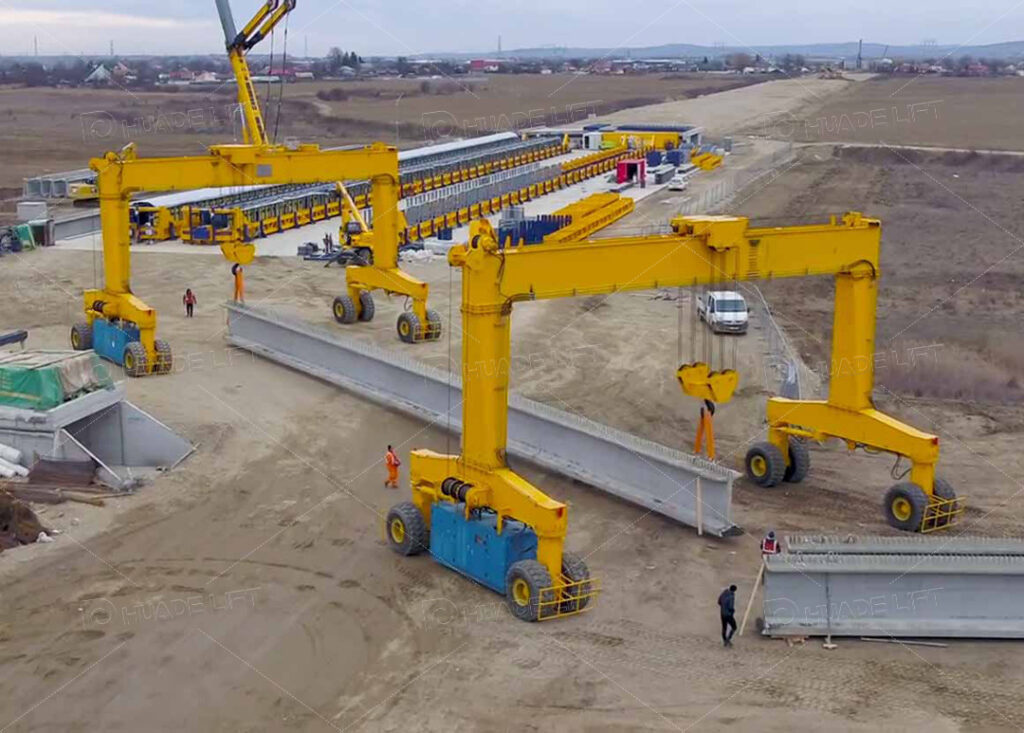
The Rubber Tyred Gantry Crane, known in Chinese as the rubber-tired gantry crane, primarily consists of a steel gantry frame, hoisting mechanism, traveling mechanism, electrical system, and tire-mounted travel unit. Unlike fixed rail-mounted equipment, it relies on rubber tires for free movement within the yard without requiring track installation, offering greater site adaptability.
Its operational principle involves lifting cargo via the hoisting mechanism, then transporting it to designated locations through the travel system. Integrated with modern control systems, this equipment enables precise positioning and efficient stacking.
Core Advantages
High Mobility: Flexible deployment across different yards.
Energy Efficiency & Environmental Protection: Some models utilize electric or hybrid power to reduce emissions.
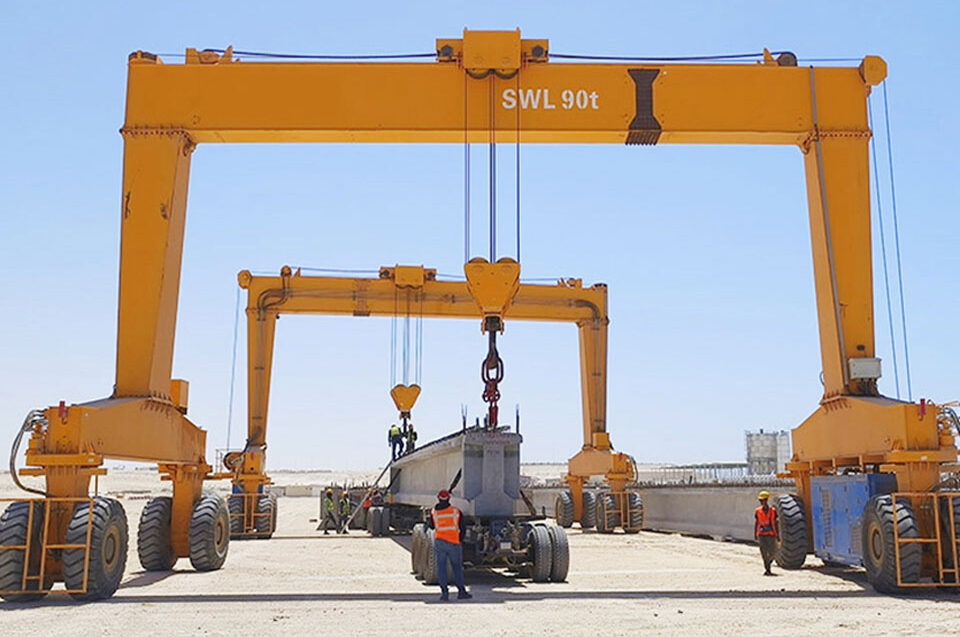
Multi-scenario Adaptability: Suitable for diverse cargo types including containers, steel, precast concrete, and wind turbine components.
Core Requirements for Intelligent Yard Management
Enhancing Operational Efficiency and Loading/Unloading Speed
In today’s fast-paced logistics environment, boosting operational efficiency and handling speed is the primary objective of intelligent yard management. As cargo throughput continues to rise, traditional manual operations and inefficient equipment can no longer meet demands. Smart yards require advanced equipment and technology to achieve rapid cargo handling and movement, reducing vessel and vehicle waiting times while boosting overall operational efficiency. Statistics indicate that the average global container yard operational efficiency is only 30%, leaving significant room for improvement. By introducing automated equipment and intelligent scheduling systems, operational efficiency is projected to increase by over 30%.
Optimizing Yard Space Utilization
As port scales expand and cargo volumes increase, yard space becomes increasingly constrained. Optimizing space utilization is a critical task for smart yard management. Rational cargo layout and efficient stacking equipment maximize limited space to increase storage capacity. Intelligent yard management systems use data analytics and optimization algorithms to assign optimal storage locations, enhancing space utilization and reducing land costs.
Reducing Operational Costs and Labor Dependency
Rising labor costs and operational expenses pose significant challenges for ports and logistics enterprises. Intelligent yard management aims to reduce reliance on manual labor and lower operational costs through automated equipment and smart systems. Automated equipment enables 24/7 uninterrupted operations, minimizing human fatigue and errors while improving task accuracy and stability. Simultaneously, intelligent systems provide real-time monitoring and maintenance of equipment, predicting failures in advance to reduce repair costs.
Integration Requirements for Digital and Information Systems
In the digital era, intelligent yard management relies on digital and information systems. Technologies like IoT, big data, and cloud computing enable real-time monitoring and data collection for yard equipment, cargo, and operational workflows. Analyzing and processing this data provides decision-making insights, optimizes resource allocation, and boosts operational efficiency. The integration of digital and information systems also enables information sharing and collaborative operations between yards and other logistics segments, enhancing transparency and responsiveness across the entire supply chain.
The Application Value of Rubber-Tired Gantry Cranes in Intelligent Yard Management
High Mobility and Flexible Scheduling
The high mobility of Rubber-Tired Gantry Cranes (RTGs) enables flexible scheduling within intelligent yards. Based on varying operational tasks and yard layouts, RTGs can swiftly relocate to designated positions for cargo loading, unloading, and handling. During multi-task operations, intelligent scheduling systems allocate tasks rationally according to equipment location, status, and priority, maximizing RTG capabilities and boosting overall efficiency. This flexible scheduling capability enables yards to rapidly respond to emergencies and operational peaks, ensuring uninterrupted logistics flow.
Precise Positioning and Efficient Stacking
Combining advanced sensor technology with automated control, Rubber Tyred Gantry Cranes achieve precise positioning and efficient stacking. Sensors continuously monitor the position of the lifting device, the status of cargo, and distances to surrounding objects. Through automated control systems, crane operations are precisely managed to ensure cargo is accurately placed at designated locations. Intelligent anti-sway technology effectively minimizes swaying of the lifting device during lifting and movement, enhancing operational stability and safety. Within container yards, RTGs precisely stack containers to designated layer heights, maximizing yard space utilization and stacking efficiency.
Reduced Forklift Dependency
In traditional yard operations, forklifts are typically primary handling equipment, yet they suffer from high energy consumption, low efficiency, and significant safety risks. The application of Rubber Tyred Gantry Cranes (RTGs) can significantly reduce reliance on forklifts. RTGs possess far greater lifting capacity and operational reach than forklifts, enabling the simultaneous transport of multiple containers or large cargo items. This reduces energy consumption and safety risks during transportation. Furthermore, the coordinated operation of RTGs with other automated equipment can establish a more efficient and intelligent logistics handling system, elevating the overall operational level of the yard.
Scalable Operation Modes
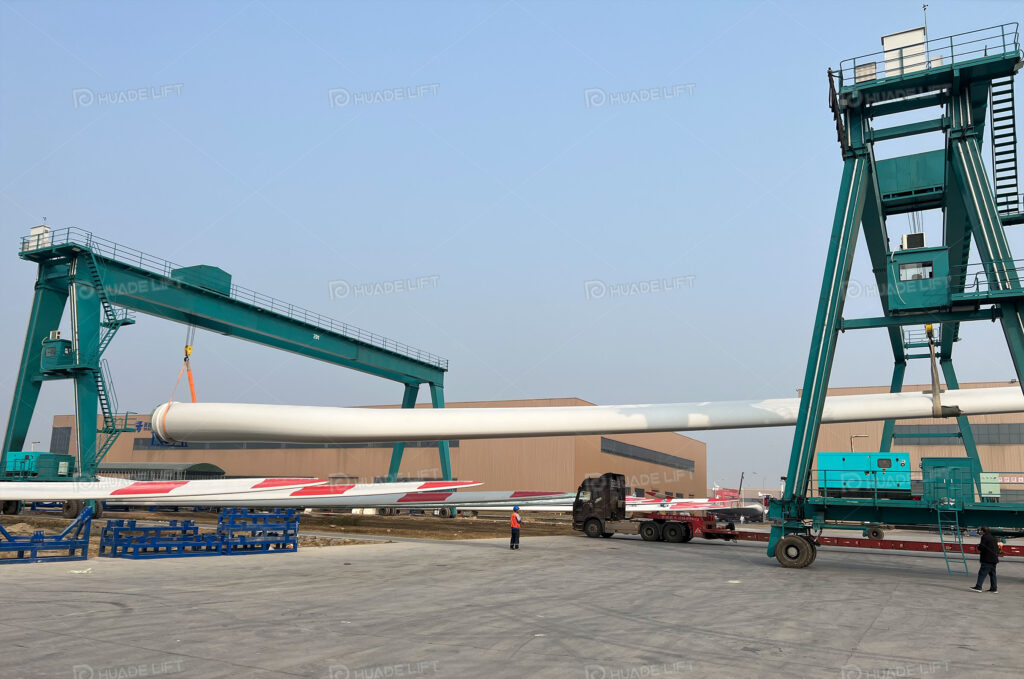
Rubber Tyred Gantry Cranes feature scalable operation modes to accommodate diverse cargo handling requirements. Beyond standard containers, they can load, unload, and stack large, heavy items like steel, wind turbine components, and precast concrete. By swapping specialized lifting attachments and adjusting operational parameters, RTGs adapt flexibly to varying cargo characteristics and demands. When handling extra-long or oversized cargo like wind turbine components, the RTG ensures safe transportation through specialized lifting attachments and a stable gantry frame, providing reliable logistics solutions across industries.
Practical Experience in Different Cargo Yard Types
Container Yard
Rubber-Tyred Gantry Cranes are extensively deployed in container yards. At a major international port, for instance, RTG implementation significantly boosted container handling efficiency. Through intelligent dispatch systems, RTGs rapidly respond to vessel and vehicle loading/unloading demands, reducing average movement time by approximately 30%. Simultaneously, RTGs’ precise positioning and efficient stacking capabilities increased container yard space utilization by over 20%. Environmentally, electrically powered RTGs substantially reduced exhaust emissions, aligning with the port’s green development philosophy. By adopting RTGs, the port not only enhanced operational efficiency but also lowered costs, strengthening its competitiveness in the international shipping market.
Bulk Cargo Yard
RTGs also play a vital role in bulk cargo yards. During the loading, unloading, and stacking of bulk materials like coal and ore, RTGs equipped with specialized grab attachments enable efficient handling and transportation. Automated control systems precisely regulate the opening/closing and lifting height of the grabs, enhancing loading/unloading accuracy while minimizing cargo spillage and loss. At a major coal terminal, adopting RTGs for bulk cargo operations increased operational efficiency by 40% while reducing labor costs and environmental pollution. The RTG’s mobility allows it to navigate freely within bulk cargo yards, rapidly adjusting its position based on cargo stacking conditions and transportation requirements, thereby improving overall yard operational efficiency.
Large Component Yard
In large component yards handling items like wind turbine parts or precast concrete elements, the advantages of Rubber Tyred Gantry Cranes become even more pronounced. These large components are typically heavy and long, demanding exceptional lifting capacity and stability from handling equipment. The RTG, with its robust hoisting mechanism and stable gantry frame, safely and efficiently handles these massive components. At a wind turbine manufacturing base’s yard, the RTG manages the loading, unloading, and stacking of wind turbine blades and towers weighing tens of tons. Utilizing specially designed lifting attachments and precise positioning systems, the RTG accurately places large components in designated locations, ensuring operational safety and accuracy. Following the introduction of RTGs at this base, the handling efficiency of large components has increased by over 50%, effectively ensuring smooth production and transportation.
Energy Efficiency and Sustainable Development Solutions
Hybrid and Electrification Trends in Rubber Tyred Gantry Cranes
In response to global carbon reduction goals, hybrid and electrification have become key development trends for Rubber Tyred Gantry Cranes. Traditional diesel-powered RTGs consume high energy and emit significant pollutants, causing substantial environmental damage. Electric RTGs, powered by electricity, drastically reduce exhaust emissions, enabling zero- or low-pollution operations. Some advanced ports have begun testing hydrogen fuel cell RTGs to address the range limitations of pure electric equipment while achieving truly zero emissions. With continuous advancements in battery technology and decreasing costs, electric RTGs will see broader adoption in the future, becoming a vital pillar for green port development.
Tangible Achievements in Energy Conservation, Consumption Reduction, and Emission Cuts
Numerous ports have achieved significant energy savings, reduced consumption, and lower emissions after adopting hybrid or electric Rubber Tyred Gantry Cranes. For instance, one port replaced some diesel-powered RTGs with electric models, reducing annual diesel consumption by thousands of tons and correspondingly cutting emissions of pollutants like carbon dioxide and nitrogen oxides. Additionally, electric RTGs demonstrate higher energy efficiency, reducing energy consumption by over 30% compared to diesel counterparts. The integration of energy recovery systems further enhances efficiency by enabling energy recycling. These tangible benefits not only improve environmental quality around ports but also align with sustainable development principles, laying a foundation for long-term port growth.
Integration of Smart Management with Sustainable Port Development
Smart management is intrinsically linked to sustainable port development. As the core equipment in intelligent yard management, Rubber Tyred Gantry Cranes (RTGs) align perfectly with sustainable port objectives through their advantages in energy conservation, consumption reduction, and emission minimization. Intelligent equipment management and scheduling systems optimize crane operations, cutting unnecessary energy consumption and emissions. Smart management systems also enable real-time monitoring and analysis of port energy consumption and environmental metrics, providing data-driven insights for sustainable development strategies. Integrating smart management with sustainable port construction achieves a win-win scenario of enhanced operational efficiency and environmental protection, propelling the port industry toward greener, more sustainable practices.
Future Trends and Development
Full Automation
In the future, Rubber Tyred Gantry Cranes (RTGs) will evolve toward full automation, enabling unmanned yard operations. Leveraging 5G communication, AI visual recognition, and Internet of Things (IoT) technology, RTGs can achieve higher levels of automation. Automatic container location functions use laser scanning and AI algorithms to precisely identify container positions; Intelligent path planning systems optimize travel routes based on real-time yard conditions, avoiding congestion and boosting operational efficiency; remote monitoring and maintenance systems provide real-time equipment status tracking, predictive failure detection, and reduced downtime. Simultaneously, unmanned yards will integrate with intelligent transportation systems to enable seamless cargo transfer between yard equipment, transport vehicles, and vessels, further enhancing logistics efficiency.
5G and IoT Integration
The convergence of 5G and IoT will empower Rubber Tyred Gantry Cranes with enhanced real-time communication and intelligent collaboration capabilities. The high-speed, low-latency characteristics of 5G networks ensure timely and stable data transmission between devices. Through IoT technology, RTGs can interconnect with other yard equipment, sensors, and smart terminals, forming an intelligent collaborative operation network. Within this network, RTGs can obtain real-time environmental information and intelligently collaborate with other equipment to jointly execute complex operational tasks. The integration of 5G and IoT will also provide enhanced support for remote operation and monitoring, enabling managers to control equipment operations with greater precision.
Global Smart Port Development Trends
As the global push toward smart port construction accelerates, Rubber Tyred Gantry Cranes will play a crucial role. Smart port development demands efficient, intelligent yard management equipment. Leveraging their high mobility, broad adaptability, and advanced intelligence, RTGs will become core equipment for smart port yard operations. In future smart ports, RTGs will integrate with automated terminal equipment, intelligent warehousing systems, and big data analytics platforms to build a highly intelligent logistics ecosystem, enabling efficient, precise, and green port operations. Technological innovations and application expansions of RTGs will provide robust support for global smart port development, propelling the port industry toward a new phase of advancement.
Conclusion
Rubber Tyred Gantry Cranes, with their flexible mobility, energy-saving and environmentally friendly advantages, and broad adaptability, are emerging as the core solution for intelligent yard management. They not only enhance operational efficiency and optimize yard space utilization but also effectively reduce operational costs and energy consumption.
Driven by both digitalization and green initiatives, RTGs possess immense potential for technological convergence and advancement. In the future, with the further application of automation, 5G, and the Internet of Things, Rubber Tyred Gantry Cranes will play an increasingly vital role in global smart port development, delivering long-term value to ports, logistics, and manufacturing.
