
The challenges in hoisting wind turbine towers manifest across three dimensions: First, the pressure stemming from the towers’ physical characteristics. As the capacity of individual wind turbines increases, tower height and weight grow accordingly. These massive components impose stringent demands on hoisting equipment’s lifting capacity, load-bearing stability, and precision control during elevated operations. Second, constraints imposed by complex site conditions. Wind projects are often sited away from densely populated areas, where terrain frequently features significant elevation changes, uneven ground bearing capacity, and confined working spaces. Traditional lifting equipment struggles to meet these demands in terms of site adaptability and mobility flexibility.
Core Challenges in Wind Turbine Tower Hoisting
The complexity of wind turbine tower hoisting operations stems from its demanding requirements across equipment, environment, and operation. Each challenge directly impacts operational safety and project quality, necessitating comprehensive technical and managerial responses.
Installation Pressures from Tower Characteristics
As large load-bearing components, wind turbine towers require structural designs balancing strength and lightweighting. Yet they inherently exhibit the physical characteristics of being tall, heavy, and long. During installation, the tower’s height demands lifting equipment with sufficient boom length and high-altitude stability to ensure smooth elevation to the designated installation height. Its weight imposes stringent requirements on the rated lifting capacity and structural strength of the equipment, necessitating precautions against structural deformation or overturn risks due to overload. Additionally, the tubular shape of the tower is prone to swaying during lifting, complicating precise positioning. Improper control may result in collisions between the tower and pre-installed components, causing structural damage.
Limitations and Impacts of Site Conditions
The site characteristics of wind power projects are a key factor constraining hoisting operations. Mountainous wind projects are often situated on slopes, ridges, and other terrain with significant elevation changes. Ground gradients may exceed the operational limits of conventional lifting equipment, making stable positioning difficult and increasing the risk of tilting during operations. Additionally, mountainous sites frequently feature dense vegetation and exposed rock formations, which not only restrict working space but may also complicate equipment movement planning. This necessitates additional site clearing and path preparation, further increasing operational complexity.
Uncontrollable Risks from Natural Environments
Natural environmental factors represent an unavoidable risk source in wind turbine tower erection operations. Strong winds are one of the primary influencing factors. Even conventional wind speeds can generate horizontal thrust during tower lifting, increasing component sway. This not only compromises precise alignment but may also impose additional lateral loads on the crane boom, potentially exceeding the equipment’s design capacity. Sudden gusts or severe typhoons may even force immediate suspension of operations. Improper handling could cause uncontrolled movements of lifted sections, potentially resulting in serious accidents.
Core Advantages of Pneumatic-Tire Gantry Cranes for Wind Tower Lifting
Pneumatic-tire gantry cranes (a type of rubber tyre gantry crane) excel in wind tower lifting operations due to their performance characteristics aligning perfectly with the demands of this task. They specifically address the pain points faced by traditional lifting equipment, providing multiple safeguards for operational safety and efficiency.
Exceptional Site Adaptability and Maneuverability
Equipped with tyre-mounted travel mechanisms, rubber tyre gantry cranes impose far fewer ground condition requirements than crawler cranes. They eliminate the need for extensive site leveling or protective measures like steel plates or road base boxes, enabling smooth movement directly on unpaved surfaces and gently undulating terrain. This characteristic provides a significant advantage in the complex terrain of mountainous wind power projects. Rubber tyre gantry cranes can flexibly adjust parking positions and operating angles based on task requirements, reducing time and cost investments in site modifications.
Simultaneously, the rubber tyre gantry crane’s steering system is designed with flexibility, supporting multi-angle steering and in-place rotation functions. In confined workspaces, it can rapidly adjust the equipment’s posture, avoiding operational range limitations caused by site constraints. For compact platform operations in coastal wind projects, this maneuverability substantially enhances hoisting convenience and reduces reliance on site-specific equipment movement. Furthermore, rubber tyre gantry cranes offer faster travel speeds than crawler cranes, enabling rapid relocation between multiple tower sections during hoisting operations and boosting overall efficiency.
Robust Lifting Capacity and Precise Control Performance
To accommodate the weight characteristics of wind turbine towers, the rubber tyre gantry crane achieves a powerful rated lifting capacity through optimized boom structures and reinforced load-bearing frames, meeting the hoisting demands of various tower specifications. The boom, constructed from high-strength steel and engineered through precise structural mechanics calculations, achieves lightweight design while maintaining sufficient bending and torsional strength. This ensures stable support for tower weights during elevated operations, preventing lifting deviations caused by boom deformation.
More importantly, rubber tyre gantry cranes are equipped with advanced hydraulic control systems and electronic monitoring systems, enabling precise control over boom elevation, luffing, slewing, and other movements. During tower lifting, operators can smoothly adjust hoisting speed through responsive control handles, preventing component sway caused by sudden speed changes. Additionally, some rubber tyre gantry cranes feature micro-adjustment capabilities, enabling millimeter-level positioning during tower alignment with installation benchmarks. This ensures precise tower docking and significantly enhances installation accuracy.
Simplified Site Preparation and Efficient Workflow
Traditional crawler cranes require extensive pre-operation site preparation, including ground leveling, track pad installation, and equipment leveling—processes that consume significant time and incur additional labor and material costs. In contrast, the rubber tyre gantry crane, leveraging its tyre-based travel mechanism, imposes lower demands on ground flatness and load-bearing capacity. Pre-operation site preparation requires only basic cleanup—removing sharp obstacles and leveling significant protrusions—significantly reducing site preparation time.
In terms of operational workflow, the assembly and commissioning of rubber tyre gantry cranes are more straightforward. They eliminate complex boom assembly or counterweight installation steps, allowing rapid commissioning and deployment upon arrival at the site. For scenarios involving the continuous hoisting of multiple tower sections, the rubber tyre gantry crane can move directly to the next section’s lifting position after completing one section’s installation. This eliminates the need for repeated disassembly and reassembly of the equipment, significantly enhancing operational continuity. This efficient workflow effectively shortens the tower installation cycle for wind power projects and reduces overall construction costs.
Outstanding Cost-Effectiveness and Comprehensive Adaptability
From a long-term operational cost perspective, rubber tyre gantry cranes offer significant advantages. On one hand, their simplified site preparation process reduces upfront site modification expenses. On the other hand, rubber tyre gantry cranes feature lower maintenance complexity. The failure rate of their tyre-mounted travel mechanisms is lower than that of crawler-mounted mechanisms, and their maintenance cycles are longer, thereby reducing routine equipment maintenance costs. Simultaneously, rubber tyre gantry cranes exhibit relatively reasonable energy consumption. While ensuring lifting efficiency, they effectively control fuel or electricity usage, reducing energy costs during operations.
Moreover, rubber tyre gantry cranes offer strong adaptability. Beyond tower erection, they can be repurposed for nacelle, blade, and other wind turbine component installations by swapping lifting attachments or adjusting boom lengths—enabling “one crane for multiple tasks” and boosting utilization rates. This multi-scenario adaptability not only reduces equipment procurement costs for enterprises but also alleviates transportation and storage pressures, offering wind power projects more flexible equipment configuration solutions.
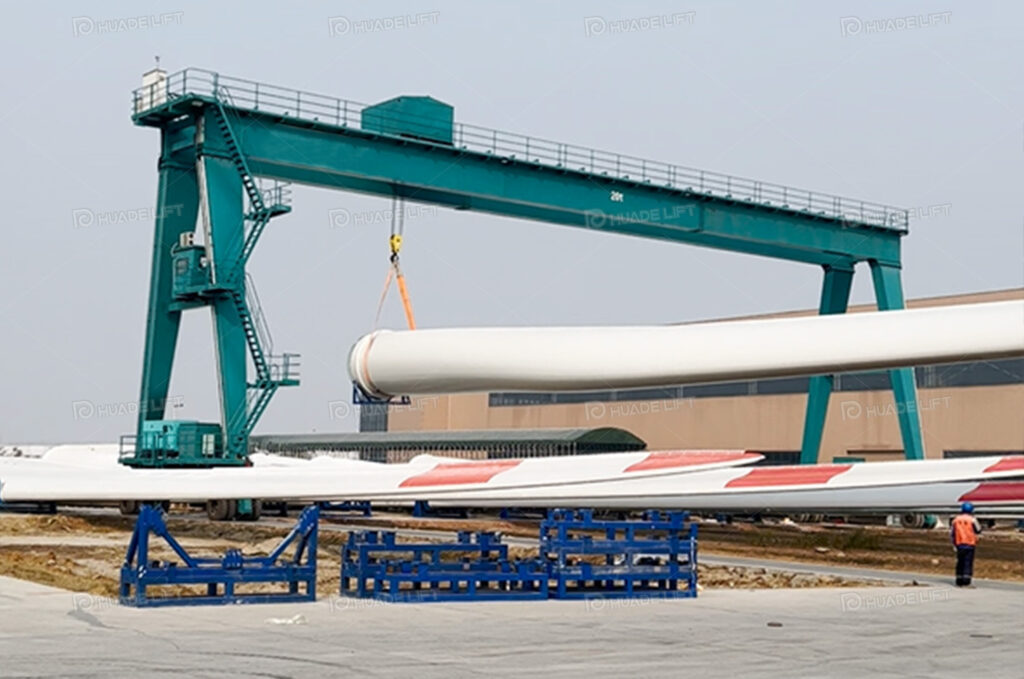
Core Features of Rubber Tyre Gantry Cranes Ensuring Wind Turbine Tower Lifting Safety
The reliable safety assurance provided by rubber tyre gantry cranes for wind turbine tower lifting stems from targeted optimizations in structural design, control systems, and safety protections. Through multiple technical measures, they establish a comprehensive safety protection system that effectively mitigates various risks during lifting operations.
High-Strength Structural Design
The structural design of rubber tyre gantry cranes adheres to the core principles of “high strength and high stability.” From the boom and gantry to the chassis, all components are fabricated from high-strength alloy steel. Advanced techniques like finite element analysis are employed to optimize critical load-bearing sections, ensuring structural integrity under heavy loads. The boom adopts a box-type or truss structure, offering not only excellent bending strength but also effectively reducing its own weight. This minimizes energy consumption and structural stress during operation. As the core support structure, the gantry employs a symmetrical design reinforced with stiffeners to enhance overall torsional resistance, preventing structural deformation caused by excessive single-side loading.
Additionally, the grounding structure of rubber tyre gantry cranes is designed with the complex conditions of wind farm sites in mind. A multi-wheel group tyre layout evenly distributes the equipment’s weight across the ground, reducing ground pressure and preventing sinking on soft soil or sites with low bearing capacity. Some rubber tyre gantry cranes also feature adjustable outrigger systems. Before operation, the outriggers can be extended, retracted, or raised/lowered to adjust the equipment’s levelness, further enhancing stability on uneven terrain and providing a solid foundation for lifting operations.
Advanced Control Systems
The control system of a rubber tyre gantry crane serves as the “central nervous system” for lifting safety. By integrating multiple advanced technologies, it achieves precise control and dynamic stability throughout the lifting process. Precise lifting control technology dynamically adjusts the boom’s lifting speed, luffing angle, and slewing speed in real time, ensuring smooth tower section hoisting and preventing component sway caused by speed fluctuations. The anti-sway control system employs sensors to monitor tower sway in real time, automatically adjusting boom movements to counteract sway caused by external wind forces or operational deviations. This keeps tower sway within safe limits, significantly enhancing positioning accuracy and safety at elevated heights.
Additionally, the rubber tyre gantry crane features an operator assistance system. Through in-cab displays, it provides real-time readings of critical parameters including load capacity, boom length, working radius, and equipment leveling. This enables operators to clearly monitor equipment status and promptly identify anomalies. Some high-end rubber tyre gantry crane models further incorporate 360° panoramic monitoring. Cameras installed throughout the equipment eliminate operator blind spots, preventing collisions caused by obstructed vision and further enhancing operational safety.
Multi-Layered Safety Protection Mechanisms
To address various potential risks during lifting operations, rubber tyre gantry cranes incorporate multi-layered safety protection mechanisms, forming a comprehensive “warning-intervention-emergency response” safety assurance system. The load monitoring system serves as a core protective component. Sensors installed on the boom, winch, and other critical areas continuously track the weight of the lifted load. When the load approaches or exceeds the crane’s rated capacity, the system automatically triggers audible and visual alarms while halting relevant operations. This prevents overload conditions, mitigating risks of structural damage or overturn.
Harsh Environment Adaptability
To address the challenging environments common in wind power projects, the rubber tyre gantry crane incorporates specialized design optimizations that enhance its environmental adaptability. Regarding wind resistance, the crane’s boom and gantry structure undergo wind tunnel testing to verify exceptional wind stability. Certain rubber tyre gantry crane models also incorporate wind load monitoring systems that continuously track wind speed and direction. When wind speeds exceed safe operating thresholds, the system alerts operators to halt operations and secures the equipment and lifted tower sections by locking the boom and retracting the winch, preventing swaying or component loss of control due to high winds.
For low-temperature and humid environments, the hydraulic and electrical systems of rubber tyre gantry cranes incorporate low-temperature protection designs. Hydraulic oil with superior low-temperature flow properties is selected, while electrical components feature waterproofing and anti-condensation capabilities, ensuring reliable operation in cold, rainy, or snowy conditions. The equipment surface is treated with corrosion-resistant coatings that effectively resist salt spray erosion in coastal areas, extending service life. These environmental adaptation features enable the rubber tyre gantry crane to maintain stable performance under complex climatic conditions in wind power projects, ensuring the continuous advancement of hoisting operations.
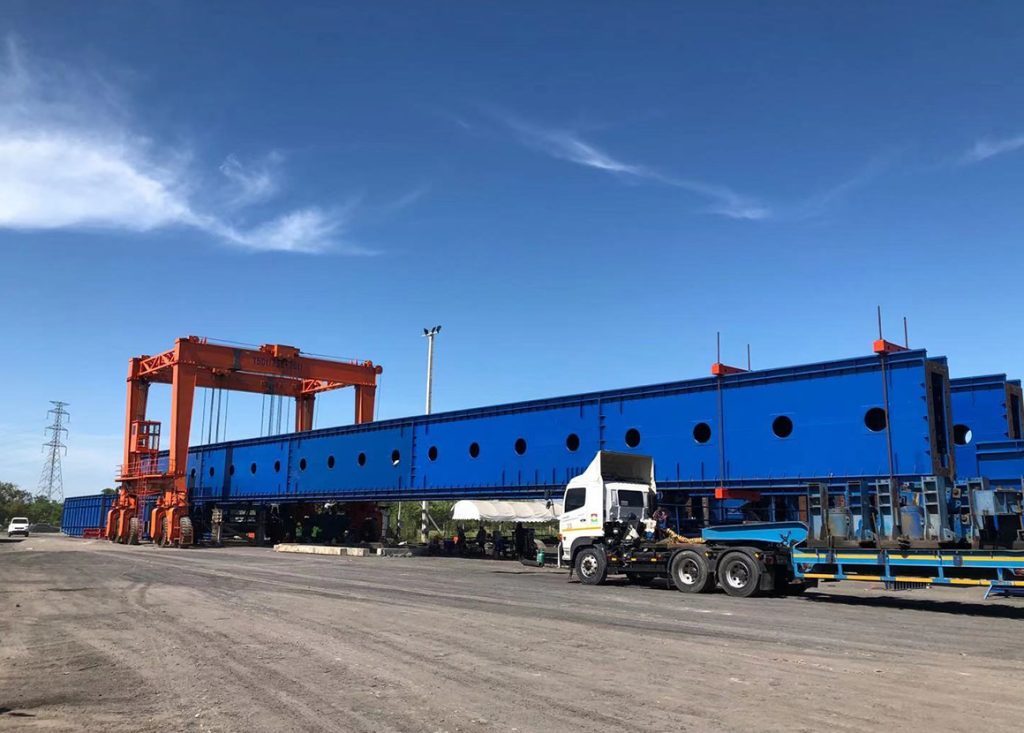
Rubber Tyred Gantry Crane for Transporting Steels
How Rubber Tyre Gantry Cranes Ensure Safe and Reliable Hoisting of Wind Turbine Towers
Multi-Position Coordination and Emergency Management
Wind turbine tower hoisting operations involve multiple roles including rubber tyre gantry crane operators, ground supervisors, safety monitors, and technical inspectors. A collaborative mechanism must be established based on “unified command, clear division of responsibilities, and rapid response.” Pre-operation meetings are required to clarify duties, communication protocols, and standardized command signals (e.g., flag signals, radio channels, hand gestures) to ensure accurate information transmission. Ground signalers must position themselves in areas with unobstructed visibility and no safety hazards to continuously monitor the hoisting status and promptly issue adjustment commands to the operator. Safety supervisors must strictly monitor the operational exclusion zone, prohibiting unauthorized personnel and equipment from entering, while simultaneously tracking environmental wind speed changes. Should wind speeds exceed safe operation standards, they must immediately issue a shutdown warning.
Specialized emergency plans must be developed and regularly rehearsed for potential contingencies: If rubber tyre gantry crane’s hydraulic system failure prevents tower section elevation/lowering, immediately activate the backup power unit and manually lower the tower section to a safe position using a hand pump. If partial wear occurs in the rigging, deploy backup rigging for replacement while securing the tower section with temporary supports to prevent falling. During extreme weather, the tower must be swiftly secured to temporary supports and the rubber tyre gantry crane’s wind-anchor system activated to ensure equipment and tower safety. Emergency drills must be conducted quarterly to enhance interdepartmental coordination capabilities, ensuring rapid response and effective handling during incidents.
Conclusion
Amid the wind power industry’s rapid shift toward large-capacity, complex scenarios, rubber tyre gantry cranes (rubber tyre gantry cranes) have emerged as the ideal equipment for tower hoisting due to their exceptional site adaptability, precise lifting control capabilities, and comprehensive safety protection systems. From mountainous terrain to coastal salt fog environments, rubber tyre gantry cranes (rubber tyre gantry cranes) effectively address diverse challenges through targeted technical optimizations and standardized operations, ensuring safe and efficient tower hoisting.
For wind power project developers, selecting rubber tyre gantry cranes for tower erection represents the optimal decision balancing safety, efficiency, and cost. With ongoing technological innovations in rubber tyre gantry cranes (rubber tyre gantry cranes)—such as intelligent monitoring systems and new energy power units—their safety assurance capabilities in tower erection will further enhance, providing stronger equipment support for the sustainable development of the global wind power industry. In future wind power project construction, Rubber tyre gantry cranes (rubber tyre gantry cranes) will undoubtedly play an increasingly vital role, contributing to the achievement of the wind power industry’s goals for safe and efficient development.
