
What is a Rubber Tyred Gantry Crane
The rubber tyred gantry crane, commonly abbreviated as a rubber tyred gantry crane, is a heavy-duty lifting equipment playing a pivotal role in industrial applications. Utilizing rubber rubber tyred gantrys as its travel mechanism and featuring a gantry frame structure, it combines mobility with stability. This crane is extensively deployed in ports, railway yards, large logistics centers, beam yards, wind power facility construction, and numerous other scenarios.
Features of Rubber Tyred Gantry Cranes
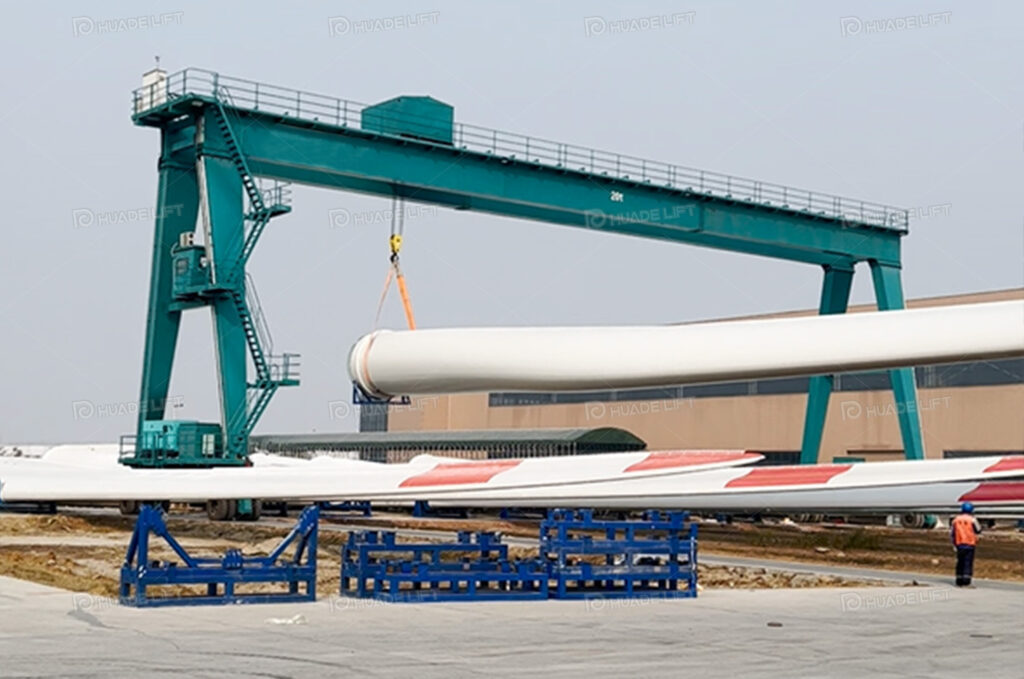
Versatility: Rubber tyred gantry cranes adapt to diverse cargo handling needs. Whether transporting large machinery, precast beams, or wind turbine components, they effortlessly manage tasks through versatile lifting attachments and exceptional load-bearing capacity. In wind power construction, facing components like blades and towers of varying sizes and weights, these cranes safely and stably complete lifting operations by switching specialized attachments, ensuring project progress.
Mobile Flexibility: Unlike cranes confined to fixed tracks, rubber tyred gantry cranes utilize rubber rubber tyred gantrys for mobility, granting them exceptional maneuverability. When temporary work area adjustments are needed, rubber tyred gantry cranes can rapidly relocate, significantly boosting operational efficiency.
High Space Utilization: Rubber tyred cranes possess robust stacking capabilities, typically enabling 5-7 layers of cargo stacking.
Eco-Friendly and Energy-Efficient: With technological advancements, many rubber tyred gantry cranes now utilize electric or hybrid power systems. Compared to traditional diesel engines, these significantly reduce exhaust emissions and energy consumption. Some electric models feature energy recovery systems that convert potential energy into electricity during cargo descent, storing it for subsequent operations. This further enhances energy efficiency and contributes positively to environmental protection.
Superior Safety: Rubber tyred gantry cranes incorporate advanced safety features such as collision avoidance systems, overload protection devices, and emergency braking systems. Collision avoidance systems continuously monitor distances between the crane and surrounding objects, triggering immediate alerts and automatic braking when potential hazards are detected to prevent accidents. Overload protection ensures the crane operates within safe load limits, effectively safeguarding both equipment and personnel.
Cost-Effectiveness: Although the initial purchase cost of a rubber tyred gantry crane is relatively high, its outstanding durability and low maintenance requirements provide significant cost advantages over the long term. Its rational structural design and key components made from high-quality materials enable it to withstand frequent heavy-load operations, reducing equipment failures and maintenance frequency.
Rubber Tyred Gantry Crane Specification and Dimensions
Rubber tyred cranes feature numerous specifications, each closely tied to operational requirements and collectively forming the foundation for efficient work.
Load capacity is one of the most critical parameters, directly determining the maximum weight the crane can handle. Typically ranging from 20 to 60 tons, this capacity meets the demands of most industrial scenarios. For lifting large precast beams or wind power equipment, a 60-ton capacity ensures smooth operation.
Span refers to the horizontal distance between the two outriggers of a rubber tyred gantry crane, defining the crane’s lateral working range. In practice, span is typically determined by the layout of the worksite and the arrangement of goods. In relatively confined spaces like beam yards or logistics centers, span is reduced accordingly to accommodate site conditions.
Lifting height is equally important, as it determines the vertical height to which the rubber tyred gantry crane can raise cargo. For scenarios requiring multi-level cargo stacking, or in wind power facility construction where turbine components must be lifted to specific installation heights, higher lifting heights may be necessary to meet construction requirements.
The following drawings provide a more intuitive representation of how key specifications manifest in the actual structure of a rubber tyred gantry crane. These parameters offer deeper insight into the crane’s performance characteristics, providing a solid basis for selecting the appropriate crane.
The specification and dimensional design of a rubber tyred gantry crane involves a comprehensive evaluation process. It requires thorough consideration of operational requirements, site conditions, and other factors to ensure the crane can operate efficiently and safely in various complex environments.
Rubber Tyred Gantry Crane Specification Factors
In industrial applications, rubber tyred gantry crane specifications are influenced by multiple interrelated factors that collectively shape the crane’s performance and applicability.
Load Capacity and Lifting Performance
Load capacity determines the maximum weight a crane can safely lift, typically ranging from 20 to 60 tons. A 20-ton capacity suffices for handling large machinery in port operations, whereas lifting massive wind turbine components during wind power facility construction may require a 60-ton capacity crane. Lifting performance is closely related to lifting speed and height, which depend on the crane’s hoisting mechanism—including motor power, gearbox reduction ratio, and wire rope specifications. Higher motor power enables faster lifting speeds, allowing for more efficient hoisting tasks; while appropriate wire rope specifications ensure safety and stability during the lifting process.
Structural Components and Material Selection
Structural components and materials significantly influence the specifications and performance of rubber tyred gantry cranes. The main steel structure, serving as the crane’s skeleton, requires sufficient strength and stability, typically manufactured from high-strength steel. The quality and specifications of the steel directly impact the crane’s load-bearing capacity and service life. For instance, in large ports where frequent handling of heavy cargo occurs, the main steel structure of rubber tyred gantry cranes employs higher-strength steel to ensure long-term stable operation. Components like wheels and bearings must also be appropriately selected based on the crane’s load capacity and operational requirements to guarantee mobility and reliability. Material choices must additionally consider factors such as corrosion resistance and wear resistance to adapt to diverse working environments. In humid settings like coastal areas, crane components require excellent corrosion resistance to extend service life.
Power Supply and Control Systems
The power supply and control systems constitute another critical factor influencing rubber tyred gantry crane specifications. The type of power source determines the crane’s propulsion method, with common options including diesel, electric, and hybrid. Diesel power suits locations with unstable or limited electricity supply, offering strong mobility; electric drive provides environmental benefits, energy efficiency, and low operating costs, ideal for sites with stable power; hybrid systems combine both advantages, allowing flexible switching between power modes based on operational needs. The sophistication of the control system directly impacts the crane’s operational precision and safety. Modern rubber tyred gantry cranes are equipped with advanced automated control systems featuring functions such as variable frequency speed control, remote monitoring, and collision avoidance. These capabilities not only enhance operational efficiency but also significantly improve the crane’s safety and reliability. In automated ports, operators can precisely control rubber tyred gantry cranes from control rooms via remote monitoring systems while continuously tracking real-time operational status to promptly identify and resolve potential issues.
Determining the Specifications of a Rubber Tyred Gantry Crane
Selecting the appropriate rubber tyred gantry crane hinges on accurately analyzing operational requirements and site conditions. Below are detailed steps for specifying crane parameters:
Assess Load Requirements: Determine the maximum weight of goods to be lifted. The crane’s load capacity must exceed this value. For instance, when hoisting wind turbine towers during wind power facility construction, the substantial weight of the tower requires selecting a rubber tyred gantry crane with matching load capacity. Additionally, incorporate the weight of auxiliary equipment like lifting gear and slings used during operations to ensure the crane operates within its safe load limits.
Assess Site Dimensions: Accurately measure the width and length of the crane’s operational area. These measurements are critical for determining the crane’s span and lifting height. Additionally, note any obstacles within the work area, such as buildings or utility poles, along with limitations like ground bearing capacity and slope, as these factors impact normal crane operation.
Analyze Workflow: Gain a thorough understanding of cargo movement paths and methods within the site, determining the average distance goods typically need transported and the required handling speed. In logistics centers, where frequent handling occurs over varying distances, longer-distance operations necessitate rubber tyred gantry-mounted cranes with higher trolley travel speeds. For applications demanding higher handling speeds, both trolley travel and lifting speeds must be correspondingly increased to ensure operational efficiency.
Consider power options: Weigh the advantages and disadvantages of diesel, electric, and hybrid power systems based on actual operating environments and requirements to make an appropriate selection. In ports with stable and ample power supply, electric rubber tyred gantry cranes are the preferred choice due to their environmental friendliness and energy efficiency. In remote areas with unstable or limited power supply, diesel-powered rubber tyred gantry cranes hold greater advantages. Hybrid rubber tyred gantry cranes combine the strengths of both, allowing flexible switching between power modes based on operational conditions, making them suitable for diverse complex work environments.
Assessing Maneuverability: In confined workspaces or when frequent crane repositioning is required, the crane’s turning radius and trolley travel speed become critical factors. A smaller turning radius enables agile maneuvering in tight spaces, while higher trolley speeds enhance operational efficiency. Older, compactly laid-out terminals necessitate rubber tyred gantry cranes with minimal turning radii and superior maneuverability.
Inspect the Hoisting Mechanism: Thoroughly examine all performance metrics of the hoisting mechanism to ensure its lifting height meets operational requirements and operates stably and reliably. Additionally, verify if the hoisting mechanism incorporates advanced anti-sway technology, such as electronic anti-sway systems or mechanical anti-sway devices. These technologies effectively reduce cargo sway during lifting and transport, enhancing operational safety and stability.
Inspect the control system: Select a rubber tyred gantry-mounted crane with a control system matching operational needs. Highly automated systems enable remote operation, automatic positioning, and fault diagnosis, significantly boosting efficiency and safety. For simpler environments with lower automation requirements, standard control systems offer a more economical and practical solution. Modern ports typically opt for rubber tyred gantry-mounted cranes with advanced automated control systems to maximize overall operational efficiency.
Consult Manufacturers and Suppliers: Engage in thorough discussions with rubber tyred gantry crane manufacturers and suppliers, clearly outlining your operational requirements and site conditions. Leveraging their specialized technical expertise and extensive experience, they can recommend suitable crane models tailored to your specific needs and provide customized solutions. Additionally, they can share the latest industry technological advancements and best practices, empowering you to make more informed decisions.
Rubber Tyred Gantry Crane Parts Name
Trolley Travel Mechanism: The core component for horizontal movement, determining the crane’s maneuverability. It primarily consists of wheel sets, transmission mechanisms, frame balance beams, and steering systems. Wheel sets are constructed from high-strength steel to withstand heavy loads and high-speed operation; transmission mechanisms are motor-driven to ensure smooth movement; balance beams absorb inertial forces; and steering systems enable 90-degree turns via steering gears, adapting to yard operation requirements.
Electrical System: Serving as the “nerve center” controlling equipment operation, it includes the distribution box, cable reel, and centralized control console. The distribution box stably allocates power, the cable reel handles electrical transmission, and the centralized control console is the core device enabling operators to achieve precise control.
Operator Cab: The operator’s primary work area, fully equipped with control switches and gauges. Its unobstructed visibility and user-friendly operation allow operators to clearly grasp site conditions, ensuring safe and efficient operations.
Hoisting Mechanism: Responsible for vertical cargo lifting, comprising an electric hoist, wire rope, pulley block, and hook. The electric hoist provides power, working with the wire rope and pulley block to raise and lower the hook. The hook directly connects to the cargo to ensure safe lifting.
Trolley Travel Mechanism: Mounted on the gantry frame’s crossbeam, it drives the hoisting mechanism’s lateral movement to expand the operational range. Comprising the trolley frame, drive unit, wheels, and guidance system, the drive unit supplies power while the guidance system prevents deviation, ensuring smooth operation.
Maintenance of RTG Crane Parts
Regular maintenance of rubber tyred gantry crane components is essential for ensuring safe and efficient operation. It extends equipment lifespan while reducing operational costs. Maintenance must cover critical components comprehensively and meticulously.
Structural Component Maintenance
Focus on inspecting structural elements such as the frame, outriggers, and main beam for wear, deformation, cracks, and corrosion. As the primary load-bearing component, cracks in the main beam require immediate attention. Verify bolt tightness and weld integrity at outrigger connection points; promptly repair or replace components to ensure structural stability.
Wheel Assembly Maintenance
Daily inspections should cover rubber tyred gantry wear, bulges, and cuts. Remove surface debris and regularly check rubber tyred gantry pressure. Simultaneously inspect hubs and bearings for looseness or overheating. Apply grease on schedule, and promptly replace worn or faulty components to ensure crane mobility.
Drive System Maintenance
Inspect motor operating status and clean cooling components to ensure heat dissipation. Regularly check reducer oil levels and temperatures, replace lubricants, and examine gear wear. Focus on inspecting brake pad wear, adjust clearances to ensure reliable braking, and repair faults promptly.
Hoisting Mechanism Maintenance
Daily inspection of wire rope for wear, broken strands, and corrosion; replace immediately if exceeding standards. Apply specialized lubricant periodically. Inspect sheave and drum wear and lubricate with grease. Inspect hooks for deformation and cracks; conduct periodic non-destructive testing to ensure lifting safety.
Control System Maintenance
Inspect control buttons, displays, and wiring. Repair or replace faulty components and regularly update system software. Calibrate weight, height, and other sensors to ensure sensitivity and accuracy, guaranteeing stable control system operation.
Electrical Component Maintenance
Inspect cables for damage or aging. Secure wiring terminals to ensure reliable connections. Perform regular motor maintenance and check insulation performance. Implement waterproofing, moisture-proofing, and dust-proofing measures for electrical equipment to prevent environmental-induced failures.
Safety Device Maintenance
Safety devices are critical for crane operation and require regular inspection and maintenance. Overload limiters, anti-collision devices, emergency brakes, and other safety systems must undergo periodic testing and calibration to ensure sensitivity and reliability. Immediately cease crane operation and perform repairs or replacements upon detecting any safety device malfunction to safeguard operational safety.
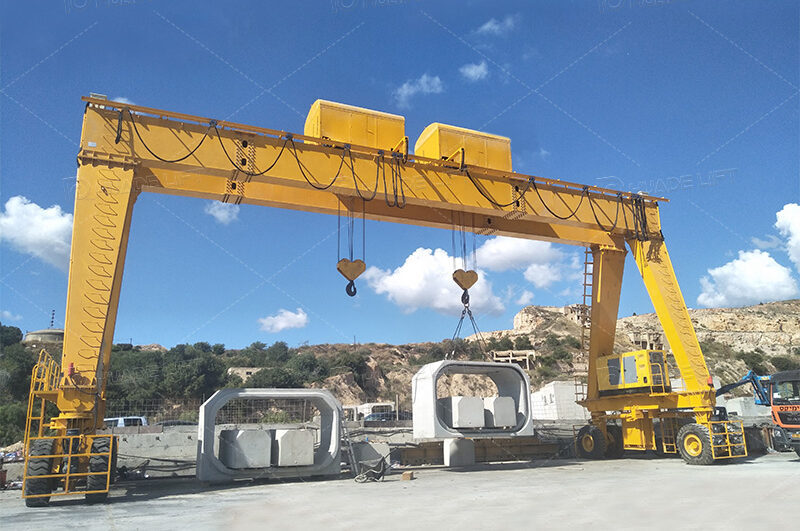
Rubber Tyre Gantry Crane Safe Operation
Safe operation is central to rubber tyred gantry crane work. Before operation, conduct a comprehensive inspection: check structural components for cracks, ensure bolts are tightened, verify rubber tyred gantry pressure, and confirm safety devices and electrical systems are functioning normally. During operation, strictly prohibit overloading or off-center loading. No personnel are allowed beneath the load or within the operating radius. Avoid sudden acceleration or braking. Immediately stop operation and seek shelter during severe weather such as strong winds or heavy rain. Operators must undergo regular professional training and be proficient in emergency response procedures.
Conclusion
Rubber tyred gantry cranes serve as core equipment in industrial material handling. Their specifications must align with operational requirements, and their versatile features make them powerful tools for enhancing efficiency and reducing costs. Regular maintenance of structural components and wheels ensures stable equipment operation and safety.
