
The Significance of Choosing the Reliable Crane Manufacturer
In industrial production and engineering construction, cranes are critical heavy equipment whose safety, stability, and reliability directly impact project schedules, operational costs, and personnel safety. Cranes typically operate under high loads and complex conditions over extended periods. Therefore, selecting a reliable crane manufacturer is not merely a matter of price comparison but a strategic decision affecting the stable operation of the project throughout its entire lifecycle.
A dependable manufacturer not only delivers equipment tailored to operational requirements but also consistently adds value through delivery, installation, maintenance, and long-term service—becoming a vital long-term partner for enterprises.
Types of Crane Manufacturers in the Global Market
OEM Crane Manufacturers vs. Trading Companies
OEM crane manufacturers operate their own factories, exercising full control over design, R&D, production, and testing. They maintain independent R&D teams, support customized designs, and enforce stringent quality control. Trading companies lack production capabilities, merely aggregating third-party resources for sales—functioning as intermediaries.OEM manufacturers are the preferred choice for complex operating conditions or custom projects.
Local Manufacturers vs. Overseas Crane Suppliers
Local manufacturers excel in prompt on-site service, rapidly addressing installation, commissioning, and repair needs to minimize downtime losses. Overseas manufacturers offer greater competitiveness in product diversity and pricing, catering to specialized lifting requirements.
Selecting overseas suppliers hinges on evaluating their export experience and international delivery capabilities.Whether local or overseas, the core evaluation criterion remains the alignment of service capabilities with project requirements.
Specialized Crane Manufacturers vs. General Equipment Suppliers
Specialized crane manufacturers focus deeply on the lifting sector, possessing profound expertise in equipment design, safety controls, and operational adaptation. They can precisely match diverse industry-specific needs. General equipment suppliers offer broad portfolios and one-stop procurement but exhibit weaker specialization in crane technology.
Therefore, projects where lifting operations are critical should prioritize specialized manufacturers to ensure equipment reliability and safety.
Assess the Manufacturer’s Experience and Expertise
A manufacturer’s industry experience and expertise are fundamental to ensuring equipment quality and service standards. Selection should involve a comprehensive assessment across two dimensions: industry credentials and project compatibility, and team capabilities.
Industry Credentials and Project Alignment
To assess the validity of a manufacturer’s experience, two key aspects must be evaluated: Industry Credentials: Beyond years in operation, focus on depth of industry expertise (e.g., participation in standard-setting, leadership in niche sectors), while confirming their stable growth trajectory to ensure long-term spare parts and after-sales support. Project Alignment: Core verification should confirm whether the manufacturer possesses experience matching your project’s scale, complexity, and industry-specific characteristics. Manufacturers with comparable project experience demonstrate greater precision in understanding requirements and rapid development of tailored solutions.
Team Capabilities
When evaluating a team’s capabilities, focus on two key areas: The technical team must possess solid expertise in structural design, mechanical analysis, and other relevant fields to deliver customized designs and rigorous verification calculations. Operational and service personnel should be highly experienced to ensure precise control over installation and commissioning details, as well as rapid troubleshooting. Specific assessments can be conducted by reviewing certification credentials and examining project experience.
Range of Products and Services
Reliable crane operation relies not only on high-quality equipment but also on comprehensive, full-cycle professional services. When selecting a manufacturer, comprehensively evaluate the completeness of their product portfolio and the scope of their service coverage, focusing on critical aspects like installation training, after-sales response, and maintenance spare parts.
Comprehensive Product and Service Offerings
A reliable manufacturer must possess a comprehensive product portfolio covering various tonnages and types to accommodate diverse scenarios. Simultaneously, it should provide end-to-end service support throughout the equipment’s entire lifecycle—including preliminary research and design, mid-term installation and training, and post-installation maintenance and spare parts—to deliver an integrated “equipment + service” solution.
Key Service Components Explained
Installation and Training Services: Manufacturers must dispatch specialized teams to perform standardized installation, commissioning, and performance testing. Systematic operational training is indispensable, requiring customized programs tailored to equipment characteristics. Combining theory with hands-on practice ensures operators develop independent, safe operating capabilities.
After-Sales Response Capability: Manufacturers must maintain dedicated service departments staffed with experienced technicians, establishing robust response mechanisms to ensure rapid needs assessment and timely on-site problem resolution.
Maintenance and Spare Parts Support: Manufacturers should provide regular maintenance plans and proactively identify potential faults. They must also guarantee the supply of genuine spare parts, establish a warehousing system to stock core components, and ensure timely availability to maintain equipment stability.
Check Credentials and Certifications
Qualification certifications serve as direct proof that manufacturers meet standards for production capacity, quality control, and safety management, and are a prerequisite for compliant equipment use. When selecting equipment, prioritize verifying whether manufacturers hold relevant core certifications to ensure compliance with regional and industry regulations.
Essential Core Certification Checklist
Internationally recognized core certifications include ISO 9001 , ISO 14001 , and ISO 45001. Additionally, verify specialized certifications based on project-specific regional and industry requirements.
Core Value of Certification and Compliance Verification
Certifications transcend mere documentation. Manufacturers with robust certification systems ensure equipment meets design and safety standards through standardized production and rigorous quality control, thereby reducing operational risks.
Different regions impose specific regulatory requirements on lifting equipment; non-compliant equipment may fail acceptance or even be prohibited. Confirm that the manufacturer’s products have passed regional and industry compliance testing. HuadeLift prioritizes compliance, strictly adheres to international and local standards in production, and has obtained all core certifications to ensure products meet diverse regional requirements.
Evaluate the Manufacturer’s Reputation and Client Reviews
Market reputation and customer feedback directly reflect a manufacturer’s true capabilities. Collecting authentic feedback through multiple channels enables a more objective assessment of product quality and service levels, helping avoid potential risks.
Collect Authentic Customer Feedback Through Multiple Channels
Official Channels
Review case studies and customer testimonials on the manufacturer’s official website to assess alignment with your industry and project type.
Third-Party Platforms
Utilize independent review sites like Google Reviews to gather objective feedback on product quality and after-sales responsiveness.
Industry Communities
Engage in industry forums and offline exhibitions to uncover authentic client experiences and equipment performance insights.
Direct Verification
Request past client contact information from the manufacturer to discuss project specifics and service satisfaction directly.
Key Red Flags to Watch For
When gathering client feedback, pay close attention to these common issues—red flags indicating significant risks:
High-Frequency Recurring Complaints
Multiple clients reporting identical issues (e.g., quality defects, unstable performance, safety device failures) indicates systemic product flaws—avoid such manufacturers.
Customer Service Deficiencies
Numerous reports of “unanswered issues,” “poor attitude,” or “cumbersome processes” reveal critical gaps in service systems, making future problem resolution unlikely.
Delivery and fulfillment issues
Frequent delays in delivery, installation backlogs, or unmet commitments reveal inadequate production management and project control capabilities, potentially hindering your own project timelines.
Ineffective problem resolution: Failure to reasonably resolve faults or disputes over extended periods, or even shifting blame, indicates a lack of integrity and accountability on the manufacturer’s part, undermining the reliability of future service.
Industry Recognition and Awards as Credentials
Beyond customer feedback, industry recognition and honors serve as credible proof of capability. When evaluating honors, focus on the authority of the awarding body and the rigor of selection criteria to avoid being misled by false accolades. Reputable manufacturers typically receive honors from widely recognized industry platforms, earning broad market acceptance.
Evaluating Transparency
In crane procurement and subsequent collaborations, a manufacturer’s transparency and communication efficiency directly impact the partnership experience and project progress. A reliable manufacturer should maintain an open communication stance, proactively and promptly sharing critical information to ensure smooth collaboration.
Document Transparency
Safe crane operation and standardized maintenance require comprehensive technical documentation. Reliable manufacturers should provide detailed and clear manuals, troubleshooting guides, and other materials to help customers quickly familiarize themselves with operations and accurately diagnose issues. Throughout project execution, they must supply full-process solution documentation, ensuring customers clearly understand progress and details to prevent disputes caused by information opacity.
Timely Communication
From initial requirement alignment and mid-project design confirmation to post-production maintenance and issue resolution, manufacturers must establish efficient communication protocols ensuring prompt responses at every stage—such as rapid progress updates and feedback integration during design, and regular production status reports.
Customization Capabilities
Complex operating conditions or special-requirement projects hinge on customized solutions. Reliable manufacturers must possess strong customization capabilities, designing precise solutions based on actual client needs while clearly communicating key information such as design rationale, technical highlights, implementation processes, and cost breakdowns.
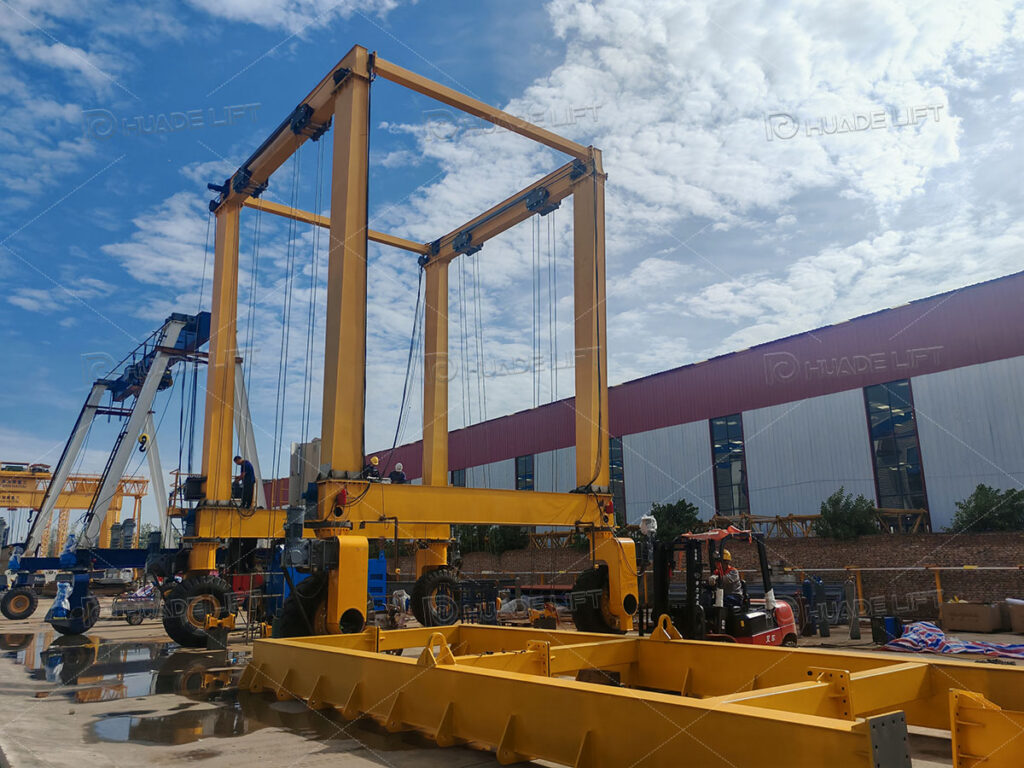
Cost Considerations
Cost is a critical factor in crane procurement, but the initial purchase price alone should not be the sole criterion. Reliable decision-making must balance upfront investment with total lifecycle value. Manufacturers offering long-term cost optimization should be selected through comprehensive evaluation of cost-effectiveness.
Rational Assessment of Initial Purchase Price
Market Price Comparison: Prior to procurement, understand the reasonable price range for comparable equipment and compare quotes to gauge market conditions. Be wary of quotes significantly below market rates, as these often conceal deficiencies in materials, craftsmanship, or service, potentially leading to substantial follow-up costs.
Transparency in Quotations: When comparing offers, verify the detailed breakdown to clarify the scope of supply, core components, and service inclusions. Confirm whether hidden costs like transportation or taxes are present. Reliable manufacturers provide clear quotations and proactively explain cost structures.
Prioritize Value for Money: Move beyond a “low-price orientation.” Evaluate cost-effectiveness holistically by assessing product quality, technical capabilities, and service capacity. High-quality, premium equipment typically has lower long-term operating costs and higher value, while low-cost, substandard equipment often incurs significantly higher overall costs due to frequent failures and downtime.
Comprehensive Calculation of Total Cost of Ownership (TCO)
Total Cost of Ownership (TCO) encompasses all expenses from equipment procurement to disposal, including initial purchase, operation, maintenance, spare parts costs, and downtime losses. When selecting manufacturers, conduct a comprehensive TCO calculation to make informed decisions.
Long-Term Maintenance Costs: Equipment durability determines maintenance frequency and expenses. High-quality equipment features longer component lifespans and reduced maintenance needs. Manufacturers offering timely, affordable genuine spare parts further optimize maintenance costs.
Energy and Operational Costs: Equipment energy efficiency directly impacts electricity expenses, while operational efficiency relates to labor input and production output. High-efficiency equipment reduces both categories of costs.
Comprehensive Benefits: Highly reliable equipment ensures project timelines and avoids delay losses; precise and efficient equipment enhances work quality, reduces rework, and generates greater profitability.
How to Compare Crane Manufacturer Quotes Correctly
When comparing quotes from different manufacturers, adhere to the principle of “comparing prices under equal conditions and comparing value at equal prices.” Focus on the following core dimensions to avoid one-sided comparisons that lead to flawed decisions:
Ensure Consistency in Scope of Supply
Clearly define the core components and accessories covered in each manufacturer’s quote to establish a uniform basis for comparison. For instance, some quotes may include installation tools while others exclude them, making direct price comparisons prone to inaccuracies.
Verify Key Component Specifications and Brands
The quality of core components like motors and reducers determines equipment performance and lifespan. When comparing, scrutinize the specifications and brand tiers of these critical parts to assess quality standards and mitigate future risks.
Clarify service inclusions
Confirm whether quotes cover critical services like installation, commissioning, and training. Distinguish between complimentary and additional-cost items, evaluating quote reasonableness based on service scope.
Identify hidden cost risks
Be vigilant for concealed expenses like shipping fees or taxes. Require manufacturers to provide full cost breakdowns to prevent budget overruns.
Reasonably priced products often correspond to superior quality and comprehensive services, reducing long-term costs. Conversely, seemingly low prices frequently conceal risks that may ultimately lead to significantly higher overall expenses.
How to Verify a Crane Manufacturer’s Reliability
Multi-dimensional evaluation can initially screen potential reliable manufacturers. To ensure accurate decision-making, confirm their actual capabilities through direct, in-depth verification methods rather than relying solely on promotional materials.
On-site Factory Inspection/Third-Party Audit
Physical visits allow direct assessment of production capacity and quality control standards, focusing on workshop equipment, production process compliance, and quality inspection procedures. Engage management and technical staff to gauge expertise. When lacking professional capacity, commission third-party audits for objective results.
Verification of Completed Project Cases
Prioritize screening similar project cases. Conduct on-site or video inspections to assess equipment operational status. Proactively engage with case clients to understand usage experiences, service efficiency, and obtain genuine feedback.
Export Experience and Industry Reputation Investigation
When procuring export equipment or partnering with overseas manufacturers, focus on verifying export channels, logistics/customs expertise, and the completeness of compliance certifications. Investigate reputation through industry associations and peers to confirm market recognition and mitigate risks.
Final Checklist: Choosing a Reliable Crane Manufacturer
| No. | Key Evaluation Points |
| 1 | Possesses extensive industry experience and a portfolio of similar projects |
| 2 | Owns manufacturing facilities with independent design and production capabilities |
| 3 | Offers a comprehensive product system supporting customized solutions |
| 4 | Provides full lifecycle service support |
| 5 | Holds necessary international and regional certifications |
| 6 | Maintains a strong market reputation with minimal negative feedback |
| 7 | Ensures efficient communication and transparent information sharing |
| 8 | Delivers clear and reasonable quotations with no hidden costs |
| 9 | Features a robust after-sales response mechanism |
| 10 | Verified through on-site inspections or third-party audits |
Conclusion
Selecting a crane manufacturer is not merely a one-time equipment purchase, but the beginning of a long-term partnership. By conducting a comprehensive evaluation across multiple dimensions—including technical capabilities, service systems, compliance, and total lifecycle value—enterprises can ensure safety and efficiency while achieving long-term stable project operations and cost optimization.
