
Straddle carriers are core heavy-duty handling equipment in logistics parks, with significant price variations during procurement. When buyers search for straddle carrier cost or how much does a straddle carrier cost, they often discover that prices vary widely depending on configuration and application. As a seasoned engineer, I draw on practical experience to break down the key factors driving price fluctuations, helping you understand the real straddle carrier price factors, make precise selections, control budgets, and avoid common procurement pitfalls.
Straddle Carrier Types
Diesel Straddle Carrier: Low Initial Cost, Suitable for Complex Operating Conditions
Diesel straddle carriers are the mainstream choice for large logistics parks and are often preferred by buyers comparing diesel straddle carrier price across manufacturers. They offer relatively low initial purchase costs primarily due to their mature power systems and well-established supply chains, which directly influence the overall straddle carrier price structure.
Their power system technology is highly refined, with large-scale production enabling controlled manufacturing costs for engines and hydraulic drive components, avoiding excessive markups.
Price fluctuations primarily stem from powertrain and hydraulic configurations. For instance, imported hydraulic components command approximately a 10% premium over domestic alternatives, directly affecting the final straddle carrier cost breakdown.
These trucks are well-suited for sites lacking charging infrastructure and requiring multi-shift continuous operation. From an operational perspective, their straddle carrier fuel consumption cost becomes a key long-term consideration.
Additionally, they operate on compacted ground without requiring rail installation or concrete paving, indirectly reducing the total straddle carrier investment cost.
Electric Straddle Carriers: Higher Initial Cost, More Economical in Long-term Operation
Electric straddle carriers have gained popularity in recent years due to environmental regulations. Many buyers specifically search for electric straddle carrier cost to compare them with diesel models. Unlike diesel models, their initial purchase price is higher, but they prove more cost-effective over the long term when evaluating straddle carrier total cost of ownership.
The core driver of their higher price is the modular battery pack, which accounts for 30%-40% of the total equipment cost. This is why electric vs diesel straddle carrier cost comparisons often show a noticeable upfront gap.
Battery capacity and charging speed directly influence pricing, and these factors also determine the straddle carrier operating cost per hour in long-term operations.
These vehicles are well-suited for indoor logistics parks and ports with stringent environmental regulations, where comprehensive charging facilities are typically available and strict limits on noise and exhaust emissions are enforced.
Electricity costs less than diesel fuel, maintenance is simpler, and failure rates are low. In lifecycle analysis, their straddle carrier operating cost is typically 20%-30% lower than diesel models, making it a clear example of “paying more upfront but saving later.”
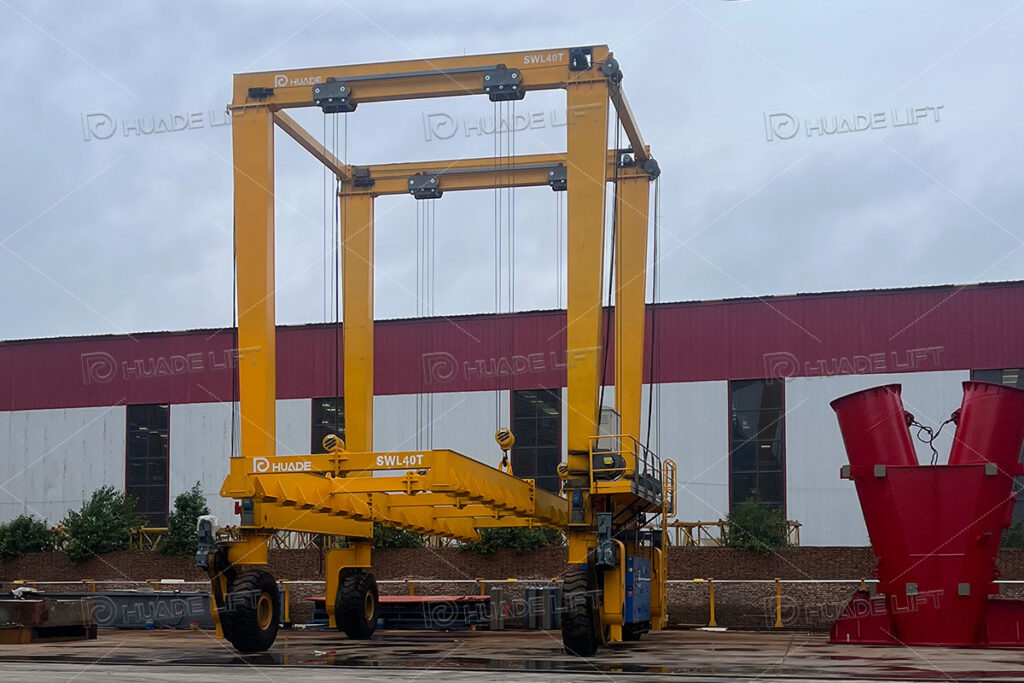
Power System: Diesel, Electric, Hybrid
Pricing Differences Among Three Power Types
The powertrain is the core factor determining price fluctuations for straddle carriers and is central to any straddle carrier cost analysis.
Diesel powertrains offer the lowest initial purchase cost. With mature manufacturing processes, high production volumes, and stable domestic and international suppliers, their unit manufacturing costs are low.Pricing is influenced by international procurement costs for core components. Models meeting higher environmental standards feature additional exhaust treatment systems, resulting in slightly higher prices.
Electric powertrains command the highest initial price, with the core challenge lying in batteries. Battery performance dictates user experience, requiring higher R&D and manufacturing costs.Electric models feature more complex motors and electronic control systems. Fluctuations in battery raw material costs directly drive up pricing, constituting the primary reason for their higher price point.
Hybrid pricing falls between the two extremes and is often evaluated in strategic straddle carrier ROI calculations, where energy savings and environmental compliance are long-term considerations.Their cost is influenced by both diesel engine specifications and battery configurations. Premium hybrid systems command higher prices due to advanced intelligent switching capabilities and brake energy recovery systems.
Impact of the Powertrain System on Long-term Operating Costs
When selecting a powertrain, focus shouldn’t be solely on the initial price; long-term operating costs must also be considered, as they directly impact the straddle carrier lifecycle cost.
Diesel models have lower initial costs, but higher fuel consumption and environmental compliance expenses. Regular exhaust treatment and component replacements drive up long-term costs, making it difficult for the initial price difference to offset these expenses.
Electric vehicles have higher upfront costs but benefit from low electricity expenses and simplified maintenance, reducing the overall straddle carrier maintenance cost. The initial price difference is typically recouped within 2-3 years through cost savings. Hybrid straddle carriers offer mid-range operating costs, making them suitable for scenarios lacking comprehensive charging infrastructure while still aiming to reduce energy consumption.
Manufacturer and Brand
Brand Reputation and Product Quality Premium
The price of straddle carriers is significantly influenced by brand reputation. Renowned brands like Kalmar, Konecranes, and HuadeLift generally command higher prices than ordinary brands, primarily due to their quality and established reputation.
These brands have deep industry expertise, employing rigorous manufacturing processes. Their frames undergo finite element analysis, and core components are predominantly imported premium products, resulting in low failure rates and extended service life.
This premium is reflected not only in product quality but also in higher resale value, which positively impacts the overall straddle carrier total cost of ownership.
Impact of After-Sales Service and Manufacturer Strength
After-sales service and warranty policies increase the unit price but offer convenience and assurance. Strong support networks reduce downtime, lowering the real straddle carrier operating cost.
Some brands provide a 3-year full-unit warranty with nationwide service centers, 24/7 on-site troubleshooting, and spare parts supply—ideal for continuous operation scenarios.
Large manufacturers benefit from economies of scale, resulting in lower unit costs and more competitive pricing. Their robust R&D capabilities enable product optimization and cost control.
Smaller or custom manufacturers operate with smaller batch sizes and higher R&D investments, leading to higher pricing. However, they offer greater flexibility, making them suitable for scenarios requiring personalized solutions.
Customization of Straddle for Your Project
Core Parameter Customization: Load Capacity, Span, and Lifting Height
Customization significantly affects the final straddle carrier machine cost. The higher the level of customization, the greater the price increase, with core parameter customization having the most significant impact.
Load capacity is the primary customization factor, ranging from tens to hundreds of tons. Higher load capacities demand stronger structures and upgraded power and hydraulic systems, leading to higher prices.
A 100-ton capacity costs 30%-50% more than a 50-ton model, requiring corresponding upgrades to tires and lifting attachments. Avoid pursuing “bigger is better” during procurement—focus on meeting actual requirements.
Span and lifting height directly determine material handling dimensions and stacking height. Larger parameters increase structural design complexity and material consumption, driving up costs.
Increasing span from 10 meters to 15 meters or lifting height from 8 meters to 12 meters may raise costs by 20%-30%. Customization based on site requirements is essential.
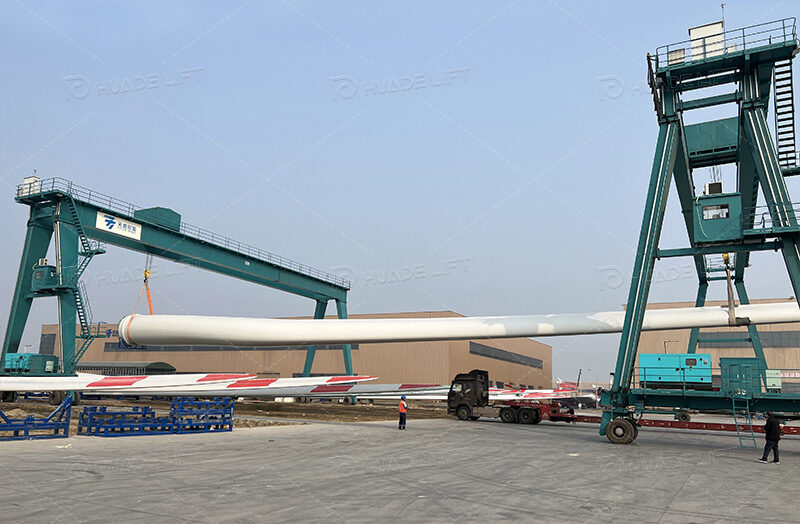
Accessory Configuration Customization: Drives, Tires, and Safety Accessories
Drive system customization must align with operating conditions. For heavy-duty applications exceeding 100 tons, hydraulic motors paired with wheel-end reducers are used, though this approach carries higher costs. For applications under 100 tons, electric motors with reducers are employed, offering lower costs.
Avoid blindly pursuing high-end drive systems; instead, select solutions that precisely match operational requirements to prevent unnecessary cost increases.
Tire configuration depends on the working environment. Standard tires are suitable for level surfaces, while heavy-duty tires are required for complex terrain. The latter are more expensive but offer superior wear resistance.
Wear-resistant rubber tires cost 10%-15% more than standard tires but offer extended service life, reducing long-term replacement expenses.
Specialized attachments like lifting beams, anti-sway systems, and overload protection require custom design and manufacturing, incurring additional costs.
High-risk scenarios necessitate essential safety equipment to prevent accident losses; routine operations need not undergo unnecessary upgrades.
How are Container Shipping Prices, Rates & Transport Costs Calculated
Matching Transportation Costs with Equipment Selection
As the core equipment for container handling, the procurement cost of straddle carriers should align with broader container handling cost per container and throughput requirements.
Container transportation costs are determined by factors such as cargo type and transport mode. High-throughput ports require efficient, durable models, while smaller logistics parks can opt for cost-effective standard models.
Blindly purchasing high-end models leads to equipment idling and increased procurement costs. Selecting models based on actual throughput capacity is the rational approach.
Indirect Effects of Additional Costs and Trade Terms
Fuel surcharges and peak season fees for container shipping impact the buyer’s budget and cross-border vehicle selection.
When fuel surcharges rise, prioritize electric or hybrid models; when fuel prices are low, diesel models offer better value.
Trade terms determine cost allocation scope. Different terms like FOB or CIF impose varying budget pressures, thereby influencing vehicle choice.
For tight budgets, opt for models with lower initial costs. With ample budgets, prioritize vehicles offering low long-term operating costs and superior quality.
Maintenance and Servicing
The Relationship Between Initial Pricing and Maintenance Costs
Many buyers focus solely on initial straddle carrier price, overlooking long-term servicing expenses. Maintenance costs, spare parts availability, and downtime risks directly influence the real straddle carrier maintenance cost and long-term profitability.
Vehicles that are easy to maintain and have readily available parts may carry a slightly higher initial price tag. However, their straightforward upkeep and extended service intervals reduce long-term maintenance costs.
Conversely, models with low initial prices often feature simpler designs and components of mediocre quality. These vehicles experience more frequent breakdowns, require more frequent servicing, and face difficulties in obtaining replacement parts—ultimately resulting in higher long-term costs.
Impact of Component Configuration on Maintenance Costs
Component configuration directly determines maintenance costs. High-quality components reduce failure rates and extend service life, lowering the total straddle carrier lifecycle cost.
Imported parts benefit from comprehensive after-sales service, ensuring timely spare parts supply and technical support to minimize downtime losses. Inferior components may reduce the initial straddle carrier cost, but increase downtime losses and spare part expenses, negatively affecting total ownership economics.
Maintenance costs must be factored into total cost of ownership. Models with low initial prices but high maintenance costs may incur higher long-term ownership expenses.
A diesel model with an initial price 100,000 yuan lower could incur 30,000-50,000 yuan more annually in maintenance and downtime losses, offsetting the initial price difference within five years.
Lifecycle Cost Analysis
Core Components of Total Cost of Ownership
When selecting a cost-effective straddle carrier, conduct a lifecycle cost analysis to calculate the total cost of ownership (TCO). Key components include the initial purchase price, maintenance costs, fuel/electricity expenses, depreciation, and residual value.
The initial price is fundamental but not the sole factor. If two models differ by ¥100,000 in initial cost but have an annual maintenance and fuel cost difference of ¥50,000 over a 10-year lifespan, the lower-priced model will incur higher total ownership costs.
Significant variations exist in depreciation and residual value. Well-known brands experience slower depreciation and higher residual values, often retaining 40%-50% of their initial price after five years, while ordinary brands typically retain only 20%-30%.
The Practical Value of Life Cycle Cost Analysis
Life cycle cost analysis helps avoid the trap of low initial prices. Some models with slightly higher upfront costs actually offer lower total cost of ownership over the long term due to higher fuel efficiency, lower maintenance expenses, and higher residual values.
For example, an electric vehicle may cost 200,000 yuan more than a diesel model initially, but it saves 50,000 yuan annually. Over a 10-year lifespan with a 100,000 yuan residual value advantage, its total cost of ownership is actually 200,000 yuan lower.
The essence of high cost-effectiveness lies in long-term affordability and practicality. Low-priced models often incur higher costs due to frequent breakdowns later on, making them less economical in the long run.
When purchasing, comprehensively evaluate all costs to determine which model best aligns with your needs and offers the lowest long-term ownership expenses.
Summary
The straddle carrier cost is influenced by multiple factors including the power system, brand reputation, customization level, and maintenance strategy. The core drivers of price fluctuations are the power system and customization. Rather than focusing solely on upfront straddle carrier price, buyers should conduct a comprehensive straddle carrier total cost of ownership evaluation to ensure the selected model delivers long-term operational efficiency and financial return.
